
Real Heat, No Chimney Required.
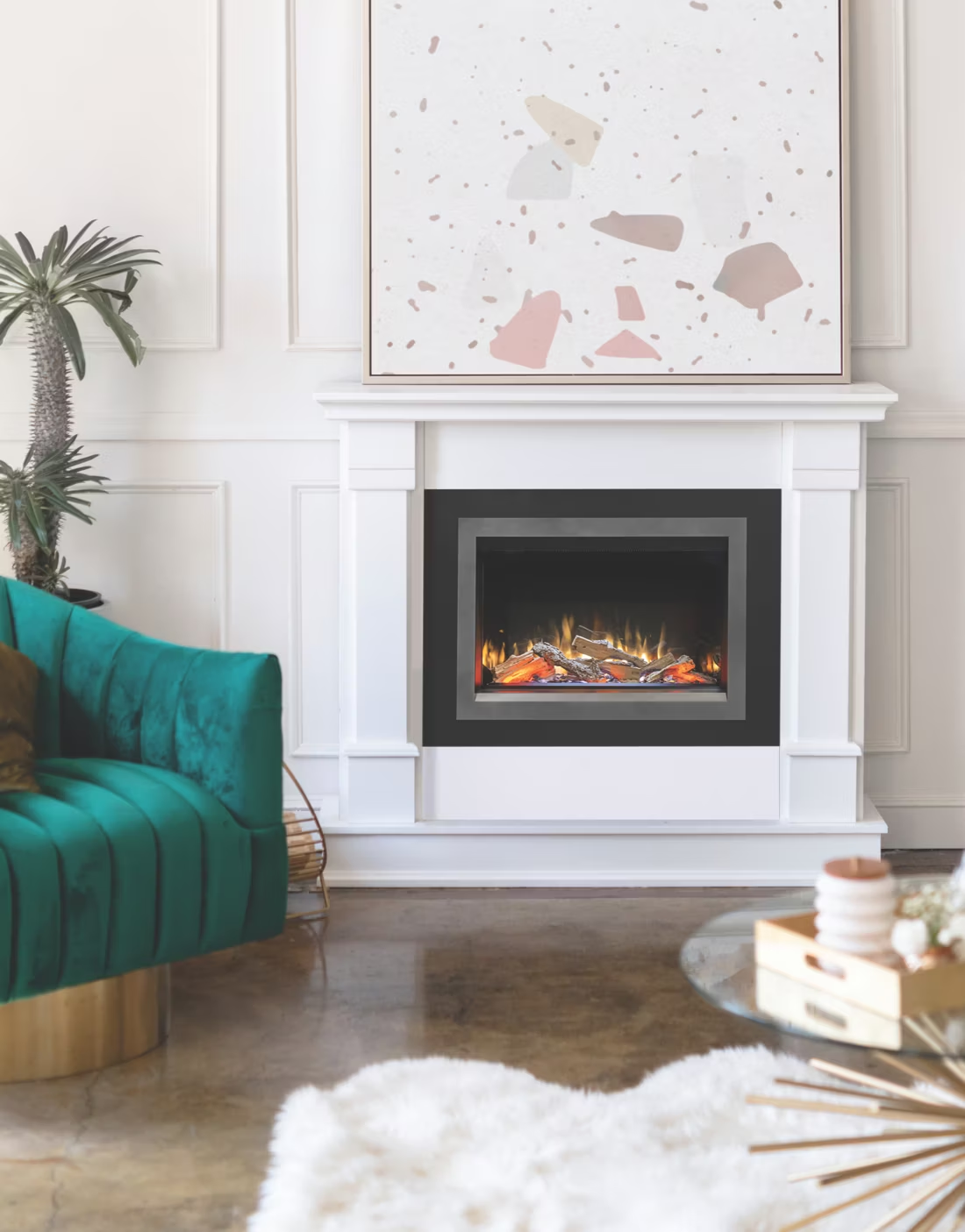
Electric fireplaces suit Madisonville's mild Monroe County winters and East Tennessee housing stock. Find the right unit and connect with a trusted local dealer.
Every Project Starts From One of These Five Situations
Madisonville's mild winters make electric a practical, low-hassle choice.
Madisonville sits at just under 1,000 feet in the foothills near the Cherokee National Forest, where winters average a low around 28°F and the region logs a moderate winter heating season overall. That's a fraction of what a place like Duluth, MN sees in an average winter—Monroe County rarely deals with extended sub-zero stretches, which means most homes here need supplemental zone heat rather than a whole-home wood-burning setup.
There's no natural gas utility serving most of Madisonville, so homes without existing propane service face tank installation and delivery logistics just to add gas heat. Electric fireplaces skip that entirely—no venting, no chimney, no fuel storage, and no combustion byproducts to manage. Fort Loudoun Electric Cooperative serves the area at a residential rate around 12.1 cents per kWh, which keeps running costs for supplemental electric heat reasonable. For manufactured homes, additions, sunrooms, and rental properties common throughout Monroe County, an electric unit is often the simplest path to real ambiance and real heat.
Three steps. No salesperson until you're ready.
Tell us about your project
Your zip code, your situation, and the fuel you're leaning toward—or let the answers point you to one.
See what's actually available
The brands dealers within 100 miles genuinely carry—real options, never a catalog mirage.
Get your dealer & Project Guide
A trusted local dealer, plus the free Project Guide & Parts List that names every component of the job.
Frequently Asked Questions
How much does an electric fireplace installation cost in Madisonville?
Plug-in freestanding electric fireplaces and stoves typically run $150 to $600 with no installation required beyond finding an outlet. Wall-mounted units installed by an electrician, including a dedicated circuit if needed, generally run $800 to $2,500. Built-in electric fireplace conversions with custom mantel work and new wiring run higher, often $1,500 to $4,000 depending on cabinetry and finish work. Since Monroe County has no natural gas infrastructure in much of the area, electric avoids the propane tank and gas line costs that a comparable gas installation would require.
How much space will an electric fireplace actually heat?
Most electric fireplace inserts and stoves put out around 4,000 to 5,200 BTUs (roughly 1,500 watts), which comfortably heats a single room of 400 to 1,000 square feet depending on insulation and ceiling height. Given Madisonville's relatively mild heating load compared to colder climates, electric units work well as zone heat for a living room, den, or bonus room rather than as a whole-home heat source. Homeowners heating a larger open floor plan sometimes install two units in separate zones rather than one oversized unit.
Do I need a permit to install an electric fireplace in Madisonville?
Plug-in freestanding units that simply connect to an existing outlet typically don't require a permit. Built-in installations that involve running a new dedicated circuit or modifying a wall do require an electrical permit through the Monroe County Building Department, and the work should be done by a licensed electrician. There's no chimney or venting inspection involved since electric units don't produce combustion byproducts—the permit process is much simpler than what's required for a wood or gas installation in the county.
Electric vs. gas fireplace—which makes more sense in Madisonville?
Gas is a solid option here, but most of Madisonville lacks natural gas utility service, so a gas fireplace typically means installing and maintaining a propane tank with a local supplier. Electric skips that step entirely—no fuel delivery, no tank, no gas line permit. Gas does produce more heat output and can run during a power outage if properly configured, while electric requires grid power to operate. For homeowners who want simple installation, low upfront cost, and no fuel logistics, especially in rentals or manufactured homes, electric is usually the easier call.
Why choose electric over wood when Monroe County has good firewood access?
Monroe County does have solid wood access—the Cherokee National Forest issues cutting permits for about $20 per cord during the May-to-October season, and oak, hickory, and maple all burn well locally. But wood heat comes with chimney maintenance, creosote buildup, and ongoing wood handling that many Madisonville homeowners want to avoid, particularly in newer homes, rentals, or manufactured housing without an existing chimney. Electric fireplaces deliver the visual warmth of a fire with none of that upkeep, which is a big part of why electric has become the standard choice for supplemental and ambiance-driven installs in town.
What will an electric fireplace cost to run each month?
At Fort Loudoun Electric Cooperative's residential rate of about 12.1 cents per kWh, a typical 1,500-watt electric fireplace running 5 hours a day costs roughly 90 cents a day, or about $27 a month for regular evening use. Most homeowners use the heater function selectively during cold snaps and run just the flame effect the rest of the time, which draws only a few watts and costs pennies. That makes electric one of the more predictable and affordable heating add-ons for a Madisonville home.
What type of electric fireplace works best for Madisonville homes?
Given the mild climate here, most homeowners prioritize flame realism and room ambiance over raw heat output, since the heater function only gets heavy use during the occasional hard freeze when lows dip well below the 28°F winter average. Wall-mounted units and log-set inserts from brands like Dimplex, Napoleon, and Touchstone use LED and mirror-reflection technology that looks convincing even with the heater off. For a living room or den that doubles as a gathering space, a wider linear unit tends to be the popular choice among local buyers.
How long do electric fireplaces last, and what maintenance do they need?
Electric fireplace heating elements typically last 10 to 15 years with normal use, and LED flame components often outlast the heater itself. Maintenance is minimal compared to a wood or gas unit—no chimney sweep, no annual gas line inspection. Occasional dusting of the vents, vacuuming behind the unit, and replacing an LED bulb or heating element if it fails is usually all that's needed. There's no combustion byproduct to manage, so there's nothing comparable to creosote buildup or flue inspection.
Are electric fireplaces safe for homes with kids or pets?
Yes—electric fireplaces use a cool-touch glass front and produce no real flame or combustion, so there's no carbon monoxide risk and no open fire hazard. That makes them a common choice for family rooms, playrooms, and rental properties throughout Monroe County where liability and safety matter to homeowners and landlords alike. Some models include a heater-off mode that runs the flame effect with zero heat output, useful for year-round ambiance without the safety considerations of running a heater unattended.
Can I put a TV above my fireplace?
Yes—with an asterisk. Fireplaces are hot and TVs don't like heat. Either put a mantel between them to deflect rising warmth, or choose a fireplace with heat-management technology that creates a cool zone on the wall above—the wall stays around 125 degrees, barely warm, while the room still gets full heat. If you like clean lines and don't want a mantel, heat management is the answer.
Do electric fireplaces actually produce heat?
Yes—most put out around 4,800–5,000 BTUs from a standard outlet, which comfortably warms a bedroom, office, or den as a comfort-zone heater. What they won't do is carry a whole house the way wood, gas, or pellet can. Think of electric as ambiance-first with honest supplemental heat: flames on with no heat in July, flames plus warmth in January.
How much should I budget for a fireplace?
For an average home—covering the fireplace, the vent pipe, and basic installation—a budget between $3,900 and $5,500 gives you a lot of options across wood, gas, and pellet. By the time you add finish work, gas line, and electrical, the average complete installation lands between $5,000 and $12,000 all-in. In a remodel or new build, a good rule is to put about 2.5% of the total project cost toward the fireplace.
Can a fireplace actually lower my heating bill?
Yes—by creating a comfort zone. A furnace heats every square foot of the house just to warm the one room you're in; a gas fireplace on low burns roughly a sixth of the gas a typical furnace does. Set the furnace around 55–60 degrees as a baseline, then heat the rooms your family actually uses. Families who heat this way commonly save $20–$60 a month.
Nearby Dealers
Hearth shops serving Madisonville and the surrounding area. Every listing shows whether it is a WhyFire partner, a dealer we have verified as authorized for the brands we recommend, or a local business carrying hearth products. No manufacturer pays for placement. How we verify dealers →
Englands Woodstove Store
Southern Flame
Pool Warehouse
Middle Tn Natural Gas - Dayton
Electric Service in Madisonville
An electric fireplace's heater draws about 1,500 watts—pennies per hour at local rates.
Fort Loudoun Electric Coop
Find your electric fireplace in Madisonville.
Tell us a bit about your home and we'll match you with the right electric fireplace or insert—and connect you with a trusted local dealer who can handle the wiring, mounting, and finish work.
Find Your Fireplace →