
Electric fireplace warmth for every room in Lawrence County.
Clean, instant heat with no chimney, no venting, and no wood to haul—a good fit for Lawrence County's milder winters, from Lawrenceburg out to the county's rural stretches. Find the right unit and connect with a trusted local dealer.
Every Project Starts From One of These Five Situations
A milder climate calls for a different kind of heat.
Lawrence County sits in climate zone 4A with a solid winter heating season and an average winter low near 28 degrees—real winter, but nothing like the sustained sub-zero stretches you'd find in a place like Fargo or Duluth. Around 16,000 people live in the county, most concentrated in and around Lawrenceburg, the county seat and home to David Crockett State Park, with the rest spread across farmland and hardwood forest thick with oak, hickory, maple, and pine. That mix of climate and geography matters for heating decisions: winters here call for real supplemental heat on the coldest nights, but not the kind of all-night, whole-house wood-burning setup you'd need farther north.
Duck River Electric Membership Corporation serves most of the county, and reliable grid power makes electric fireplaces a practical option almost anywhere in Lawrence County—no gas line required, no chimney to maintain, and none of the wood-smoke concerns some counties face (Lawrence County has no air quality non-attainment issues or burn restrictions). For homeowners who want the look and ambiance of a fireplace without the upkeep of tending oak or hickory logs, or who need a fast way to add heat to a bonus room, finished basement, or manufactured home, an electric unit plugs into the existing setup with minimal disruption. The tradeoff is honest: electric fireplaces are excellent for ambiance and zone heating, but they're not a substitute for a wood stove if you're relying on backup heat during an extended outage.
Three steps. No salesperson until you're ready.
Tell us about your project
Your zip code, your situation, and the fuel you're leaning toward—or let the answers point you to one.
See what's actually available
The brands dealers within 100 miles genuinely carry—real options, never a catalog mirage.
Get your dealer & Project Guide
A trusted local dealer, plus the free Project Guide & Parts List that names every component of the job.
Frequently Asked Questions
How much does an electric fireplace installation cost in Lawrence County?
Plug-in electric fireplaces and stoves—the kind that just need a standard 120-volt outlet—typically run $200 to $800 for the unit itself, with no installation cost beyond finding a spot near an outlet. Built-in or wall-mounted units that require a dedicated circuit, in-wall wiring, or custom framing run higher, typically $800 to $2,500 once a licensed electrician is involved. Costs climb toward the higher end for larger linear units, custom mantel surrounds, or installations in older Lawrenceburg homes where the existing wiring needs upgrading to handle the additional load.
Do I need a permit to install an electric fireplace in Lawrence County?
Most plug-in electric fireplaces don't require a permit since they use existing outlets and don't involve any structural or electrical modification. If you're installing a built-in unit that requires a new dedicated circuit or any rewiring, that electrical work typically needs a permit through the Lawrence County building department and should be done by a licensed electrician—not just for code compliance, but because an undersized circuit is a real fire risk with higher-wattage units. Local dealers who sell built-in electric fireplaces usually coordinate the electrical work as part of the installation.
Will an electric fireplace work if the power goes out?
No—and this is the honest tradeoff to weigh. Every electric fireplace, insert, and stove needs power to run the heater and, in most models, the flame effect too. Lawrence County doesn't see the kind of prolonged ice-storm outages that hit some parts of the Southeast, and Duck River Electric Membership Corporation generally restores service quickly, but if backup heat during an outage is a real priority for your household, a wood stove or vented gas unit is a better primary choice. Many homeowners here use electric for the main living space and keep a wood stove or insert elsewhere in the house as an outage-ready backup.
What size electric fireplace do I need for my room?
Electric fireplaces are sized more by room square footage and heater output than by BTU-per-square-foot rules you'd use for wood or gas. Most units include a built-in heater rated for 400 to 1,000 square feet, which covers the majority of living rooms, dens, and bonus rooms in Lawrence County homes. For open floor plans or larger rooms, look at a wider linear unit or plan on it as supplemental heat alongside your existing HVAC rather than the sole heat source. Local dealers can walk through your room dimensions and ceiling height to recommend a specific model and mounting height.
Electric vs. gas fireplace—which makes more sense in Lawrence County?
Gas fireplaces deliver more heat output and a more realistic flame, but they require either a natural gas line or a propane tank, plus venting work—a bigger project in rural parts of the county where natural gas service is limited and propane is the common fallback. Electric fireplaces skip all of that: no gas line, no venting, no combustion byproducts, just an outlet or a dedicated circuit. For a straightforward ambiance upgrade in a bedroom, basement, or rental property, electric is usually the simpler and cheaper path. For a primary heat source in the main living area of a permanent home, gas or wood typically wins on raw heat output.
Electric vs. wood stove—which is right for my home?
Wood heat runs deep in this part of Tennessee, with plenty of oak and hickory available locally, and a wood stove will out-heat an electric unit on the coldest nights of the year while working without power. But wood means chimney maintenance, ash cleanup, and sourcing or cutting fuel. Electric fireplaces skip all of that—no chimney, no smoke, no wood to stack—but they're best treated as supplemental or ambiance heat rather than a primary system for whole-home heating through Lawrence County's winter. Many households here end up with both: a wood stove for serious cold and backup power, an electric unit for everyday ambiance in a secondary room.
Where can I install an electric fireplace in my home?
Almost anywhere. Because electric fireplaces don't need clearance for combustion air or a vent path, they work in rooms where a wood or gas unit simply couldn't go—interior walls, upstairs bedrooms, finished basements, even manufactured and mobile homes, which are common throughout rural Lawrence County. The main constraint is electrical: plug-in units need an accessible outlet, and larger built-in units need a circuit sized for the heater load, which is where a licensed electrician or your local dealer comes in.
How much maintenance does an electric fireplace need?
Very little compared to wood or gas. There's no chimney to sweep, no annual gas line inspection, and no ash to clean out. Maintenance is mostly dusting the unit, occasionally replacing an LED bulb in older flame-effect models, and making sure the vents on the heater unit stay clear of dust buildup. It's one of the reasons electric fireplaces are popular in rental properties and lower-maintenance homes throughout Lawrence County.
Where can I find a local dealer for electric fireplaces in Lawrence County?
Big-box stores sell plug-in units, but for built-in or wall-mounted electric fireplaces—especially ones requiring a dedicated circuit—a specialty hearth dealer is worth the extra step. They can confirm the right amperage and circuit sizing with an electrician, recommend a unit sized correctly for your room, and stand behind the installation. That's the kind of local matchup Find My Fireplace focuses on: a trusted dealer who actually installs in Lawrence County, rather than a generic online listing.
Can I put a TV above my fireplace?
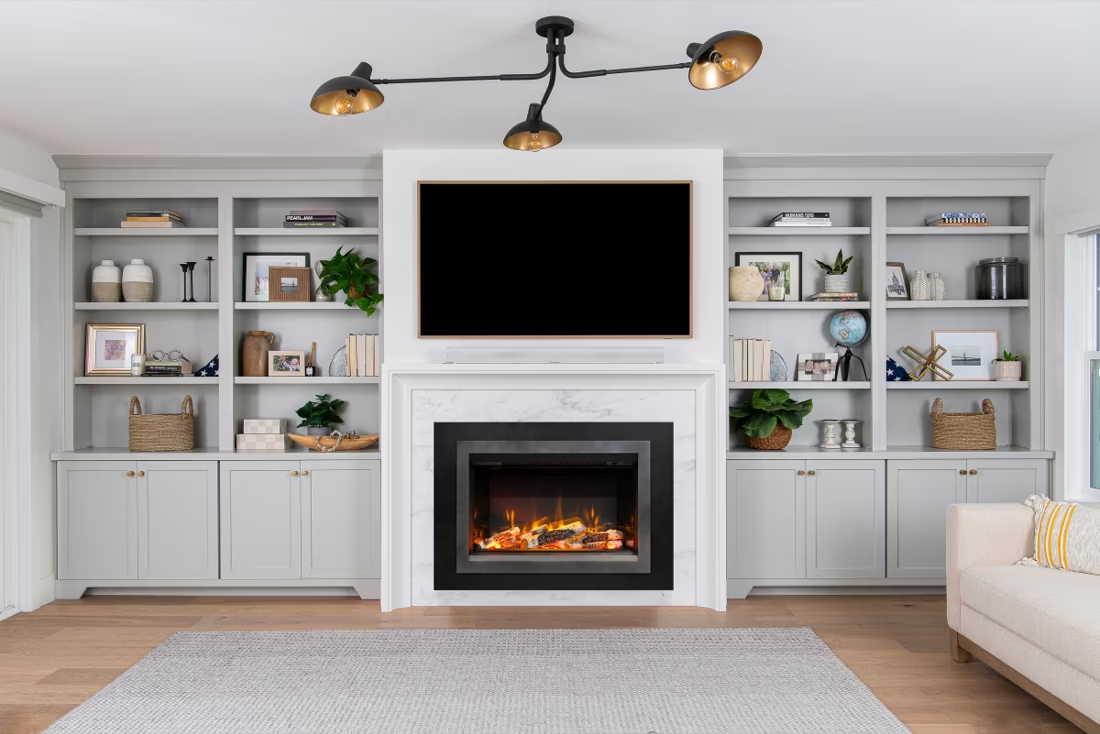
Yes—with an asterisk. Fireplaces are hot and TVs don't like heat. Either put a mantel between them to deflect rising warmth, or choose a fireplace with heat-management technology that creates a cool zone on the wall above—the wall stays around 125 degrees, barely warm, while the room still gets full heat. If you like clean lines and don't want a mantel, heat management is the answer.
Does an electric fireplace need a vent or chimney?
No—that's its superpower. An electric fireplace needs a wall and an outlet, period. No vent pipe, no gas line, no clearances to design around, which is why it works in bedrooms, offices, apartments, and walls where venting a gas or wood unit would be impractical or impossible. Installation is typically the simplest and least expensive of any fireplace type.
Does a fireplace add value to my home?
On average, a fireplace adds back to the home about the same amount you spent installing it. Add the monthly savings from heating the rooms you actually use instead of the whole house—often hundreds of dollars a year—and the value case is strong before you even count what a fire does for how your family uses the room.
Can a fireplace actually lower my heating bill?
Yes—by creating a comfort zone. A furnace heats every square foot of the house just to warm the one room you're in; a gas fireplace on low burns roughly a sixth of the gas a typical furnace does. Set the furnace around 55–60 degrees as a baseline, then heat the rooms your family actually uses. Families who heat this way commonly save $20–$60 a month.
Stove and Fireplace Dealers in Lawrence County
Listings include WhyFire partner dealers, dealers we have verified as authorized for the brands we recommend, and established local businesses that carry hearth products. Every listing shows which one it is. The ones marked Preferred run on WhyFire's software, so they can show you real pricing and book your appointment right here. No manufacturer pays for placement. How we verify dealers →
Phoenix Sales
Consolidated Trade Services
Thompson Gas
Vaughan Gas
Find your electric fireplace in Lawrence County.
Tell us a bit about your home and the room you're heating, and we'll match you with a trusted local dealer plus a free Project Guide & Parts List—the exact unit, mounting hardware, and electrical specs for your Lawrence County project.
Find Your Fireplace →