
Reliable Gas Heat for Jefferson City Winters.
Jefferson County winters average lows in the mid-20s, cold enough for a gas fireplace to earn its keep as daily supplemental heat. Find the right unit and connect with a trusted local dealer.
Every Project Starts From One of These Five Situations
Convenient heat for a mild Appalachian foothills climate.
Jefferson City sits at about 1,140 feet in the foothills of the Great Smoky Mountains, not far from Cherokee Lake and the Carson-Newman University campus. With a mild winter heating season and winter lows averaging 24°F, the climate here is far gentler than a place like Madison, WI, where the heating season runs nearly twice as long. Most Jefferson County homes don't need a full-time primary heat source for months on end—they need something that comes on fast on a 28-degree morning and shuts off just as easily.
That's the gap gas fireplaces fill well here. Natural gas infrastructure doesn't reach every neighborhood in a town this size, so many homeowners run on propane instead, delivered and stored on-site by regional suppliers. Either fuel works in a modern direct-vent unit. Paired with the electric heat pumps that Appalachian Electric Cooperative customers commonly run as their primary system, a gas fireplace or insert gives you instant zone heat in the room you actually live in, without the wood handling that oak and hickory burners require through a Tennessee winter.
Three steps. No salesperson until you're ready.
Tell us about your project
Your zip code, your situation, and the fuel you're leaning toward—or let the answers point you to one.
See what's actually available
The brands dealers within 100 miles genuinely carry—real options, never a catalog mirage.
Get your dealer & Project Guide
A trusted local dealer, plus the free Project Guide & Parts List that names every component of the job.
Frequently Asked Questions
How much does a gas fireplace installation cost in Jefferson City?
Expect somewhere between $3,500 and $9,000 for a typical gas fireplace or insert installation in Jefferson City, with the final number driven mostly by whether you're on natural gas or propane and how much venting and gas line work is involved. A direct-vent insert going into an existing masonry fireplace with a propane line already run to the house lands on the lower end. New construction or a from-scratch installation that requires a new propane tank set, a gas line run across the yard, and framed venting through an exterior wall will sit toward the top. A local dealer will give you a firm number after seeing your fireplace or the room you're building into.
Can I convert my existing wood fireplace to gas?
Yes, and it's a common request from owners of older Jefferson County homes that were built with a masonry fireplace and a chimney that's seen its share of oak and hickory over the years. A gas insert slides into that opening and uses a stainless liner run up the existing flue, so you keep the look of the fireplace without the ash and the wood stacked on the porch. Since much of the area isn't on natural gas mains, the more common version of this conversion here pairs the insert with a propane tank rather than a gas utility hookup—your installer will size the regulator and orifices accordingly.
Do I need natural gas, or can I run a fireplace on propane?
Propane is the more practical answer for a lot of Jefferson City addresses, since natural gas mains don't extend into every part of the county the way they do in a larger nearby city. If your home already has a propane tank for a water heater, range, or furnace, adding a fireplace to that line is straightforward. If not, a local propane supplier can set a tank as part of the project. Nearly every gas fireplace model on the market today can be configured for either natural gas or propane—it's a matter of the orifice kit your installer uses, not a different product.
Will my gas fireplace still work if the power goes out?
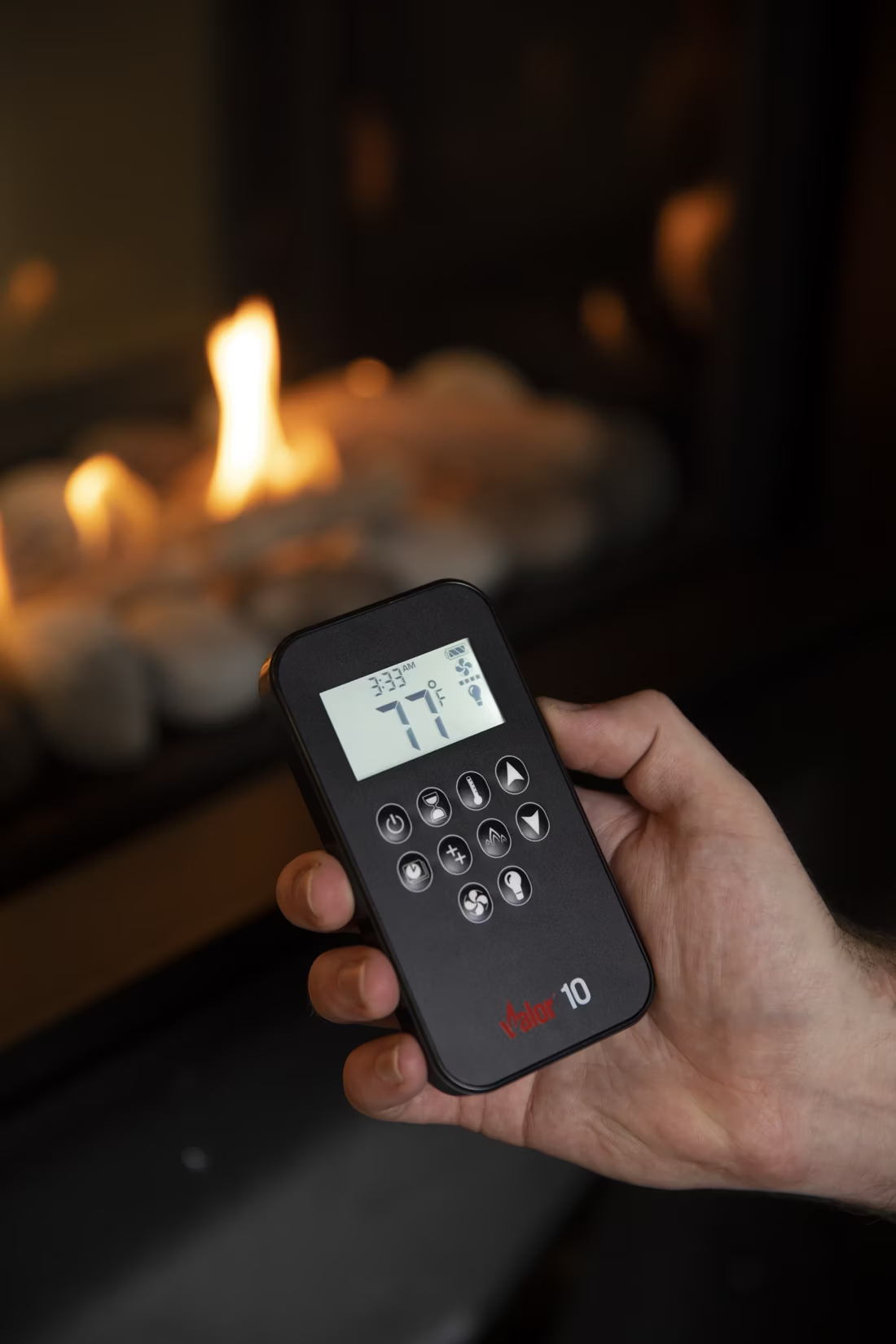
Most will, which matters in a hilly county where ice storms occasionally take down power lines for a day or two. Units with an IPI (intermittent pilot ignition) system run on a small battery backup that kicks in the moment power drops, so the fireplace lights normally off the batteries until the grid comes back. The one thing to remember is checking those batteries every fall before burning season, since they're easy to forget until the night you actually need them. A few brands, Valor among them, skip batteries entirely and generate their own current off the pilot's thermocouple. Ask your local dealer which ignition system is on any unit you're comparing.
What's the difference between a gas fireplace, gas insert, and gas stove?
A gas fireplace is a built-in unit framed into a wall, typically chosen for new construction or a remodel where there's no existing fireplace opening. A gas insert is sized to slide into an existing masonry firebox, converting an old wood-burning fireplace into a sealed, efficient gas unit that vents through the existing chimney. A gas stove is a freestanding cabinet-style unit that sits on the floor, similar in footprint to a wood stove but running on gas or propane. For the many older homes around downtown Jefferson City with an existing brick fireplace, an insert is usually the straightforward upgrade; new rooms or additions are better suited to a built-in fireplace.
Do I need a permit to install a gas fireplace in Jefferson City?
Yes. Gas fireplace installations fall under building and gas permitting through Jefferson County's building codes department, and any new or extended gas or propane line needs to be run by a licensed gas-fitter. In practice, the hearth dealers who handle installations in this area coordinate the permit, the gas line work, and the final inspection as one package, so you're not stuck managing separate trades or two different inspections yourself.
What's the difference between vented and vent-free gas fireplaces?
Vented (direct-vent) gas fireplaces pull combustion air from outside and exhaust it back outside through a sealed pipe—they're the standard choice almost everywhere, including Jefferson City, and produce real, substantial heat. Vent-free units burn gas directly into the room with no chimney or outside venting at all; they're legal in Tennessee and popular in some older rural homes as a low-cost supplemental heater, but they require careful room-size sizing and an oxygen depletion sensor, and they add moisture and combustion byproducts to indoor air. For a primary living-room installation, most local dealers will steer you toward a direct-vent unit; vent-free tends to make more sense for occasional-use spaces like a detached workshop or cabin.
How often should my gas fireplace be serviced?
Plan on an annual inspection, ideally in early fall before the first cold snap. A technician checks the burner, pilot assembly, venting, and gas connections, and cleans the glass and interior—much less involved than sweeping a wood chimney, but it catches the kind of pilot or ignition issues that otherwise show up as a no-start on the coldest night of the year. Local service providers typically charge in the $125 to $200 range for this visit.
Gas vs. wood—which makes more sense for a Jefferson City home?
Wood is still a real option here—oak, hickory, maple, and pine are all common locally, and Forest Service cutting permits through the Nantahala-Pisgah National Forests run about $20 per cord during the May-to-October season. But wood means splitting, stacking, and tending a fire, and with air quality here rated with no significant local restrictions, that's a lifestyle choice rather than a necessity. Gas wins on convenience: flip a switch, get heat, walk away. For a primary living space where you want reliable daily warmth without the wood pile, gas is usually the better fit; wood tends to end up in a workshop, a second fireplace, or a home where the ritual of a real fire matters as much as the heat.
Why is a fireplace insert so efficient?
An insert does two things: it seals the chimney completely, so you stop losing air you already paid to heat, and it radiates warmth into the room through the firebox and glass. Most add a heat-exchange fan that pulls cool room air underneath, wraps it around the hot firebox, and pushes it back out warm. Your home is more efficient before you've even lit the first fire.
Is my gas fireplace wasting gas?
If it was installed more than 15 years ago, probably. Older gas fireplaces keep a standing pilot light burning all the time, and that little flame can cost a couple hundred dollars a year. Newer models use pilot-on-demand ignition—the pilot lights only when you use the fireplace and goes out when you turn it off.
What is an in-home preview and do I need one?
It's a visit where a hearth professional measures your space, confirms the model you picked actually works in your home, and walks the specs—framing, gas line, venting, finish work—before anything is ordered. Some details you just can't know until you see the house. Never make a down payment without one; it's the single most-skipped step that burns buyers.
Does a fireplace add value to my home?
On average, a fireplace adds back to the home about the same amount you spent installing it. Add the monthly savings from heating the rooms you actually use instead of the whole house—often hundreds of dollars a year—and the value case is strong before you even count what a fire does for how your family uses the room.
Nearby Dealers
Hearth shops serving Jefferson City and the surrounding area. Every listing shows whether it is a WhyFire partner, a dealer we have verified as authorized for the brands we recommend, or a local business carrying hearth products. No manufacturer pays for placement. How we verify dealers →
Professional Fireplace & Chimney Service
Smoky Mountain Buildings
Heritage Propane
Heritage Propane
American Fireplaces
East Tennessee Fireplace Co.
Claiborne County Utility
Find your gas fireplace in Jefferson City.
Tell us about your home and we'll put together a free Project Guide & Parts List for your Jefferson City gas project—the right unit, the exact parts including your vent kit, and a trusted local dealer to install it.
Find Your Fireplace →