
Warmth you can add anywhere—no chimney required.
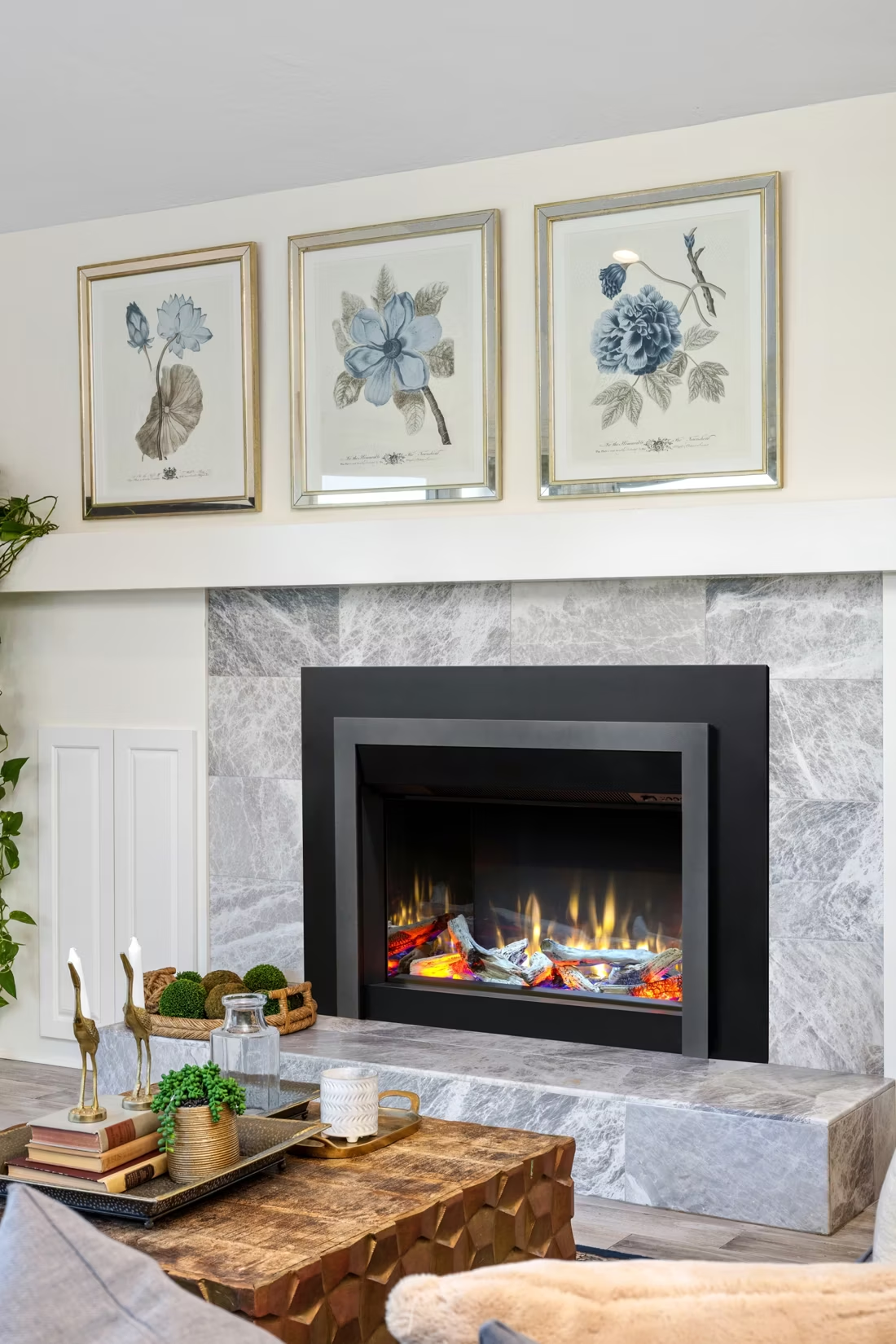
For homes around Gainesboro, Whitleyville, and the Cordell Hull Lake shoreline, an electric fireplace or insert adds real zone heat to a room without gas lines, venting, or a masonry hearth. Find the right unit and connect with a trusted local dealer.
Every Project Starts From One of These Five Situations
Zone heat that fits a small, rural county.
Jackson County is small—under 2,000 residents spread across a mostly rural stretch of the Upper Cumberland, from Gainesboro out toward Whitleyville, Flynns Lick, and the shoreline of Cordell Hull Lake. Climate zone 4A here means moderate, mixed-humid winters—cold enough for regular heating season but nowhere near the extremes of a place like Duluth or Burlington. That's exactly the profile where electric fireplaces do well: they're not trying to replace a furnace, they're closing the gap in a bonus room, a lake cabin, a mobile home addition, or a farmhouse where running a gas line or building a new chimney isn't practical.
Most homes here are on Caney Fork Electric Cooperative service, and installation is refreshingly simple compared to wood or gas: no flue, no gas permit, often no permit at all beyond an electrical outlet check from the Jackson County Building Department if new wiring is involved. Plenty of county households still burn oak, hickory, maple, or pine as primary heat—Jackson County has no air quality restrictions on wood smoke, so that option stays wide open—but for a guest room, a rental property, or a manufactured home where a wood stove or gas insert isn't in the cards, an electric unit gets you real supplemental warmth and the look of a fire with a plug and a switch.
Three steps. No salesperson until you're ready.
Tell us about your project
Your zip code, your situation, and the fuel you're leaning toward—or let the answers point you to one.
See what's actually available
The brands dealers within 100 miles genuinely carry—real options, never a catalog mirage.
Get your dealer & Project Guide
A trusted local dealer, plus the free Project Guide & Parts List that names every component of the job.
Frequently Asked Questions
How much does an electric fireplace or insert cost to install in Jackson County?
Most electric fireplace and insert installations in Jackson County run $400 to $1,500 depending on the unit and whether you need a dedicated circuit. A plug-in freestanding unit or a wall-mount model on an existing outlet sits at the low end. Built-in units, mantel-surround inserts replacing an old wood or gas fireplace, and units requiring a licensed electrician to run a new 120V or 240V circuit push toward the higher end. Because there's no venting or gas line involved, electric is consistently the least expensive fireplace fuel to install in the county—a local dealer can confirm exact pricing based on your home's wiring.
Do I need a permit to install an electric fireplace in Jackson County?
In most cases, no. Since electric fireplaces don't require venting or gas piping, a simple plug-in or existing-outlet installation typically doesn't trigger a building permit. If your installer needs to add a new dedicated circuit or breaker—common for larger built-in units—that electrical work should go through a licensed electrician, and the Jackson County Building Department can confirm whether an inspection is required for your specific project. This is one of the simplest hearth products to install for exactly that reason.
Will an electric fireplace actually heat a room, or is it just for looks?
A properly sized electric insert or freestanding unit will genuinely heat a room—most put out around 4,600–5,000 BTUs (roughly 1,500 watts), enough for 400 to 1,000 square feet depending on insulation and ceiling height. In Jackson County's zone 4A winters, that's plenty for a bonus room, a lake cabin bedroom, or a mobile home addition as supplemental heat. What it won't do is replace central heat for an entire farmhouse—for that, wood or a larger gas system is the better fit. Many local homeowners run electric units with the heater off for ambiance in shoulder seasons and switch the heat on only when a room actually needs it.
What's the difference between an electric insert, a wall-mount unit, and a freestanding electric stove?
An electric insert is built to slide into an existing fireplace opening—a common choice for Jackson County homes with an old, drafty wood-burning fireplace they want to convert to low-maintenance electric heat. A wall-mount unit hangs like a flat-screen TV and works well in newer construction or additions with no existing hearth. A freestanding electric stove sits on the floor and mimics the look of a traditional wood stove—popular in cabins and manufactured homes around Cordell Hull Lake where a built-in isn't an option. All three plug into standard household power; the right choice mostly comes down to whether you have an existing fireplace opening to fill.
What does it cost to run an electric fireplace on Caney Fork Electric Cooperative rates?
A typical electric fireplace heater draws about 1,500 watts on high. Running it for a few hours an evening during Jackson County's cold-season months adds a modest amount to a Caney Fork Electric Cooperative bill—generally far less than heating an entire home, since you're only warming the one room you're in. Most homeowners use the flame effect without the heater running for ambiance, and switch the heater on only during the coldest stretches, which keeps the operating cost down even further.
Electric vs. wood—which makes more sense for my Jackson County home?
Wood remains a strong choice here—oak, hickory, maple, and pine are all common locally, there are no air quality restrictions on burning, and a wood stove keeps a home warm even when the power's out, which matters in a rural county where outages can run longer than in town. Electric wins on convenience and simplicity: no chimney, no wood handling, no permit hassle, and it works well in mobile homes, additions, and rentals where a wood stove isn't practical or allowed by a landlord. Many Jackson County households run both—wood as primary heat in the main living space, electric in a bedroom or bonus room for quick, no-mess supplemental warmth.
Will my electric fireplace work as backup heat if the power goes out?
No—electric fireplaces need power to run, so they won't help during an outage. For rural stretches of Jackson County where Caney Fork Electric Cooperative service can take longer to restore after an ice storm or downed line, that's worth planning around. If backup heat during outages matters to your household, a wood stove or a battery-backed gas unit is a better primary choice, with an electric fireplace reserved for everyday zone heating in rooms where convenience matters more than storm resilience.
What's the best electric fireplace option for a manufactured or mobile home?
Manufactured homes are common throughout rural Jackson County, and electric is often the most practical fireplace fuel for them—installing a wood stove or masonry fireplace in a mobile home involves floor and wall clearance issues that can be costly to solve, and gas line work isn't always straightforward either. A freestanding electric stove or a low-profile wall-mount unit avoids all of that: no floor protection requirements, no clearance-to-combustible calculations, just an outlet or a simple dedicated circuit. A local dealer can look at your specific floor plan and recommend a unit that fits.
Electric vs. gas—which is right for my home?
Gas fireplaces put out more heat and give you a more realistic flame, but most rural parts of Jackson County run on propane rather than piped natural gas, which means a tank installation and ongoing fuel deliveries. Electric skips all of that—no tank, no fuel costs beyond your regular power bill, and no combustion byproducts to vent. For a primary heat source in a larger room, propane gas is often the stronger performer. For a guest room, sunroom, or rental unit where simplicity and low upfront cost matter most, electric is usually the easier call. A local dealer can walk through both options against your specific room and budget.
Does an electric fireplace need a vent or chimney?
No—that's its superpower. An electric fireplace needs a wall and an outlet, period. No vent pipe, no gas line, no clearances to design around, which is why it works in bedrooms, offices, apartments, and walls where venting a gas or wood unit would be impractical or impossible. Installation is typically the simplest and least expensive of any fireplace type.
Can I put a TV above my fireplace?
Yes—with an asterisk. Fireplaces are hot and TVs don't like heat. Either put a mantel between them to deflect rising warmth, or choose a fireplace with heat-management technology that creates a cool zone on the wall above—the wall stays around 125 degrees, barely warm, while the room still gets full heat. If you like clean lines and don't want a mantel, heat management is the answer.
How much should I budget for a fireplace?
For an average home—covering the fireplace, the vent pipe, and basic installation—a budget between $3,900 and $5,500 gives you a lot of options across wood, gas, and pellet. By the time you add finish work, gas line, and electrical, the average complete installation lands between $5,000 and $12,000 all-in. In a remodel or new build, a good rule is to put about 2.5% of the total project cost toward the fireplace.
Can a fireplace actually lower my heating bill?
Yes—by creating a comfort zone. A furnace heats every square foot of the house just to warm the one room you're in; a gas fireplace on low burns roughly a sixth of the gas a typical furnace does. Set the furnace around 55–60 degrees as a baseline, then heat the rooms your family actually uses. Families who heat this way commonly save $20–$60 a month.
Stove and Fireplace Dealers in Jackson County
Listings include WhyFire partner dealers, dealers we have verified as authorized for the brands we recommend, and established local businesses that carry hearth products. Every listing shows which one it is. The ones marked Preferred run on WhyFire's software, so they can show you real pricing and book your appointment right here. No manufacturer pays for placement. How we verify dealers →
Colligan Group Dba Frugal Mick
Ap Hearth LLC
Spar-Gas
Middle Tn Natural Gas - Gordonsville
Webbtown Propane Company
Find your electric fireplace in Jackson County.
Tell us a bit about your home and we'll match you with the right electric fireplace or insert, plus a free Project Guide & Parts List with your recommended local dealer.p_cta_eyebrow
Find Your Fireplace →