
Real ambiance and zone heat, without the chimney, for Humphreys County homes.
From Waverly to New Johnsonville to the cabins along Kentucky Lake, Humphreys County's mild winters make electric a practical, no-venting way to add warmth to a room. Find the right unit and connect with a trusted local dealer.
Every Project Starts From One of These Five Situations
The mild-winter case for electric heat.
Humphreys County sits along the Tennessee River in Climate Zone 4A, with an average winter low around 27°F and roughly 3,729 heating degree days a year—a fraction of what a place like Duluth, MN or Burlington, VT logs each winter. That milder load is exactly the situation where electric fireplaces earn their keep: they don't need to carry the whole house through a brutal season, they just need to take the edge off a living room in Waverly, a den in New Johnsonville, or a lake cabin near Nathan Bedford Forrest State Park on a cold January evening.
Housing stock across the county runs from older frame farmhouses to a good number of manufactured and modular homes, and natural gas service is limited mostly to in-town Waverly, with propane doing much of the heavy lifting elsewhere. Electric fireplaces sidestep all of that—no gas line, no chimney, no combustion air requirements—which makes them a common choice for finished garages, added bedrooms, rental properties, and manufactured homes where solid-fuel or gas installs get complicated. Power comes through Duck River Electric Membership Corporation for most of the county, and a straightforward 120V or 240V circuit is usually all an installer needs to run.
Three steps. No salesperson until you're ready.
Tell us about your project
Your zip code, your situation, and the fuel you're leaning toward—or let the answers point you to one.
See what's actually available
The brands dealers within 100 miles genuinely carry—real options, never a catalog mirage.
Get your dealer & Project Guide
A trusted local dealer, plus the free Project Guide & Parts List that names every component of the job.
Frequently Asked Questions
How much does an electric fireplace installation cost in Humphreys County?
A plug-in freestanding or wall-mount electric fireplace with no wiring changes typically runs $150 to $600 for the unit alone. A built-in electric insert or a linear wall unit that needs a dedicated 20-amp circuit run by a licensed electrician usually lands between $400 and $1,500 installed, depending on how far the circuit has to travel and whether it's going into an existing masonry opening or new framing. Because there's no chimney, gas line, or venting to deal with, electric installs in Humphreys County are generally the fastest and least disruptive of any fireplace fuel—often a single day's work.
Can an electric fireplace actually heat a room in Humphreys County, or is it just for looks?
Most electric fireplaces put out 4,000 to 5,000 BTUs on the heat setting—enough to noticeably warm a single room, but not enough to serve as your home's primary heat source. Given Humphreys County's relatively mild climate (winter lows averaging around 27°F and about 3,729 heating degree days a year), that's usually a fine trade: an electric insert can comfortably supplement a propane furnace or heat pump during shoulder-season cold snaps, and many homeowners run it as the only heat for a converted garage, sunroom, or guest bedroom rather than trying to heat the whole house with it.
What's the difference between a plug-in and a built-in electric fireplace?
A plug-in electric fireplace is freestanding or wall-mounted and runs off a standard 120V household outlet—no electrician required, and it can move with you if you leave a rental in Waverly or McEwen. A built-in electric insert or linear unit is set into a wall, cabinet, or existing masonry fireplace opening, often wired on its own circuit for higher heat output, and generally looks more like a permanent fixture. For homeowners converting an old wood-burning fireplace that's no longer used, an electric insert is a popular way to get a finished look and real supplemental heat without touching the chimney at all.
Do I need a permit to install an electric fireplace in Humphreys County?
A simple plug-in unit needs no permit at all. If you're adding a built-in insert that requires a new dedicated circuit, an electrical permit through the Humphreys County Building Department (or the City of Waverly if you're inside city limits) covers that work, and most licensed electricians pull it as part of the job. There's no gas line permit, no chimney inspection, and no venting sign-off required—which is one of the reasons electric installs move faster than wood or gas projects in the county.
Can I put an electric insert into my old wood-burning fireplace?
Yes, and it's a common project in the county's older farmhouses and lake-area cabins around Kentucky Lake, where a masonry fireplace hasn't been used in years but the homeowner doesn't want to lose the look of it. An electric log insert or a flush-fit electric fireplace insert drops into the existing opening, plugs into a nearby outlet or a newly run circuit, and gives you flame effect and real supplemental heat with none of the chimney maintenance, creosote, or ash cleanup that came with the original wood setup.
How much does it cost to run an electric fireplace in Humphreys County?
Most electric fireplaces draw around 1,500 watts on the heat setting. At typical Duck River Electric Membership Corporation residential rates, running one for several hours an evening costs roughly a dollar or two a day—far less than heating an entire home with electric resistance heat, since you're only conditioning the room you're in. That's the appeal for county homeowners with a propane furnace or heat pump already handling the whole house: the fireplace becomes a cheap way to keep the main living space comfortable without cranking the central system.
Electric vs. propane vs. wood—what's most practical for Humphreys County?
Propane is the default whole-home heating fuel across most of the county outside in-town Waverly, and wood remains genuinely useful here too—oak, hickory, maple, and pine are all common locally and burn well. Electric fireplaces aren't trying to replace either as primary heat; they're best suited to zone heating a den, bonus room, or manufactured home addition, and to properties like lake cabins near Nathan Bedford Forrest State Park where running a gas line or building a chimney isn't practical. For a rental property or a room you use occasionally, electric is usually the simplest and cheapest fuel to install.
Are electric fireplaces a good fit for manufactured or modular homes in Humphreys County?
Often, yes. Humphreys County has a substantial share of manufactured and modular housing, and solid-fuel or gas installations in these homes can run into structural and code complications—clearance requirements, floor protection, or venting paths that weren't part of the original construction. Electric fireplaces avoid nearly all of that: no chimney penetration, no gas line, and most units are light enough to wall-mount or set into an existing niche without any structural work, which is why they're a frequent choice for homeowners in this housing type.
Electric vs. pellet stove—which makes more sense here?
Pellet stoves burning bagged pellets from regional suppliers like Lignetics, Hamer Pellet Fuel, or Greenway Renewable Energy put out real, whole-room heat—40,000+ BTUs in some models—but they still need electricity to run the auger and combustion blower, so they're not a power-outage backup any more than an electric fireplace is. If your goal is genuine supplemental heat for a living area and you're willing to manage a pellet hopper, a pellet stove will outperform an electric unit on raw heat output. If your goal is ambiance plus modest, no-maintenance warmth with zero fuel handling, an electric fireplace is the simpler choice—and it's usually the cheaper one to install.
Do electric fireplaces actually produce heat?
Yes—most put out around 4,800–5,000 BTUs from a standard outlet, which comfortably warms a bedroom, office, or den as a comfort-zone heater. What they won't do is carry a whole house the way wood, gas, or pellet can. Think of electric as ambiance-first with honest supplemental heat: flames on with no heat in July, flames plus warmth in January.
Can I put a TV above my fireplace?
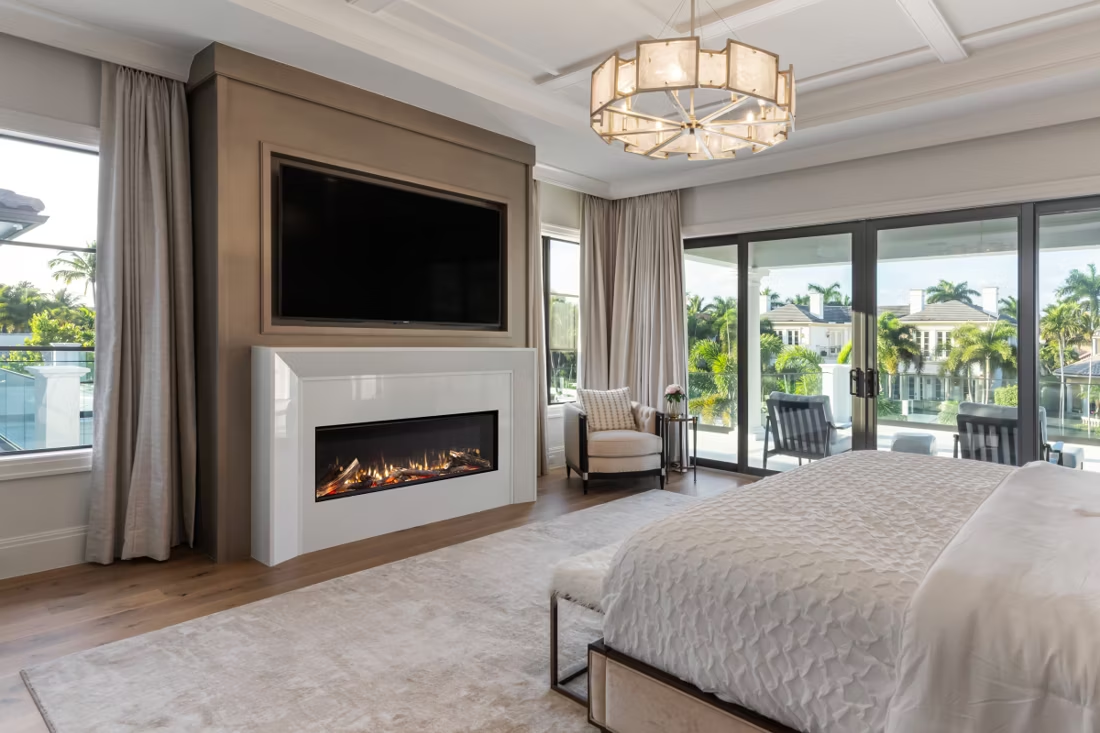
Yes—with an asterisk. Fireplaces are hot and TVs don't like heat. Either put a mantel between them to deflect rising warmth, or choose a fireplace with heat-management technology that creates a cool zone on the wall above—the wall stays around 125 degrees, barely warm, while the room still gets full heat. If you like clean lines and don't want a mantel, heat management is the answer.
Can I install a fireplace myself?
If you're putting a fire in your house on purpose, it's best to work with an expert. Unless you're genuinely experienced in framing, gas line, vent pipe, and the national code on clearances to combustibles, have a professional do it—and ideally the same company that sells you the fireplace, so warranty, service, and liability all live under one roof.
How much should I budget for a fireplace?
For an average home—covering the fireplace, the vent pipe, and basic installation—a budget between $3,900 and $5,500 gives you a lot of options across wood, gas, and pellet. By the time you add finish work, gas line, and electrical, the average complete installation lands between $5,000 and $12,000 all-in. In a remodel or new build, a good rule is to put about 2.5% of the total project cost toward the fireplace.
Stove and Fireplace Dealers in Humphreys County
Listings include WhyFire partner dealers, dealers we have verified as authorized for the brands we recommend, and established local businesses that carry hearth products. Every listing shows which one it is. The ones marked Preferred run on WhyFire's software, so they can show you real pricing and book your appointment right here. No manufacturer pays for placement. How we verify dealers →
Greater Dickson Gas Authority
54 Lawn & Garden
Bluegrass Supply
31W-Guthrie
Nashville Fireplace Dist.
Find your electric fireplace in Humphreys County.
Tell us a bit about your home and we'll put together a free Project Guide & Parts List for your electric fireplace project—then match you with a trusted local dealer who can install it right.
Find Your Fireplace →