
Electric warmth, wired for Houston County homes.
No chimney, no gas line, no cutting permit—just heat that plugs into the power Cumberland Electric Membership Corporation already runs to your house, cabin, or camp on Kentucky Lake.
Every Project Starts From One of These Five Situations
No gas lines, no chimney—heat that works anywhere in the county.
Houston County is one of Tennessee's smallest and quietest counties—about 2,860 people spread across a stretch of the Tennessee River near Kentucky Lake and the Land Between the Lakes recreation area, with Erin as the county seat and Tennessee Ridge and Bakerville rounding out the rest. Winters here are moderate by national standards—average lows around 26°F and roughly 3,920 heating degree days, Zone 4A—so most homes need supplemental warmth on cold nights rather than a primary heating overhaul. That's exactly the gap an electric fireplace fills well.
A lot of the housing stock in Houston County is older farmhouses, lakefront cabins, and manufactured homes—settings where running a masonry chimney or a new gas line isn't practical or, in the case of many manufactured homes, isn't allowed at all. An electric fireplace sidesteps all of that: no venting, no combustion, no cutting permit, and power delivered through Cumberland Electric Membership Corporation's existing lines. For a bonus room, a lake cabin used on weekends, or a manufactured home where wood and gas installs face real restrictions, electric heat is often the simplest upgrade available.
Three steps. No salesperson until you're ready.
Tell us about your project
Your zip code, your situation, and the fuel you're leaning toward—or let the answers point you to one.
See what's actually available
The brands dealers within 100 miles genuinely carry—real options, never a catalog mirage.
Get your dealer & Project Guide
A trusted local dealer, plus the free Project Guide & Parts List that names every component of the job.
Frequently Asked Questions
How much does an electric fireplace cost to install in Houston County?
A plug-in electric fireplace or insert that runs on a standard 120V outlet typically costs $200 to $700 for the unit itself, with no installation labor beyond mounting it—many homeowners in Houston County do this themselves in an afternoon. A built-in wall unit or larger electric insert that needs a dedicated 20-amp circuit runs higher, generally $800 to $2,000 once you factor in a licensed electrician to run the new line, especially in older farmhouses around Erin or Tennessee Ridge where panel capacity can be tight. Lakefront cabins near Kentucky Lake sometimes need panel upgrades first if the electrical service is older.
Do I need a permit to install an electric fireplace in Houston County?
Houston County does not maintain a county-wide building code for most residential work, so a plug-in electric fireplace generally requires no permit at all. If you're adding a dedicated circuit for a built-in unit, that electrical work should still be done by a licensed electrician to meet code and keep your homeowner's insurance intact, even though a separate county permit usually isn't required outside city limits. If you live within Erin's city limits, check with the town before starting electrical work, since municipal rules can differ from the surrounding county.
What size electric fireplace do I need for my home?
Most electric fireplace heaters are rated to comfortably warm 400 to 1,000 square feet, which covers a single living room, bonus room, or small cabin easily. Given Houston County's moderate winter lows—averaging around 26°F rather than the deep-freeze temperatures further north—a mid-size electric insert or built-in unit is usually enough as supplemental heat rather than a whole-home replacement for a central furnace or heat pump. If you're heating an open floor plan or a larger lake house, a local dealer can walk through wattage and square footage to make sure you're not undersized.
Will an electric fireplace still work if the power goes out?
No—this is the honest tradeoff with electric heat. Unlike a gas fireplace with battery-backup ignition, an electric fireplace stops working the moment power drops, and ice storms along the Tennessee River can knock out Cumberland Electric Membership Corporation service for a day or more in a bad winter. If backup heat during outages matters to your household, pair an electric fireplace with a wood stove or propane heater rather than relying on electric as your only option in a power-loss scenario.
Electric vs. wood—which makes more sense for my Houston County home?
Wood remains a practical choice here—oak, hickory, maple, and pine are all common locally, and a wood stove keeps working through a power outage, which matters given how storms can affect service along the river. But wood requires a chimney, clearances, and annual sweeping. Electric skips all of that: no venting, no ash, no permit in most cases, and it's the more realistic option for manufactured homes, rental properties, and lake cabins where a wood or gas install isn't feasible. Many households in the county end up with wood as primary heat and an electric unit in a secondary room for convenience.
Electric vs. gas—which is the better fit here?
Houston County has limited natural gas infrastructure outside a few pockets, so most gas-fired heat in the county runs on propane with its own tank and delivery arrangement. An electric fireplace avoids that entirely—no tank, no fuel deliveries, no gas line permit—which makes it the lower-hassle choice for anyone who doesn't already have propane service set up. If you're building new construction and already planning a propane tank for a furnace or water heater, a gas fireplace becomes more attractive; otherwise, electric is usually the simpler path.
Can I install an electric fireplace in a manufactured or mobile home?
Yes—and it's one of the more common electric fireplace installs in Houston County, where manufactured homes make up a real share of the housing stock. UL-listed electric fireplaces are generally approved for manufactured housing where wood stoves and some gas units face stricter clearance and structural requirements. A local dealer familiar with manufactured-home wiring can confirm your panel has room for a dedicated circuit if you're going with a built-in model rather than a plug-in unit.
How much does it cost to run an electric fireplace day to day?
Most electric fireplace heaters draw around 1,500 watts on the heat setting, which works out to roughly 10 to 20 cents an hour depending on your Cumberland Electric Membership Corporation rate—noticeably cheaper to run occasionally than heating an entire home with electric resistance heat. Many households in Houston County use the fireplace's flame effect without the heater running most of the year and switch on the heat function only for supplemental warmth on the coldest nights, which keeps the running cost low.
How does Find My Fireplace help me get one installed?
I match you with a trusted local dealer who actually knows Houston County's homes—whether that's an older farmhouse near Erin, a lake cabin on Kentucky Lake, or a manufactured home in Tennessee Ridge—and hand you a free Project Guide & Parts List: the specific unit recommendation, circuit requirements if you need a dedicated line, and the dealer best positioned to install it. I'm not a manufacturer or a store, and I don't take money from any brand to steer you toward it—the goal is getting you the right fit from someone who installs in this county regularly.
Can I put a TV above my fireplace?
Yes—with an asterisk. Fireplaces are hot and TVs don't like heat. Either put a mantel between them to deflect rising warmth, or choose a fireplace with heat-management technology that creates a cool zone on the wall above—the wall stays around 125 degrees, barely warm, while the room still gets full heat. If you like clean lines and don't want a mantel, heat management is the answer.
Does an electric fireplace need a vent or chimney?
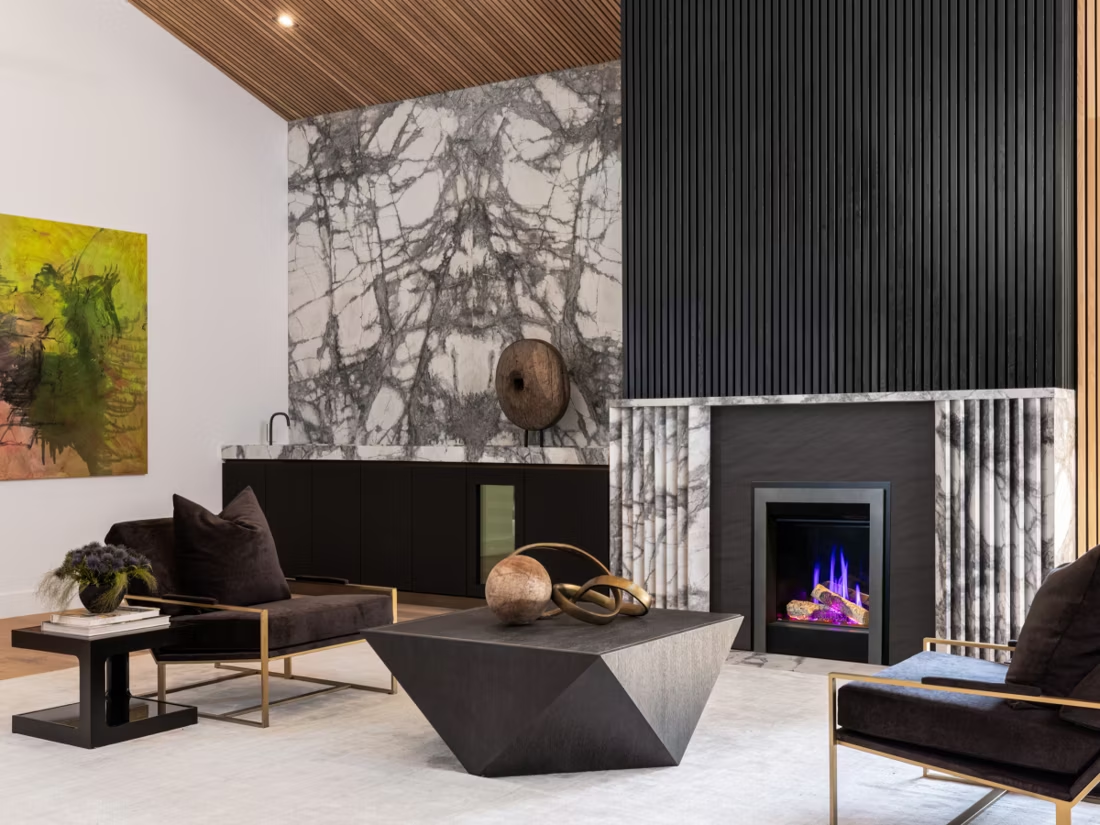
No—that's its superpower. An electric fireplace needs a wall and an outlet, period. No vent pipe, no gas line, no clearances to design around, which is why it works in bedrooms, offices, apartments, and walls where venting a gas or wood unit would be impractical or impossible. Installation is typically the simplest and least expensive of any fireplace type.
Can a fireplace actually lower my heating bill?
Yes—by creating a comfort zone. A furnace heats every square foot of the house just to warm the one room you're in; a gas fireplace on low burns roughly a sixth of the gas a typical furnace does. Set the furnace around 55–60 degrees as a baseline, then heat the rooms your family actually uses. Families who heat this way commonly save $20–$60 a month.
Can I install a fireplace myself?
If you're putting a fire in your house on purpose, it's best to work with an expert. Unless you're genuinely experienced in framing, gas line, vent pipe, and the national code on clearances to combustibles, have a professional do it—and ideally the same company that sells you the fireplace, so warranty, service, and liability all live under one roof.
Stove and Fireplace Dealers in Houston County
Listings include WhyFire partner dealers, dealers we have verified as authorized for the brands we recommend, and established local businesses that carry hearth products. Every listing shows which one it is. The ones marked Preferred run on WhyFire's software, so they can show you real pricing and book your appointment right here. No manufacturer pays for placement. How we verify dealers →
Greater Dickson Gas Authority
Bluegrass Supply
31W-Guthrie
54 Lawn & Garden
Find your electric fireplace in Houston County.
Tell me a bit about your home and I'll match you with a trusted local dealer and send over a free Project Guide & Parts List—the right unit, the electrical specs, and the dealer who can actually install it near you.
Find Your Fireplace →