
Bring warmth and glow to your Hickman County home—no chimney required.
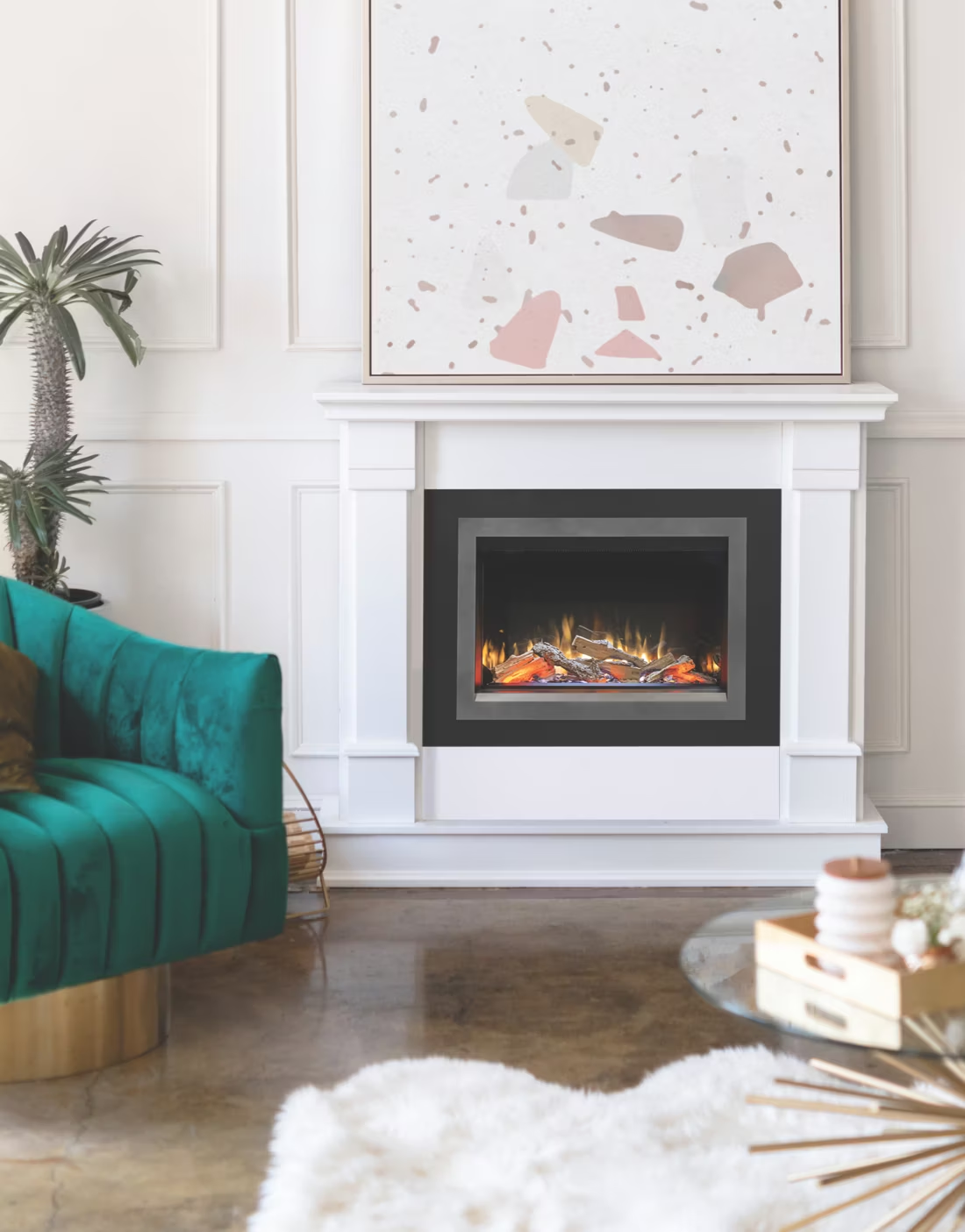
With winter lows averaging 27°F and about 4,003 heating degree days a year, most Hickman County homes need supplemental warmth, not a second furnace. An electric fireplace or insert adds that warmth to a den, bonus room, or living space with a standard outlet—no venting, no gas line, no masonry work.
Every Project Starts From One of These Five Situations
The easiest hearth upgrade in Middle Tennessee.
Hickman County is rural—about 6,727 people spread across farmland, wooded ridges, and small towns around Centerville. Climate zone 4A puts winters here well short of what a place like Duluth, MN or Bozeman, MT deals with; a 4,003 HDD year means most homes lean on a central furnace or heat pump for the bulk of the season, with real but modest need for extra heat on the coldest nights. That's exactly the gap an electric fireplace is built to fill—a way to warm the room you're actually sitting in without running the whole system harder.
Most homes in Hickman County get their power through Duck River Electric Membership Corporation, and that matters for planning: electric units run on standard household circuits (120V for most plug-in models, sometimes a dedicated 240V circuit for larger built-ins), so there's no fuel delivery, no wood to split, and no annual chimney sweep. With no air quality restrictions on the books here, the appeal of electric in Hickman County isn't about avoiding smoke rules—it's about a clean, low-maintenance way to add real ambiance and zone heat to older farmhouses, newer ranch-style builds, and manufactured homes alike, all of which are common throughout the county.
Three steps. No salesperson until you're ready.
Tell us about your project
Your zip code, your situation, and the fuel you're leaning toward—or let the answers point you to one.
See what's actually available
The brands dealers within 100 miles genuinely carry—real options, never a catalog mirage.
Get your dealer & Project Guide
A trusted local dealer, plus the free Project Guide & Parts List that names every component of the job.
Frequently Asked Questions
How much does an electric fireplace installation cost in Hickman County?
Electric is the least expensive hearth option available. A plug-in freestanding or wall-mount unit can run $300 to $1,200 installed, since most just need a standard outlet and a mounting bracket. A built-in electric fireplace or insert set into a wall or existing masonry opening, especially one needing a new dedicated circuit, typically lands between $1,200 and $3,500. There's no chimney, no venting, and no gas line to run, which is why electric installs in Hickman County are usually finished in a single afternoon rather than a full day of work.
Will an electric fireplace actually heat my room, or is it just for looks?
Most electric fireplaces put out 4,600 to 5,200 BTU on the heat setting, enough to comfortably warm a single room in the 27°F winter lows Hickman County sees most nights. It won't replace your furnace or heat pump on a hard freeze, but as zone heat for a den, sunroom, or bonus room over a moderate 4,003 HDD season, it can genuinely reduce how hard your main system runs. Many local homeowners run the flame effect year-round and only switch on the heater during the coldest stretch of winter.
Do I need a permit for an electric fireplace in Hickman County?
In most cases, no. A plug-in unit that runs off an existing outlet doesn't typically trigger a permit. If you're adding a dedicated 240V circuit for a larger built-in unit, that electrical work usually does require a permit and should be pulled by a licensed electrician—check with the Hickman County building and codes office before work starts. This is one of the simplest permitting situations of any hearth fuel, which is part of why electric is a popular retrofit choice here.
What's the difference between an electric insert, a wall-mount unit, and a freestanding electric stove?
An electric insert is built to slide into an existing fireplace opening, including an old wood-burning masonry fireplace that's no longer in regular use—a common scenario in Hickman County's older farmhouses. A wall-mount unit hangs flush on a wall like a large TV and works well in newer construction without an existing hearth. A freestanding electric stove sits on the floor and mimics the look of a traditional wood stove, which some homeowners prefer for a more rustic feel in a den or cabin-style room. All three plug into standard household power in most cases.
Will my electric fireplace still work if the power goes out?
No—and this is worth being honest about. Unlike a wood stove, an electric fireplace has no function without electricity, so it won't provide backup heat during a Duck River Electric Membership Corporation outage. Hickman County does see occasional winter storm outages, and homeowners who want heat that works when the grid doesn't should pair an electric unit for daily convenience with a wood stove or propane option for true backup, rather than relying on electric alone during a multi-day outage.
What's the best electric fireplace for Hickman County homes?
For most rooms here, a mid-size insert or wall-mount unit from a brand like Dimplex or Napoleon in the 1,500-watt class covers a typical living room or den without overwhelming it. If you're retrofitting an old masonry fireplace that's not getting wood-burning use anymore, an insert sized to your existing opening is usually the cleanest-looking option. For a bonus room addition or a mobile or manufactured home where running new gas or venting isn't practical, a wall-mount or freestanding stove-style unit tends to be the simplest fit. A local dealer can match unit size to your specific room and wall construction.
How much does an electric fireplace add to my power bill?
Running the heater on a typical 1,500-watt electric fireplace for several hours a day adds a modest amount to a Duck River Electric Membership Corporation bill—generally in the range of $10 to $30 a month depending on how often it's used and your rate. Running just the flame effect without heat costs only a few cents an hour since the light-only mode draws minimal power. Compared to running a whole-home furnace harder to cover the same room, most Hickman County homeowners find the added cost worth the convenience of not heating rooms they aren't using.
Electric vs. wood—which makes more sense for my Hickman County home?
Wood has deep roots here—oak, hickory, maple, and pine are all common locally, and a wood stove provides real heat that works without power during an outage. But wood means splitting, stacking, ash cleanup, and an annual chimney inspection. Electric skips all of that: no fuel to manage, no venting, and a cleaner install in homes without an existing chimney. For a primary heat source in a drafty older farmhouse, wood often wins. For a low-maintenance ambiance upgrade or supplemental heat in a newer or manufactured home, electric is usually the better fit—and plenty of households here end up with both.
Electric vs. pellet—which is the better supplemental heat option?
Pellet stoves, using regional brands like Lignetics, Hamer Pellet Fuel, or Greenway Renewable Energy, put out more real heat than an electric unit and can run for hours on a hopper of fuel, but they still need electricity to run the auger and blower and require venting through an exterior wall or roof. Electric fireplaces need neither venting nor fuel storage, making them the simpler install, but they can't match a pellet stove's heat output for a room that truly needs backup warmth. If you're mainly after ambiance and light zone heat in Hickman County's moderate winters, electric is the easier path; if you want meaningful heat output from a supplemental appliance, pellet is worth a look too.
Can I put a TV above my fireplace?
Yes—with an asterisk. Fireplaces are hot and TVs don't like heat. Either put a mantel between them to deflect rising warmth, or choose a fireplace with heat-management technology that creates a cool zone on the wall above—the wall stays around 125 degrees, barely warm, while the room still gets full heat. If you like clean lines and don't want a mantel, heat management is the answer.
Do electric fireplaces actually produce heat?
Yes—most put out around 4,800–5,000 BTUs from a standard outlet, which comfortably warms a bedroom, office, or den as a comfort-zone heater. What they won't do is carry a whole house the way wood, gas, or pellet can. Think of electric as ambiance-first with honest supplemental heat: flames on with no heat in July, flames plus warmth in January.
Can a fireplace actually lower my heating bill?
Yes—by creating a comfort zone. A furnace heats every square foot of the house just to warm the one room you're in; a gas fireplace on low burns roughly a sixth of the gas a typical furnace does. Set the furnace around 55–60 degrees as a baseline, then heat the rooms your family actually uses. Families who heat this way commonly save $20–$60 a month.
What is an in-home preview and do I need one?
It's a visit where a hearth professional measures your space, confirms the model you picked actually works in your home, and walks the specs—framing, gas line, venting, finish work—before anything is ordered. Some details you just can't know until you see the house. Never make a down payment without one; it's the single most-skipped step that burns buyers.
Stove and Fireplace Dealers in Hickman County
Listings include WhyFire partner dealers, dealers we have verified as authorized for the brands we recommend, and established local businesses that carry hearth products. Every listing shows which one it is. The ones marked Preferred run on WhyFire's software, so they can show you real pricing and book your appointment right here. No manufacturer pays for placement. How we verify dealers →
Greater Dickson Gas Authority
Nashville Fireplace Dist.
Find your electric fireplace in Hickman County.
Tell us a bit about your home and room, and we'll match you with a trusted local dealer and send over a free Project Guide & Parts List—the right unit, the exact parts, and a plan built for your space.
Find Your Fireplace →