
Instant, no-mess heat for Henry County homes.
From Paris to the Kentucky Lake shoreline around Paris Landing, electric fireplaces give Henry County homeowners real ambiance and real zone heat—no chimney, no gas line, no venting. Find the right unit and get matched with a trusted local dealer.
Every Project Starts From One of These Five Situations
Mild winters, simple installs—electric heat fits right in.
Henry County sits in the northwest corner of Tennessee, bordered by Kentucky Lake and the Tennessee River, with the county seat of Paris anchoring a population of just under 12,000 spread across Paris itself and smaller communities like Puryear, Buchanan, and Springville. The climate here is Zone 4A, mixed-humid, with an average winter low around 27°F and a relatively short, mild winter heating season—a fraction of what a place like Duluth, Minnesota deals with. That milder heating load is exactly why electric fireplaces have become such a common choice locally: most Henry County homes already rely on a central heat pump or HVAC system to handle the bulk of winter, and an electric unit fills in as supplemental zone heat and visual warmth rather than a primary heat source.
There's no gas line to run and no masonry chimney to build, which matters in a county with plenty of older farmhouses, lake cottages around Paris Landing, and manufactured homes where adding a wood or gas hearth would mean significant structural or venting work. Electric units plug into a standard outlet or, for larger built-ins, tie into a dedicated circuit run by a licensed electrician—either way, the install is fast and clean. Paris Board of Public Utilities serves the city of Paris, and area electric cooperatives cover most of the rural county, so reliable power is available almost everywhere a homeowner would want to put a unit, whether that's a den in town or a weekend place on the lake.
Three steps. No salesperson until you're ready.
Tell us about your project
Your zip code, your situation, and the fuel you're leaning toward—or let the answers point you to one.
See what's actually available
The brands dealers within 100 miles genuinely carry—real options, never a catalog mirage.
Get your dealer & Project Guide
A trusted local dealer, plus the free Project Guide & Parts List that names every component of the job.
Frequently Asked Questions
How much does an electric fireplace installation cost in Henry County?
Most electric fireplace projects in Henry County run $400 to $2,500. A freestanding or plug-in insert that fits into an existing fireplace opening sits at the low end and typically needs no electrical work at all. A wall-mounted or built-in unit that requires a dedicated 120V or 240V circuit, in-wall wiring, and possibly a mantel or surround build-out lands in the middle to upper end, largely driven by electrician labor rather than the unit itself. Lake-area cottages around Paris Landing sometimes see a modest travel add-on for installers coming from Paris or nearby Murray, Kentucky.
Will an electric fireplace actually heat my room, or is it just for looks?
Both, depending on the model. Most electric fireplaces sold in Henry County are 1,500-watt units that put out around 4,600 to 5,000 BTUs—enough to comfortably supplement heat in a 400 to 1,000 square foot space, which covers most living rooms, dens, and lake-house great rooms in the area. They're not sized to replace a heat pump or furnace as your whole-home heat source, but on a 27°F morning they'll noticeably warm the room they're in while your central system idles. If you want a unit purely for ambiance with the heater turned off in summer, that's a standard feature on nearly every model sold locally.
Do I need a permit to install an electric fireplace in Henry County?
A simple plug-in insert or freestanding unit generally doesn't require a permit—it's no different than plugging in a space heater. If you're having a built-in unit wired into a new dedicated circuit, that electrical work typically does require a permit through the Henry County Building & Codes Office, or through the City of Paris if you're inside city limits. Most licensed electricians and hearth dealers pull that permit as part of the job, so it's rarely something a homeowner has to manage directly.
What's the difference between an electric fireplace, insert, and wall-mounted unit?
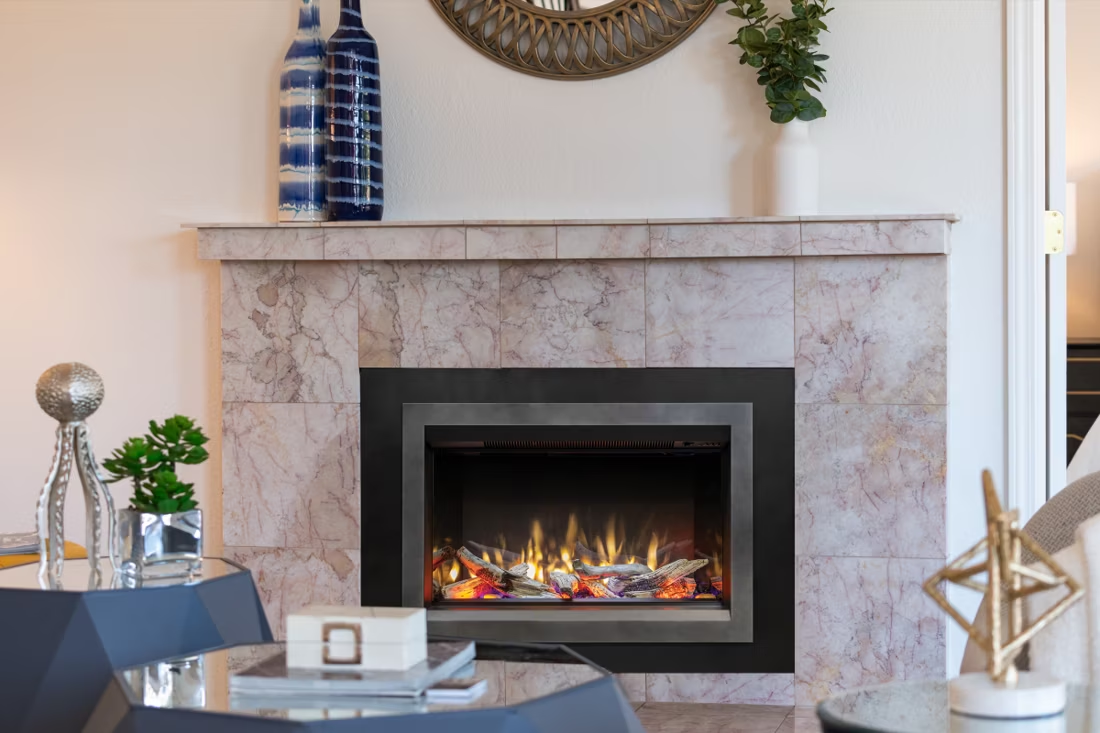
An electric insert is built to slide into an existing masonry or wood-burning fireplace opening, giving you the look of a real fire without the wood, ash, or chimney maintenance—a popular upgrade for older Henry County farmhouses with an unused fireplace. A freestanding electric fireplace is its own furniture piece, often styled as a mantel or media console, and works in any room with an outlet. A wall-mounted unit is a slim, linear fireplace recessed into or hung on a wall, common in newer builds and lake homes around Paris Landing where a clean, modern look is the goal. All three heat similarly; the choice comes down to whether you have an existing fireplace to fill, floor space for furniture, or a wall you want as a focal point.
What's the best electric fireplace for Henry County's climate?
Because Henry County's winters are moderate—average lows in the upper 20s, not the deep-freeze conditions of the upper Midwest—homeowners here have more flexibility to prioritize flame realism and design over raw heat output. Mid-size units from brands like Dimplex and Napoleon are popular for combining strong LED flame effects with enough 1,500-watt heat to cover a typical living room. For lake houses used seasonally around Paris Landing, a plug-in insert that needs no dedicated wiring is often the practical choice, since it can be installed or moved without an electrician visit.
How much does it cost to run an electric fireplace in Henry County?
A standard 1,500-watt electric fireplace running on the heater setting costs roughly 15 to 25 cents per hour to operate, depending on your rate through Paris Board of Public Utilities or your local electric cooperative. Run for a few hours each evening through a mild Henry County winter, that adds up to a modest monthly cost—far less than running a wood stove's equivalent BTU output in fuel, and with none of the fuel storage or ash disposal that comes with wood heat.
Electric vs. wood—which makes more sense for my Henry County home?
Wood remains common in Henry County, where oak, hickory, and maple are all locally available and burn well, and a wood stove keeps working during a power outage—a real consideration for rural parts of the county served by co-op lines. But wood means chimney maintenance, ash cleanup, and stacked cordwood, and it's overkill as a primary heat source given the county's relatively mild, short winter heating season. Electric wins for convenience, cleanliness, and low-effort ambiance in a home that already has central heat doing the heavy lifting—it's a poor backup during outages, but for daily zone heat and atmosphere in a den, bedroom, or lake house, it's hard to beat.
Electric vs. pellet stove—which is right for my home?
Pellet stoves burn compressed wood pellets from regional suppliers like Lignetics, Hamer Pellet Fuel, and Greenway Renewable Energy, and they can produce real primary-heat output for a whole living area—but they need a hopper refilled, glass cleaned, and an exhaust vent through an exterior wall or roof, plus power to run the auger and blower. An electric fireplace needs none of that: no fuel to buy or store, no venting, and a wall outlet is often all it takes. For a Henry County homeowner who wants supplemental heat and ambiance without the upkeep, electric is simpler. For someone heating a larger, less-insulated space and wanting to cut a propane or electric bill during the coldest stretches, pellet has more heating muscle.
Can an electric fireplace work as backup heat during a power outage?
No—this is the one honest limitation to flag. Electric fireplaces require power to run both the heating element and the flame effect, so during an outage they're offline just like your central HVAC. In rural stretches of Henry County served by electric cooperatives, storm-related outages do happen, and homeowners who want heat that works with the power off should look at a wood stove or a battery-backed gas unit for that specific role. Many local homes end up with a wood or gas appliance for genuine backup heat and an electric unit elsewhere in the house for everyday convenience and looks.
Can I put a TV above my fireplace?
Yes—with an asterisk. Fireplaces are hot and TVs don't like heat. Either put a mantel between them to deflect rising warmth, or choose a fireplace with heat-management technology that creates a cool zone on the wall above—the wall stays around 125 degrees, barely warm, while the room still gets full heat. If you like clean lines and don't want a mantel, heat management is the answer.
Do electric fireplaces actually produce heat?
Yes—most put out around 4,800–5,000 BTUs from a standard outlet, which comfortably warms a bedroom, office, or den as a comfort-zone heater. What they won't do is carry a whole house the way wood, gas, or pellet can. Think of electric as ambiance-first with honest supplemental heat: flames on with no heat in July, flames plus warmth in January.
How much should I budget for a fireplace?
For an average home—covering the fireplace, the vent pipe, and basic installation—a budget between $3,900 and $5,500 gives you a lot of options across wood, gas, and pellet. By the time you add finish work, gas line, and electrical, the average complete installation lands between $5,000 and $12,000 all-in. In a remodel or new build, a good rule is to put about 2.5% of the total project cost toward the fireplace.
What is an in-home preview and do I need one?
It's a visit where a hearth professional measures your space, confirms the model you picked actually works in your home, and walks the specs—framing, gas line, venting, finish work—before anything is ordered. Some details you just can't know until you see the house. Never make a down payment without one; it's the single most-skipped step that burns buyers.
Stove and Fireplace Dealers in Henry County
Listings include WhyFire partner dealers, dealers we have verified as authorized for the brands we recommend, and established local businesses that carry hearth products. Every listing shows which one it is. The ones marked Preferred run on WhyFire's software, so they can show you real pricing and book your appointment right here. No manufacturer pays for placement. How we verify dealers →
54 Lawn & Garden
Jones Mobile Home Service Inc
Greater Dickson Gas Authority
Master Sweeps
Hank Bros. True Value
Acme Brick Company
Walt Mestan Dba The Fireplace Center
Bluegrass Supply
Akridge Farm Supply
Hlc Cullipher LLC
Find your electric fireplace in Henry County, TN.
Tell us a bit about your home and we'll put together a free Project Guide & Parts List for your electric fireplace project—then match you with a trusted local dealer serving Henry County.
Find Your Fireplace →