
Electric fireplace heat, built for Henderson County's mild winters.
No chimney, no gas line, no wood pile—just a switch and instant warmth for homes from Lexington to Scotts Hill and Sardis. Find the right electric unit and connect with a trusted local dealer.
Every Project Starts From One of These Five Situations
Reliable heat that plugs right in.
Henderson County sits in climate zone 3A, with winter lows that average around 27°F and about 3,694 heating degree days a year—a fraction of what a place like Duluth, MN or Fargo, ND deals with. That's exactly the profile where electric fireplaces earn their keep: the county doesn't need a whole-home wood-burning setup to survive January, but the den still gets cold enough on a February morning to want real, immediate heat in one room without cranking the central system for the whole house.
Chickasaw Electric Cooperative serves much of the county, and most homes here—from town lots in Lexington to rural properties out toward Sardis and Luray—already have the standard 120V or 240V circuits an electric fireplace needs. That makes electric one of the simplest upgrades available: no venting to run, no chimney to sweep, no propane tank to fill. Plenty of Henderson County households still keep a wood stove going with local oak and hickory for backup heat or tradition, but for a family room, a bonus room, or a rental property where drilling a flue isn't practical, an electric insert or built-in unit gets real supplemental warmth installed in an afternoon.
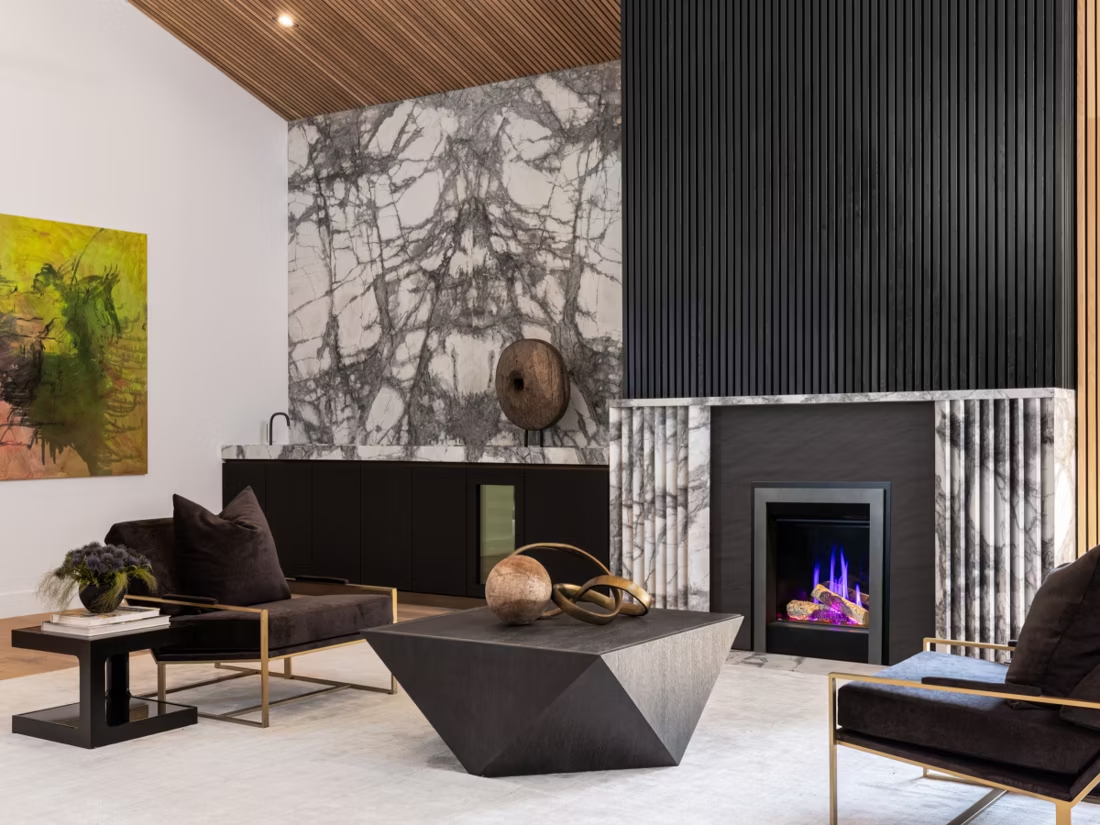
Three steps. No salesperson until you're ready.
Tell us about your project
Your zip code, your situation, and the fuel you're leaning toward—or let the answers point you to one.
See what's actually available
The brands dealers within 100 miles genuinely carry—real options, never a catalog mirage.
Get your dealer & Project Guide
A trusted local dealer, plus the free Project Guide & Parts List that names every component of the job.
Frequently Asked Questions
How much does an electric fireplace installation cost in Henderson County?
A plug-in electric fireplace or freestanding stove needs no installation cost beyond the unit itself and typically runs $300 to $800. A built-in electric fireplace or insert that gets wired into a dedicated circuit—the more common choice for a mantel-style install in a Lexington living room or a den remodel out in the county—runs closer to $800 to $2,000 once a licensed electrician handles the circuit work. Framing or mantel carpentry adds to that if you're building it into a wall rather than dropping it into an existing fireplace opening. Local dealers will quote the exact number after seeing your space and your electrical panel capacity.
Will an electric fireplace actually heat a room in Henderson County's winters?
Yes, for the room it's in. Most electric fireplaces put out around 5,000 BTU (roughly 1,500 watts), which is enough to comfortably warm a 400-square-foot room even on a night when the temperature drops into the 20s—Henderson County's winter lows average around 27°F, well short of the deep-freeze conditions that push heating systems in the Upper Midwest. What an electric fireplace won't do is replace your central furnace or heat pump on a whole-home basis; think of it as zone heating for the room you actually live in, with the flame-only mode available for ambiance the rest of the year.
Do I need a permit to install an electric fireplace in Henderson County?
A plug-in unit that uses a standard outlet needs no permit at all. A built-in electric fireplace wired into a new dedicated circuit is treated as electrical work, and depending on your municipality—Lexington, Scotts Hill, Sardis, or unincorporated county land—that typically means pulling an electrical permit through the local building office or Henderson County Building & Codes. Most licensed electricians and hearth dealers handle that paperwork as part of the install, so it's rarely something the homeowner has to manage directly.
What's the difference between an electric fireplace, insert, and stove?
An electric fireplace is typically a built-in or wall-mounted unit designed to look like a framed fireplace, often set into a mantel surround. An electric insert is sized to slide into an existing masonry fireplace opening, which is a popular option for older Lexington homes with a fireplace that's rarely used for wood anymore. An electric stove is a freestanding cabinet-style unit that sits on the floor and can go almost anywhere with an outlet or dedicated circuit, making it a good fit for a den or bonus room without an existing hearth.
Will my electric fireplace work if the power goes out?
No—electric fireplaces require power to run the heater, blower, and flame effect, so they shut off in an outage just like the rest of your home's electrical system. In Henderson County, where ice storms and summer thunderstorm outages do happen, a wood stove burning local oak or hickory remains the more reliable backup heat source if losing power for an extended stretch is a real concern. Many homeowners here run electric for daily convenience and keep a wood-burning appliance as the storm-season backup.
Can I run an electric fireplace with the heat off, just for the flame?
Yes—nearly every electric fireplace on the market lets you run the LED flame effect independently of the heater. That matters more in Henderson County than you'd expect: with the region's hot, humid summers, most owners run flame-only mode from spring through fall and only switch the heat on once temperatures start dropping toward that 27°F average winter low. It's one of the reasons electric units are popular in rooms with window units or ductless mini-splits, where adding real combustion heat isn't wanted.
Electric vs. wood—which is right for my Henderson County home?
Wood offers real off-grid heat during outages, the lowest ongoing fuel cost if you're cutting your own oak or hickory, and the ambiance a lot of longtime county residents grew up with. Electric offers instant on-off convenience, zero smoke or ash, no chimney to maintain, and a much simpler install—especially in a home without an existing flue. In a climate as mild as Henderson County's, where deep cold snaps are the exception rather than the rule, plenty of households choose electric for the main living space and keep wood as a secondary or backup option rather than the primary heat source.
Electric vs. gas—which makes more sense here?
Natural gas service is limited across much of Henderson County, so gas fireplace installs here usually mean propane, which requires a tank and periodic refills. Electric skips the fuel supply question entirely—no tank, no delivery, no gas line—which is a real advantage for homeowners outside town who don't already have propane service set up. Gas still wins on raw heat output for larger, colder rooms, but for most Henderson County living rooms and dens, electric delivers enough heat with a far simpler installation.
How much maintenance does an electric fireplace need?
Very little. There's no chimney to sweep, no ash to clean, and no annual gas line inspection—just an occasional dusting of the heating element and a bulb or LED panel replacement every several years depending on the model. That low-maintenance profile is a big part of the appeal for Henderson County renters, manufactured homes, and anyone who wants fireplace ambiance without taking on the upkeep that a wood stove burning local hardwood requires.
Can I put a TV above my fireplace?
Yes—with an asterisk. Fireplaces are hot and TVs don't like heat. Either put a mantel between them to deflect rising warmth, or choose a fireplace with heat-management technology that creates a cool zone on the wall above—the wall stays around 125 degrees, barely warm, while the room still gets full heat. If you like clean lines and don't want a mantel, heat management is the answer.
Do electric fireplaces actually produce heat?
Yes—most put out around 4,800–5,000 BTUs from a standard outlet, which comfortably warms a bedroom, office, or den as a comfort-zone heater. What they won't do is carry a whole house the way wood, gas, or pellet can. Think of electric as ambiance-first with honest supplemental heat: flames on with no heat in July, flames plus warmth in January.
Can a fireplace actually lower my heating bill?
Yes—by creating a comfort zone. A furnace heats every square foot of the house just to warm the one room you're in; a gas fireplace on low burns roughly a sixth of the gas a typical furnace does. Set the furnace around 55–60 degrees as a baseline, then heat the rooms your family actually uses. Families who heat this way commonly save $20–$60 a month.
Can I install a fireplace myself?
If you're putting a fire in your house on purpose, it's best to work with an expert. Unless you're genuinely experienced in framing, gas line, vent pipe, and the national code on clearances to combustibles, have a professional do it—and ideally the same company that sells you the fireplace, so warranty, service, and liability all live under one roof.
Stove and Fireplace Dealers in Henderson County
Listings include WhyFire partner dealers, dealers we have verified as authorized for the brands we recommend, and established local businesses that carry hearth products. Every listing shows which one it is. The ones marked Preferred run on WhyFire's software, so they can show you real pricing and book your appointment right here. No manufacturer pays for placement. How we verify dealers →
Walt Mestan Dba The Fireplace Center
Acme Brick Company
Jones Mobile Home Service Inc
Find your electric fireplace in Henderson County.
Tell us a bit about your home and we'll put together a free Project Guide & Parts List—the exact parts for your electric fireplace project and a trusted local Henderson County dealer to install it.
Find Your Fireplace →