
Zone heat for Franklin County that plugs in and just works.
Franklin County's winters are moderate by Tennessee standards—a manageable winter heating season and average lows near 30°F—which makes electric heat a genuinely practical option here, not a compromise. No chimney, no gas line, no venting. Find the right unit and get matched with a trusted local dealer.
Every Project Starts From One of These Five Situations
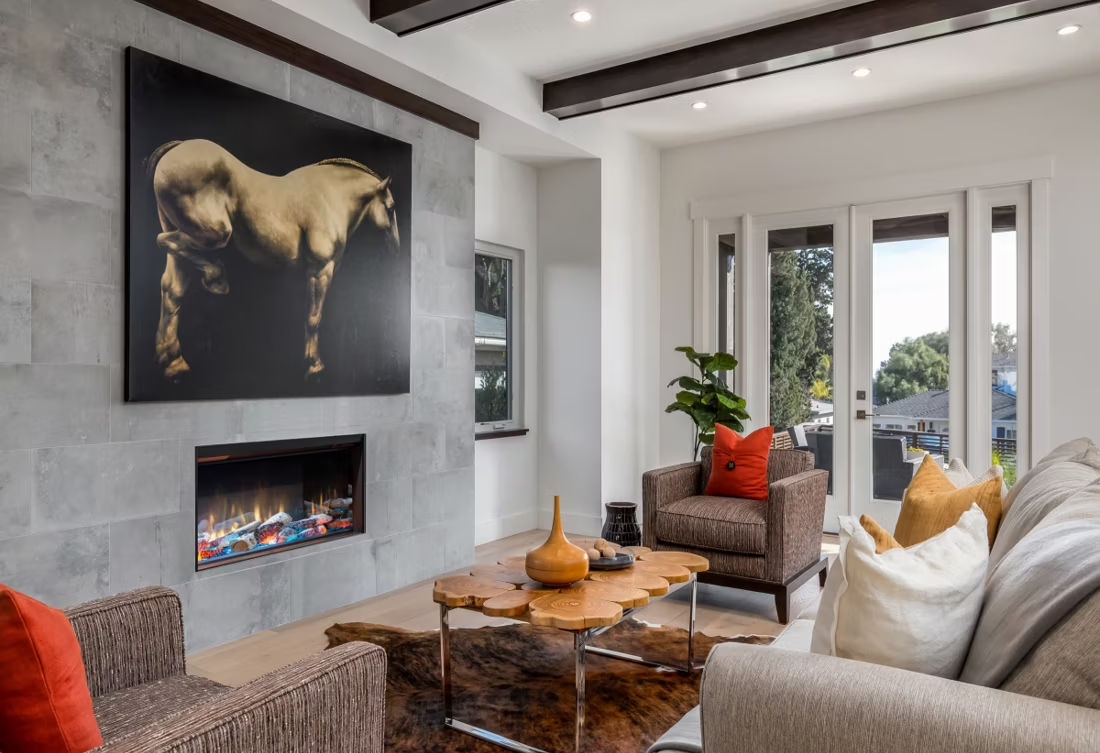
The no-hassle option for supplemental heat.
Franklin County sits on the southern edge of the Cumberland Plateau in south-central Tennessee, home to Winchester, Sewanee and its university perched at roughly 1,800 feet, Decherd, Cowan, and the shoreline communities around Tims Ford Lake. Climate zone 4A and a moderate winter heating season put the county well below the demands of colder regions like Madison, WI or Duluth, MN—winters here are real but manageable, with average lows around 30°F rather than the sustained sub-zero stretches that push homeowners toward high-output catalytic wood stoves. That's exactly the kind of climate where an electric fireplace earns its keep as supplemental, zone-specific heat rather than a stretch fit.
Power in Franklin County runs through Duck River Electric Membership Corporation on TVA-generated supply, and that reliable, relatively affordable electric service is part of why electric units make sense here—no propane tank, no gas line, no annual chimney sweep. For Sewanee's older stone and frame homes without existing masonry fireplaces, for rental properties in Cowan and Decherd, or for a den or bonus room in a newer Winchester build, an electric insert or wall-mount unit delivers real, on-demand warmth with a straightforward plug-in install. There are no air quality restrictions or burn-ban concerns in Franklin County to navigate, either—electric simply removes those variables from the equation entirely.
Three steps. No salesperson until you're ready.
Tell us about your project
Your zip code, your situation, and the fuel you're leaning toward—or let the answers point you to one.
See what's actually available
The brands dealers within 100 miles genuinely carry—real options, never a catalog mirage.
Get your dealer & Project Guide
A trusted local dealer, plus the free Project Guide & Parts List that names every component of the job.
Frequently Asked Questions
How much does an electric fireplace installation cost in Franklin County?
Most electric fireplace and insert installations in Franklin County run somewhere between $400 and $2,000. A plug-in electric insert dropped into an existing masonry fireplace opening or a freestanding electric stove sits at the lower end—it's often a same-day install with no electrician needed. A built-in wall unit or a larger insert that requires a dedicated 20-amp circuit runs higher once an electrician is involved, particularly in older Sewanee or Winchester homes where the existing panel needs updated wiring to support it. A local dealer can give you a firm number after seeing your space and your home's electrical setup.
Will an electric fireplace actually heat my home in Franklin County's winters?
For a single room, yes—most electric units are rated for 400 to 1,500 square feet and will comfortably heat a living room, bonus room, or bedroom on Franklin County's colder nights. With a moderate winter heating season and winter lows averaging around 30°F, the county doesn't see the extended deep-freeze stretches that demand a whole-home primary heat source, which is exactly the situation electric heat handles well. What it won't do is replace a furnace or central HVAC system for the whole house—think of it as targeted, efficient heat for the room you're actually in, not a substitute for your existing system.
Do I need a permit to install an electric fireplace in Franklin County?
In most cases, no. A plug-in electric insert or freestanding electric stove that uses a standard household outlet typically doesn't require a permit—there's no gas line, no chimney work, and no combustion venting to inspect. If your project involves adding a new dedicated circuit or breaker for a larger built-in unit, that electrical work generally does require a permit through the county, and any licensed electrician doing the work will pull it as part of the job. Ask your local dealer whether your specific unit and installation plan crosses that threshold.
Electric vs. gas fireplace—which makes more sense for my Franklin County home?
Gas delivers higher heat output and a more traditional flame appearance, but it requires either a natural gas line or a propane tank, plus venting for most models. Electric skips both of those requirements entirely—it plugs into an existing outlet, produces zero combustion byproducts, and can go anywhere in the house, including interior walls or upper floors where running gas or venting isn't practical. For Franklin County's milder heating season, where the goal is often ambiance plus supplemental warmth in one room rather than heating an entire home, electric is frequently the simpler and less expensive path. Homes already plumbed for gas, or ones wanting a fireplace as a true secondary heat source in a detached or drafty space, may still lean toward gas.
What size electric fireplace or insert do I need?
Sizing comes down to the room, not the whole house. A compact insert or wall-mount unit (roughly 30-40 inches wide) suits a bedroom or small den, while a 50-inch-plus unit or a larger built-in can serve as the focal point and primary heat source for an open living or great room. Most electric units list a square-footage rating on the spec sheet—match that to the room you're heating, not your home's total square footage, since electric fireplaces are designed for zone heating rather than whole-home coverage. A local dealer can walk your space and recommend a specific model and mounting style.
How much does it cost to run an electric fireplace with Duck River Electric Membership Corporation rates?
Most electric fireplaces draw around 1,500 watts on the heater setting, which—at typical Duck River Electric Membership Corporation residential rates—works out to roughly 15 to 20 cents per hour of heater use. Running the flame effect alone without the heater engaged uses only a few watts, essentially negligible on your bill. For a room you're heating for a few hours in the evening rather than running the furnace for the whole house, that's a meaningful savings, especially during the shoulder-season weeks in Franklin County when you want to take the chill off a single room without firing up central heat.
Can I convert my existing wood-burning fireplace to electric?
Yes, and it's a common project for older masonry fireplaces around Winchester and Sewanee that no longer get regular wood use. An electric insert slides into the existing firebox opening, plugs into a nearby outlet (or a new dedicated circuit for larger models), and typically doesn't require any changes to the existing chimney or masonry—some homeowners cap the flue afterward to stop drafts. The conversion cost usually falls in the $500 to $1,500 range depending on insert size and whether new electrical work is needed, and it eliminates chimney maintenance entirely going forward.
Electric vs. wood—which is right for my Franklin County property?
Wood heat has deep roots in Franklin County, with oak, hickory, maple, and pine all common locally and Cherokee National Forest cutting permits available for $20 per cord during the May-to-October season for those who want to self-cut. Wood also keeps working during a power outage, which electric can't do. Electric, on the other hand, needs no wood stacking, no ash cleanup, and no annual chimney sweep—you flip a switch and get instant, consistent heat with a clean flame display. For a primary heat source with backup capability, especially on rural acreage, wood still has an edge. For convenience, low maintenance, and installation flexibility in town, electric is usually the easier fit.
What features should I look for in an electric fireplace?
Look at the flame technology first—better units use layered LED or ember-bed effects that look far more convincing than older units, and that difference is obvious once you see them side by side. Check the heater rating (most top out around 1,500 watts, roughly 5,000 BTU) and whether it has a thermostat rather than just a high/low switch, since thermostatic control keeps a room at a set temperature instead of cycling on full blast. Also confirm whether the flame effect can run independently of the heater—useful for Franklin County's mild shoulder seasons when you want the ambiance without adding warmth to the room. A local dealer can show you working display models so you're not deciding from a spec sheet alone.
Can I put a TV above my fireplace?
Yes—with an asterisk. Fireplaces are hot and TVs don't like heat. Either put a mantel between them to deflect rising warmth, or choose a fireplace with heat-management technology that creates a cool zone on the wall above—the wall stays around 125 degrees, barely warm, while the room still gets full heat. If you like clean lines and don't want a mantel, heat management is the answer.
Do electric fireplaces actually produce heat?
Yes—most put out around 4,800–5,000 BTUs from a standard outlet, which comfortably warms a bedroom, office, or den as a comfort-zone heater. What they won't do is carry a whole house the way wood, gas, or pellet can. Think of electric as ambiance-first with honest supplemental heat: flames on with no heat in July, flames plus warmth in January.
What is an in-home preview and do I need one?
It's a visit where a hearth professional measures your space, confirms the model you picked actually works in your home, and walks the specs—framing, gas line, venting, finish work—before anything is ordered. Some details you just can't know until you see the house. Never make a down payment without one; it's the single most-skipped step that burns buyers.
Can I install a fireplace myself?
If you're putting a fire in your house on purpose, it's best to work with an expert. Unless you're genuinely experienced in framing, gas line, vent pipe, and the national code on clearances to combustibles, have a professional do it—and ideally the same company that sells you the fireplace, so warranty, service, and liability all live under one roof.
Stove and Fireplace Dealers in Franklin County
Listings include WhyFire partner dealers, dealers we have verified as authorized for the brands we recommend, and established local businesses that carry hearth products. Every listing shows which one it is. The ones marked Preferred run on WhyFire's software, so they can show you real pricing and book your appointment right here. No manufacturer pays for placement. How we verify dealers →
A-1 Chimney Specialist
Factory Furniture
Allgas, Inc. Of Tn - Winchester
Find your electric fireplace in Franklin County.
Tell us a bit about your home and we'll match you with the right electric fireplace or insert, plus a free Project Guide & Parts List—your exact parts, including any electrical needs, and a trusted local dealer to install it.
Find Your Fireplace →