
Find the right electric fireplace for your Davidson County home.
No chimney, no gas line, no venting—just plug-in or hardwired warmth that fits downtown high-rises, historic bungalows, and everything in between across Nashville and Davidson County. Find the right unit and connect with a trusted local dealer.
Every Project Starts From One of These Five Situations
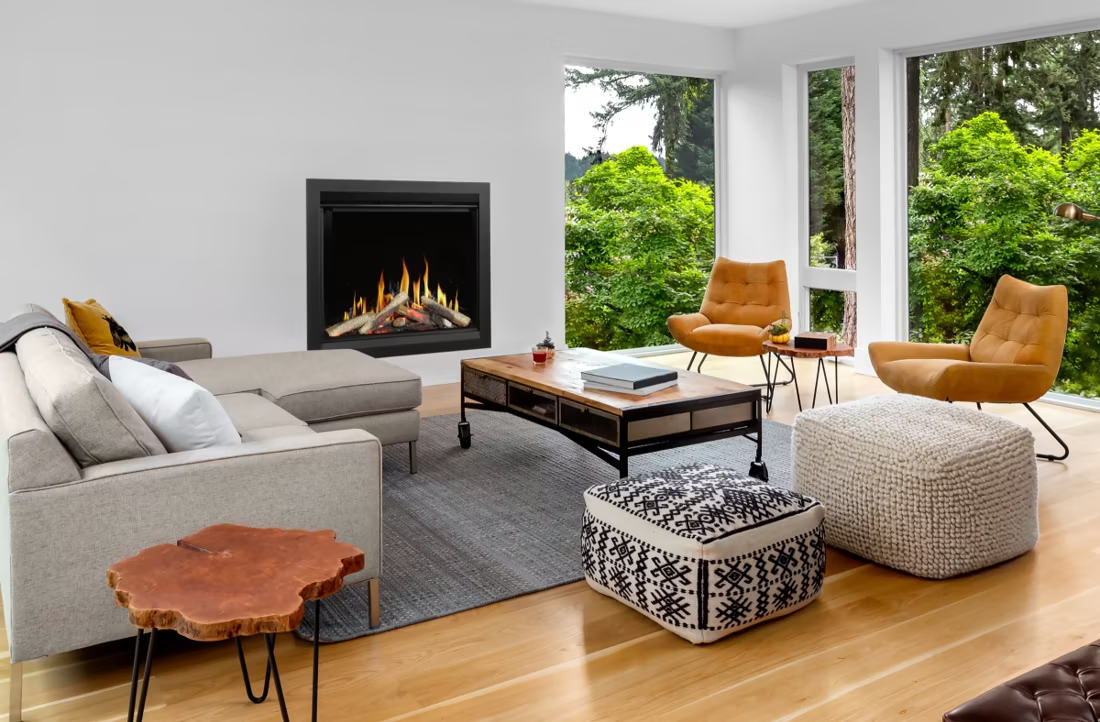
Heat and ambiance without a chimney.
Davidson County sits in climate zone 4A with roughly 3,648 heating degree days and a winter low average around 28°F—a fraction of the heating load a place like Duluth, MN carries through its winter. That mild-humid climate means most Nashville homes don't need a wood- or gas-fired appliance running full-time just to survive January. Instead, electric fireplaces have become the practical fit for a huge share of Davidson County's roughly 1.2 million residents: enough radiant comfort for a chilly evening, without the cost or complexity of building a chimney into a home that was never designed for one.
Nashville's growth has been vertical and fast—condo towers in The Gulch and SoBro, infill townhomes in Wedgewood-Houston, apartment complexes stretching out toward Antioch and Hermitage. None of that housing stock is set up for solid-fuel or gas venting through a shared wall or a twelfth-floor unit, which is exactly where electric fireplaces do their best work. A plug-in insert or a hardwired wall unit runs on standard household power supplied through Nashville Electric Service, installs in an afternoon, and gives renters and condo owners the fireplace experience local building codes and HOA rules otherwise rule out. Older homes in Belle Meade, Green Hills, and Forest Hills that already have a masonry firebox can drop in an electric insert just as easily, trading ash and draft for a clean glass front and a remote control.
Three steps. No salesperson until you're ready.
Tell us about your project
Your zip code, your situation, and the fuel you're leaning toward—or let the answers point you to one.
See what's actually available
The brands dealers within 100 miles genuinely carry—real options, never a catalog mirage.
Get your dealer & Project Guide
A trusted local dealer, plus the free Project Guide & Parts List that names every component of the job.
Frequently Asked Questions
How much does an electric fireplace installation cost in Davidson County?
Simple plug-in electric fireplace inserts start around $400 to $800 installed, since they just need an existing standard outlet and a bit of trim work. Hardwired wall-mount or built-in units, which usually need a dedicated circuit run by a licensed electrician, typically land between $1,200 and $2,500 depending on the wall type, wire run length, and whether the unit is going into new construction or an existing wall in a Craftsman-era home in East Nashville or a condo in the Gulch. Retrofitting an old masonry fireplace with an electric insert tends to run toward the lower end, since the existing opening does most of the framing work for you.
Electric vs. gas fireplace—which makes more sense in Davidson County?
Gas fireplaces remain a standard, well-supported option throughout Davidson County, particularly in homes that already have natural gas service for a furnace or water heater—they deliver real heat output and can run during a power outage with the right ignition system. Electric fireplaces trade some heat output for flexibility: no gas line, no venting, and installation in places gas simply can't go, like a downtown high-rise unit or a rental apartment. For a primary living room in a single-family home with existing gas service, gas is often the better performer. For condos, apartments, finished basements, bedrooms, or any space where running a flue or gas line isn't realistic, electric is usually the only appliance that actually clears code and the HOA.
How much heat does an electric fireplace actually put out?
Most electric fireplaces use a standard 1,500-watt heating element, which puts out roughly 5,000 BTUs—enough to comfortably warm a single room in the 300 to 400 square foot range. Given Davidson County's relatively mild heating load (a winter low average around 28°F and about 3,648 heating degree days per year), that's often plenty for supplemental or zone heating in a den, bedroom, or condo living room without leaning on central HVAC. Electric units aren't designed to replace a furnace for whole-home heating, but for the kind of shoulder-season chill Nashville sees more often than deep winter cold, they cover the gap well.
What types of electric fireplaces are available for my home?
The main categories are inserts (designed to slide into an existing masonry firebox—common in older Nashville neighborhoods like Belle Meade and Inglewood), wall-mount units (surface-mounted, popular in condos and apartments with no fireplace opening at all), built-in units (recessed into new framing during a remodel), and freestanding mantel packages (a self-contained fireplace and surround that needs no construction at all—a good fit for renters). A local dealer can walk your specific wall, breaker panel, and room layout to recommend which format actually fits.
Do I need a permit to install an electric fireplace in Davidson County?
A basic plug-in unit that runs off an existing standard outlet generally doesn't require a permit. A hardwired unit that needs a new dedicated circuit does require an electrical permit through Metro Nashville's Department of Codes and Building Safety, and the wiring work should be done by a licensed electrician. In condo and apartment buildings, check with your HOA or property management as well—some buildings have their own rules about wall penetrations and added electrical load, separate from the city permit process.
Can I install an electric fireplace in a downtown Nashville condo or apartment?
Yes—this is one of the most common reasons Davidson County homeowners and renters choose electric in the first place. Because there's no venting, flue, or gas line involved, an electric fireplace is one of the few fireplace options that's actually feasible in a high-rise unit in The Gulch or SoBro, or in a leased apartment near Vanderbilt or in Green Hills. Plug-in units require no building modification at all, which makes them the default choice for renters; hardwired wall units need only a standard electrical circuit, which most licensed electricians can add without touching the building's shared systems.
Is a wood-burning fireplace still an option in Davidson County?
It's less central here than in colder, more rural parts of the country. Davidson County's mixed-humid climate and modest heating load mean wood was never the primary heat source it is in places like the upper Midwest, and most of the county's newer construction and multifamily housing—the condo towers, townhomes, and apartment complexes driving Nashville's growth—were never built with a masonry chimney to begin with. Where wood fireplaces do exist, it's mostly in older homes in neighborhoods like Belle Meade, Forest Hills, and Green Hills that already have a working chimney, burning regionally common oak, hickory, maple, or pine. For the majority of Davidson County housing stock today, electric or gas fills the role a wood fireplace once played.
What does it cost to run an electric fireplace day to day?
A typical 1,500-watt electric fireplace costs roughly 15 to 20 cents per hour to run on heat mode, based on current residential rates from Nashville Electric Service, which draws power through the Tennessee Valley Authority. Running it a few hours an evening through a mild Nashville winter adds up to a modest monthly amount compared to heating an entire home—and most units let you run the flame effect alone, with the heater switched off, for pure ambiance during Nashville's long humid summers without any operating cost to speak of.
What features should I look for in an electric fireplace?
Look for a unit with a separate control for the flame effect and the heater—that way you can run the visual year-round without adding heat in Nashville's hot, humid summer months. LED-based flame technology has largely replaced older rotating-light designs and looks noticeably more realistic up close. If you're mounting on an exterior wall or in an older home, check the amp draw against your panel's available capacity before committing to a hardwired install. Beyond that, decide whether you want a straightforward mantel package or something a local dealer can integrate into custom built-in cabinetry—the hardware differs enough that it's worth discussing your specific room during a consultation.
Does an electric fireplace need a vent or chimney?
No—that's its superpower. An electric fireplace needs a wall and an outlet, period. No vent pipe, no gas line, no clearances to design around, which is why it works in bedrooms, offices, apartments, and walls where venting a gas or wood unit would be impractical or impossible. Installation is typically the simplest and least expensive of any fireplace type.
Can I put a TV above my fireplace?
Yes—with an asterisk. Fireplaces are hot and TVs don't like heat. Either put a mantel between them to deflect rising warmth, or choose a fireplace with heat-management technology that creates a cool zone on the wall above—the wall stays around 125 degrees, barely warm, while the room still gets full heat. If you like clean lines and don't want a mantel, heat management is the answer.
Can a fireplace actually lower my heating bill?
Yes—by creating a comfort zone. A furnace heats every square foot of the house just to warm the one room you're in; a gas fireplace on low burns roughly a sixth of the gas a typical furnace does. Set the furnace around 55–60 degrees as a baseline, then heat the rooms your family actually uses. Families who heat this way commonly save $20–$60 a month.
How much should I budget for a fireplace?
For an average home—covering the fireplace, the vent pipe, and basic installation—a budget between $3,900 and $5,500 gives you a lot of options across wood, gas, and pellet. By the time you add finish work, gas line, and electrical, the average complete installation lands between $5,000 and $12,000 all-in. In a remodel or new build, a good rule is to put about 2.5% of the total project cost toward the fireplace.
Stove and Fireplace Dealers in Davidson County
Listings include WhyFire partner dealers, dealers we have verified as authorized for the brands we recommend, and established local businesses that carry hearth products. Every listing shows which one it is. The ones marked Preferred run on WhyFire's software, so they can show you real pricing and book your appointment right here. No manufacturer pays for placement. How we verify dealers →
Ashbusters Chimney Service
Nashville Fireplace Dist.
Allegiance Chimney Solutions
31-W
Find your electric fireplace in Davidson County.
Tell us a bit about your home—condo, historic bungalow, or new build—and we'll match you with a trusted local dealer and send over a free Project Guide & Parts List for your electric fireplace project, including the exact parts and the dealer we recommend.
Find Your Fireplace →