
Add real heat to any room in Claiborne County—no chimney required.
From Tazewell to Cumberland Gap, electric fireplaces and inserts give Claiborne County homes zone heat without venting, gas lines, or firewood. Find the right unit and connect with a trusted local dealer.
Every Project Starts From One of These Five Situations
Zone heat that fits any room, any budget.
Claiborne County sits in the Appalachian foothills along the Cumberland Gap, with winters that average around 23°F on the coldest nights and roughly 4,786 heating degree days a year—noticeably milder than the ridge-top winters of places like Bozeman or Burlington, but still enough to leave drafty rooms cold from November through March. Many Claiborne County homes, from manufactured housing around Tazewell and New Tazewell to older farmhouses near the Gap, already lean on electric heat pumps or baseboard as a primary system. An electric fireplace or insert is the natural add-on: it supplements the main system in whichever room actually feels cold, without touching the existing HVAC.
Because electric units don't burn fuel on-site, there's no chimney, no flue, and in most cases no venting to plan for—a real advantage in a rural county where a lot of housing stock is manufactured or modular and wasn't built with masonry fireplaces in mind. Power throughout the county runs through Powell Valley Electric Cooperative, and running an electric insert or heater costs a fraction of what propane delivery runs for households outside the natural gas footprint (which is most of Claiborne County). The tradeoff is honest: electric fireplaces provide supplemental warmth and ambiance, not whole-home heat—but for a chilly bonus room, a bedroom addition, or a rental unit near Harrogate and Lincoln Memorial University, they're often the simplest fix available.
Three steps. No salesperson until you're ready.
Tell us about your project
Your zip code, your situation, and the fuel you're leaning toward—or let the answers point you to one.
See what's actually available
The brands dealers within 100 miles genuinely carry—real options, never a catalog mirage.
Get your dealer & Project Guide
A trusted local dealer, plus the free Project Guide & Parts List that names every component of the job.
Frequently Asked Questions
How much does an electric fireplace installation cost in Claiborne County?
Most electric fireplace and insert installations in Claiborne County run $400 to $1,200. A plug-in freestanding unit or a wall-mount heater that plugs into an existing outlet sits at the low end—often a same-day setup with no electrician needed. A built-in electric insert or a unit that requires a dedicated 20-amp circuit runs higher, since it involves a licensed electrician running new wiring, particularly common in older farmhouses near Cumberland Gap that weren't wired for a dedicated heating circuit. Ask your local dealer whether the model you're considering needs hardwiring before you budget.
What size electric fireplace do I need for my room?
Electric fireplaces are rated in watts, and most standard units (1,500 watts) will comfortably supplement heat in a 300-400 square foot room—enough for a living room addition or a primary bedroom in a typical Tazewell or New Tazewell home. Larger open floor plans or drafty older homes near the Gap may need a higher-output insert or a second unit in an adjoining room. Because electric fireplaces are meant as zone heat rather than whole-home heat, sizing is less about square footage of the whole house and more about which specific room you're trying to keep comfortable during cold snaps.
Do I need an electrician to install an electric fireplace?
It depends on the unit. Plug-in models—freestanding stoves, mantel units, and many wall-mounts—just need a standard outlet and no electrician is required. Built-in inserts or larger units drawing on a dedicated circuit typically do need a licensed electrician, especially in manufactured homes around Claiborne County where the existing panel may already be near capacity. The local dealers who serve the county coordinate this as part of the install, so you're not left finding your own electrician separately.
What's the difference between an electric fireplace, insert, and heater?
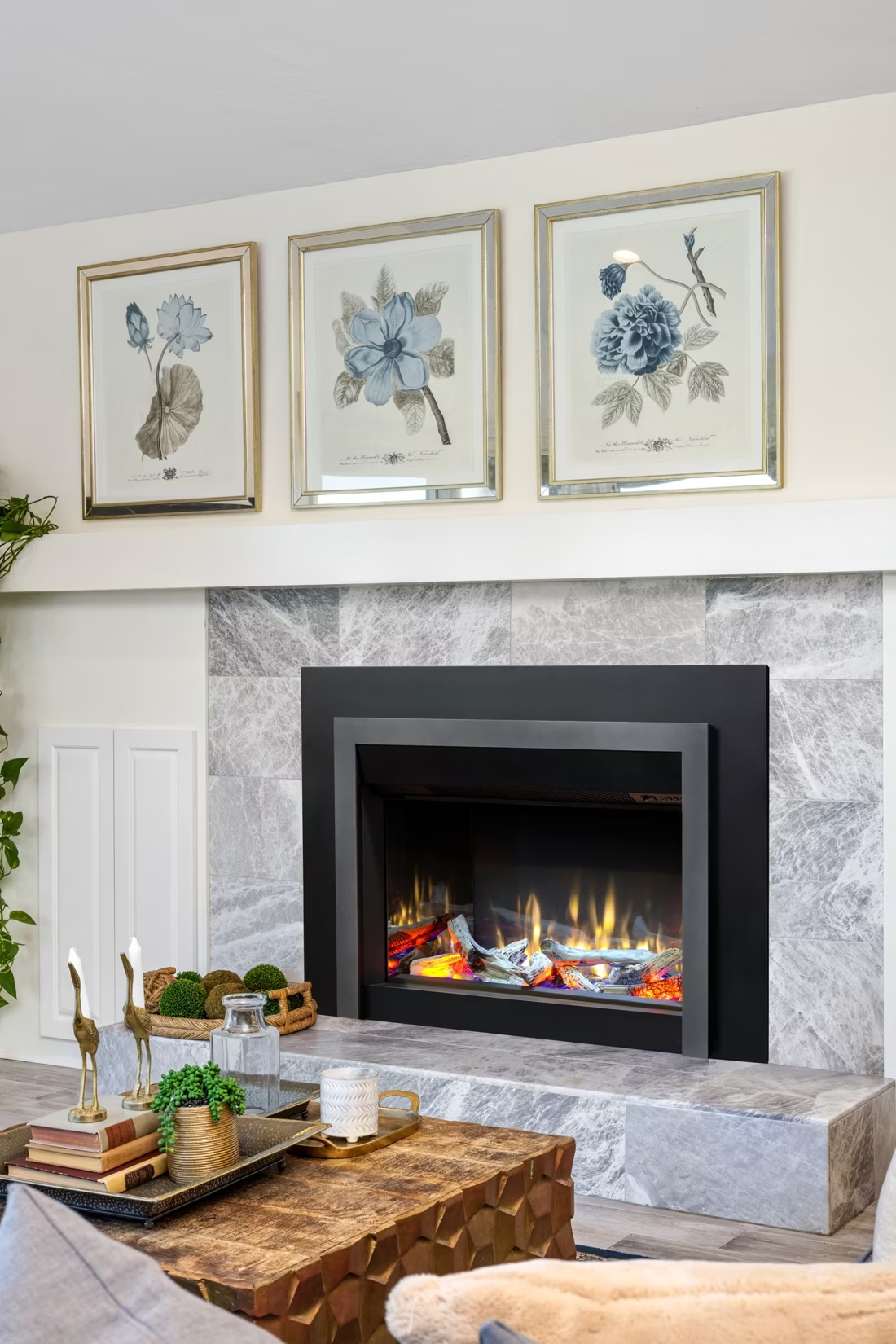
An electric fireplace is typically a freestanding or wall-mount unit built to look like a real firebox, with a flame-effect display alongside the heat element. An electric insert is sized to slide into an existing masonry fireplace opening—a common upgrade for older Claiborne County homes with a fireplace that's no longer used for wood. An electric heater with a flame effect is usually smaller and more portable, meant for a single room rather than a fixed installation. For homes with an existing fireplace opening sitting unused, an insert is usually the cleanest option; for anywhere else, a freestanding or wall-mount fireplace works well.
Do I need a permit to install an electric fireplace in Claiborne County?
A simple plug-in electric fireplace or heater generally doesn't require a permit. If the installation involves new wiring or a dedicated circuit, that electrical work typically does need a permit through the Claiborne County Building & Codes Department, and it should be pulled by the licensed electrician doing the wiring. Local dealers who regularly install hardwired units in the county can tell you up front whether your specific model and home will need one.
What's the best electric fireplace for a Claiborne County home?
For a supplemental heat role during the coldest stretches—when overnight temperatures drop toward that 23°F average low—look for a model with a true 1,500-watt heating element rather than one built mainly for the flame-effect display. Units with a built-in thermostat give you more control if you're using the fireplace to take pressure off a heat pump on the coldest mornings. For rooms where you mainly want ambiance rather than real heat—a den or finished basement—a lower-wattage model or one with the heater turned off most of the time is a fine, less expensive choice. A local dealer can match wattage to your specific room.
How much does it cost to run an electric fireplace?
A 1,500-watt electric fireplace running on high costs roughly 15-25 cents per hour at typical Powell Valley Electric Cooperative residential rates, and most owners run it a few hours a day rather than continuously. Compared to propane—the common alternative heat source for Claiborne County homes outside the natural gas footprint—electric fireplaces are usually cheaper to operate for zone heating a single room, though they can't replace a whole-home propane furnace on the coldest days. Most units also let you run the flame effect alone, with the heater off, which uses only a few watts.
Electric fireplace vs. wood stove—which is right for my home?
Claiborne County has plenty of oak, hickory, and maple available for wood heat, and a wood stove still offers the highest heat output and works during a power outage, which matters in the more rural parts of the county where outages can run long after storms. An electric fireplace can't provide heat if the power's out, but it requires no chimney, no wood handling, no ash cleanup, and no annual sweep—a real advantage for manufactured housing or a rental property near Harrogate where a masonry chimney isn't practical. For most homeowners adding heat to a specific room rather than replacing a primary heat source, electric is the simpler, lower-maintenance choice.
Electric fireplace vs. gas—which makes more sense in Claiborne County?
Natural gas service is limited across most of Claiborne County, which means a gas fireplace usually means running on propane, with a tank and delivery to manage. An electric fireplace skips that entirely—no fuel line, no tank, no delivery schedule, just a plug or a dedicated circuit. Gas still wins on raw heat output and the ability to run without electricity if you have a battery-backed ignition model, but for a straightforward supplemental-heat project in a home already on the grid, electric is usually the lower-cost, lower-hassle option.
Do electric fireplaces actually produce heat?
Yes—most put out around 4,800–5,000 BTUs from a standard outlet, which comfortably warms a bedroom, office, or den as a comfort-zone heater. What they won't do is carry a whole house the way wood, gas, or pellet can. Think of electric as ambiance-first with honest supplemental heat: flames on with no heat in July, flames plus warmth in January.
Can I put a TV above my fireplace?
Yes—with an asterisk. Fireplaces are hot and TVs don't like heat. Either put a mantel between them to deflect rising warmth, or choose a fireplace with heat-management technology that creates a cool zone on the wall above—the wall stays around 125 degrees, barely warm, while the room still gets full heat. If you like clean lines and don't want a mantel, heat management is the answer.
How much should I budget for a fireplace?
For an average home—covering the fireplace, the vent pipe, and basic installation—a budget between $3,900 and $5,500 gives you a lot of options across wood, gas, and pellet. By the time you add finish work, gas line, and electrical, the average complete installation lands between $5,000 and $12,000 all-in. In a remodel or new build, a good rule is to put about 2.5% of the total project cost toward the fireplace.
Can I install a fireplace myself?
If you're putting a fire in your house on purpose, it's best to work with an expert. Unless you're genuinely experienced in framing, gas line, vent pipe, and the national code on clearances to combustibles, have a professional do it—and ideally the same company that sells you the fireplace, so warranty, service, and liability all live under one roof.
Stove and Fireplace Dealers in Claiborne County
Listings include WhyFire partner dealers, dealers we have verified as authorized for the brands we recommend, and established local businesses that carry hearth products. Every listing shows which one it is. The ones marked Preferred run on WhyFire's software, so they can show you real pricing and book your appointment right here. No manufacturer pays for placement. How we verify dealers →
Professional Fireplace & Chimney Service
Claiborne County Utility
Smoky Mountain Buildings
Heritage Propane
Carl Pierce Furniture And Appliance
Myers Home Center
Tn Gas Company
Archies Stone And Fireplaces
Southwest Heating & Air
Lee Propane
Find your electric fireplace in Claiborne County.
Tell us a bit about your home and we'll match you with a trusted local dealer and send over your free Project Guide & Parts List—the exact electric fireplace or insert for your space, the parts you'll need, and who to call in Claiborne County to get it installed.
Find Your Fireplace →