
Add real warmth to your Carter County home—without the smoke or the vent.
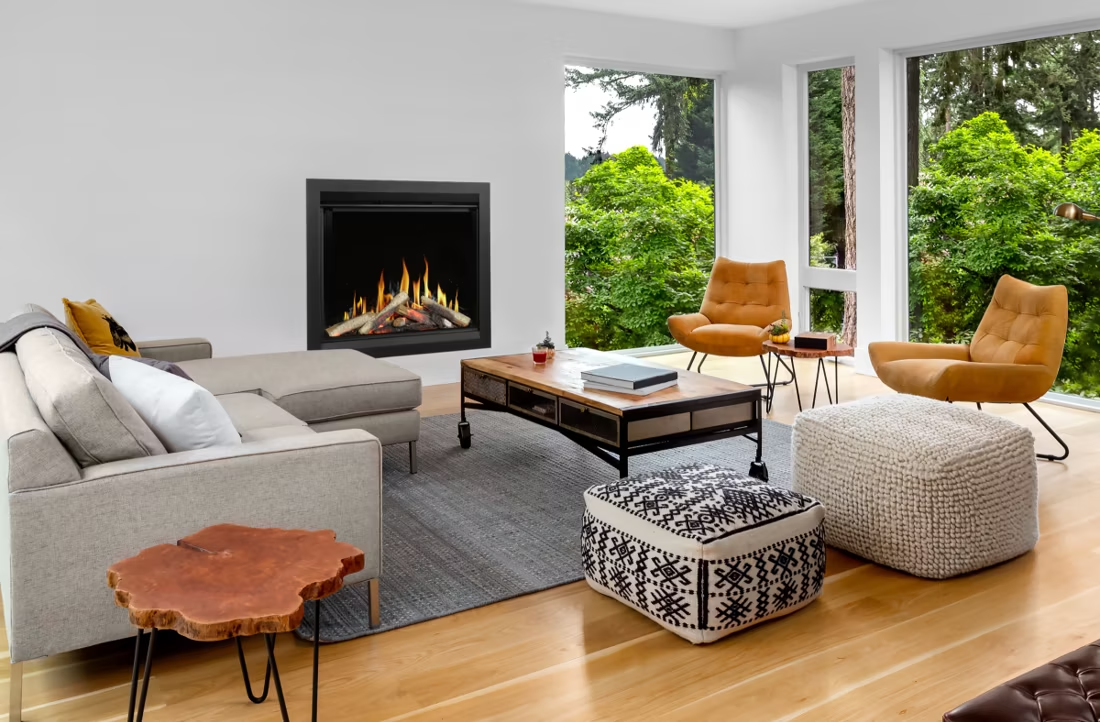
From Elizabethton to Roan Mountain to the shoreline at Watauga Lake, electric fireplaces bring instant, no-hassle heat to rooms where a chimney or gas line just isn't practical. Find the right unit and connect with a trusted local dealer.
Every Project Starts From One of These Five Situations
Supplemental warmth that goes anywhere in the house.
Carter County sits in the Appalachian foothills of northeast Tennessee—climate zone 4A, 4,302 heating degree days, and winter lows averaging 26°F across Elizabethton, Hampton, and the Roan Mountain highlands. That's a real heating season, but a mild one compared to true cold country—Carter County's heating load is roughly half what a place like Duluth, MN or Burlington, VT sees in a given winter. That mildness is exactly why electric fireplaces work so well here as supplemental heat: they don't need to carry the whole load, just take the edge off a bonus room, a finished basement, or a sunroom addition on a chilly October or March evening.
Because electric units need no chimney, no gas line, and no combustion air, they go into places a wood stove or gas insert can't—a converted attic space in an older Elizabethton home, a rental unit, a manufactured home along Stoney Creek or the Doe River. The tradeoff is honest: electric fireplaces run on the grid, and Carter County's mountain winters bring occasional ice storms that knock out power for hours or days. Homes here that rely on wood heat (oak, hickory, maple, and pine are all common cordwood locally, with Forest Service permits running about $20 per cord May through October) or a gas appliance keep that backup capability; a plug-in electric unit does not. Most Carter County homeowners we talk to pair an electric fireplace with an existing wood or gas heat source rather than use it as their only plan.
Three steps. No salesperson until you're ready.
Tell us about your project
Your zip code, your situation, and the fuel you're leaning toward—or let the answers point you to one.
See what's actually available
The brands dealers within 100 miles genuinely carry—real options, never a catalog mirage.
Get your dealer & Project Guide
A trusted local dealer, plus the free Project Guide & Parts List that names every component of the job.
Frequently Asked Questions
How much does an electric fireplace installation cost in Carter County?
Electric fireplaces are the least expensive hearth option to install because there's no chimney, no gas line, and no venting to run. A basic plug-in insert or wall-mount unit typically lands between $300 and $1,200 installed, while a larger built-in unit that needs a dedicated 240V circuit run by an electrician can run $1,500 to $2,500. Converting an existing masonry fireplace in an older Elizabethton or Hampton home to an electric insert usually falls in the middle of that range, since the mantel and surround are already in place. A local dealer can give you a firm number once they know the unit and your home's electrical panel capacity.
Do I need a permit to install an electric fireplace in Carter County?
In most cases, no—a plug-in electric fireplace that uses a standard 120V outlet doesn't require a permit, since there's no gas work or structural chimney involved. If you're installing a larger built-in unit that needs a new dedicated circuit, that electrical work should go through a licensed electrician and may require a permit through Carter County's building department, depending on the scope of the wiring. Most local dealers can tell you within a few minutes whether your chosen unit needs new electrical work or simply plugs into an existing outlet.
Will an electric fireplace actually heat my Carter County home?
Most electric fireplaces are built around a 1,500-watt heating element, which caps out around 5,000-5,200 BTU—enough to noticeably warm a single room, but not enough to carry a whole house through a Carter County winter with 4,302 heating degree days. Think of it as supplemental heat: great for taking the chill off a sunroom, finished basement, or bedroom without running the furnace harder, but not a replacement for your primary heat source. Homeowners in Elizabethton and Roan Mountain who want electric as more than ambiance usually pair it with a heat pump or existing central system rather than expect it to do the whole job.
Will my electric fireplace work if the power goes out?
No—electric fireplaces run entirely on grid power, so they shut off the moment your electricity does. That matters in Carter County, where ice storms in the mountain valleys around Roan Mountain and Watauga Lake can knock out power for hours or occasionally days at a time. If backup heat during an outage is a priority for your household, a wood stove or a gas unit with battery-backup ignition is the better fit for that role, with an electric fireplace as the everyday convenience option for the rest of the year.
What's the difference between an electric insert, wall-mount, and freestanding unit?
An electric insert is built to slide into an existing masonry firebox—a common upgrade for older homes in Elizabethton and Hampton with a fireplace that's rarely used because the wood-burning version is a hassle. A wall-mount unit hangs on the wall like a piece of art, with a flush or recessed profile that works well in newer construction or additions where there's no existing fireplace. A freestanding electric stove sits on the floor and can go almost anywhere with an outlet, which makes it popular for garages, workshops, and finished basements around the county. All three plug into standard household power in most models.
How much does it cost to run an electric fireplace?
A typical 1,500-watt electric fireplace costs somewhere between 15 and 25 cents per hour to run, depending on local electricity rates, which works out to roughly $1.50-$2.50 for a full evening of use. That's considerably cheaper than heating an entire home with electric resistance heat, which is part of why electric fireplaces work well as targeted, room-by-room heat in Carter County rather than a whole-house solution. Most units also let you run the flame effect with the heater off, so you can keep the ambiance going without any real electricity draw.
Electric vs. wood—which is right for my Carter County home?
Wood heat has deep roots in Carter County—oak, hickory, maple, and pine are all common local firewood, and cutting permits through the Nantahala-Pisgah National Forests run about $20 per cord from May through October. A wood stove provides real primary heat and keeps working through the ice-storm power outages that hit the mountain valleys here. An electric fireplace can't do either of those things, but it wins on convenience: no wood to split and stack, no chimney to sweep, no smoke, and installation that takes hours instead of days. For a supplemental heat source in a room where running a chimney isn't practical, electric is usually the simpler answer.
Electric vs. gas fireplace—which should I choose?
Gas fireplaces put out real, whole-room heat—often 20,000-30,000 BTU or more—and most models keep working during a power outage with a battery-backup ignition system, which matters given Carter County's occasional winter ice storms. Electric fireplaces trade that heating power for simplicity: no gas line, no venting, and installation that's often a same-day job. If you want a fireplace that can meaningfully offset your heating bill in a cold Carter County winter, gas is the stronger choice. If you want ambiance and light supplemental warmth with the easiest possible install—especially in a rental, a mobile home, or a room without gas service—electric is the practical pick.
Can I install an electric fireplace in a mobile home or rental?
Yes, and this is one of the strongest use cases for electric in Carter County's rural housing stock. Since there's no chimney, gas line, or structural modification required, a plug-in electric fireplace can go into a manufactured home along Stoney Creek or a rental unit in Elizabethton without triggering the code issues that come with wood or gas installations. Renters should confirm with a landlord before adding a wall-mount unit that requires anchoring into the wall, but a freestanding electric stove needs nothing more than an available outlet.
Does an electric fireplace need a vent or chimney?
No—that's its superpower. An electric fireplace needs a wall and an outlet, period. No vent pipe, no gas line, no clearances to design around, which is why it works in bedrooms, offices, apartments, and walls where venting a gas or wood unit would be impractical or impossible. Installation is typically the simplest and least expensive of any fireplace type.
Can I put a TV above my fireplace?
Yes—with an asterisk. Fireplaces are hot and TVs don't like heat. Either put a mantel between them to deflect rising warmth, or choose a fireplace with heat-management technology that creates a cool zone on the wall above—the wall stays around 125 degrees, barely warm, while the room still gets full heat. If you like clean lines and don't want a mantel, heat management is the answer.
How much should I budget for a fireplace?
For an average home—covering the fireplace, the vent pipe, and basic installation—a budget between $3,900 and $5,500 gives you a lot of options across wood, gas, and pellet. By the time you add finish work, gas line, and electrical, the average complete installation lands between $5,000 and $12,000 all-in. In a remodel or new build, a good rule is to put about 2.5% of the total project cost toward the fireplace.
Can I install a fireplace myself?
If you're putting a fire in your house on purpose, it's best to work with an expert. Unless you're genuinely experienced in framing, gas line, vent pipe, and the national code on clearances to combustibles, have a professional do it—and ideally the same company that sells you the fireplace, so warranty, service, and liability all live under one roof.
Stove and Fireplace Dealers in Carter County
Listings include WhyFire partner dealers, dealers we have verified as authorized for the brands we recommend, and established local businesses that carry hearth products. Every listing shows which one it is. The ones marked Preferred run on WhyFire's software, so they can show you real pricing and book your appointment right here. No manufacturer pays for placement. How we verify dealers →
Blossman Gas And Appliance
Roan Mountain Lawn & Garden
Builders First Source- Gray
Admiral Propane LLC
Marsh Lp Gas
Holston Hardware Company
Hammonds HVAC & Gas Services
Blue Ridge Propane Inc
Youngs Fuel Service
Brinkley Hardware
Hammond's Heating And Air
Find your electric fireplace in Carter County.
Tell us a bit about your home and we'll match you with the right electric fireplace, insert, or stove for your space—plus a free Project Guide & Parts List with the exact unit specs, mounting hardware, and electrical requirements, and our recommended local dealer to handle the install.
Find Your Fireplace →