
Add warm, instant heat to your Cannon County home—no chimney, no venting.
From Woodbury out to the Short Mountain community, electric fireplaces give Cannon County homes real supplemental warmth without masonry work or a flue—just a licensed electrician and the right unit for your room.
Every Project Starts From One of These Five Situations
Simple heat for old farmhouses and new builds alike.
Cannon County is a small, rural corner of Middle Tennessee—about 3,000 people spread across the hills and hollows around Woodbury, home to the annual Uncle Dave Macon Days celebration. Winters here are moderate by national standards (climate zone 4A, roughly 3,796 heating degree days, average winter lows near 27°F), but the housing stock skews old: farmhouses with high ceilings, drafty additions, and outbuildings that were never built with central heat in mind. Electric fireplaces have become a popular fix for exactly that kind of space, because they don't require a chimney, a gas line, or a hole cut through a wall for venting.
Power in Cannon County runs through Duck River Electric Membership Corporation, the co-op serving most of the county outside any incorporated city limits. Cannon County doesn't maintain its own building codes department, so most residential electrical inspections—including the dedicated circuit a built-in electric fireplace often needs—are handled through the State Fire Marshal's Office electrical inspection program rather than a local permit desk. One honest limitation worth knowing up front: electric fireplaces need grid power to run, so they go dark during the same ice-storm outages that hit DREMC lines hardest. Plenty of Cannon County households pair one with a wood stove that burns the local oak, hickory, or maple for backup heat, and use the electric unit for everyday zone heating and ambiance.
Three steps. No salesperson until you're ready.
Tell us about your project
Your zip code, your situation, and the fuel you're leaning toward—or let the answers point you to one.
See what's actually available
The brands dealers within 100 miles genuinely carry—real options, never a catalog mirage.
Get your dealer & Project Guide
A trusted local dealer, plus the free Project Guide & Parts List that names every component of the job.
Frequently Asked Questions
How much does an electric fireplace installation cost in Cannon County?
Most electric fireplace projects in Cannon County run $500 to $2,500. A plug-in freestanding unit or a mantel package with a standard 120V outlet sits at the low end—often a same-day install. A built-in insert or wall-mount unit that needs a dedicated 20-amp circuit run by a licensed electrician, plus any trim carpentry to frame it into a wall or existing fireplace opening, lands toward the higher end. Because Cannon County has no local codes department, that electrical work is typically inspected through the State Fire Marshal's Office rather than a county building desk—your electrician will know the process.
Do I need a permit for an electric fireplace in Cannon County?
A simple plug-in electric fireplace on an existing outlet generally doesn't require any permit. If your installation calls for new wiring or a dedicated circuit—common for larger built-in inserts and wall-mount units—that electrical work should be done by a licensed electrician and is subject to inspection through the State Fire Marshal's Office electrical inspection program, since Cannon County doesn't run its own local building codes department. A reputable local dealer or electrician will tell you upfront whether your specific unit and location need that step.
Will an electric fireplace actually heat a room, or is it just for looks?
A typical 1,500-watt electric fireplace puts out around 5,000 BTU, enough to comfortably heat a 400- to 500-square-foot room as supplemental or zone heat—useful in a Cannon County farmhouse with an old, oversized living room or an add-on den that the central system struggles to reach. With average winter lows around 27°F and roughly 3,796 heating degree days a year here, an electric unit works well as a second heat source you run in the room you're actually in, but it isn't sized to replace a whole-home furnace on its own.
What's the difference between an electric insert, a wall-mount unit, and a mantel package?
An electric insert is built to slot into an existing masonry fireplace opening or a framed wall cavity, giving you a built-in look without any venting work. A wall-mount unit hangs flush on a wall like a large flat-screen TV, often chosen for a modern, minimal look in a newer Cannon County build. A mantel package pairs a freestanding or built-in electric firebox with a surrounding wood or stone mantel surround, giving you the traditional hearth look in a home that never had a fireplace to begin with. All three plug in or wire in—none of them need a chimney or exterior vent.
Will my electric fireplace work during a power outage?
No—electric fireplaces run on grid power, so they shut off along with everything else when DREMC lines go down, which happens periodically during Middle Tennessee ice storms. This is the honest tradeoff against wood heat: an electric unit gives you clean, no-mess convenience day to day, but it isn't backup heat. Many Cannon County households handle this by keeping a wood stove or fireplace burning local oak, hickory, or maple as their outage plan, and running the electric fireplace the rest of the year for everyday warmth and ambiance.
What size electric fireplace do I need for my home?
Sizing comes down to the room, not the whole house. A 26- to 33-inch insert or wall-mount unit suits a bedroom or small den common in Cannon County's older farmhouse floor plans, while a 40-inch-plus unit or a linear insert fits better in an open-concept living area or a larger great room in a newer build. Since most of these homes rely on the electric fireplace for supplemental zone heat rather than whole-home heating, matching the unit to the specific room you spend the most time in matters more than maximizing BTU output.
How much does it cost to run an electric fireplace on my DREMC bill?
A typical 1,500-watt electric fireplace run on high heat costs roughly 15-25 cents per hour at Duck River Electric Membership Corporation's residential rates, depending on your specific rate schedule. Run a few hours an evening through a Cannon County winter, that adds up to a modest monthly bump—far less than heating an entire drafty farmhouse room with central electric resistance heat, which is part of why these units get used for zone heating rather than as a primary furnace replacement.
Can I convert my existing wood-burning fireplace to electric?
Yes, and it's a common project in Cannon County's older housing stock. An electric insert slides into the existing masonry opening, and because it doesn't need to vent anything, you don't have to touch the chimney at all—some homeowners cap it, others leave it as-is for a future wood-burning option. This route keeps the existing mantel and surround while eliminating ash cleanup and creosote maintenance, though it does mean giving up the option of burning wood for backup heat in that fireplace unless you keep a separate wood stove elsewhere in the house.
Electric vs. wood or pellet—which is right for my Cannon County home?
Wood, burned from local oak, hickory, or maple, keeps working through a DREMC outage and offers real radiant heat output—a meaningful advantage in a county where ice storms can knock out power for days. Pellet stoves, stocked regionally by brands like Lignetics, Hamer Pellet Fuel, and Greenway Renewable Energy, offer cleaner, more automated burning but still need electricity to run the auger and blower, so they share electric's outage limitation. A plug-in or hardwired electric fireplace wins on convenience and low-maintenance operation for everyday use in a main living space, bedroom, or den. Many Cannon County homeowners land on a mix: electric for daily zone heat and ambiance, wood as the backup plan when the lines go down.
Can I put a TV above my fireplace?
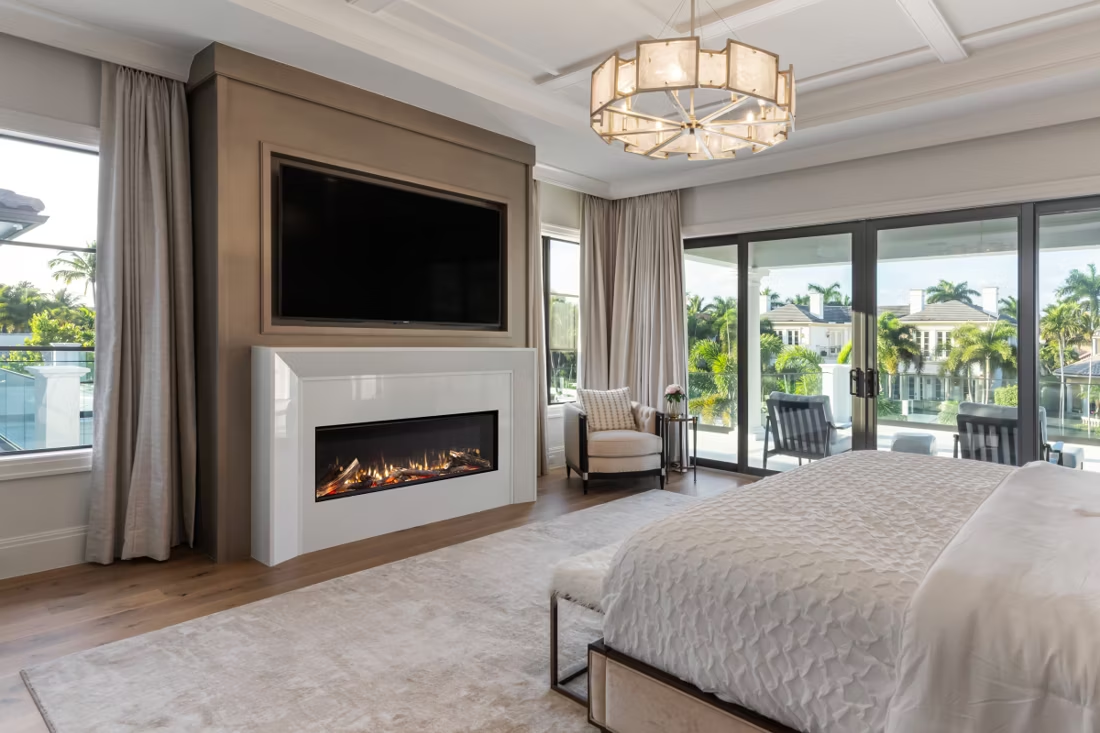
Yes—with an asterisk. Fireplaces are hot and TVs don't like heat. Either put a mantel between them to deflect rising warmth, or choose a fireplace with heat-management technology that creates a cool zone on the wall above—the wall stays around 125 degrees, barely warm, while the room still gets full heat. If you like clean lines and don't want a mantel, heat management is the answer.
Do electric fireplaces actually produce heat?
Yes—most put out around 4,800–5,000 BTUs from a standard outlet, which comfortably warms a bedroom, office, or den as a comfort-zone heater. What they won't do is carry a whole house the way wood, gas, or pellet can. Think of electric as ambiance-first with honest supplemental heat: flames on with no heat in July, flames plus warmth in January.
Can a fireplace actually lower my heating bill?
Yes—by creating a comfort zone. A furnace heats every square foot of the house just to warm the one room you're in; a gas fireplace on low burns roughly a sixth of the gas a typical furnace does. Set the furnace around 55–60 degrees as a baseline, then heat the rooms your family actually uses. Families who heat this way commonly save $20–$60 a month.
Does a fireplace add value to my home?
On average, a fireplace adds back to the home about the same amount you spent installing it. Add the monthly savings from heating the rooms you actually use instead of the whole house—often hundreds of dollars a year—and the value case is strong before you even count what a fire does for how your family uses the room.
Stove and Fireplace Dealers in Cannon County
Listings include WhyFire partner dealers, dealers we have verified as authorized for the brands we recommend, and established local businesses that carry hearth products. Every listing shows which one it is. The ones marked Preferred run on WhyFire's software, so they can show you real pricing and book your appointment right here. No manufacturer pays for placement. How we verify dealers →
Middle Tn Natural Gas - Woodbury
Middle Tn Natural Gas - Smithville
All Gas
A/c Plus Heating & Cooling, Inc.
Middle Tn Natural Gas - McMinnville
Find your electric fireplace in Cannon County.
Tell us about your home and we'll match you with a trusted local dealer and put together a free Project Guide & Parts List—the exact unit, wiring requirements, and install plan for your Cannon County electric fireplace project.
Find Your Fireplace →