
Electric heat that fits any Campbell County home.
No chimney, no gas line, no venting—just a clean electric insert or wall unit sized for your room in LaFollette, Jacksboro, Caryville, or Jellico. Find the right unit and connect with a trusted local dealer.
Every Project Starts From One of These Five Situations
Simple heat for the foothills of the Cumberlands.
Campbell County sits in the Cumberland Mountains of northeast Tennessee, from the county seat of LaFollette down through Jacksboro and Caryville to Jellico near the Cumberland Gap. Climate zone 4A and a moderate heating season put winters here well short of the deep cold that grips places like Duluth, MN—the average winter low sits around 25°F—but the mountain hollows still see enough cold stretches from November through March that a supplemental heat source earns its place in most homes.
A lot of the housing stock in Campbell County is older frame construction or single- and double-wide manufactured homes tucked into the hollows and ridgelines—many without an existing masonry chimney or the structural allowance for one. That's exactly where electric fireplaces do their best work: no flue, no gas line, no combustion byproducts to vent, just a plug-in or hardwired unit that a local electrician and hearth dealer can size to the room and get running in an afternoon. Whether you're supplementing a heat pump or electric baseboard system on Powell Valley Electric Cooperative service, or just adding ambiance to a living room, the right unit depends on your panel capacity, the room size, and whether you want a built-in insert, a wall-mount, or a mantel package—which is exactly what a local dealer will walk you through.
Three steps. No salesperson until you're ready.
Tell us about your project
Your zip code, your situation, and the fuel you're leaning toward—or let the answers point you to one.
See what's actually available
The brands dealers within 100 miles genuinely carry—real options, never a catalog mirage.
Get your dealer & Project Guide
A trusted local dealer, plus the free Project Guide & Parts List that names every component of the job.
Frequently Asked Questions
How much does an electric fireplace installation cost in Campbell County?
Plug-in electric inserts and freestanding units that don't require new wiring typically run $300 to $900 installed, since there's no venting or gas line work involved. Hardwired built-in units or full mantel packages that need a dedicated 120V or 240V circuit run higher—usually $1,200 to $3,000—because an electrician needs to run new circuit wiring, especially in older Campbell County homes with dated panels. Manufactured and mobile homes sometimes add a modest cost for reinforcing the mounting wall, which a local dealer will flag during the in-home visit.
Do I need a permit to install an electric fireplace in Campbell County?
It depends on the unit. A standard plug-in electric insert or freestanding stove that uses an existing outlet typically doesn't require a permit. If your installer needs to add a new dedicated circuit—common for larger built-in units—that electrical work requires a permit through the Campbell County Building Department and a final inspection. Most local dealers coordinate this as part of the install so you're not left tracking down the paperwork yourself.
Will an electric fireplace heat my whole house?
No—electric fireplaces are zone heaters, typically rated to comfortably warm 400 to 1,000 square feet depending on the model and insulation. With Campbell County's moderate heating season, that's usually enough to take the edge off a living room or bedroom on a cold night and cut down on how hard your central heat pump or propane furnace has to work. For whole-home heating during the coldest stretches of a Cumberland Mountain winter, most homeowners still rely on their existing central system and treat the electric fireplace as supplemental, ambiance-driven heat.
Is an electric fireplace a good fit compared to wood heat here?
Wood heat has deep roots in Campbell County—oak, hickory, maple, and pine are all common locally, and plenty of homes in the hollows still burn wood as a primary or backup heat source. But electric fireplaces solve a different problem: no chimney to maintain, no cutting or hauling firewood, and no combustion concerns in a rental property or a manufactured home where a masonry chimney was never an option. For homeowners who want the look and glow of a fire without the upkeep, or who are heating a single room in an older house, electric is the more practical choice. Many households keep both—wood for backup heat during outages, electric for daily convenience.
What's the difference between an electric insert, a wall-mount unit, and a freestanding stove?
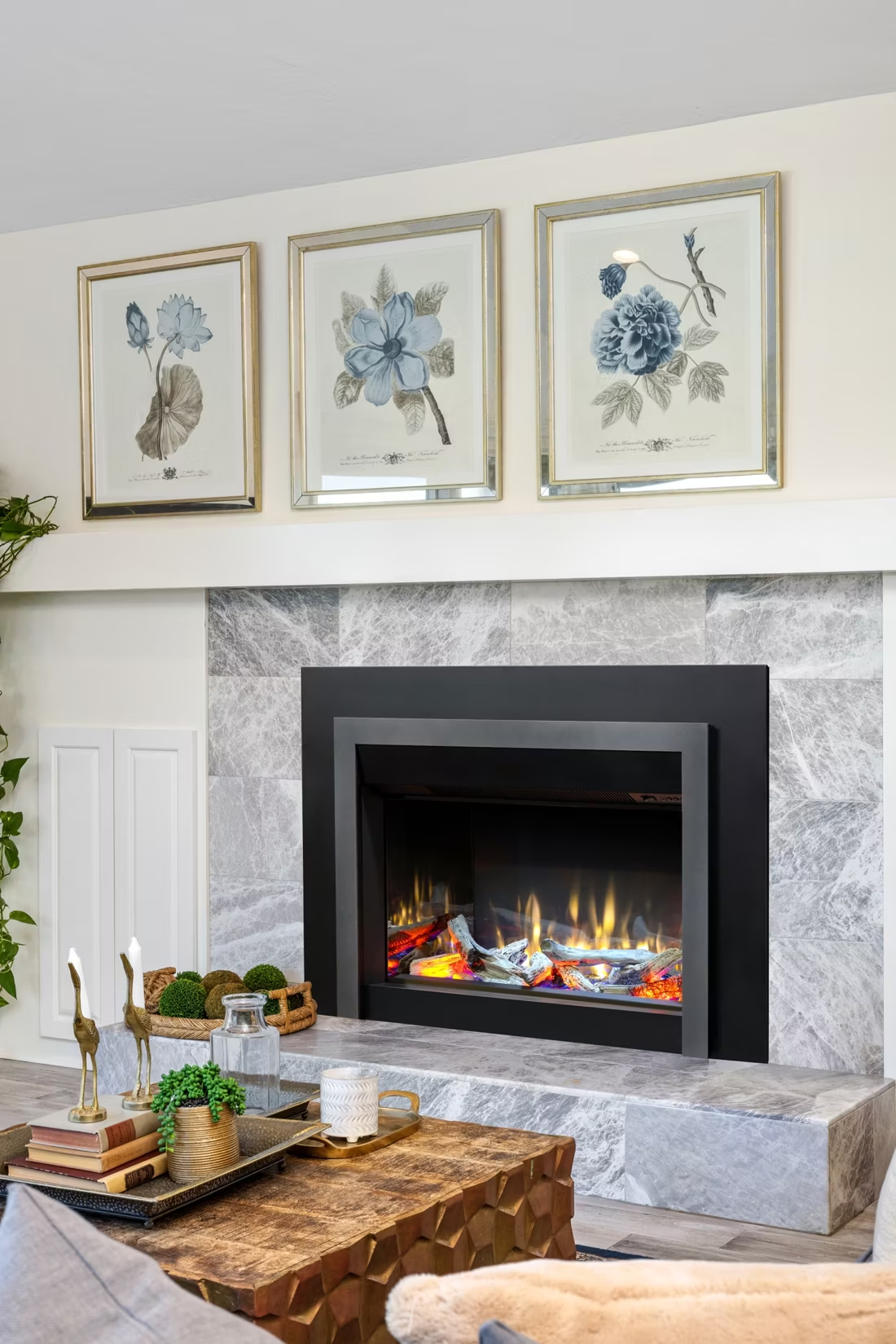
An electric insert is built to slide into an existing fireplace opening, often replacing an old wood-burning firebox with a clean electric heat source and flame effect. A wall-mount unit hangs flush on the wall like a flat-screen TV, which works well in newer construction or rooms without an existing hearth. A freestanding electric stove sits on the floor like a traditional wood stove, which is a popular option in manufactured homes and cabins where a wall-mount isn't practical. All three plug into standard household current or a dedicated circuit depending on wattage—your local dealer will match the type to your room and existing setup.
How much does it cost to run an electric fireplace in Campbell County?
Most electric fireplace inserts and stoves run on a 1,500-watt heating element, which costs roughly 15 to 25 cents per hour to run depending on your Powell Valley Electric Cooperative rate. Run for a few hours each evening through a Cumberland Mountain winter, that adds up to a modest monthly cost compared to running a whole-home heat pump or propane furnace longer to cover the same room. Most units also let you run the flame effect alone, without the heater, for near-zero-cost ambiance in the shoulder seasons.
Are electric fireplaces a good option for manufactured and mobile homes in the county?
Yes—this is actually one of the best-fit use cases in Campbell County, where single- and double-wide manufactured homes are common throughout the hollows and ridge communities. These homes typically can't support a masonry chimney or the structural load of a wood-burning unit, and running new gas line isn't always practical. A plug-in or low-amp electric fireplace sidesteps both problems entirely—no chimney, no gas, minimal structural requirements—while still delivering supplemental heat and the look of a real hearth.
How much maintenance does an electric fireplace need?
Very little compared to wood or gas. There's no annual chimney sweep, no gas line inspection, and no combustion byproducts to manage. Routine care is mostly dusting the unit, occasionally cleaning the glass front, and replacing the LED ember bed bulbs every several years as they dim—most last 20,000+ hours of use. If the heating element stops working but the flame effect still runs, that's usually a simple element replacement rather than a full unit swap, and most local dealers stock parts for the brands they sell.
Electric vs. propane fireplace—which is right for my Campbell County home?
Propane is common in Campbell County's rural areas where natural gas lines don't reach, and a propane fireplace or insert delivers higher heat output and a more traditional flame—but it requires a tank, gas line work, and periodic venting inspections. Electric skips all of that: no tank to refill, no combustion to vent, and a lower upfront installation cost in most cases. For homeowners who want real supplemental heat output and don't mind managing a propane tank, propane often wins. For those prioritizing simplicity, lower installation cost, and flexibility to move or relocate the unit later, electric is usually the better fit.
Can I put a TV above my fireplace?
Yes—with an asterisk. Fireplaces are hot and TVs don't like heat. Either put a mantel between them to deflect rising warmth, or choose a fireplace with heat-management technology that creates a cool zone on the wall above—the wall stays around 125 degrees, barely warm, while the room still gets full heat. If you like clean lines and don't want a mantel, heat management is the answer.
Do electric fireplaces actually produce heat?
Yes—most put out around 4,800–5,000 BTUs from a standard outlet, which comfortably warms a bedroom, office, or den as a comfort-zone heater. What they won't do is carry a whole house the way wood, gas, or pellet can. Think of electric as ambiance-first with honest supplemental heat: flames on with no heat in July, flames plus warmth in January.
Can a fireplace actually lower my heating bill?
Yes—by creating a comfort zone. A furnace heats every square foot of the house just to warm the one room you're in; a gas fireplace on low burns roughly a sixth of the gas a typical furnace does. Set the furnace around 55–60 degrees as a baseline, then heat the rooms your family actually uses. Families who heat this way commonly save $20–$60 a month.
What is an in-home preview and do I need one?
It's a visit where a hearth professional measures your space, confirms the model you picked actually works in your home, and walks the specs—framing, gas line, venting, finish work—before anything is ordered. Some details you just can't know until you see the house. Never make a down payment without one; it's the single most-skipped step that burns buyers.
Stove and Fireplace Dealers in Campbell County
Listings include WhyFire partner dealers, dealers we have verified as authorized for the brands we recommend, and established local businesses that carry hearth products. Every listing shows which one it is. The ones marked Preferred run on WhyFire's software, so they can show you real pricing and book your appointment right here. No manufacturer pays for placement. How we verify dealers →
Carl Pierce Furniture And Appliance
Tn Gas Company
Find your electric fireplace in Campbell County.
Tell us a bit about your home and we'll put together a free Project Guide & Parts List—the right electric fireplace or insert for your space, the exact parts needed, and a trusted local dealer to install it.
Find Your Fireplace →