
Zone heat that installs in an afternoon, anywhere in Bedford County.
No chimney, no gas line, no venting—just plug-in or hardwired warmth for homes across Bedford County, from Shelbyville out to Wartrace and Normandy. Find the right unit and connect with a trusted local dealer.
Every Project Starts From One of These Five Situations
Heat that plugs in—not one more thing to permit or inspect.
Bedford County sits in Middle Tennessee about 50 miles southeast of Nashville, with Shelbyville as the county seat and home to the Tennessee Walking Horse National Celebration each August. Winters here are mild by national standards—climate zone 4A, an average winter low around 29°F, and roughly 3,523 heating degree days a year, a fraction of what a place like Duluth, MN or Fargo, ND racks up. Most winter days in Shelbyville, Wartrace, Normandy, and Flat Creek stay above freezing, which changes the math on home heating: you don't need a full-time combustion appliance running around the clock, you need supplemental heat for the genuinely cold stretches.
Bedford County has no air quality non-attainment status and no wood-burning restrictions, so the pull toward electric here isn't regulatory—it's practical. A lot of housing stock in the county, especially outside Shelbyville proper, is manufactured or rental housing where a masonry chimney or new gas line isn't an option. Electric fireplaces solve that: a qualified electrician (or in some cases, a simple 120V outlet) gets you real supplemental heat and the look of a fire in an afternoon, backed by reliable service from Duck River Electric Membership Corporation, the co-op that serves most of the county.
Three steps. No salesperson until you're ready.
Tell us about your project
Your zip code, your situation, and the fuel you're leaning toward—or let the answers point you to one.
See what's actually available
The brands dealers within 100 miles genuinely carry—real options, never a catalog mirage.
Get your dealer & Project Guide
A trusted local dealer, plus the free Project Guide & Parts List that names every component of the job.
Frequently Asked Questions
How much does an electric fireplace installation cost in Bedford County?
A plug-in electric fireplace insert or mantel package that uses a standard 120V outlet typically runs $400 to $800 installed, including the unit and any minor trim work. A built-in electric fireplace that requires a dedicated 20-amp circuit—common for larger units or in-wall installations in Shelbyville-area new construction—runs closer to $800 to $1,200 once an electrician runs the new circuit. Because there's no venting, chimney work, or gas line to account for, electric is consistently the least expensive fireplace category for Bedford County homeowners, and most installs are done in a single day.
What size electric fireplace do I need for my home?
Most electric fireplaces are rated around 1,500 watts, which produces roughly 5,000 BTU of heat—enough to comfortably warm a single room of 400 to 1,000 square feet depending on ceiling height and insulation. Given Bedford County's mild winters (average low around 29°F), most homeowners here are using electric fireplaces as supplemental zone heat for a living room, den, or bonus room rather than as the sole heat source for the house. If you're trying to take the edge off a larger open floor plan or a sunroom addition, a local dealer can help you decide between a single larger unit or two smaller units placed strategically.
Do I need a permit to install an electric fireplace in Bedford County?
A plug-in unit that uses an existing outlet typically doesn't require a permit. If your installation requires a new dedicated circuit or panel work—common for built-in or wall-recessed units—an electrical permit is required through the Bedford County Building & Codes Department, or through the City of Shelbyville's codes office if you're within city limits. Licensed electricians who do this work regularly will pull the permit as part of the job, so you generally don't have to coordinate it yourself.
What's the difference between an electric insert, a built-in electric fireplace, and a mantel package?
An electric insert is designed to slide into an existing masonry or wood-burning fireplace opening, giving an old fireplace new life without any venting changes. A built-in electric fireplace is designed to be framed into a wall during new construction or a remodel, giving you a flush, linear look. A mantel package pairs a freestanding or wall-mounted electric unit with a surrounding mantel and is the easiest option for renters or homeowners who don't want to touch existing framing. For a lot of Bedford County's older farmhouses with existing fireboxes, an insert is the simplest upgrade; for new builds and additions, built-in units are more common.
Do electric fireplaces actually produce real heat, or just the look of a flame?
Most models sold today do both—the flame effect runs independently of the heater, so you can run the ambiance without the heat in warmer months, or run both together in winter. A standard 1,500-watt unit puts out about 5,000 BTU, which is genuine, usable heat for a single room—comparable to a space heater but built into your fireplace surround. It won't replace central heat for a whole house, but for the kind of shoulder-season chill common in Bedford County, where nights dip into the 20s but days often climb back into the 40s and 50s, it's often all the extra warmth a room needs.
How much does it cost to run an electric fireplace in Bedford County?
At typical Duck River Electric Membership Corporation residential rates, running a 1,500-watt electric fireplace on high for several hours an evening costs somewhere in the range of a few dollars a week during the coldest stretches—far less than heating an entire house with central HVAC to compensate for one cold room. Because Bedford County's winters are relatively short and mild, most homeowners only run their unit heavily during the coldest weeks of January and early February, which keeps the annual operating cost modest compared to a wood or gas appliance that requires fuel purchases.
Electric vs. wood—which makes more sense for my Bedford County home?
Bedford County has plenty of oak, hickory, maple, and pine available locally, and wood heat still has a place here—especially for homeowners who want a backup heat source during a winter storm and power outage. But wood requires a chimney, annual sweeping, and ongoing fuel handling, while electric requires none of that. For most homes in Shelbyville and the surrounding towns where winters rarely demand a full-time heat source, electric wins on convenience, upfront cost, and zero maintenance. Wood still makes sense for rural properties with easy access to firewood and a real interest in off-grid backup heat.
Electric vs. gas—which is right for a Bedford County home?
Natural gas service is limited outside Shelbyville's core, so many rural Bedford County homes would need propane for a gas fireplace, including tank installation and gas line work. Electric skips all of that—no fuel deliveries, no gas line, no venting—at the tradeoff of lower total heat output and a dependence on grid power during outages. For homeowners already on propane for a furnace or water heater, adding a gas fireplace can make sense. For homes without existing gas infrastructure, or for secondary rooms and additions, electric is usually the more practical and less expensive path.
Is an electric fireplace a good fit for a manufactured or rental home in Bedford County?
Yes—this is one of the most common uses for electric fireplaces throughout Bedford County's rural communities. Manufactured and rental housing often can't accommodate a masonry chimney or a new gas line, but a plug-in electric unit or a mantel package needs neither. Many units are also fully portable, so a renter can take the fireplace with them when they move. It's the lowest-commitment way to add real supplemental heat and fireplace ambiance to a home where permanent venting work isn't an option.
Can I put a TV above my fireplace?
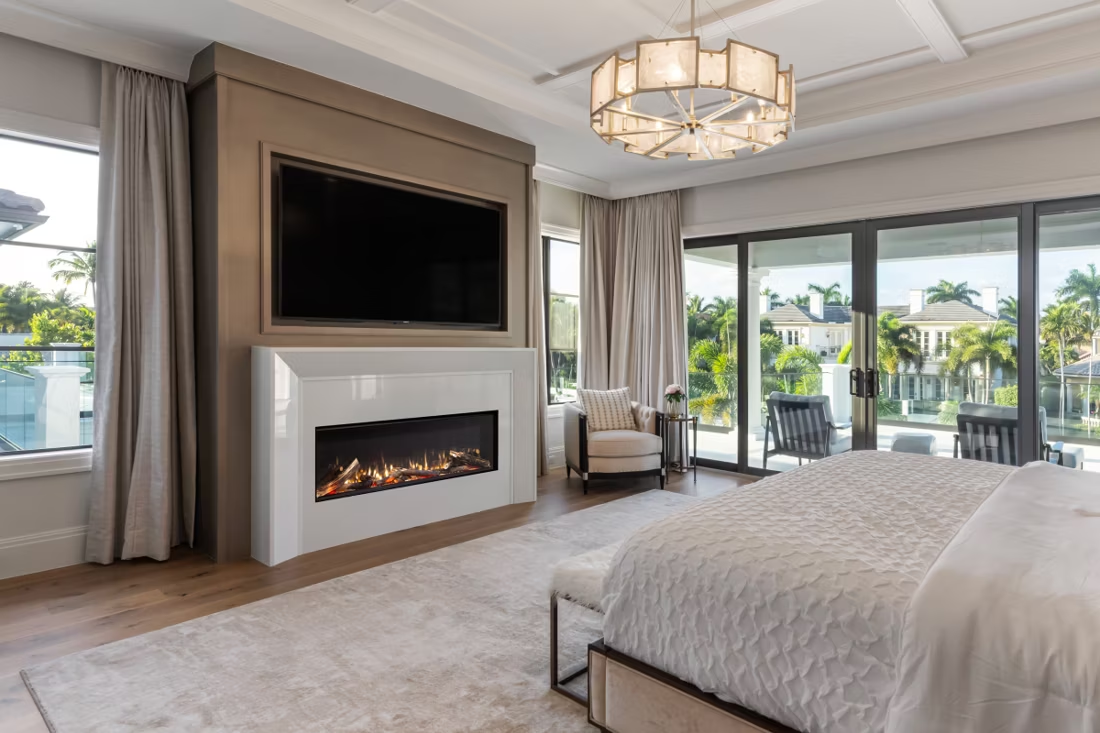
Yes—with an asterisk. Fireplaces are hot and TVs don't like heat. Either put a mantel between them to deflect rising warmth, or choose a fireplace with heat-management technology that creates a cool zone on the wall above—the wall stays around 125 degrees, barely warm, while the room still gets full heat. If you like clean lines and don't want a mantel, heat management is the answer.
Does an electric fireplace need a vent or chimney?
No—that's its superpower. An electric fireplace needs a wall and an outlet, period. No vent pipe, no gas line, no clearances to design around, which is why it works in bedrooms, offices, apartments, and walls where venting a gas or wood unit would be impractical or impossible. Installation is typically the simplest and least expensive of any fireplace type.
What is an in-home preview and do I need one?
It's a visit where a hearth professional measures your space, confirms the model you picked actually works in your home, and walks the specs—framing, gas line, venting, finish work—before anything is ordered. Some details you just can't know until you see the house. Never make a down payment without one; it's the single most-skipped step that burns buyers.
How much should I budget for a fireplace?
For an average home—covering the fireplace, the vent pipe, and basic installation—a budget between $3,900 and $5,500 gives you a lot of options across wood, gas, and pellet. By the time you add finish work, gas line, and electrical, the average complete installation lands between $5,000 and $12,000 all-in. In a remodel or new build, a good rule is to put about 2.5% of the total project cost toward the fireplace.
Stove and Fireplace Dealers in Bedford County
Listings include WhyFire partner dealers, dealers we have verified as authorized for the brands we recommend, and established local businesses that carry hearth products. Every listing shows which one it is. The ones marked Preferred run on WhyFire's software, so they can show you real pricing and book your appointment right here. No manufacturer pays for placement. How we verify dealers →
Spar-Gas
A/c Plus Heating & Cooling, Inc.
Consolidated Trade Services
Find your electric fireplace in Bedford County.
Tell us a bit about your home and we'll match you with the right electric fireplace or insert—and connect you with a trusted local dealer for a free Project Guide & Parts List.
Find Your Fireplace →