
Electric fireplaces built for Anderson County's mild winters.
No chimney, no gas line, no venting—just plug-in or hardwired warmth for a bonus room, primary suite, or basement in Oak Ridge, Clinton, Norris, or Oliver Springs. Find the right unit and connect with a trusted local dealer.
Every Project Starts From One of These Five Situations
Reliable TVA power and an easy install make electric the low-friction choice.
Anderson County sits in the foothills of the Cumberland Plateau along the Clinch River, home to Oak Ridge, Clinton, Norris, and Oliver Springs. At 3,732 heating degree days and a winter low averaging 29°F, this is climate zone 4A—cold enough to want supplemental heat in the rooms your furnace struggles to reach, but nowhere near the extremes of the higher Appalachians. Plenty of local homes still burn oak, hickory, and maple for primary or backup heat, especially with Cherokee National Forest cutting permits running just $20 a cord during the May-through-October season. But for a bedroom over the garage, a finished basement, or a ranch-style Oak Ridge home built during the Manhattan Project era without a second flue, electric is the fastest and cleanest way to add real heat to a specific room.
Power throughout Anderson County comes off the TVA grid through local distributors—Oak Ridge Electric Department, Clinton Utilities Board, and Appalachian Electric Cooperative among them—which means dependable service and some of the lower residential electric rates in the country. That matters for an appliance you'll run for hours at a time. A typical electric fireplace install here runs $400 to $1,200, whether that's a plug-in wall unit in a rental near Norris Lake or a hardwired built-in insert during a remodel. No masonry, no combustion byproducts, and in most cases no building permit beyond basic electrical work if you're adding a dedicated circuit.
Three steps. No salesperson until you're ready.
Tell us about your project
Your zip code, your situation, and the fuel you're leaning toward—or let the answers point you to one.
See what's actually available
The brands dealers within 100 miles genuinely carry—real options, never a catalog mirage.
Get your dealer & Project Guide
A trusted local dealer, plus the free Project Guide & Parts List that names every component of the job.
Frequently Asked Questions
How much does an electric fireplace installation cost in Anderson County?
Most electric fireplace projects in Anderson County land between $400 and $1,200. A plug-in wall-mounted unit or freestanding stove on the low end needs nothing more than a standard outlet. A built-in insert or a mantel package with a linear electric firebox runs higher once you factor in the surround, mantel carpentry, and—for larger 240V units—a dedicated circuit run by a licensed electrician. Converting an old masonry fireplace in an older Clinton or Norris home to an electric insert is usually the middle of that range, since the opening often needs minor framing to fit the unit properly.
How big of a room can an electric fireplace actually heat?
Most residential electric fireplaces are rated around 4,000 to 5,000 BTU, which comfortably heats a single room in the 200 to 400 square foot range—a bedroom, a den, a basement rec room. They're built as supplemental or zone heat, not a whole-house solution, which fits Anderson County's climate well: at 3,732 heating degree days and winter lows that average in the high 20s, most homes only need real backup heat during the occasional Arctic outbreak, not for months on end. If you're trying to heat an open great room or a drafty older home near Melton Hill Lake, talk to a local dealer about a larger insert or multiple units rather than one undersized unit running constantly.
Do I need a permit or an electrician to install an electric fireplace?
A simple plug-in unit on an existing 120V outlet typically doesn't require a permit. A hardwired built-in or a larger 240V insert usually does need an electrical permit and a licensed electrician to run a dedicated circuit—that's handled through the Oak Ridge or Clinton building department if you're inside city limits, or Anderson County Codes Enforcement for unincorporated areas like Oliver Springs or Norris. Most local dealers coordinate the electrician as part of the install so you're not managing two separate trades.
What's the difference between an electric insert, a mantel package, and a wall-mounted unit?
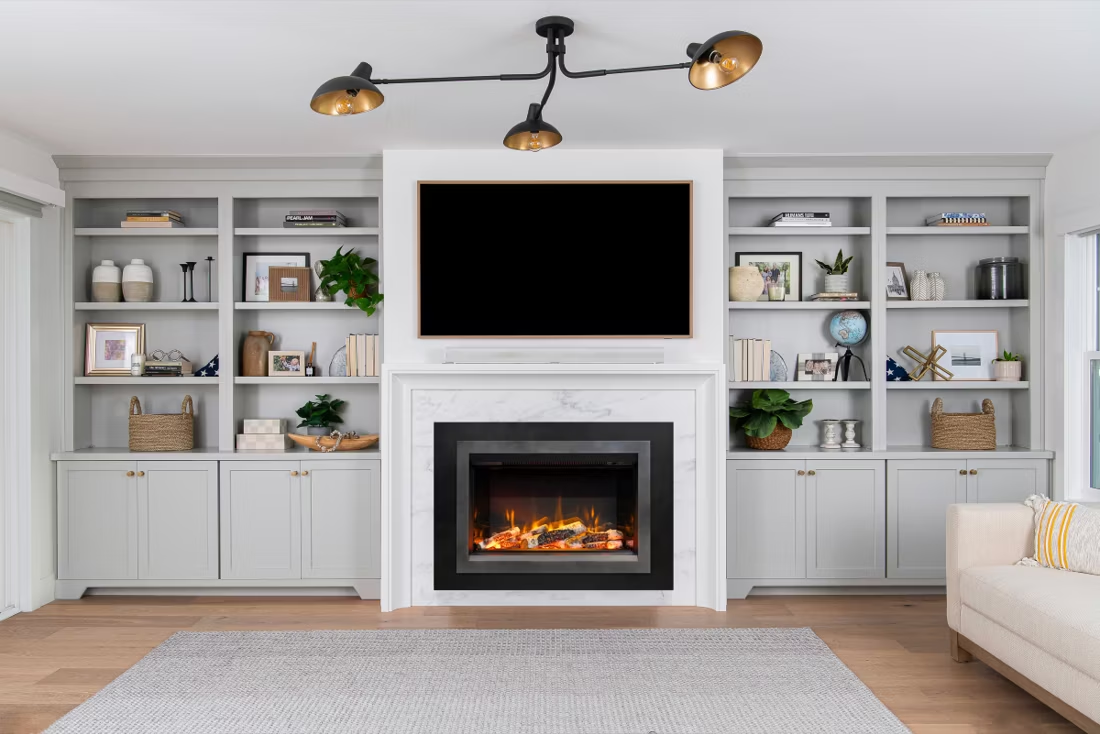
An electric insert drops into an existing fireplace opening—a common choice for Norris and Clinton homes with an old masonry fireplace nobody uses anymore. A mantel package pairs a linear electric firebox with a surround and mantel shelf, built as a standalone feature in a room without an existing hearth. A wall-mounted unit hangs directly on the wall like a flat-screen TV, with no surround needed, and is often the fastest and cheapest option for a bedroom, apartment, or rental property. All three plug in or hardwire and none require venting.
How much does it cost to run an electric fireplace in Anderson County?
A typical 1,500-watt electric fireplace costs roughly $0.15 to $0.25 per hour to run at full heat, depending on your rate through Oak Ridge Electric Department, Clinton Utilities Board, or Appalachian Electric Cooperative. TVA-area residential rates tend to run lower than the national average, which is part of why electric zone heating pencils out well here—running one unit for a few hours a night in a bedroom or den costs noticeably less than heating the whole house with central HVAC just to keep one room comfortable.
Will my electric fireplace work if the power goes out?
No—electric fireplaces require power to run the heater and, in most models, the flame effect. Anderson County's TVA-served grid is generally reliable, but winter ice storms do occasionally knock out power for a day or more, particularly in more rural stretches around Oliver Springs. If backup heat during outages matters to you, pair an electric unit for everyday convenience with a wood stove for true off-grid backup—Cherokee National Forest cutting permits run about $20 per cord during the May-to-October season, and oak and hickory are the common local firewood species.
What are the best electric fireplace brands for Anderson County homes?
Dimplex, Napoleon, and Amantii are well-regarded mid-to-upper-range brands with realistic flame effects and good heater components, and they're what most reputable local dealers carry and stand behind for warranty service. Touchstone is a common choice for wall-mounted units in smaller spaces like apartments or rental properties. Avoid unbranded units from big-box stores with no local support—if the heater element or flame board fails in year three, you want a dealer who can service or replace it, not a shipping label back to an online marketplace.
Electric vs. gas vs. wood—which is right for my Anderson County home?
Wood offers real backup heat during outages and pairs with cheap Cherokee National Forest cutting permits, but it means ash cleanup and chimney maintenance. Gas offers instant, higher-output heat and can serve as a primary source, but it requires either natural gas service or a propane tank plus venting work. Electric is the simplest and cheapest to install, needs no venting or fuel storage, and is ideal for a specific room—a bedroom, basement, or den—but it isn't a realistic whole-home heat source and won't run without power. Many Anderson County homes end up with a layered approach: gas or wood for primary heat, electric for the room down the hall that never gets warm.
Where does an electric fireplace make the most sense in an Anderson County home?
The best fits are rooms that are hard or expensive to extend ductwork or gas lines into—finished basements, primary suites added on later, sunrooms, and bonus rooms over garages. Electric units are also popular in Oak Ridge's older ranch-style homes from the Manhattan Project era, where retrofitting a second heat source without opening walls is a real advantage, and in rental units and condos around Norris Lake where landlords want a low-maintenance amenity with zero venting or gas liability.
Can I put a TV above my fireplace?
Yes—with an asterisk. Fireplaces are hot and TVs don't like heat. Either put a mantel between them to deflect rising warmth, or choose a fireplace with heat-management technology that creates a cool zone on the wall above—the wall stays around 125 degrees, barely warm, while the room still gets full heat. If you like clean lines and don't want a mantel, heat management is the answer.
How much does an electric fireplace cost to run?
With the heater on, a typical unit draws about 1,500 watts—at average electric rates that's roughly 20 cents an hour. Run the flame effect alone and it costs pennies; the flames are LED-driven and use about as much power as a light bulb. There's no pilot light, no fuel delivery, and essentially no maintenance.
Can a fireplace actually lower my heating bill?
Yes—by creating a comfort zone. A furnace heats every square foot of the house just to warm the one room you're in; a gas fireplace on low burns roughly a sixth of the gas a typical furnace does. Set the furnace around 55–60 degrees as a baseline, then heat the rooms your family actually uses. Families who heat this way commonly save $20–$60 a month.
What is an in-home preview and do I need one?
It's a visit where a hearth professional measures your space, confirms the model you picked actually works in your home, and walks the specs—framing, gas line, venting, finish work—before anything is ordered. Some details you just can't know until you see the house. Never make a down payment without one; it's the single most-skipped step that burns buyers.
Stove and Fireplace Dealers in Anderson County
Listings include WhyFire partner dealers, dealers we have verified as authorized for the brands we recommend, and established local businesses that carry hearth products. Every listing shows which one it is. The ones marked Preferred run on WhyFire's software, so they can show you real pricing and book your appointment right here. No manufacturer pays for placement. How we verify dealers →
Tn Gas Company
Southern Flame
Pool Warehouse
Archies Stone And Fireplaces
Carl Pierce Furniture And Appliance
Find your electric fireplace in Anderson County.
Tell us a bit about your home and room, and we'll match you with a trusted local dealer and send over a free Project Guide & Parts List—the exact unit, mounting or insert kit, and electrical requirements for your Anderson County project.
Find Your Fireplace →