
Find the right electric fireplace for a Ziebach County home.
Zone heat and low-maintenance ambiance for Ziebach County's ranches and small towns—from Dupree to the far corners of the county. Get matched with a trusted local dealer who knows what your home's electrical service can actually support.
Every Project Starts From One of These Five Situations
Simple heat that doesn't depend on a chimney or a fuel delivery.
Ziebach County is sparsely populated—just over 2,100 residents spread across a large stretch of west-central South Dakota—and climate zone 6A means long, cold winters where supplemental heat matters in nearly every room of the house. Wood is deeply rooted here, with ponderosa pine, oak, and cottonwood commonly available, and pellet stoves have a following too. But electric fireplaces have carved out a real niche of their own, especially in bedrooms, additions, and older ranch homes where running a gas line or building a masonry chimney isn't practical.
An electric fireplace or insert plugs into a standard outlet (or a dedicated 240V circuit for larger built-ins), needs no venting, no chimney, and no annual sweep—which matters in a county where the nearest full-service hearth shop or chimney technician may be a drive away. For rural properties served by a local electric cooperative, that plug-and-go simplicity, paired with a modest draw on the grid, makes electric a practical add for a guest room, a remodeled kitchen, or a ranch house main living area that just needs a little extra warmth on the coldest nights.
Three steps. No salesperson until you're ready.
Tell us about your project
Your zip code, your situation, and the fuel you're leaning toward—or let the answers point you to one.
See what's actually available
The brands dealers within 100 miles genuinely carry—real options, never a catalog mirage.
Get your dealer & Project Guide
A trusted local dealer, plus the free Project Guide & Parts List that names every component of the job.
Frequently Asked Questions
How much does an electric fireplace installation cost in Ziebach County?
Electric fireplace installs are the least expensive hearth option available in Ziebach County, typically running $400 to $1,200. A plug-in insert or wall-mounted unit that uses an existing standard outlet sits at the low end. Built-in units that require a dedicated 240V circuit, or installations in a new wall opening with electrical work, land at the higher end. Because there's no venting, chimney, or gas line involved, most of the cost is the unit itself plus modest electrician labor—a big difference from the $4,500-plus typical for wood or gas installs in this county.
Will an electric fireplace actually heat my room in a South Dakota winter?
It depends on what you're asking it to do. Most electric fireplaces are rated around 4,600-5,000 BTU and are built for supplemental zone heat in a single room—a bedroom, a den, an addition—not for carrying a whole house through a Ziebach County cold snap. In climate zone 6A, where overnight lows regularly drop well below zero, an electric unit works best paired with your existing furnace, propane system, or wood stove, taking the edge off in the room you spend the most time in rather than replacing your primary heat source.
Do I need a permit to install an electric fireplace in Ziebach County?
Most plug-in electric fireplaces don't require a building permit since there's no venting or gas line involved—you're just plugging into an existing outlet. If you're adding a dedicated 240V circuit or cutting a new wall opening for a built-in unit, that electrical work should be done by a licensed electrician and may require a permit depending on your specific location within the county. Because Ziebach County is largely rural and unincorporated, permit requirements can vary by township—a local electrician or dealer familiar with the area can tell you quickly whether your project needs one.
What's the difference between an electric fireplace, insert, and stove?
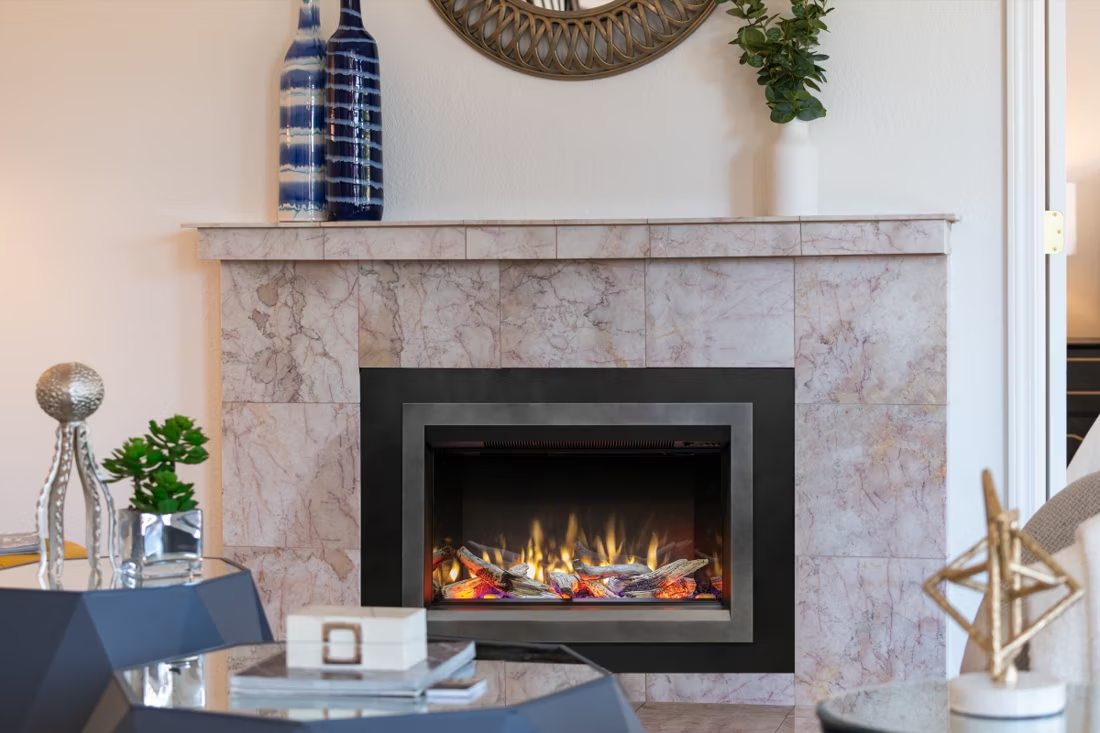
An electric fireplace is typically a wall-mounted or built-in unit designed to look like a framed fireplace. An electric insert is sized to slide into an existing masonry or wood fireplace opening, converting an old wood-burning firebox into a low-maintenance heat source without touching the chimney. An electric stove is a freestanding cabinet-style unit that mimics a wood or pellet stove's look. For Ziebach County ranch homes with an old, rarely used masonry fireplace, an insert is often the simplest upgrade—it fills the existing opening and needs no chimney work at all.
How does an electric fireplace handle a rural power outage?
It doesn't—electric fireplaces need grid power (or a generator) to run, so they go dark the moment power drops. That's a real consideration in Ziebach County, where rural electric cooperative service can be knocked out for extended periods during winter storms. For households relying on electric heat as their primary source, it's worth keeping a wood stove or propane heater as backup. Many local homes pair an electric fireplace for everyday convenience with a wood stove burning ponderosa pine, oak, or cottonwood as the fallback when the power's out and the temperature's dropping.
Are electric fireplaces cheaper to run than wood or propane in Ziebach County?
For occasional, single-room use, yes—an electric fireplace's operating cost is just the electricity it draws, with no fuel purchase, delivery, or storage. But for whole-home heating through a long Ziebach County winter, electricity typically costs more per BTU than wood you cut or split yourself, and propane or wood usually wins on raw heating capacity for the dollar. Most homeowners here treat electric as a low-cost add for ambiance and spot heating rather than a way to cut their overall winter heating bill.
Can I install an electric fireplace myself?
A basic plug-in electric fireplace or insert that uses an existing standard outlet can often be installed by a reasonably handy homeowner—it's furniture-simple in many cases. Built-in units requiring a new circuit, wall framing, or a dedicated 240V line should go through a licensed electrician, both for safety and because improper wiring can trip breakers or create a fire risk. A local dealer can tell you which category your chosen unit falls into before you buy.
What size electric fireplace do I need for my home?
Sizing an electric fireplace is more about room dimensions than square footage of the whole house, since these units are built for zone heating. A compact wall-mounted or insert unit works for a bedroom or small den; a larger built-in wall unit suits an open living or great room. In Ziebach County's older ranch-style homes, where rooms tend to be closed off rather than open-concept, a properly sized unit in the room you actually occupy most often will outperform a larger unit that's underpowered for a big open space it can't realistically heat.
Electric vs. pellet stove—which makes more sense for my Ziebach County home?
A pellet stove burns bagged pellets from suppliers like Lignetics or Indeck Energy Services, puts out real whole-room heat, and can be a meaningful part of a home's heating plan—but it still needs venting, an electrical hookup for the auger and blower, and regular hopper loading. An electric fireplace needs none of that: no venting, no fuel storage, no ash cleanup, just an outlet. For a Ziebach County homeowner who wants genuine supplemental heat and doesn't mind the upkeep, pellet is the stronger heating tool. For someone who wants low-maintenance ambiance and light zone warmth in a specific room, electric is the simpler, cheaper path.
Can I put a TV above my fireplace?
Yes—with an asterisk. Fireplaces are hot and TVs don't like heat. Either put a mantel between them to deflect rising warmth, or choose a fireplace with heat-management technology that creates a cool zone on the wall above—the wall stays around 125 degrees, barely warm, while the room still gets full heat. If you like clean lines and don't want a mantel, heat management is the answer.
Do electric fireplaces actually produce heat?
Yes—most put out around 4,800–5,000 BTUs from a standard outlet, which comfortably warms a bedroom, office, or den as a comfort-zone heater. What they won't do is carry a whole house the way wood, gas, or pellet can. Think of electric as ambiance-first with honest supplemental heat: flames on with no heat in July, flames plus warmth in January.
Can I install a fireplace myself?
If you're putting a fire in your house on purpose, it's best to work with an expert. Unless you're genuinely experienced in framing, gas line, vent pipe, and the national code on clearances to combustibles, have a professional do it—and ideally the same company that sells you the fireplace, so warranty, service, and liability all live under one roof.
What is an in-home preview and do I need one?
It's a visit where a hearth professional measures your space, confirms the model you picked actually works in your home, and walks the specs—framing, gas line, venting, finish work—before anything is ordered. Some details you just can't know until you see the house. Never make a down payment without one; it's the single most-skipped step that burns buyers.
Find your electric fireplace in Ziebach County.
Tell us a bit about your home and we'll put together a free Project Guide & Parts List for your electric fireplace project—matched with a trusted local dealer who knows what your Ziebach County home's electrical service can support.
Find Your Fireplace →