
Instant heat for Turner County's coldest rooms—no chimney required.
From Parker to Viborg to Marion, electric fireplaces bring clean, instant zone heat to Turner County homes without a gas line, a propane tank, or a masonry chimney. Find the right unit and connect with a trusted local dealer.
Every Project Starts From One of These Five Situations
Zone heat that keeps up with a Great Plains winter.
Turner County is small and rural—about 5,360 people spread across Parker, Viborg, Marion, Hurley, Centerville, Chancellor, and Davis, with a lot of open ground in between. Sitting in climate zone 6A, winters here bring sustained sub-zero wind chill and hard, driving wind off the open plains with almost nothing to break it. Most homes lean on propane furnaces or wood as primary heat, but electric fireplaces have a real, specific job in this county: warming a finished basement in Viborg, a sunporch addition outside Marion, or a room where running new gas line or a Class A chimney just isn't practical.
Southeastern Electric Cooperative, headquartered right in Marion, serves much of Turner County's rural electric grid—which makes an electric fireplace a straightforward, low-friction option here. There are no wood smoke or emissions restrictions to navigate in Turner County (no air quality non-attainment issues, no curtailment days), so an electric unit sidesteps that conversation entirely. The tradeoff worth understanding upfront: electric fireplaces are supplemental heat, not a whole-home furnace replacement, and they go dark in a power outage—a real consideration when a Great Plains ice storm knocks out the grid for a day or two.
Three steps. No salesperson until you're ready.
Tell us about your project
Your zip code, your situation, and the fuel you're leaning toward—or let the answers point you to one.
See what's actually available
The brands dealers within 100 miles genuinely carry—real options, never a catalog mirage.
Get your dealer & Project Guide
A trusted local dealer, plus the free Project Guide & Parts List that names every component of the job.
Frequently Asked Questions
How much does an electric fireplace installation cost in Turner County?
Cost depends heavily on whether you're installing a plug-in unit or a hardwired built-in. A freestanding electric stove or insert that plugs into an existing standard outlet is the cheapest path—often $400 to $1,500 including the unit, since there's no electrician visit required. A built-in wall unit or linear electric fireplace that needs a dedicated 120V or 240V circuit run by a licensed electrician typically lands between $1,500 and $3,500 once you factor in the unit, wiring, and any surround or mantel carpentry. Larger custom media-wall installs with finish carpentry can run higher. A local dealer will give you a firm number after seeing the room and the existing electrical panel capacity.
Will an electric fireplace actually heat a room in Turner County's winters?
It will take the edge off a room, but don't expect it to replace your furnace. Most electric fireplaces top out around 1,500 watts, which puts real heat output in the range of 5,000 BTU—enough to comfortably warm a well-insulated room of 300 to 500 square feet as supplemental heat, not to carry a whole house through a 6A-zone Turner County cold snap. For a finished basement, a bonus room, or a bedroom that runs cold, that's plenty. For anything larger, or for a home that's counting on the fireplace as its main heat source, you'll want to talk sizing through with a local dealer before you buy.
Do I need a permit to install an electric fireplace in Turner County?
In most cases, no—a plug-in freestanding electric stove or insert that uses an existing outlet doesn't trigger a building permit. Where a permit typically comes into play is when new electrical work is involved: running a dedicated circuit for a built-in wall unit, upgrading panel capacity, or adding new wiring behind a media wall. That electrical work should go through a licensed electrician regardless of permit requirements, both for safety and because most manufacturer warranties require proper wiring. If you're unsure whether your specific project needs a permit, Turner County's building office can confirm, and most dealers who handle built-in installs will coordinate that step for you.
Electric vs. propane—which fits my Turner County home better?
They usually aren't competing for the same job. Propane is the common choice for primary heat in Turner County's rural areas without natural gas service, and a propane fireplace or stove can keep running during a power outage—a real advantage in a Great Plains blizzard. Electric fireplaces can't run without power, so they're not a backup heat source, but they cost far less to install (no tank, no gas line, no venting), produce zero emissions, and can go in rooms where running propane line isn't worth the expense—a converted garage, a basement family room, an office addition. Many Turner County homeowners end up with both: propane or wood carrying the real heat load, electric handling ambiance and zone heat in a secondary space.
What's the difference between an electric insert, an electric stove, and a built-in electric fireplace?
An electric insert is sized to drop into an existing fireplace opening—masonry or zero-clearance—and is the most common upgrade for a homeowner who wants to stop dealing with wood or gas but keep the existing mantel and surround. An electric stove is a freestanding cabinet-style unit that sits on the floor like a wood stove, plugs in, and can go almost anywhere. A built-in electric fireplace is designed to be framed into a wall—often as part of a media wall or new construction—and usually requires a dedicated circuit. For most Turner County homes retrofitting an old fireplace, the insert is the simplest path; for a room with no existing fireplace, a stove or built-in unit is the better fit.
Will my electric fireplace still work if the power goes out?
No—and this is the honest tradeoff to weigh before choosing electric as your only heat source in Turner County. An electric fireplace has no function without grid power, so during an ice storm or extended winter outage it won't produce heat or even flame effect. Southeastern Electric Cooperative and other providers in the area work hard to restore outages quickly, but rural lines can take longer than in-town service. If backup heat during outages matters to your household, a wood stove or a propane unit with battery-backed ignition is worth considering alongside or instead of electric.
What's the best electric fireplace for a cold-climate Turner County home?
Look past the flame effect and check the actual heating specs—units from Dimplex and Napoleon, for example, publish real wattage and square-footage coverage rather than just showing a pretty display. If you want the unit to genuinely take the chill off a room and not just look nice, prioritize a model with a true 1,500-watt heater and a thermostat, not a decorative-only insert. For colder rooms—an uninsulated porch conversion or a basement with block walls—talk to a local dealer about realistic square-footage coverage before you commit, since manufacturer ratings assume a reasonably insulated space.
How much maintenance does an electric fireplace need?
Very little, which is one of its biggest advantages over wood or gas in Turner County. There's no chimney to sweep, no gas line to inspect, and no ash to clean out. Maintenance is mostly dusting the unit, occasionally cleaning the glass front, and replacing LED light components if they eventually dim—which can be years down the line depending on the model. There's no annual safety inspection requirement like there is for a wood-burning appliance or a gas line.
Electric vs. wood—which makes sense for my Turner County home?
Wood—commonly ponderosa pine, oak, or cottonwood in this part of South Dakota—offers real heat output, works with zero electricity (a genuine advantage during a Great Plains power outage), and gives you the ritual of a live fire, but it comes with chimney maintenance, ash cleanup, and the need for proper venting and clearances. Electric skips all of that: no chimney, no permits for a plug-in unit, no smoke, no wood to split or stack, but it depends entirely on the grid and won't keep a room warm if the power's out. For a primary heat source in a Turner County farmhouse, wood still has the edge in a true emergency. For a clean, low-maintenance ambiance-plus-supplemental-heat option in a basement, addition, or secondary living space, electric is usually the more practical pick.
Can I put a TV above my fireplace?
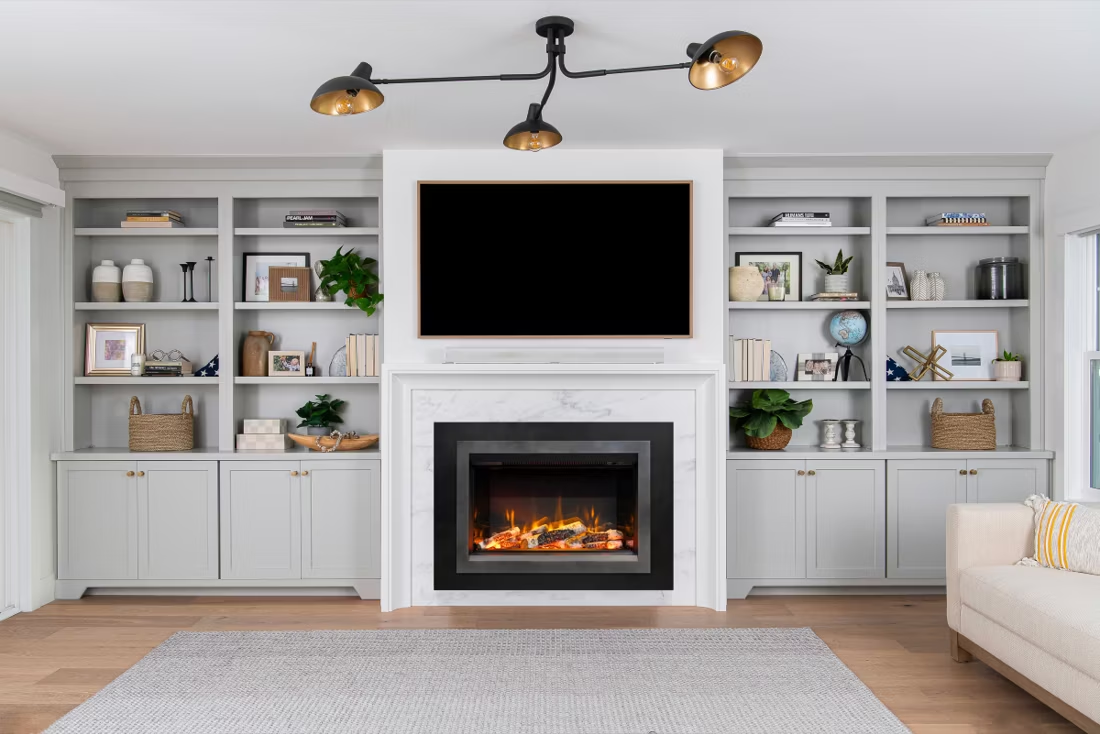
Yes—with an asterisk. Fireplaces are hot and TVs don't like heat. Either put a mantel between them to deflect rising warmth, or choose a fireplace with heat-management technology that creates a cool zone on the wall above—the wall stays around 125 degrees, barely warm, while the room still gets full heat. If you like clean lines and don't want a mantel, heat management is the answer.
Does an electric fireplace need a vent or chimney?
No—that's its superpower. An electric fireplace needs a wall and an outlet, period. No vent pipe, no gas line, no clearances to design around, which is why it works in bedrooms, offices, apartments, and walls where venting a gas or wood unit would be impractical or impossible. Installation is typically the simplest and least expensive of any fireplace type.
Can a fireplace actually lower my heating bill?
Yes—by creating a comfort zone. A furnace heats every square foot of the house just to warm the one room you're in; a gas fireplace on low burns roughly a sixth of the gas a typical furnace does. Set the furnace around 55–60 degrees as a baseline, then heat the rooms your family actually uses. Families who heat this way commonly save $20–$60 a month.
What is an in-home preview and do I need one?
It's a visit where a hearth professional measures your space, confirms the model you picked actually works in your home, and walks the specs—framing, gas line, venting, finish work—before anything is ordered. Some details you just can't know until you see the house. Never make a down payment without one; it's the single most-skipped step that burns buyers.
Stove and Fireplace Dealers in Turner County
Listings include WhyFire partner dealers, dealers we have verified as authorized for the brands we recommend, and established local businesses that carry hearth products. Every listing shows which one it is. The ones marked Preferred run on WhyFire's software, so they can show you real pricing and book your appointment right here. No manufacturer pays for placement. How we verify dealers →
Hjellming Construction
Find your electric fireplace in Turner County.
Tell us a bit about your home and we'll match you with the right electric fireplace, insert, or built-in unit—plus a free Project Guide & Parts List with the exact parts and your recommended local Turner County dealer.
Find Your Fireplace →