
Instant Heat, No Venting Required.
Zone heat for garages, bonus rooms, and ranch outbuildings around Sturgis—plug it in or wire it in, no chimney, no permits for most units. Find the right fit and connect with a trusted local dealer.
Every Project Starts From One of These Five Situations
Simple heat for the rooms your furnace doesn't reach.
Sturgis sits at 3,489 feet on the edge of the Black Hills, with roughly 6,780 heating degree days a year and winter lows averaging 15°F—a climate closer to Helena, MT than to anywhere warm. That kind of cold means most homes here run on a wood stove, propane furnace, or forced-air system as primary heat, with Black Hills Power serving in-town customers and Butte Electric Coop and Grand Electric Coop covering the ranches and rural stretches of Meade County.
Electric fireplaces don't try to replace that primary system, and that's exactly why they work well here. A wall-mounted unit or insert handles a converted garage, a Harley-friendly workshop, a finished basement, or a guest bedroom without any gas line, chimney, or masonry work. Most plug-in models run on a standard 120V outlet; larger built-ins need a dedicated 240V circuit from a licensed electrician. Either way, it's the fastest, least invasive way to add real zone heat to a room your main furnace struggles to keep warm.
Three steps. No salesperson until you're ready.
Tell us about your project
Your zip code, your situation, and the fuel you're leaning toward—or let the answers point you to one.
See what's actually available
The brands dealers within 100 miles genuinely carry—real options, never a catalog mirage.
Get your dealer & Project Guide
A trusted local dealer, plus the free Project Guide & Parts List that names every component of the job.
Frequently Asked Questions
How much does it cost to run an electric fireplace in Sturgis?
At the Black Hills Power residential rate of roughly $0.1437 per kWh, a typical 1,500-watt electric fireplace costs about $0.22 an hour to run on full heat. Used for a few hours a day as supplemental heat in a bedroom or den, that works out to $15–$30 a month depending on how often you run it. Rural customers on Butte Electric Coop or Grand Electric Coop should check their own rate, but the math is similar—electric heat is predictable and easy to budget for, even if it's not meant to carry the whole house through a Meade County winter.
What does an electric fireplace installation cost in Sturgis?
Plug-in electric inserts or freestanding stoves that run on a standard outlet typically cost $300–$1,000 including the unit, with no electrician needed. Built-in wall units or larger inserts that require a dedicated 240V circuit usually run $1,200–$2,500 once you factor in electrical work, especially in older downtown Sturgis buildings where panel upgrades are sometimes needed. A local dealer can tell you which category your project falls into after a quick look at your electrical panel and the room.
Can an electric fireplace heat my whole house through a Meade County winter?
No—and any dealer being straight with you will say the same. At 6,780 heating degree days and winter lows averaging 15°F, Sturgis needs a real primary heat source: a wood stove burning local ponderosa pine, oak, or cottonwood, a propane furnace, or forced-air heat. Electric fireplaces are zone heaters, most putting out the equivalent of about 5,000 BTU. They're excellent for taking the chill off a specific room or heating a detached garage or shop, but they're not sized or intended to replace your furnace here.
Do I need a permit to install an electric fireplace in Sturgis?
Plug-in units generally don't require any permit—you're just adding an appliance to an existing outlet. If you're installing a hardwired unit that needs a new 240V circuit or panel work, that electrical work typically requires a permit through the City of Sturgis or Meade County Building Department, and it needs to be pulled by a licensed electrician. Most local dealers either employ a licensed electrician or work with one directly, so this is usually handled as part of the installation rather than something you coordinate yourself.
Which electric utility serves my home, and does that change anything?
Black Hills Power serves most in-town Sturgis addresses, while Butte Electric Coop and Grand Electric Coop cover much of rural Meade County, including many of the ranch properties surrounding town. All three deliver standard 120V and 240V residential service, so any electric fireplace on the market will work regardless of provider—the only real difference is your kWh rate, which is worth checking against the roughly $0.1437 average if you're on a rural co-op plan.
Electric vs. wood for supplemental heat around Sturgis—which makes more sense?
Wood has the edge on raw heating power and keeps working when the power's out, which matters here—rural co-op lines around Meade County can go down in a hard winter storm. Ponderosa pine, oak, and cottonwood are all common locally, and Black Hills National Forest cutting permits run $5–$20 per cord during the May-to-October season. Electric wins on convenience: no wood handling, no chimney, no ash, and it's the easier call for a bonus room, a rental, or a garage where you just want reliable warmth at the flip of a switch. Plenty of local homes run both—wood as primary or backup heat, electric for zone heating rooms the main system doesn't reach well.
What size electric fireplace do I need?
Most residential electric fireplaces are rated for spaces up to 400–1,000 square feet, and heat output tops out around 5,000 BTU regardless of the unit's size or price—that's a fixed limit of standard electric resistance heat. For a single bedroom, den, or converted garage bay in Sturgis, a standard 1,500-watt unit is plenty. For a larger open space, you're better off treating the electric fireplace as ambiance-plus-partial-heat and pairing it with your existing furnace or a wood stove rather than expecting it to carry the whole room on the coldest days.
What electric fireplace styles work best for Sturgis homes and outbuildings?
Wall-mounted electric fireplaces suit finished basements and bedrooms in the ranch-style homes common around town. Electric inserts are a good option if you've got an existing masonry fireplace opening and want heat and ambiance without the chimney maintenance. For garages, shops, and man-caves—no shortage of those in a town built around the Sturgis Motorcycle Rally—a freestanding stove-style electric unit is popular since it doesn't require any wall modification and can be moved if you rearrange the space.
Will my electric fireplace work if the power goes out?
No—electric fireplaces require power to run the heating element and any fan, so they go dark along with everything else during an outage. That's worth factoring in if you're on Butte Electric Coop or Grand Electric Coop lines out in rural Meade County, where winter storm outages are more common than they are in town. If backup heat during an outage matters to you, a wood stove is the more reliable pairing—it keeps working with no electricity at all.
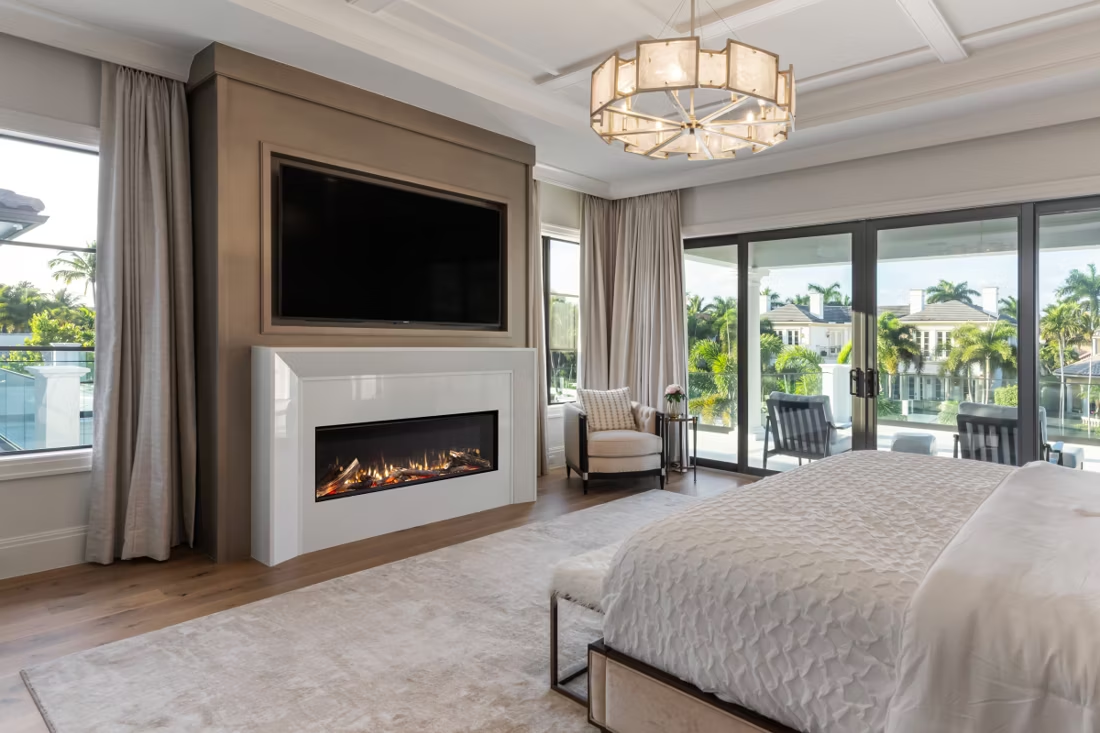
Can I put a TV above my fireplace?
Yes—with an asterisk. Fireplaces are hot and TVs don't like heat. Either put a mantel between them to deflect rising warmth, or choose a fireplace with heat-management technology that creates a cool zone on the wall above—the wall stays around 125 degrees, barely warm, while the room still gets full heat. If you like clean lines and don't want a mantel, heat management is the answer.
Does an electric fireplace need a vent or chimney?
No—that's its superpower. An electric fireplace needs a wall and an outlet, period. No vent pipe, no gas line, no clearances to design around, which is why it works in bedrooms, offices, apartments, and walls where venting a gas or wood unit would be impractical or impossible. Installation is typically the simplest and least expensive of any fireplace type.
What is an in-home preview and do I need one?
It's a visit where a hearth professional measures your space, confirms the model you picked actually works in your home, and walks the specs—framing, gas line, venting, finish work—before anything is ordered. Some details you just can't know until you see the house. Never make a down payment without one; it's the single most-skipped step that burns buyers.
Can a fireplace actually lower my heating bill?
Yes—by creating a comfort zone. A furnace heats every square foot of the house just to warm the one room you're in; a gas fireplace on low burns roughly a sixth of the gas a typical furnace does. Set the furnace around 55–60 degrees as a baseline, then heat the rooms your family actually uses. Families who heat this way commonly save $20–$60 a month.
Nearby Dealers
Hearth shops serving Sturgis and the surrounding area. Every listing shows whether it is a WhyFire partner, a dealer we have verified as authorized for the brands we recommend, or a local business carrying hearth products. No manufacturer pays for placement. How we verify dealers →
Knecht Home Center-Spearfish
Builders First Source - Spearfish
Hebron Brick
Builders First Source - Rapid City
Electric Service in Sturgis
An electric fireplace's heater draws about 1,500 watts—pennies per hour at local rates.
Black Hills Power, Inc.
Butte Electric Coop, Inc
Grand Electric Coop, Inc
Find your electric fireplace in Sturgis.
Tell us a bit about your space and we'll put together a free Project Guide & Parts List—the right unit, the exact parts, and a trusted local Sturgis-area dealer to install it.
Find Your Fireplace →