
Instant heat for Stanley County's long, cold winters.
No chimney, no gas line, no permit headaches—just clean, controllable heat for the ranch homes and river-bottom properties of Stanley County. Find the right unit and connect with a trusted local dealer.
Every Project Starts From One of These Five Situations
Zone heat for a place where every degree counts.
Stanley County sits along the Missouri River in central South Dakota, with Fort Pierre as the county seat and just over 2,500 people spread across a landscape of prairie and river-bottom terrain. Climate zone 6A and winters in the same range as Bismarck, ND put this area among the coldest in the region—winter lows average 9°F, and stretches well below zero are routine from December through February. In a county this rural, most homes rely on propane or electric baseboard for whole-house heat, and an electric fireplace fits in as targeted, supplemental warmth for the room you're actually sitting in, without touching the furnace.
Because Stanley County has no significant timber industry and limited forested land outside the river bottoms, wood stoves are essentially a non-factor here—cottonwood and oak grow along the Missouri, and ponderosa pine shows up occasionally, but there isn't a cutting-permit culture or local firewood infrastructure the way there is in wooded parts of the state. Pellet stoves are similarly rare; there's no regional retail presence to speak of, even though pellet suppliers like Lignetics and Indeck Energy Services serve the broader region. Electric fireplaces fill that gap: no venting, no fuel delivery, no chimney maintenance, and a straightforward install in additions, finished basements, shops, and rental units around Fort Pierre and Hayes.
Three steps. No salesperson until you're ready.
Tell us about your project
Your zip code, your situation, and the fuel you're leaning toward—or let the answers point you to one.
See what's actually available
The brands dealers within 100 miles genuinely carry—real options, never a catalog mirage.
Get your dealer & Project Guide
A trusted local dealer, plus the free Project Guide & Parts List that names every component of the job.
Frequently Asked Questions
How much does an electric fireplace installation cost in Stanley County?
Plug-in electric fireplaces and inserts that use a standard 120-volt outlet typically run $200 to $700 installed, since there's no venting or gas line to run. Built-in units that need a dedicated 240-volt circuit—common for larger great rooms or whole-room supplemental heat—run higher once an electrician is involved, often $1,500 to $4,000 depending on the unit and how far the electrical panel is from the install location. Because Stanley County is sparsely populated, expect a modest travel charge from installers based out of Fort Pierre or Pierre if you're out on a ranch property away from town.
Can an electric fireplace heat my whole house in a Stanley County winter?
No—and this matters given the climate here. With winters as cold as Bismarck, ND and winter lows averaging 9°F, a typical electric fireplace's 1,500-watt heater (roughly 5,000 BTU) is built for zone heating, not whole-house duty. It's excellent for taking the chill off a living room, den, or finished basement while your propane furnace or electric baseboard handles the rest of the house. Homeowners here generally use electric fireplaces to close the gap in one heavily used room rather than as a stand-alone heat source for the whole structure.
Do I need a permit to install an electric fireplace in Stanley County?
Most plug-in electric fireplaces need no permit at all—they simply plug into an existing outlet. If you're installing a built-in unit that requires a new dedicated circuit or panel work, that electrical work should go through a licensed electrician, and larger jobs may need to be registered with Stanley County's building office depending on the scope. Because there's no venting, gas line, or chimney involved, electric is by far the least permit-intensive fireplace option available in the county.
Electric vs. propane fireplace—which makes more sense here?
Propane is the standard heating fuel across most of rural Stanley County, and propane fireplaces can produce real, sustained heat output that holds up during a hard cold snap—useful if you want a legitimate backup heat source during a power outage. Electric fireplaces can't run without grid power, which is worth weighing given how exposed rural electric cooperative lines can be to winter storms and high plains wind. That said, electric wins on install simplicity and cost when you just want supplemental warmth and ambiance in one room and already have reliable power and a propane furnace running the rest of the house.
What's the best type of electric fireplace for Stanley County's climate?
Look for a built-in insert or wall unit rated with a real heater—not just a flame-effect light show—since you'll want it doing actual supplemental heating work on the coldest days. A 1,500-watt heater with a thermostat is standard and adequate for most single rooms. For larger open living areas common in ranch-style homes around Fort Pierre, size up to a wider insert or consider two smaller units in separate zones rather than one oversized unit trying to cover an open floor plan.
Will my electric fireplace work during a power outage?
No—this is the one real limitation of electric heat, and it's worth being honest about given how exposed rural power lines are to ice and wind events on the South Dakota plains. If backup heat during an outage is a priority for your household, an electric fireplace shouldn't be your only plan; pair it with a propane heater or generator for true outage resilience. For everyday supplemental warmth when the power is on, though, electric is simple, safe, and low-maintenance.
Why don't more people use wood stoves in Stanley County?
Wood heat just doesn't have the infrastructure here that it does in more heavily forested parts of the country. Cottonwood and oak grow along the Missouri River bottoms and ponderosa pine appears occasionally, but there's no meaningful cutting-permit system, firewood delivery network, or local dealer base built around wood-burning appliances in a county this size and this rural. A handful of ranch properties still keep an old wood stove for backup heat, but for most Stanley County homeowners, an electric fireplace delivers the ambiance without the logistics of sourcing and storing cordwood.
Are pellet stoves an option instead of electric in Stanley County?
Regional pellet suppliers like Lignetics and Indeck Energy Services do serve the broader area, but pellet stoves themselves are uncommon in Stanley County—there's no local dealer network to speak of, and most homeowners aren't set up to keep pellets on hand or maintain a hopper and auger system. Electric fireplaces offer a similar clean, low-maintenance experience for supplemental heat and ambiance, without needing to source fuel from outside the county or perform periodic cleaning.
Where do electric fireplaces make the most sense in Stanley County?
The best fits are additions and remodels without an existing chimney, finished basements, shops and outbuildings on ranch properties, and rental units around Fort Pierre and Hayes where landlords want reliable heat without venting or gas line liability. Because there's no masonry or venting to work around, an electric fireplace can go into almost any wall or built-in cabinet with power access—which makes it a practical fit for the older farmhouses and newer pole-barn conversions common throughout the county.
Can I put a TV above my fireplace?
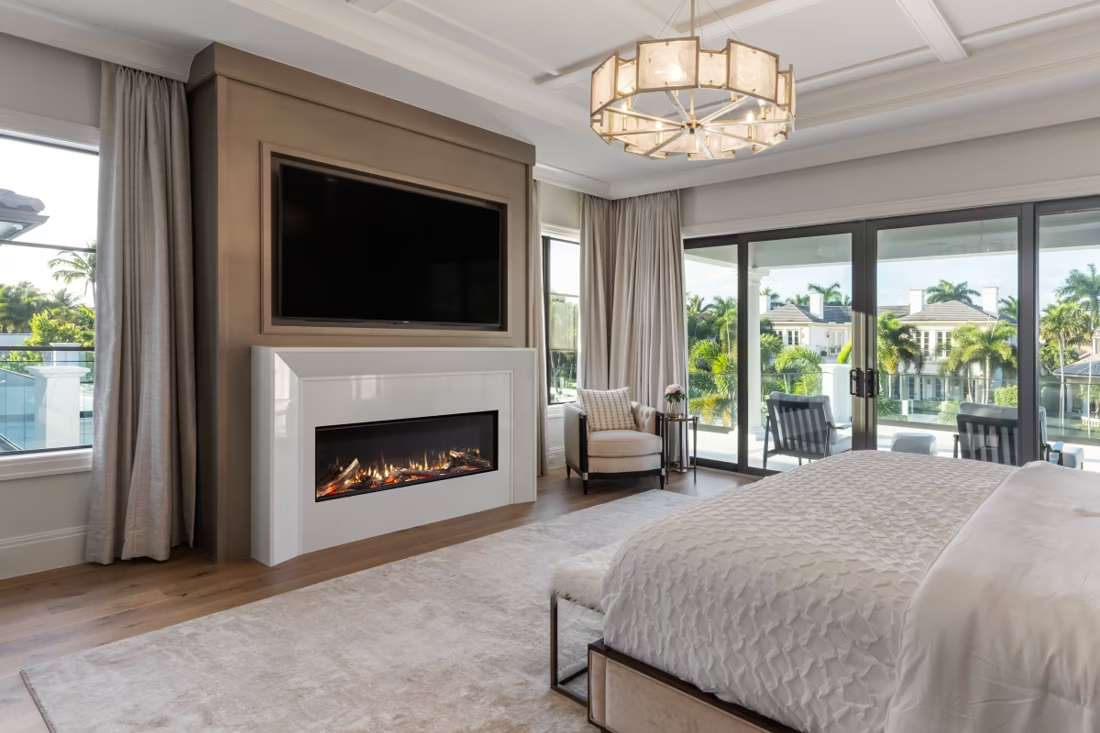
Yes—with an asterisk. Fireplaces are hot and TVs don't like heat. Either put a mantel between them to deflect rising warmth, or choose a fireplace with heat-management technology that creates a cool zone on the wall above—the wall stays around 125 degrees, barely warm, while the room still gets full heat. If you like clean lines and don't want a mantel, heat management is the answer.
Does an electric fireplace need a vent or chimney?
No—that's its superpower. An electric fireplace needs a wall and an outlet, period. No vent pipe, no gas line, no clearances to design around, which is why it works in bedrooms, offices, apartments, and walls where venting a gas or wood unit would be impractical or impossible. Installation is typically the simplest and least expensive of any fireplace type.
Can a fireplace actually lower my heating bill?
Yes—by creating a comfort zone. A furnace heats every square foot of the house just to warm the one room you're in; a gas fireplace on low burns roughly a sixth of the gas a typical furnace does. Set the furnace around 55–60 degrees as a baseline, then heat the rooms your family actually uses. Families who heat this way commonly save $20–$60 a month.
Does a fireplace add value to my home?
On average, a fireplace adds back to the home about the same amount you spent installing it. Add the monthly savings from heating the rooms you actually use instead of the whole house—often hundreds of dollars a year—and the value case is strong before you even count what a fire does for how your family uses the room.
Stove and Fireplace Dealers in Stanley County
Listings include WhyFire partner dealers, dealers we have verified as authorized for the brands we recommend, and established local businesses that carry hearth products. Every listing shows which one it is. The ones marked Preferred run on WhyFire's software, so they can show you real pricing and book your appointment right here. No manufacturer pays for placement. How we verify dealers →
Builders Solutions
Find your electric fireplace in Stanley County.
Tell us a bit about your home and we'll put together a free Project Guide & Parts List—the right unit, the wiring needs, and a trusted local dealer to install it.
Find Your Fireplace →