
Gas heat built for Black Hills winters.
From Rapid City out to Hill City and Wall, Pennington County sees long, cold stretches with average lows near 16°F. Find the right gas fireplace or insert and get matched with a trusted local dealer who can actually install it.
Every Project Starts From One of These Five Situations
Instant heat for a county that stretches from prairie to peak.
Pennington County covers a huge range of terrain—flat prairie east of Rapid City, the pine-covered rise of the Black Hills, and elevations climbing past 7,000 feet near Black Elk Peak. With roughly 115,000 residents spread across Rapid City, Box Elder, Hill City, Keystone, and Wall, winter here is no small thing: average lows sit around 16°F and the county logs close to 6,845 heating degree days a year, a heating load in the same range as Bismarck, North Dakota. Wood heat has deep roots in the Black Hills—ponderosa pine, oak, and cottonwood are the local staples—but gas fireplaces have become the go-to choice for homeowners who want reliable, no-fuss heat in a primary living space.
Natural gas service through Black Hills Energy reaches Rapid City and much of the surrounding developed corridor, so homes there can tie a new gas fireplace or insert straight into existing service. Head out toward Hill City, Keystone, or the Badlands edge near Wall, and propane from regional suppliers becomes the standard fuel instead. Either way, a properly sized and vented gas unit gives you heat at the flip of a switch, works as zone heat alongside central HVAC, and—with the right ignition system—can keep running when a Black Hills winter storm knocks out power.
Three steps. No salesperson until you're ready.
Tell us about your project
Your zip code, your situation, and the fuel you're leaning toward—or let the answers point you to one.
See what's actually available
The brands dealers within 100 miles genuinely carry—real options, never a catalog mirage.
Get your dealer & Project Guide
A trusted local dealer, plus the free Project Guide & Parts List that names every component of the job.
Frequently Asked Questions
How much does a gas fireplace installation cost in Pennington County?
Most gas fireplace or insert installations in Pennington County run somewhere between $4,000 and $11,000, with the final number driven mostly by venting path and gas supply. A direct-vent insert going into an existing masonry fireplace with gas already run to the room sits toward the lower end. A new built-in gas fireplace for a remodel or addition—with framing, venting, and a fresh gas line—lands in the middle to upper range. Rural homes near Hill City or Wall that need a new propane tank set and line run to the house should budget toward the higher end. A local dealer will give you a firm number after seeing the space in person.
Can I convert my existing wood fireplace to gas?
Yes, and it's a common project in older Rapid City neighborhoods where masonry fireplaces from the 1960s through 1980s are common. A gas insert typically drops into the existing firebox and vents through a stainless liner run up the same chimney, which keeps the cost down since you're not building new venting from scratch. Homes already on Black Hills Energy natural gas service usually see the lower end of installation cost; homes that need a propane line or tank added will run higher. The conversion keeps the look of the original fireplace while cutting out the wood handling and ash cleanup entirely.
Do I need natural gas, or should I plan on propane?
It depends on where in the county you're located. Black Hills Energy provides natural gas service across Rapid City and the surrounding developed corridor, so if your water heater or furnace already runs on natural gas, adding a fireplace is straightforward. Once you're out toward Hill City, Keystone, or the Badlands edge near Wall, propane from a regional supplier is the norm—either an existing tank on the property or a new one set by the propane company. Most gas fireplace models can be configured for either fuel; your installer sets the correct orifice and regulator for whichever you have.
Will my gas fireplace still work if the power goes out?
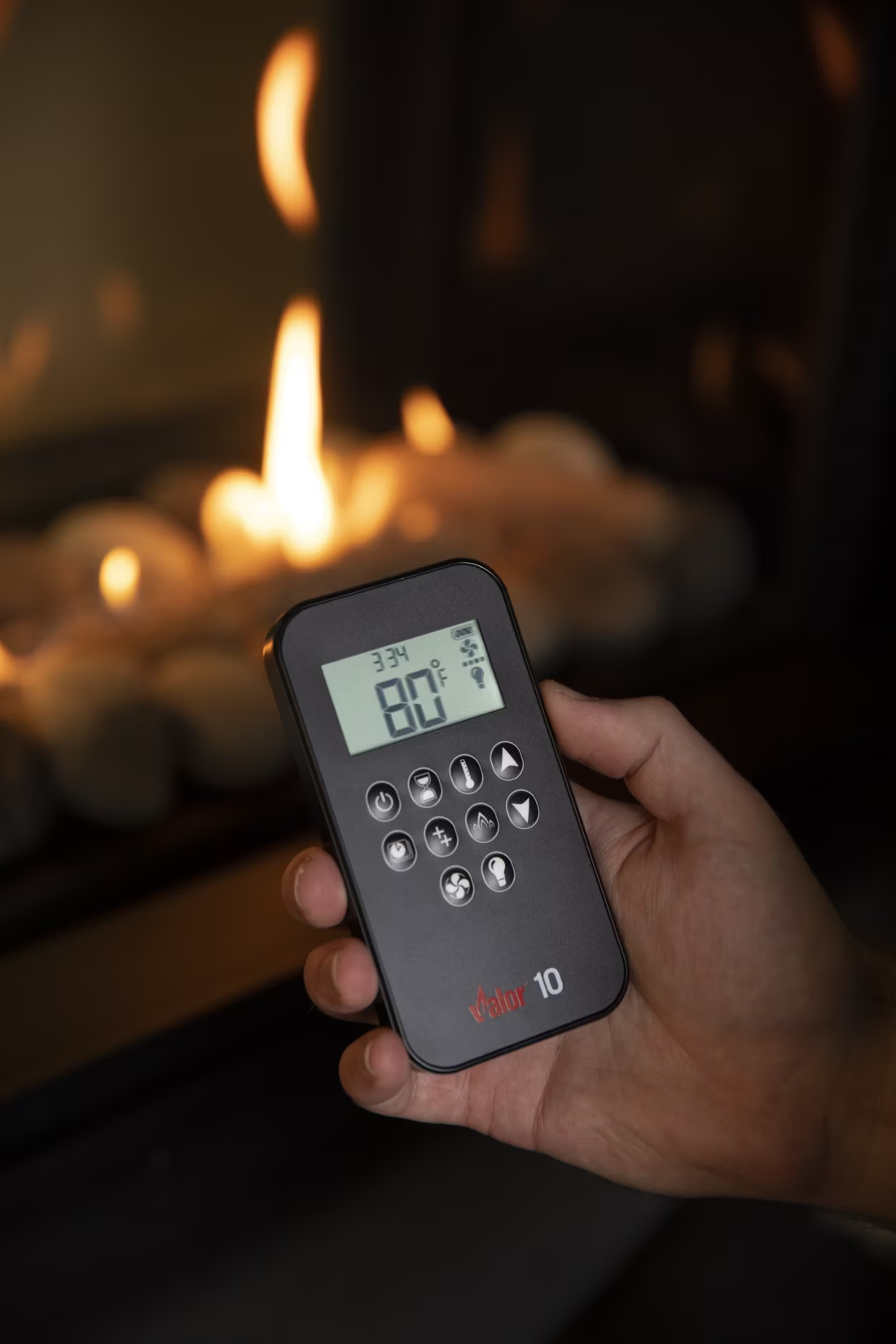
Most modern gas fireplaces will, as long as they use intermittent pilot ignition (IPI) with a battery backup—typically a set of AA batteries built into the unit that take over the moment power drops. Valor units go a step further: their pilot assembly generates its own electricity through the thermocouple, so there's no battery to remember at all. That distinction matters in Pennington County, where a Black Hills winter storm can knock out power for a day or more in the more rural stretches of the county. Ask your dealer specifically about the ignition system on any unit you're considering—a standing-pilot-only unit without battery backup won't run without electricity.
What's the difference between a gas fireplace, gas insert, and gas stove?
A gas fireplace is a fully built-in unit framed into a wall—the standard choice for new construction or a full remodel. A gas insert is sized to slide into an existing masonry firebox, sealing it up and using the existing chimney as the vent path, which is the common route for older Rapid City homes with a fireplace already in place. A gas stove is a freestanding cast-iron or steel unit that sits on the floor and vents through a wall or ceiling, similar in footprint to a wood stove but running on gas. For most Pennington County homeowners upgrading an existing masonry fireplace, an insert is the practical choice; new rooms or additions are usually better suited to a built-in fireplace or freestanding stove.
Do I need a permit to install a gas fireplace in Pennington County?
In most cases, yes. If you're inside Rapid City limits, the permit runs through the City of Rapid City's building division; in unincorporated parts of the county, it goes through Pennington County. New gas line work also requires a licensed gas-fitter regardless of jurisdiction. Most established hearth dealers handle the permitting and coordinate the gas line, venting, and inspection as part of the install, so you're not left managing separate trades yourself.
What's the difference between vented and vent-free gas fireplaces?
Vented (direct-vent) gas fireplaces pull combustion air from outside and exhaust it back outside through a sealed pipe—they're the standard, code-friendly choice almost everywhere, including Pennington County. Vent-free units burn gas directly into the room without any exterior venting, which makes them more efficient on paper but means they release some water vapor and combustion byproducts into your living space, and they come with strict room-sizing and ventilation rules. Vent-free units are legal in South Dakota, but for a Black Hills winter where a room might be closed up tight for months at a time, direct-vent is the option most local dealers steer homeowners toward. Ask about both when you talk to a retailer, but expect direct-vent to be the practical recommendation.
How often should a gas fireplace be serviced?
Plan on an annual inspection, ideally before the heating season ramps up in the fall. A technician checks the burner, pilot assembly, venting, and gas connections, and cleans the glass and interior. It's a much lighter lift than a wood chimney sweep—usually an hour or so—but it's the step that catches a failing ignition system or a venting issue before it becomes a bigger problem in the middle of a January cold snap.
Gas vs. wood—which makes more sense for a Pennington County home?
Wood still has a real place here—Black Hills National Forest cutting permits run $5 to $20 per cord through the May-to-October season, and ponderosa pine, oak, and cottonwood are all readily available locally, which keeps fuel costs low and gives you heat that works with no electricity at all during an outage. Gas trades that self-sufficiency for convenience: instant on-off operation, no wood handling, and consistent heat without tending a fire. For primary living spaces in town where Black Hills Energy natural gas is already run to the house, gas is usually the easier call. For rural or off-grid-leaning properties out toward Hill City or Wall, many homeowners keep a wood stove for backup heat even after adding gas in the main room.
Why is my open fireplace making my house colder?
Open fireplaces suck—literally. As the fire burns, it consumes air your furnace already paid to heat and pulls it out through the chimney, so the house is actually colder after the fire goes out than before you lit it. An insert fixes this: it seals the chimney, puts fixed glass across the front, and turns that hole in your house into a real heat source.
Why is a fireplace insert so efficient?
An insert does two things: it seals the chimney completely, so you stop losing air you already paid to heat, and it radiates warmth into the room through the firebox and glass. Most add a heat-exchange fan that pulls cool room air underneath, wraps it around the hot firebox, and pushes it back out warm. Your home is more efficient before you've even lit the first fire.
How much should I budget for a fireplace?
For an average home—covering the fireplace, the vent pipe, and basic installation—a budget between $3,900 and $5,500 gives you a lot of options across wood, gas, and pellet. By the time you add finish work, gas line, and electrical, the average complete installation lands between $5,000 and $12,000 all-in. In a remodel or new build, a good rule is to put about 2.5% of the total project cost toward the fireplace.
Does a fireplace add value to my home?
On average, a fireplace adds back to the home about the same amount you spent installing it. Add the monthly savings from heating the rooms you actually use instead of the whole house—often hundreds of dollars a year—and the value case is strong before you even count what a fire does for how your family uses the room.
Stove and Fireplace Dealers in Pennington County
Listings include WhyFire partner dealers, dealers we have verified as authorized for the brands we recommend, and established local businesses that carry hearth products. Every listing shows which one it is. The ones marked Preferred run on WhyFire's software, so they can show you real pricing and book your appointment right here. No manufacturer pays for placement. How we verify dealers →
Repair My Flame
Knecht Home Center - Rapid City
Builders First Source - Rapid City
Hebron Brick
Find your gas fireplace in Pennington County.
Tell us about your home and we'll match you with a trusted local dealer and send over a free Project Guide & Parts List—the exact parts, vent kit included, for your gas fireplace project in Pennington County.
Find Your Fireplace →