
Instant heat for Miner County's coldest nights.
No chimney, no gas line, no wood to split—just heat and ambiance you can add to almost any room in Howard, Canova, Carthage, Fedora, or a farmhouse out on the section roads. Find the right unit and connect with a trusted local dealer.
Every Project Starts From One of These Five Situations
Supplemental warmth that never needs a chimney.
Miner County is farm country—about 1,300 people spread across roughly 570 square miles of eastern South Dakota, centered on Howard with small communities in Canova, Carthage, and Fedora. The county sits in climate zone 6A, which means winters that run long and hard, with cold snaps and wind chill across open farmland that rival what you'd see in Fargo, North Dakota, most seasons. For generations, Miner County households have leaned on wood—oak and cottonwood from shelterbelts and river bottoms, along with hauled-in ponderosa pine—plus propane, to get through those months. Electric heat has never been the primary source out here, and in a 6A climate it usually still isn't.
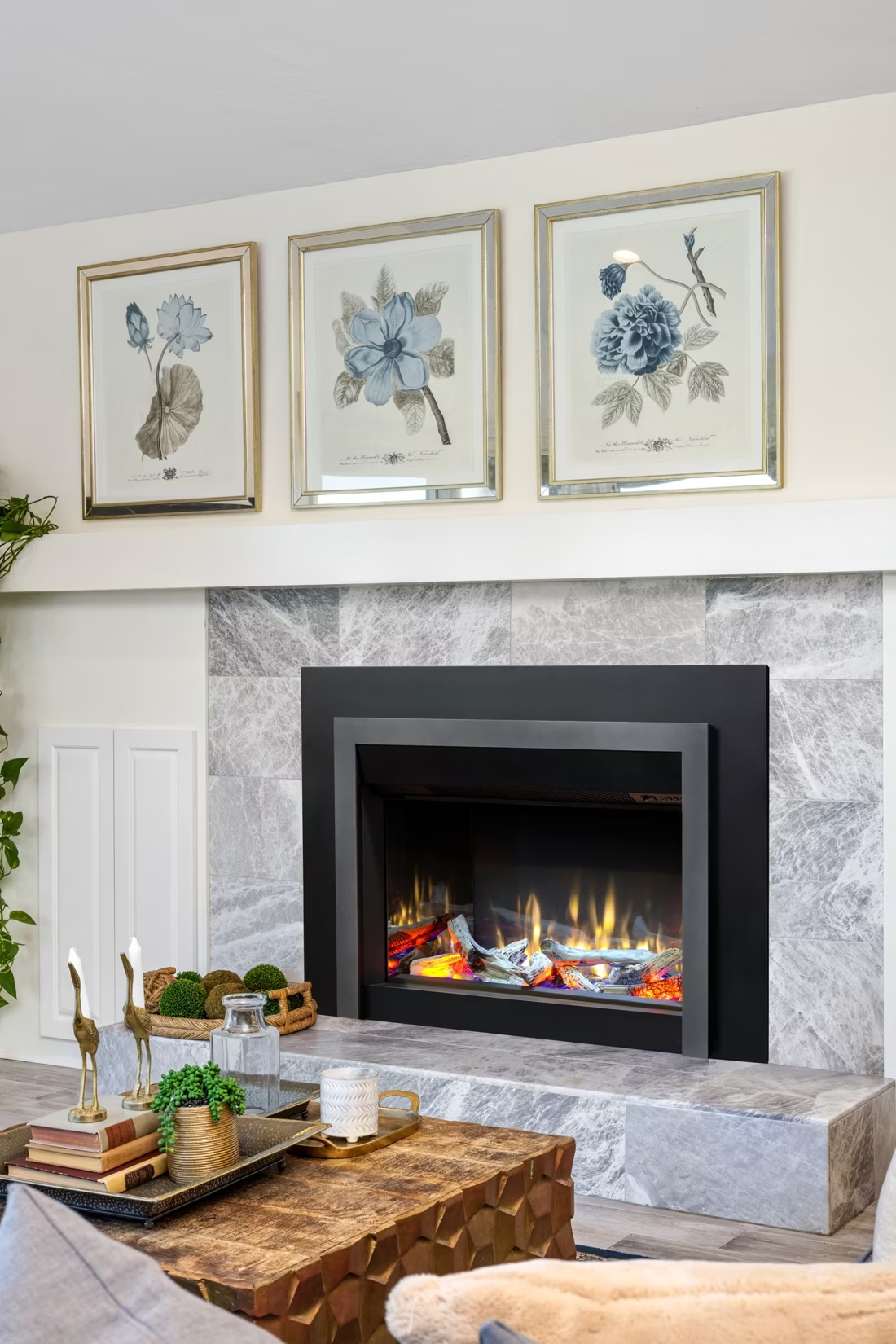
Where electric fireplaces earn their place in Miner County is as supplemental zone heat and ambiance—in a finished basement, a bedroom addition, a manufactured home, or a rental where running a wood stove or a new gas line isn't practical. There's no venting, no chimney, no combustion byproducts to worry about, and most homes here are served by a rural electric cooperative rather than a large investor-owned utility, so an electric unit is simple to wire into whatever service is already run to the house. It won't replace a wood stove or propane furnace on a January night, but it's an honest, low-hassle way to add heat and glow to a room without touching your primary heating system.
Three steps. No salesperson until you're ready.
Tell us about your project
Your zip code, your situation, and the fuel you're leaning toward—or let the answers point you to one.
See what's actually available
The brands dealers within 100 miles genuinely carry—real options, never a catalog mirage.
Get your dealer & Project Guide
A trusted local dealer, plus the free Project Guide & Parts List that names every component of the job.
Frequently Asked Questions
How much does an electric fireplace cost to install in Miner County?
Plug-in electric fireplaces and freestanding electric stoves are the least expensive hearth option available—most units run $150 to $1,000, and installation is as simple as setting it against a wall and plugging into an existing outlet. Built-in electric fireplaces or inserts that need a dedicated circuit typically add a few hundred dollars for electrician labor, since Miner County homes are served by a rural electric cooperative and any new circuit work should be pulled and inspected properly rather than tapped off an existing line. Compared to a wood stove installation with chimney work, or a propane line run, electric is by far the lowest-cost and lowest-hassle option in the county.
Can an electric fireplace heat my whole home in Miner County's climate?
No, and it's worth saying plainly: in a 6A climate zone with winters as long and cold as Miner County sees, electric resistance heat is too expensive and too limited in output to serve as a whole-home heat source. Most electric fireplaces and inserts are rated for zone heating—a single room, a basement, or a bedroom addition—not for carrying a farmhouse through a January cold spell. For most Miner County homes, wood or propane remains the primary heat source, with an electric unit layered in for supplemental warmth or ambiance in a specific room.
Do I need a permit to install an electric fireplace in Miner County?
A plug-in electric fireplace that uses an existing outlet generally doesn't require a permit—it's treated like any other appliance. If you're installing a built-in unit or insert that requires new wiring or a dedicated circuit, that electrical work should be permitted and inspected, which is standard practice for any licensed electrician working in Miner County. Unlike wood or gas installations, there's no venting, chimney, or gas-line permitting involved, which is a big part of why electric units are popular for quick upgrades in rentals and manufactured homes around Howard and the smaller towns in the county.
Will my electric fireplace still work during a power outage?
No—and this matters in Miner County, where winter ice storms and high winds can knock out rural electric service for hours or, occasionally, longer. An electric fireplace or insert needs grid power to run its heating element, fan, and controls, so it won't provide backup heat during an outage the way a wood stove will. If reliable heat during power loss is a priority for your household, most Miner County homes pair an electric unit for everyday convenience with a wood stove, fireplace, or propane appliance as the fallback for when the lines go down.
What's the difference between an electric fireplace, insert, and stove?
An electric fireplace is typically a wall-mounted or built-in unit designed to look like a traditional fireplace, often with a mantel surround. An electric insert is sized to slide into an existing masonry or wood-burning fireplace opening, giving an old, unused hearth a working heat source again without any chimney or venting work. An electric stove is a freestanding unit styled like a traditional wood stove, useful where you want the look of a stove without the wood handling. All three plug into standard household power and none require venting, making them straightforward retrofits in Miner County's older farmhouses and its manufactured housing stock.
Are electric fireplaces a good fit for manufactured or mobile homes in Miner County?
Yes—this is one of the strongest use cases for electric units in a small rural county like Miner. Manufactured and mobile homes often have limited options for adding a masonry chimney or running new gas line, and many have restrictions on what can be installed by insurers or by park rules. A plug-in or low-amperage electric fireplace sidesteps those issues entirely: no venting penetration through the roof or wall, no combustion appliance to inspect, and no impact on the home's structural envelope. It's a common, sensible choice for the smaller housing stock found in Howard, Canova, Carthage, and Fedora.
How much does it cost to run an electric fireplace or insert?
Running cost depends on your electric rate and how many hours you use the heat setting versus flame-only ambiance mode. Most residential electric fireplace heaters draw around 1,500 watts on high, so running one for several hours a day adds a modest but real amount to your monthly bill from your rural electric cooperative. Because Miner County winters are long, homeowners using an electric unit as genuine supplemental heat in one room should expect a noticeably higher bill during the coldest stretches than someone using it mainly for ambiance on the flame-only setting.
Electric vs. wood or propane—which is right for my Miner County home?
Wood—often oak or cottonwood cut locally, sometimes supplemented with hauled-in ponderosa pine—and propane remain the backbone of heating in Miner County because they can carry a home through a 6A-zone winter and keep working when the power is out. Electric fireplaces and inserts don't compete on raw heat output or storm resilience, but they win on convenience: instant on/off, zero maintenance, no ash or chimney sweep, and easy installation in a room where running new venting or gas line isn't worth the cost. Many households here end up with both—propane or wood for the load-bearing heat, electric for a bedroom, den, or basement that just needs a little extra warmth and glow.
Where can I find a local dealer for electric fireplaces near Howard, SD?
Electric fireplaces are sold by hearth retailers, appliance stores, and some electrical contractors serving the Miner County area, though a county with a population under 1,500 doesn't support a dedicated hearth showroom of its own—most residents work with a dealer based in a nearby regional hub who can deliver and, if needed, wire in a built-in unit. Because there's no venting or gas line involved, installation logistics are simpler here than for wood or propane projects, which is part of why electric units are a practical option even in a small, spread-out county like Miner.
Can I put a TV above my fireplace?
Yes—with an asterisk. Fireplaces are hot and TVs don't like heat. Either put a mantel between them to deflect rising warmth, or choose a fireplace with heat-management technology that creates a cool zone on the wall above—the wall stays around 125 degrees, barely warm, while the room still gets full heat. If you like clean lines and don't want a mantel, heat management is the answer.
Does an electric fireplace need a vent or chimney?
No—that's its superpower. An electric fireplace needs a wall and an outlet, period. No vent pipe, no gas line, no clearances to design around, which is why it works in bedrooms, offices, apartments, and walls where venting a gas or wood unit would be impractical or impossible. Installation is typically the simplest and least expensive of any fireplace type.
Can a fireplace actually lower my heating bill?
Yes—by creating a comfort zone. A furnace heats every square foot of the house just to warm the one room you're in; a gas fireplace on low burns roughly a sixth of the gas a typical furnace does. Set the furnace around 55–60 degrees as a baseline, then heat the rooms your family actually uses. Families who heat this way commonly save $20–$60 a month.
Can I install a fireplace myself?
If you're putting a fire in your house on purpose, it's best to work with an expert. Unless you're genuinely experienced in framing, gas line, vent pipe, and the national code on clearances to combustibles, have a professional do it—and ideally the same company that sells you the fireplace, so warranty, service, and liability all live under one roof.
Stove and Fireplace Dealers in Miner County
Listings include WhyFire partner dealers, dealers we have verified as authorized for the brands we recommend, and established local businesses that carry hearth products. Every listing shows which one it is. The ones marked Preferred run on WhyFire's software, so they can show you real pricing and book your appointment right here. No manufacturer pays for placement. How we verify dealers →
Cozy Home & Lighting, LLC
Ramsdell F&M Ltd.
Builders FirstSource Huron
Find your electric fireplace in Miner County.
Tell us a bit about your home and we'll match you with the right electric fireplace, insert, or stove—and hand you a free Project Guide & Parts List with your recommended local dealer.
Find Your Fireplace →