
Electric heat that just works, even on McCook County's coldest nights.
No chimney, no gas line, no venting to plan around—just plug-in or hardwired warmth for farmhouses, rentals, and newer builds from Salem to Montrose. Find the right unit and connect with a trusted local dealer.
Every Project Starts From One of These Five Situations
Simple heat for a county built on practicality.
McCook County sits in southeastern South Dakota's open farm country, home to just over 3,000 people spread across Salem, Montrose, Canistota, Bridgewater, and Spencer. It's a zone 6A climate—winters here run long and cold, with lows regularly dropping below zero and wind cutting hard across unbroken prairie, not unlike what you'd find in Fargo or Bismarck to the north. Homes here range from century-old farmhouses to newer builds in Salem, plus a fair number of manufactured and rental homes throughout the county—all of which makes electric a genuinely practical fit, not a fringe option.
There's no gas line to run and no masonry to build around, which matters in a county where many homes are older and weren't wired or vented for a wood or gas hearth. Southeastern Electric Cooperative serves most of rural McCook County, and a plug-in or hardwired electric unit draws on power that's already there. It's not a replacement for your furnace on a sub-zero January night, but for zone heat in a bonus room, a supplemental boost in a drafty farmhouse living room, or a low-maintenance focal point in a Salem rental, electric does the job without the chore of hauling wood or the paperwork of a gas install.
Three steps. No salesperson until you're ready.
Tell us about your project
Your zip code, your situation, and the fuel you're leaning toward—or let the answers point you to one.
See what's actually available
The brands dealers within 100 miles genuinely carry—real options, never a catalog mirage.
Get your dealer & Project Guide
A trusted local dealer, plus the free Project Guide & Parts List that names every component of the job.
Frequently Asked Questions
How much does an electric fireplace installation cost in McCook County?
A plug-in electric fireplace or insert typically runs $400 to $1,500 installed in McCook County, and in many cases there's no real 'installation' beyond setting the unit and plugging it into an existing outlet. Built-in wall units or larger electric fireplaces that need a dedicated 120V or 240V circuit run higher, often $1,500 to $3,000, once an electrician runs new wiring—common in older Salem and Montrose farmhouses where existing circuits weren't built for a supplemental heater. Local dealers can tell you quickly which category your project falls into during a walkthrough.
What size electric fireplace do I need for my McCook County home?
Most electric fireplace heaters put out 5,000 to 9,000 BTU, which is enough to noticeably warm a single room—a living room, bedroom, or converted porch—but not a whole farmhouse. In McCook County's older, less-insulated homes around Bridgewater and Canistota, expect the heater to work harder and cover less square footage than the same unit would in a tightly built newer home in Salem. If you're trying to heat more than one room, a local dealer can help you decide between a larger insert, a second unit, or pairing electric with your existing furnace rather than expecting one unit to do it all.
Do I need a permit to install an electric fireplace in McCook County?
For a standard plug-in electric fireplace or insert, no permit is typically required since no gas line, venting, or structural work is involved. If your project involves a built-in wall unit that requires a new dedicated circuit or panel work, an electrical permit is usually needed, and that paperwork runs through the McCook County building office in Salem for anything outside city limits, or through the applicable town office for in-town projects. Local dealers who handle electric installs regularly can tell you which category your specific unit falls into before work starts.
Will an electric fireplace actually heat my room during a McCook County winter?
Within its zone, yes—most electric fireplace heaters can noticeably warm a single room, especially in a newer, better-insulated home. But it's worth being honest about the limits: at zone 6A design temperatures, with lows well below zero on the hardest nights, an electric unit is a supplemental heat source, not a substitute for your furnace. It's also worth noting that because electric units run on grid power, they offer no heat during a power outage—which is a real consideration in a rural county where ice storms and high winds do occasionally knock out lines. If backup heat during outages matters to you, that's a point in favor of pairing electric with a wood or pellet appliance elsewhere in the home.
What's the difference between an electric fireplace, insert, and stove?
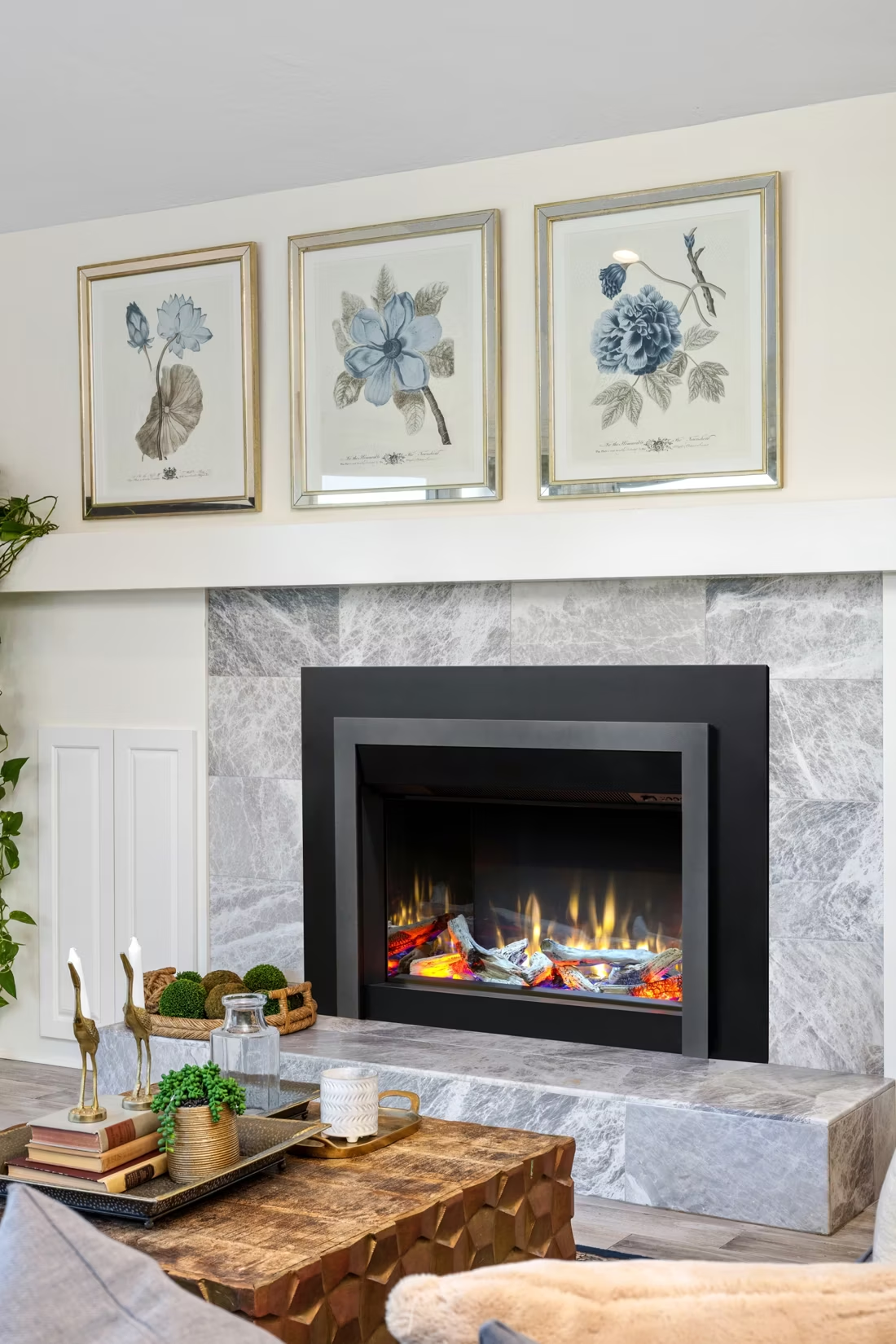
An electric fireplace is typically a wall-mounted or built-in unit designed to look like a framed fireplace, often with a mantel surround. An electric insert is sized to slot into an existing masonry fireplace opening, giving an old wood-burning fireplace a clean, no-maintenance makeover without touching the chimney. An electric stove is a freestanding unit styled like a wood or pellet stove but plugs in like any other electric heater. For McCook County homes with an existing brick fireplace that's gone unused for years—common in some of the older farmhouses around Canistota and Spencer—an insert is often the simplest upgrade.
Electric vs. wood—which makes more sense for my McCook County home?
Wood—burning locally available ponderosa pine, oak, or cottonwood—offers real heat output, works with zero electricity during an outage, and has deep roots in this part of South Dakota's farm country. But it comes with the ongoing work of hauling, splitting, and stacking, plus chimney maintenance. Electric requires none of that: no wood, no ash, no annual sweep, just a switch. For a primary heat source in a rural home where power reliability is a real concern, wood still has an edge. For a low-hassle secondary heat source or a clean focal point in a Salem living room, electric is usually the easier call.
Electric vs. gas—which is the better fit?
Gas fireplaces put out considerably more heat and can run during a power outage if equipped with a battery-backup ignition system, but they require a gas line—either natural gas where available or a propane tank—plus venting work and gas-permit paperwork. Electric skips all of that: no gas line, no venting, and a far simpler install, but with lower heat output and a firm dependence on grid power. In much of unincorporated McCook County where natural gas service is limited and propane means managing a tank, electric is often the lower-friction option for supplemental warmth, while gas makes more sense for homeowners wanting fireplace heat that can carry more of the load.
Can I install an electric fireplace in a rental or manufactured home in McCook County?
Yes—this is actually one of the strongest cases for electric. A plug-in freestanding unit or a wall-mounted model needs no chimney, no venting, and no structural changes, which makes it a practical option for renters in Salem or Montrose and for the manufactured and mobile homes found throughout the county's rural areas. Just confirm the unit's amperage draw against your home's electrical panel, particularly in older manufactured homes where circuits can be more limited—a local dealer can walk through this with you before you buy.
Where can I buy an electric fireplace in McCook County?
Big-box stores sell electric fireplaces, but they won't tell you whether your specific circuit can handle a built-in unit, whether an insert will actually fit your existing masonry opening, or which model holds up to daily use versus occasional ambiance. A local hearth dealer serving McCook County can size the right unit to your room, confirm the electrical requirements, and stand behind the install—which matters more with electric than people expect, since a poorly matched unit either underheats the room or overloads an old circuit.
Can I put a TV above my fireplace?
Yes—with an asterisk. Fireplaces are hot and TVs don't like heat. Either put a mantel between them to deflect rising warmth, or choose a fireplace with heat-management technology that creates a cool zone on the wall above—the wall stays around 125 degrees, barely warm, while the room still gets full heat. If you like clean lines and don't want a mantel, heat management is the answer.
Does an electric fireplace need a vent or chimney?
No—that's its superpower. An electric fireplace needs a wall and an outlet, period. No vent pipe, no gas line, no clearances to design around, which is why it works in bedrooms, offices, apartments, and walls where venting a gas or wood unit would be impractical or impossible. Installation is typically the simplest and least expensive of any fireplace type.
Does a fireplace add value to my home?
On average, a fireplace adds back to the home about the same amount you spent installing it. Add the monthly savings from heating the rooms you actually use instead of the whole house—often hundreds of dollars a year—and the value case is strong before you even count what a fire does for how your family uses the room.
Should the dealer who sells my fireplace also install it?
Ideally, yes. A fireplace project involves vent pipe, gas line, electrical, and often tile or stone. Hire three or four separate trades and you own the liability and the game of telephone between them. One company selling and installing means one accountable party, start to finish—ask about factory training, on-time completion records, and what happens if an inspection fails.
Stove and Fireplace Dealers in McCook County
Listings include WhyFire partner dealers, dealers we have verified as authorized for the brands we recommend, and established local businesses that carry hearth products. Every listing shows which one it is. The ones marked Preferred run on WhyFire's software, so they can show you real pricing and book your appointment right here. No manufacturer pays for placement. How we verify dealers →
Cozy Home & Lighting, LLC
Hjellming Construction
Fireplace Professionals, Inc
Find your electric fireplace in McCook County.
Tell us a bit about your home and we'll match you with a trusted local dealer and send over a free Project Guide & Parts List—the exact unit, wiring needs, and install plan for your McCook County home.
Find Your Fireplace →