
Instant warmth for prairie homes without a chimney to spare.
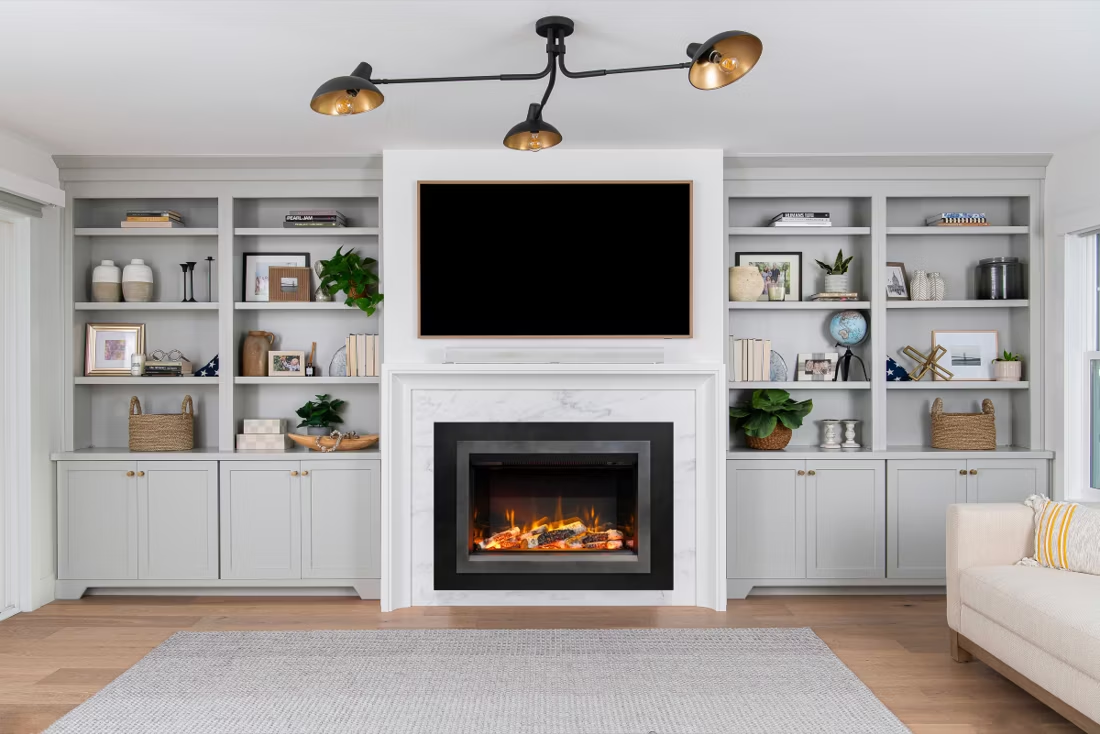
Kingsbury County's open farmland catches wind straight off the prairie, and a lot of homes around De Smet and Lake Preston were never built with a flue. An electric fireplace plugs into an outlet or a dedicated circuit and heats a room the same afternoon it's installed. I'll match you with a trusted local dealer who knows which unit and circuit setup actually fits your house.
Every Project Starts From One of These Five Situations
No chimney, no propane tank, just an outlet.
Kingsbury County is farm and lake country in east-central South Dakota—De Smet is the county seat, and Lake Preston, Arlington, Iroquois, and Erwin round out a population under 3,300 spread thin across open ground near Lake Henry, Lake Whitewood, and Lake Preston. Climate zone 6A here means winters that rival Fargo, ND for wind chill even when the thermometer alone doesn't look extreme—flat terrain gives the wind nothing to slow it down, and older farmhouses and the modular homes common throughout the county often have single-pane windows and no existing masonry chimney to build a wood or gas system around. Electric fireplaces solve that problem directly: no venting, no gas line, no roof penetration, just power from Kingsbury Electric Cooperative or whichever rural line serves your section.
Wood is still burned in the county—ponderosa pine, oak, and cottonwood cut from shelterbelts and lake-bottom timber remain common fuel here—and pellet stoves running Lignetics or Indeck Energy Services pellets show up in a handful of homes too. But both call for a chimney or vent pipe, ash or ash-pan management, and fuel storage that not every property has room for, especially renters and newer modular homes. Electric units skip all of that. They won't replace a furnace or a wood stove as the county's primary defense against a January cold snap, but for zone heating a living room, a finished basement, or an addition without existing venting, they're the simplest install in the county, and a local dealer can size one correctly the first time.
Three steps. No salesperson until you're ready.
Tell us about your project
Your zip code, your situation, and the fuel you're leaning toward—or let the answers point you to one.
See what's actually available
The brands dealers within 100 miles genuinely carry—real options, never a catalog mirage.
Get your dealer & Project Guide
A trusted local dealer, plus the free Project Guide & Parts List that names every component of the job.
Frequently Asked Questions
How much does an electric fireplace installation cost in Kingsbury County?
A basic plug-in insert or mantel unit runs $150 to $600 installed, since it uses a standard 120V outlet and needs no new wiring. A built-in wall unit or a larger insert that draws enough current to require its own dedicated circuit typically runs $1,500 to $4,000 once you add a licensed electrician's time to run new wire from the panel—a real consideration in older farmhouses around De Smet or Lake Preston where the existing electrical panel may already be near capacity. A local dealer or electrician can tell you quickly whether your panel has room or needs an upgrade first.
What's the difference between a plug-in electric fireplace and a built-in unit?
A plug-in insert or freestanding mantel unit is the simplest option—it sits in an existing opening or against a wall and runs off a standard outlet, which makes it a good fit for renters or manufactured homes in Arlington or Erwin where you don't want to modify wiring. A built-in wall unit is recessed into framing like a real fireplace and usually needs a dedicated 240V circuit for full heat output, which means an electrician's involvement but a cleaner, more finished look—a common choice for new construction or a remodel around Lake Preston.
Do I need a permit to install an electric fireplace in Kingsbury County?
A simple plug-in unit that uses an existing outlet generally doesn't trigger a permit. If your project involves running new wiring or a dedicated circuit for a built-in unit, that electrical work should go through a licensed electrician, who will typically pull the necessary permit with the county. Since Kingsbury County is largely unincorporated farmland outside De Smet and the other small towns, permit requirements can vary by township—a local dealer or electrician working in the area regularly will know which office to check with before work starts.
Will an electric fireplace heat my whole house?
No, and it's worth being upfront about that in a zone 6A county where January mornings can sit well below zero. Most electric fireplaces top out around 5,000 to 5,200 BTU, which is enough to noticeably warm a single room—a living room, a finished basement, an addition—but not enough to carry a farmhouse through a prairie cold front on its own. In Kingsbury County, electric units work best as supplemental or zone heat alongside a propane furnace or a wood stove burning local oak or cottonwood, not as the sole heat source for the whole home.
What happens to my electric fireplace during a power outage?
It won't run—electric fireplaces have no battery backup and depend entirely on the grid. That's a real consideration out here, since ice storms and high-wind events on the open prairie can knock down rural electric cooperative lines for hours or, in a bad storm, longer. If backup heat during an outage matters to your household, pair the electric unit with a wood stove or a propane appliance that doesn't depend on power, rather than relying on electric as your only supplemental source.
Electric vs. wood vs. pellet—which makes sense for my home in Kingsbury County?
Wood, typically ponderosa pine, oak, or cottonwood cut locally, costs the least per BTU and keeps working through a power outage, but it needs a chimney or Class A vent pipe, seasoned fuel storage, and regular ash cleanout. Pellet stoves burning Lignetics or Indeck Energy Services pellets burn cleaner and are easier to load, but the auger and blower need electricity, same as an electric fireplace. Electric skips venting and ash entirely and installs in an afternoon, but it's supplemental heat only and won't survive a grid outage. For a home without existing venting and no interest in fuel storage, electric is usually the easiest starting point; for a farmhouse relying on backup heat when the co-op lines go down, wood still has the edge.
Does an electric fireplace need its own electrical circuit?
Smaller plug-in inserts and mantel units generally run fine on a standard household circuit already serving that outlet, as long as it isn't overloaded with other high-draw appliances. Larger built-in units, especially ones rated near the 1,500W ceiling most electric fireplaces top out at, often need a dedicated 15- or 20-amp circuit to run safely and avoid tripping breakers. In older Kingsbury County farmhouses with dated panels, an electrician should confirm available capacity before installing a larger unit—this is one of the first things a local dealer will ask about.
Is an electric fireplace a good option for a manufactured or modular home?
Yes, and it's one of the more common installs in rural Kingsbury County for exactly that reason. Manufactured and modular homes, common throughout the townships outside De Smet and Lake Preston, don't have a masonry chimney to tie a wood stove or vented gas fireplace into, and running new gas line or venting through manufactured-home construction can be complicated. An electric fireplace needs neither—it mounts on the wall or recesses into existing framing and runs off standard household wiring, making it one of the simplest heat-and-ambiance upgrades available for that housing type.
How much maintenance does an electric fireplace need?
Very little compared to wood or pellet. There's no ash to clean, no chimney to sweep, and no annual inspection requirement. Maintenance is mostly dusting the unit and occasionally replacing an LED light strip or heating element after years of daily use—most units are rated for 10,000-plus hours of operation. That low-maintenance profile is part of why electric fireplaces show up often in Kingsbury County rentals and second homes around the lakes, where nobody wants to schedule a seasonal chimney service.
Does an electric fireplace need a vent or chimney?
No—that's its superpower. An electric fireplace needs a wall and an outlet, period. No vent pipe, no gas line, no clearances to design around, which is why it works in bedrooms, offices, apartments, and walls where venting a gas or wood unit would be impractical or impossible. Installation is typically the simplest and least expensive of any fireplace type.
Do electric fireplaces actually produce heat?
Yes—most put out around 4,800–5,000 BTUs from a standard outlet, which comfortably warms a bedroom, office, or den as a comfort-zone heater. What they won't do is carry a whole house the way wood, gas, or pellet can. Think of electric as ambiance-first with honest supplemental heat: flames on with no heat in July, flames plus warmth in January.
Does a fireplace add value to my home?
On average, a fireplace adds back to the home about the same amount you spent installing it. Add the monthly savings from heating the rooms you actually use instead of the whole house—often hundreds of dollars a year—and the value case is strong before you even count what a fire does for how your family uses the room.
What is an in-home preview and do I need one?
It's a visit where a hearth professional measures your space, confirms the model you picked actually works in your home, and walks the specs—framing, gas line, venting, finish work—before anything is ordered. Some details you just can't know until you see the house. Never make a down payment without one; it's the single most-skipped step that burns buyers.
Stove and Fireplace Dealers in Kingsbury County
Listings include WhyFire partner dealers, dealers we have verified as authorized for the brands we recommend, and established local businesses that carry hearth products. Every listing shows which one it is. The ones marked Preferred run on WhyFire's software, so they can show you real pricing and book your appointment right here. No manufacturer pays for placement. How we verify dealers →
Cozy Home & Lighting, LLC
Ramsdell F&M Ltd.
Builders FirstSource Huron
Get your free Project Guide & Parts List for an electric fireplace in Kingsbury County.
Tell me about your home, its wiring, and where you want the heat, and I'll match you with a trusted local Kingsbury County dealer or electrician and send a free Project Guide & Parts List—the right unit, circuit requirements, and recommended installer for your electric fireplace project.
Find Your Fireplace →