
Warm up Hyde County without a wood pile or gas line.
Electric heat for the open, wind-scoured winters around Highmore and the rest of Hyde County—no chimney, no wood delivery, no propane tank to keep filled. Find the right unit and connect with a trusted local dealer.
Every Project Starts From One of These Five Situations
Electric fireplaces fit the reality of prairie living.
Hyde County is about as rural as South Dakota gets—807 people spread across roughly 860 square miles of rolling prairie, with Highmore as the county seat and not much else in between. Climate zone 6A means genuinely cold, wind-driven winters, the kind where an exposed farmhouse or a manufactured home on the edge of town feels every degree of wind chill. Ponderosa pine, oak, and cottonwood do grow in the scattered river-bottom draws and shelterbelts around the county, but there's no real forest base here—no national forest permit office, no established cutting culture—which is why wood heat never became a practical mainstay the way it did in timbered parts of the state.
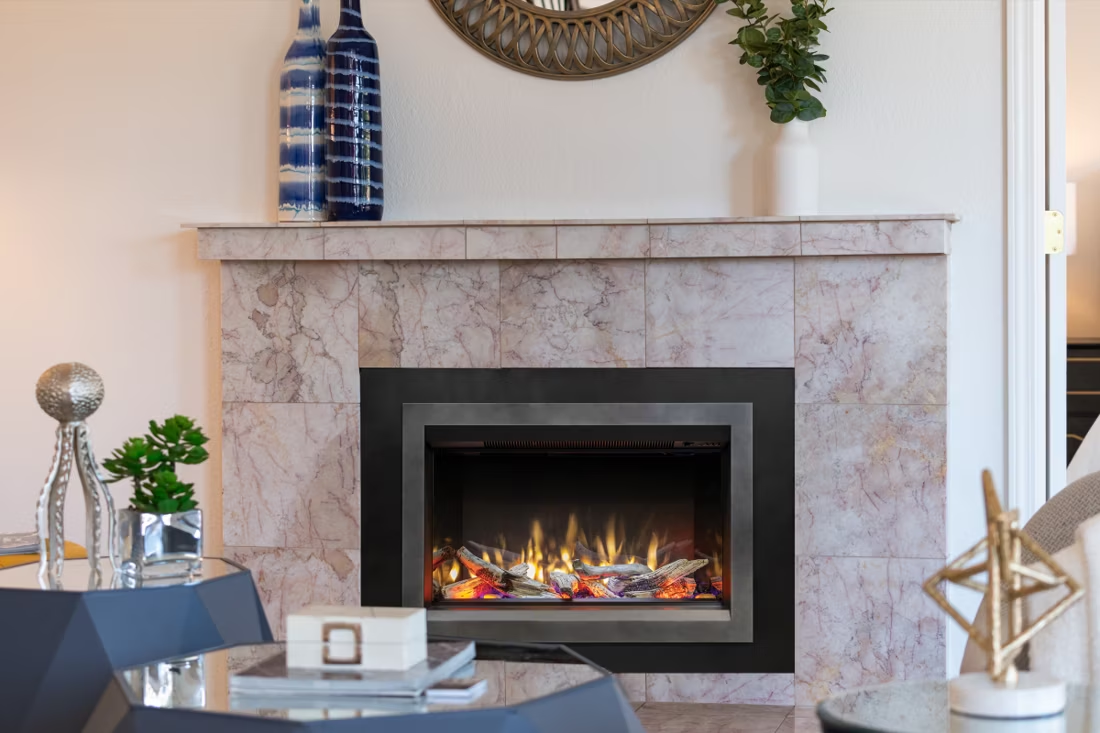
Pellet stoves face the same logistics problem: the nearest bagged-pellet suppliers, brands like Lignetics and Indeck Energy Services, are regional operations with no dealer presence anywhere near a county this small, so pellets have to be trucked in specially rather than picked up locally. Electric fireplaces sidestep all of that. They plug into a standard outlet or a dedicated circuit, need no venting or chimney, and work in anything from a farmhouse near Highmore to a doublewide on a rural section line—which matters in a county where Oahe Electric Cooperative, not a gas utility, is often the only infrastructure already run to the property.
Three steps. No salesperson until you're ready.
Tell us about your project
Your zip code, your situation, and the fuel you're leaning toward—or let the answers point you to one.
See what's actually available
The brands dealers within 100 miles genuinely carry—real options, never a catalog mirage.
Get your dealer & Project Guide
A trusted local dealer, plus the free Project Guide & Parts List that names every component of the job.
Frequently Asked Questions
How much does an electric fireplace cost to install in Hyde County?
Electric fireplaces are the least expensive hearth option to get into, and that holds true in Hyde County. A basic plug-in insert or stove that fits into an existing fireplace opening can run as little as $300 to $800 for the unit itself, with no real installation cost beyond setting it in place. Built-in wall units or larger mantel-style fireplaces that require a dedicated 120V or 240V circuit run higher—typically $1,500 to $5,000 installed, depending on whether an electrician needs to run new wiring from the panel. Either way, it's dramatically cheaper than running a new propane line or building a wood-burning chimney, which is part of why electric is a popular choice for supplemental heat in a rural county like this one.
Can an electric fireplace actually keep up with Hyde County winters?
As a whole-home heat source, no—electric fireplaces are zone heaters, not furnace replacements, and Hyde County's climate zone 6A winters (similar in severity to what Bismarck, North Dakota sees) will outlast a single electric unit's output on the coldest, windiest nights. Where electric fireplaces earn their keep is supplemental heat: taking the edge off a drafty living room, warming an addition or finished basement that your furnace doesn't reach well, or adding ambiance and a little extra warmth to a farmhouse sitting exposed on open ground. Pair one with your existing propane or LP furnace and most Hyde County homeowners find it cuts furnace runtime noticeably in the shoulder seasons.
Do I need a permit to install an electric fireplace in Hyde County?
A plug-in electric insert or freestanding stove that uses an existing outlet typically doesn't require a permit—it's treated like any other appliance. If your installation requires new wiring, a dedicated circuit, or work inside a wall, that's electrical work and should go through a licensed electrician, and larger structural changes may need sign-off from the Hyde County Courthouse in Highmore, which handles building matters for the county. It's a much lighter permitting lift than a wood chimney or a gas line, which is one more reason electric is an easy add for rural properties.
Electric vs. gas—which fits Hyde County better?
Gas—almost always propane out here, since there's no natural gas main running to most Hyde County properties—delivers more heat output and can be sized to actually carry a room on its own. Electric fireplaces can't match that BTU output but win on simplicity: no propane tank to keep full, no gas line, no annual service call, and no worry about running out of fuel during a bad stretch of weather if the roads are drifted shut. A lot of homes here end up with both—propane or gas for the main heating load, electric for a spare room, sunroom, or garage that doesn't justify running gas line to it.
What's the difference between an electric fireplace, insert, and stove?
An electric insert is built to slide into an existing fireplace opening, giving you flame effect and heat without any of the wood-burning mess. An electric stove is a freestanding cabinet-style unit that can go almost anywhere there's an outlet—no fireplace opening required, which suits a lot of Hyde County outbuildings, additions, and manufactured homes. A built-in electric fireplace is designed into a wall or custom mantel surround for new construction or a remodel. For most rural properties around Highmore without an existing masonry fireplace, the freestanding stove or a wall-mounted unit tends to be the simplest fit.
Is an electric fireplace a good fit for a manufactured or modular home?
Yes, and it's one of the more common installs in a county like Hyde, where manufactured and modular homes make up a real share of the rural housing stock. Electric units generate no combustion byproducts and need no chimney penetration through a roof, which sidesteps a lot of the clearance and structural questions that come with venting a wood or gas appliance through a manufactured home's roof or wall assembly. A freestanding electric stove or a low-profile wall unit on its own circuit is usually the most straightforward path.
Will an electric fireplace work if the power goes out?
No—and this is worth being upfront about. Electric fireplaces need power to run, so during a winter outage on the Oahe Electric Cooperative system, which does happen during ice storms and heavy prairie wind events, the unit goes dark along with everything else. If backup heat during an outage matters to you, a propane heater or a wood-burning appliance (even with the limited local wood supply) makes more sense as a true emergency fallback. Most Hyde County homeowners treat electric fireplaces as a daily-use comfort and ambiance feature layered on top of whatever handles emergency heat.
Why isn't wood heat more common in Hyde County despite oak and cottonwood growing here?
The species are around—ponderosa pine, oak, and cottonwood grow in the shelterbelts and river-bottom draws scattered across the county—but there's no forest base large enough to support the kind of cutting-permit culture you'd see farther west near the Black Hills. No national forest office issues permits here, and most of the timber that does exist is on private cropland or pasture, not open to general cutting. That's part of why electric fireplaces have become the practical hearth option for Hyde County homeowners who want supplemental heat or ambiance without depending on hauling in cordwood from somewhere else in the state.
Why not a pellet stove instead of electric?
Pellet stoves need a steady bag supply, and that's the sticking point in a county this small. Brands like Lignetics and Indeck Energy Services produce pellets sold regionally, but neither maintains a dealer or bulk-delivery presence anywhere close to Hyde County—you'd be driving to Pierre or farther and hauling bags back yourself, every few weeks all winter. An electric fireplace needs zero fuel deliveries and zero storage space, which is a real advantage for a rural property where the nearest hearth retailer is a drive rather than a quick trip across town.
Does an electric fireplace need a vent or chimney?
No—that's its superpower. An electric fireplace needs a wall and an outlet, period. No vent pipe, no gas line, no clearances to design around, which is why it works in bedrooms, offices, apartments, and walls where venting a gas or wood unit would be impractical or impossible. Installation is typically the simplest and least expensive of any fireplace type.
Can I put a TV above my fireplace?
Yes—with an asterisk. Fireplaces are hot and TVs don't like heat. Either put a mantel between them to deflect rising warmth, or choose a fireplace with heat-management technology that creates a cool zone on the wall above—the wall stays around 125 degrees, barely warm, while the room still gets full heat. If you like clean lines and don't want a mantel, heat management is the answer.
Can I install a fireplace myself?
If you're putting a fire in your house on purpose, it's best to work with an expert. Unless you're genuinely experienced in framing, gas line, vent pipe, and the national code on clearances to combustibles, have a professional do it—and ideally the same company that sells you the fireplace, so warranty, service, and liability all live under one roof.
Does a fireplace add value to my home?
On average, a fireplace adds back to the home about the same amount you spent installing it. Add the monthly savings from heating the rooms you actually use instead of the whole house—often hundreds of dollars a year—and the value case is strong before you even count what a fire does for how your family uses the room.
Stove and Fireplace Dealers in Hyde County
Listings include WhyFire partner dealers, dealers we have verified as authorized for the brands we recommend, and established local businesses that carry hearth products. Every listing shows which one it is. The ones marked Preferred run on WhyFire's software, so they can show you real pricing and book your appointment right here. No manufacturer pays for placement. How we verify dealers →
Builders Solutions
Builders FirstSource Huron
Climate Control, Inc.
Find your electric fireplace in Hyde County.
Tell us a bit about your home and we'll match you with the right electric fireplace, insert, or stove—plus a free Project Guide & Parts List with the exact parts and a trusted local dealer recommendation for Hyde County.
Find Your Fireplace →