
Real Heat for Hartford's Long Prairie Winters.
Instant, reliable warmth for a town where winter lows average 7°F and the wind rarely lets up. Find the right gas fireplace or insert, and get matched with a trusted local dealer.
Every Project Starts From One of These Five Situations
Dependable heat on the open prairie.
Hartford sits at about 1,555 feet on the eastern South Dakota prairie, just west of Sioux Falls in Minnehaha County. Winters here are long and exposed—average lows hover around 7°F, and the town racks up roughly 7,479 heating degree days a year, putting it in the same cold-climate tier as Minneapolis, MN, and well past what most southern-tier stoves are rated for. Unlike the forested West, the Great Plains around Hartford don't support much of a wood-heat culture: there's no national forest nearby for cutting permits, and the local cottonwood, oak, and scattered ponderosa pine along shelterbelts aren't a practical primary fuel source for most households. Gas has become the default choice for anyone who wants real heat without the wood supply chain.
Because Hartford is a small town of around 3,300 people, natural gas service isn't guaranteed to every address the way it would be in a larger city—many homes here run on propane instead, delivered and stored on-site. Either fuel works well in a modern direct-vent gas fireplace or insert. On the electric side, Northern States Power (Xcel Energy) and Sioux Valley Southwestern Electric Cooperative both serve parts of the area, with residential rates running roughly 12.9¢ to 17¢ per kWh—a detail worth knowing if you're weighing a gas unit's electronic ignition and blower against a simpler standing-pilot model for outage resilience.
Three steps. No salesperson until you're ready.
Tell us about your project
Your zip code, your situation, and the fuel you're leaning toward—or let the answers point you to one.
See what's actually available
The brands dealers within 100 miles genuinely carry—real options, never a catalog mirage.
Get your dealer & Project Guide
A trusted local dealer, plus the free Project Guide & Parts List that names every component of the job.
Frequently Asked Questions
How much does a gas fireplace installation cost in Hartford?
Most gas fireplace and insert installations in the Hartford area run $3,500 to $9,000, depending on the unit, whether you're running new gas line or propane line, and how much venting work is involved. A direct-vent insert going into an existing fireplace opening with fuel already nearby tends to land on the lower end. A new zero-clearance gas fireplace built into a wall, or any installation that requires a propane tank set and a long buried line run, pushes toward the higher end. A local dealer can give you a firm number after seeing your home.
Is natural gas available in Hartford, or will I need propane?
It depends on where in town you are. Hartford is a small community of about 3,300 people outside Sioux Falls, and natural gas mains don't reach every address the way they do in bigger cities. A lot of homes here run on propane, stored in an above-ground or buried tank on the property and refilled by a regional supplier. The good news is that nearly every direct-vent gas fireplace on the market today is available in either a natural gas or propane configuration—your dealer sets the correct orifice and regulator for whichever fuel you have. If you're not sure what's running to your house now, check your existing furnace or water heater, or call your gas or propane provider directly.
Will my gas fireplace keep working if the power goes out?
In most cases, yes—and on the open prairie around Hartford, where ice storms and high winds can knock out power for hours at a time, that matters. Standing-pilot gas fireplaces will light and run with no electricity at all. Units with intermittent pilot ignition (IPI) typically include a battery backup that kicks in automatically when the power drops, so keep fresh AA batteries in the unit. If you want heat without depending on a battery at all, ask a local dealer about Valor's millivolt system, which generates its own current off the pilot flame and needs no batteries or grid power to operate.
What's the difference between a gas fireplace, a gas insert, and a gas stove?
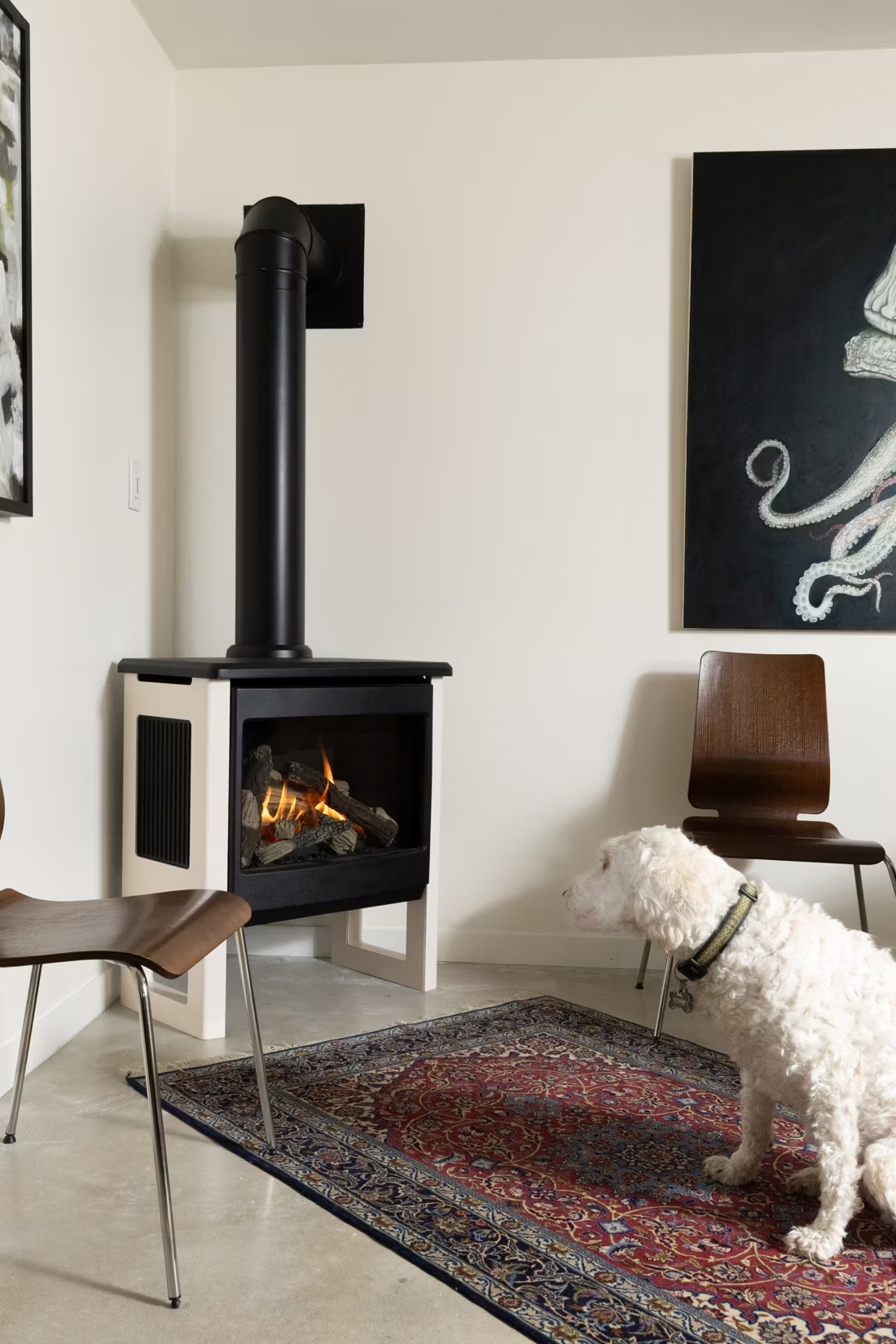
A gas fireplace is a built-in, zero-clearance unit framed into a wall—the right call for new construction or a remodel where there's no existing chimney. A gas insert is sized to slide into an existing masonry fireplace opening and uses that chimney (typically relined) as its vent path, converting an old wood-burning fireplace into an efficient, sealed gas unit. A gas stove is a freestanding cabinet-style unit that sits out in the room, similar in footprint to a wood stove but running on gas or propane. Most Hartford homes with an older wood fireplace they no longer use are good candidates for an insert; homes without one usually go with a built-in fireplace or a freestanding stove.
Do I need a permit to install a gas fireplace in Hartford?
Generally yes. New gas fireplace installations typically require both a building permit and sign-off on the gas or propane line work, coordinated through Minnehaha County or the City of Hartford depending on your address. A licensed gas-fitter has to handle the fuel line connection regardless of jurisdiction. Most established hearth dealers pull these permits as part of the installation, so you're not stuck coordinating a plumber, an inspector, and an installer separately.
What size gas fireplace do I need for a South Dakota winter?
With Hartford averaging around 7,479 heating degree days a year and winter lows near 7°F, undersizing is the more common mistake than oversizing—a decorative-only unit rated for ambiance won't keep up if you're hoping to offset a chunk of your furnace load. For a single living room used as supplemental heat, a mid-BTU direct-vent insert (around 20,000–30,000 BTU) is usually plenty. If you want the fireplace to genuinely carry a room during a cold snap, ask your dealer about higher-output models and make sure the unit is rated for your square footage and ceiling height, not just the opening size.
How often should a gas fireplace be serviced?
Once a year, ideally before the heating season starts. A technician checks the burner, pilot assembly, gas connections, venting, and any battery backup or blower components, and cleans the glass. This is a much shorter visit than a wood chimney sweep, but skipping it is how sooty glass, weak pilot lights, and worn gaskets go unnoticed until mid-winter. Expect to pay roughly $150–$250 for an annual inspection from a qualified hearth technician.
Are vent-free gas fireplaces legal in South Dakota?
Yes, vent-free (unvented) gas fireplaces are permitted in South Dakota, unlike in states such as California or Massachusetts, which restrict or ban them. That said, direct-vent units are still the more common recommendation for Hartford homes—they're sealed, draw combustion air from outside, and don't put any moisture or combustion byproducts into the living space, which matters in a tightly built, well-insulated house designed to hold heat through a Great Plains winter. If square footage or venting access makes a vent-free unit the more practical option for a specific room, a local dealer can walk you through the room-sizing and oxygen-depletion-sensor requirements that come with it.
Gas vs. electric fireplace—which makes more sense for my home?
Wood and pellet heat aren't really part of the picture in Hartford—there's no nearby national forest for cutting permits, and the prairie building stock here just isn't set up around a wood-heat tradition the way it is in more forested parts of the country. That leaves gas and electric as the two realistic options. Gas delivers real, sustained heat output and can offset your furnace during the coldest stretches, whether you're on natural gas or propane. Electric fireplaces cost far less to install, need no venting or fuel line at all, and are simple to add to a room—but they're supplemental ambiance heaters, not a serious heat source at 7 below zero. With electric rates in the area running roughly 12.9¢ to 17¢ per kWh depending on whether Northern States Power or Sioux Valley Electric Cooperative serves your address, a gas unit typically pencils out better as a genuine heat source, while electric fits best in a bedroom or den where you just want supplemental warmth and easy installation.
Is my gas fireplace wasting gas?
If it was installed more than 15 years ago, probably. Older gas fireplaces keep a standing pilot light burning all the time, and that little flame can cost a couple hundred dollars a year. Newer models use pilot-on-demand ignition—the pilot lights only when you use the fireplace and goes out when you turn it off.
What's the difference between an insert and a zero-clearance fireplace?
An insert is a fireplace that slides into a pre-existing wood-burning fireplace—if you don't have one, there's nothing to insert it into. A zero-clearance fireplace is built into a framed wall, which makes it the answer for remodels and new construction. Simple test: existing masonry fireplace means insert; blank or framed wall means zero-clearance.
Can a fireplace actually lower my heating bill?
Yes—by creating a comfort zone. A furnace heats every square foot of the house just to warm the one room you're in; a gas fireplace on low burns roughly a sixth of the gas a typical furnace does. Set the furnace around 55–60 degrees as a baseline, then heat the rooms your family actually uses. Families who heat this way commonly save $20–$60 a month.
What is an in-home preview and do I need one?
It's a visit where a hearth professional measures your space, confirms the model you picked actually works in your home, and walks the specs—framing, gas line, venting, finish work—before anything is ordered. Some details you just can't know until you see the house. Never make a down payment without one; it's the single most-skipped step that burns buyers.
Nearby Dealers
Hearth shops serving Hartford and the surrounding area. Every listing shows whether it is a WhyFire partner, a dealer we have verified as authorized for the brands we recommend, or a local business carrying hearth products. No manufacturer pays for placement. How we verify dealers →
Fireplace Professionals, Inc
Hjellming Construction
Find your gas fireplace in Hartford.
Tell us about your home and heating goals, and we'll match you with a trusted local dealer plus a free Project Guide & Parts List—the exact parts, vent kit, and recommended installer for your Hartford gas fireplace project.
Find Your Fireplace →