
Instant zone heat for Hanson County homes—no venting required.
For farmhouses and in-town homes from Alexandria to Emery, an electric fireplace adds real warmth to a single room without a chimney, a gas line, or a permit fight. Find the right unit and connect with a trusted local dealer.
Every Project Starts From One of These Five Situations
The simplest fireplace to add to a cold Dakota home.
Hanson County sits in climate zone 6A, which means winters here run in the same league as Fargo or Bismarck—long stretches below zero, biting wind across open farmland, and heating season that starts early and lets go late. With just over 1,500 residents spread across the county's farmland and the small towns of Alexandria and Emery, most homes here lean on propane, wood, or forced-air furnaces as primary heat. Electric fireplaces aren't trying to replace that system—they're filling a different role: warming up a den, a finished basement, a sunroom addition, or a bedroom without running new ductwork or cutting a hole in the roof.
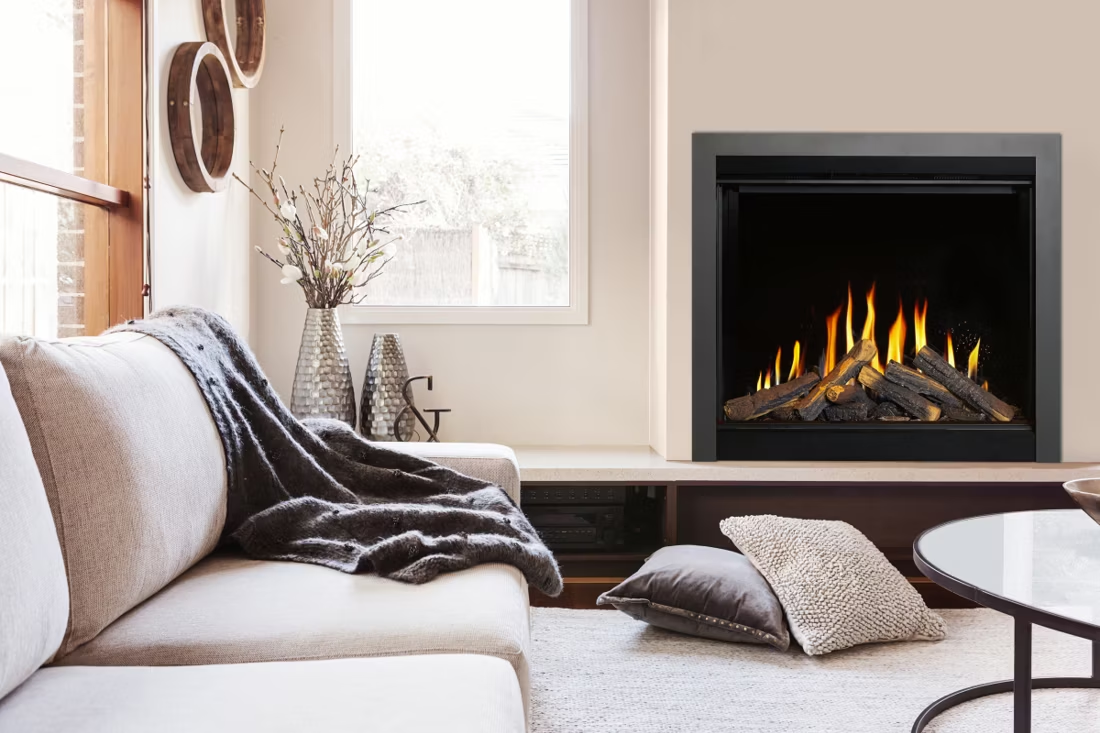
That's the practical appeal for Hanson County homeowners. An electric insert or wall unit plugs into a standard outlet or a dedicated 120V/240V circuit, needs no chimney, no flue, and no combustion air intake—which means no venting inspection and, in most cases, no building permit beyond the electrical work itself. For older farmhouses around Alexandria with a disused masonry fireplace, an electric insert drops into that existing opening and turns a cold, unused hearth into a working heat source again. For newer construction or additions, a wall-mounted unit goes up in an afternoon. Either way, it's real supplemental heat and year-round ambiance—the flame effect runs with the heater off, which matters in a county where air conditioning season matters too.
Three steps. No salesperson until you're ready.
Tell us about your project
Your zip code, your situation, and the fuel you're leaning toward—or let the answers point you to one.
See what's actually available
The brands dealers within 100 miles genuinely carry—real options, never a catalog mirage.
Get your dealer & Project Guide
A trusted local dealer, plus the free Project Guide & Parts List that names every component of the job.
Frequently Asked Questions
How much does an electric fireplace installation cost in Hanson County?
Most electric fireplace projects in Hanson County run between roughly $300 and $1,500. A plug-in freestanding or wall-mounted unit on the low end needs little more than a standard outlet. Built-in wall units or inserts that require a dedicated 240V circuit, in-wall wiring, or trim-out carpentry to fit an existing masonry opening sit toward the higher end. Because there's no chimney or gas line involved, labor costs stay modest compared to wood or gas installs—the main variable is electrical work, not venting.
Can an electric fireplace actually heat a room in a Hanson County winter?
It can hold its own in a single room, but be realistic about its limits. Most electric fireplace heaters top out around 1,500 watts—roughly 5,000 BTU of heat output—which is enough for a bedroom, den, or finished basement room with reasonable insulation, but not enough to carry a whole farmhouse through a sub-zero Hanson County night on its own. Think of it as zone heat that lets you turn down the thermostat on the rest of the house while keeping the room you're actually using warm, rather than a replacement for your propane furnace or wood stove.
Do I need a permit to install an electric fireplace in Hanson County?
Usually not for the fireplace itself. Because electric units don't burn fuel, there's no venting, flue, or gas line for a building inspector to review, and most jurisdictions don't require a fireplace-specific permit for a plug-in or hardwired electric unit. Where a permit can come into play is the electrical work—if you're adding a new dedicated circuit or running wire through a wall, a licensed electrician may need to pull an electrical permit through the county. A local dealer can tell you which side of that line your specific installation falls on.
What's the difference between an electric insert and a wall-mounted electric fireplace?
An electric insert is built to slide into an existing fireplace opening—including old masonry wood-burning fireplaces common in older Hanson County homes around Alexandria and Emery—and it uses that opening as its frame. A wall-mounted or built-in electric fireplace is designed to be recessed into new framing or hung on a wall where no fireplace previously existed, which makes it a good fit for additions, finished basements, or newer construction. Both plug into standard household power; the choice mostly comes down to whether you're upgrading an existing hearth or creating one from scratch.
Will my electric fireplace work if the power goes out?
No—electric fireplaces are entirely dependent on grid power, so a rural outage during a Hanson County ice storm or blizzard will shut it down along with everything else in the house. This is the main tradeoff against wood heat, which keeps working with zero electricity. If backup heat during outages is a real concern for your household, it's worth pairing an electric fireplace (for everyday convenience and ambiance) with a wood stove or propane heater somewhere in the home as a true outage-proof backup.
What's the best type of electric fireplace for a cold-climate county like this?
Look for units with a true supplemental heater rated at 1,500 watts with a thermostat, so you're not just running the flame effect when you actually want warmth in the room. Units that let you run the flame independent of the heat—useful during Hanson County's warm summer stretch when you want the look of a fire without adding heat to the room—are worth the small price premium. For inserts going into an old masonry fireplace shell, make sure the unit is sized to the actual opening rather than assuming a universal fit; a local dealer can measure and confirm before you buy.
Electric vs. wood—which is right for my Hanson County home?
Wood—burning locally available ponderosa pine, oak, or cottonwood—delivers far more heat output, works with zero electricity during outages, and has real heritage in rural South Dakota heating. Electric offers none of that backup capability but wins on convenience: no wood to split and stack, no chimney to sweep, no ash to haul, and instant on-off operation from a wall switch or remote. For most Hanson County households, the two aren't really competing—electric handles a specific room's everyday comfort and ambiance, while wood or propane carries the load of keeping the whole house warm through a hard winter.
Where can I buy and install an electric fireplace near Hanson County?
Big-box stores sell electric fireplaces off the shelf, but sizing the unit correctly to your opening, wiring it safely, and getting the trim right around an old masonry fireplace is where a local hearth dealer earns their fee. A trusted local installer serving the Alexandria and Emery area will measure your existing opening or framing, confirm your electrical capacity, and handle the install so the unit fits flush and functions correctly from day one—rather than guessing on measurements from an online listing.
Can I convert an old wood-burning fireplace shell to electric in an older farmhouse?
Yes, and it's one of the more common projects for older homes around Alexandria and Emery with a masonry fireplace that's gone unused for years. An electric insert slides into the existing opening, often without any masonry demolition, and gives you a working heat source and flame appearance again without reopening the chimney, relining a flue, or dealing with creosote and clearance issues. It's a straightforward way to bring a dead fireplace back to life at a fraction of the cost of restoring it for wood burning.
Can I put a TV above my fireplace?
Yes—with an asterisk. Fireplaces are hot and TVs don't like heat. Either put a mantel between them to deflect rising warmth, or choose a fireplace with heat-management technology that creates a cool zone on the wall above—the wall stays around 125 degrees, barely warm, while the room still gets full heat. If you like clean lines and don't want a mantel, heat management is the answer.
Does an electric fireplace need a vent or chimney?
No—that's its superpower. An electric fireplace needs a wall and an outlet, period. No vent pipe, no gas line, no clearances to design around, which is why it works in bedrooms, offices, apartments, and walls where venting a gas or wood unit would be impractical or impossible. Installation is typically the simplest and least expensive of any fireplace type.
What is an in-home preview and do I need one?
It's a visit where a hearth professional measures your space, confirms the model you picked actually works in your home, and walks the specs—framing, gas line, venting, finish work—before anything is ordered. Some details you just can't know until you see the house. Never make a down payment without one; it's the single most-skipped step that burns buyers.
Should the dealer who sells my fireplace also install it?
Ideally, yes. A fireplace project involves vent pipe, gas line, electrical, and often tile or stone. Hire three or four separate trades and you own the liability and the game of telephone between them. One company selling and installing means one accountable party, start to finish—ask about factory training, on-time completion records, and what happens if an inspection fails.
Stove and Fireplace Dealers in Hanson County
Listings include WhyFire partner dealers, dealers we have verified as authorized for the brands we recommend, and established local businesses that carry hearth products. Every listing shows which one it is. The ones marked Preferred run on WhyFire's software, so they can show you real pricing and book your appointment right here. No manufacturer pays for placement. How we verify dealers →
Cozy Home & Lighting, LLC
Builders FirstSource Huron
Hjellming Construction
Fireplace Professionals, Inc
Ramsdell F&M Ltd.
Kaiser Heating & Cooling
Larry's Heating & Cooling
Find your electric fireplace in Hanson County.
Tell us a bit about your home and we'll match you with the right electric fireplace or insert, plus a free Project Guide & Parts List—the exact parts and a recommended local dealer for your Hanson County project.
Find Your Fireplace →