
Find the right electric fireplace for Hamlin County's long winters.
Plug-in zone heat and real-flame ambiance for homes around Hayti, Lake Poinsett, and the rest of Hamlin County's open prairie. Find the right unit and connect with a trusted local dealer.
Every Project Starts From One of These Five Situations
Supplemental warmth for a Climate Zone 6A winter.
Hamlin County sits on flat glacial prairie in eastern South Dakota, with Hayti as the county seat and Lake Poinsett drawing cabin owners and lake-house families along its shoreline. Climate Zone 6A means genuinely harsh winters here—sustained sub-zero nights, minimal tree cover to break the wind, and a heating season that runs long. Most homes in the county lean on propane furnaces for primary heat, with wood-burning stoves (often fed by oak or cottonwood cut from river bottoms, or hauled-in ponderosa pine) as backup in older farmhouses. Electric fireplaces don't compete with either of those as a primary heat source out here—and no reputable local dealer will tell you otherwise.
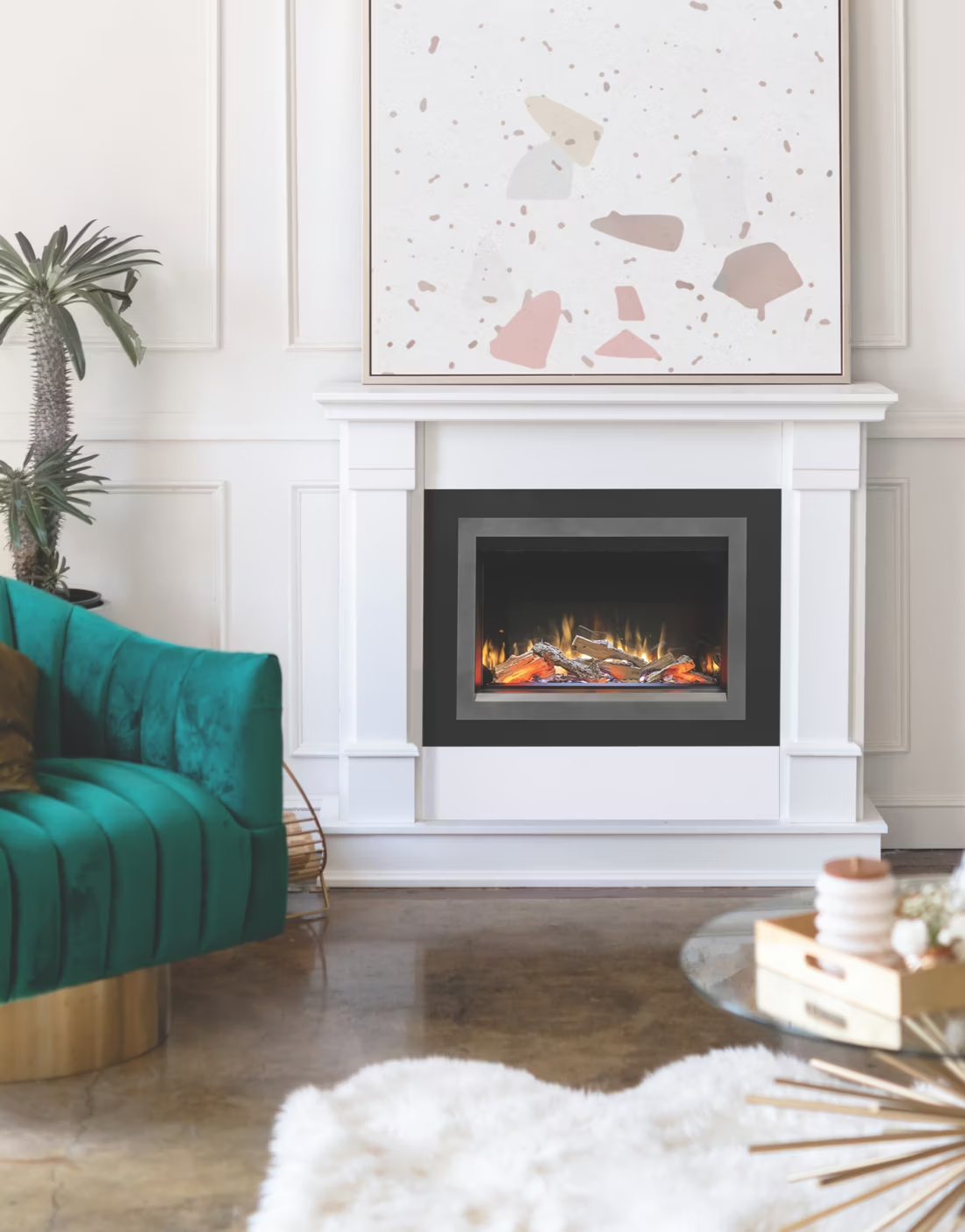
What electric does well in Hamlin County is targeted, no-fuss heat exactly where you want it: a finished basement rec room, a bedroom that the propane furnace never quite reaches, a lake cabin near Poinsett that only needs to take the chill off on weekends. There's no venting, no gas line, and no chimney to maintain—just a standard or dedicated circuit, wired through H-D Electric Cooperative's service territory out of Clear Lake. For homes where running new propane line or building a masonry chimney isn't practical, or where a homeowner just wants the visual of a fire without the ash and creosote, electric is the simplest project on this list.
Three steps. No salesperson until you're ready.
Tell us about your project
Your zip code, your situation, and the fuel you're leaning toward—or let the answers point you to one.
See what's actually available
The brands dealers within 100 miles genuinely carry—real options, never a catalog mirage.
Get your dealer & Project Guide
A trusted local dealer, plus the free Project Guide & Parts List that names every component of the job.
Frequently Asked Questions
How much does an electric fireplace installation cost in Hamlin County?
A plug-in electric insert or freestanding stove that runs off an existing standard outlet is the cheapest project here—often $300 to $800 including the unit and basic setup, with no electrician required. A built-in wall unit or larger insert that needs a dedicated 20-amp circuit typically runs $800 to $2,000 once you factor in a licensed electrician's time to run new wiring from the panel. Costs trend toward the higher end for older farmhouses around Hayti or Estelline where panel capacity is limited and a subpanel upgrade is needed before a dedicated circuit can go in.
Will an electric fireplace actually heat my home through a Hamlin County winter?
Not on its own. Most electric fireplaces top out around 1,500 watts—roughly 5,000 BTU—which is enough to comfortably warm a single room but nowhere near enough to offset whole-home heat loss in a Zone 6A climate where overnight lows regularly sit well below zero. Think of electric as zone heat that supplements your propane furnace or wood stove, not a replacement for either. It's genuinely useful for taking the edge off a room the furnace struggles to reach, or for cutting propane use during shoulder-season months when a full furnace cycle is overkill.
Do I need a permit or an electrician to install an electric fireplace in Hamlin County?
A simple plug-in unit that runs off an existing outlet doesn't require a permit or an electrician—it's no different from plugging in a space heater. If you're installing a built-in wall unit or an insert that needs a dedicated circuit, you'll want a licensed electrician to run the wiring, and any new circuit work should be pulled through Hamlin County's planning office if you're outside Hayti's city limits, or through the city if you're within them. Unlike a wood stove or gas insert, there's no venting inspection or clearance-to-combustibles code to satisfy—the electrical work is the only piece that needs sign-off.
What's the difference between an electric fireplace, insert, and stove?
An electric fireplace is typically a wall-mounted or built-in unit designed to look like a framed hearth, often with a mantel surround. An electric insert is sized to slide into an existing masonry fireplace opening, giving an old wood-burning hearth a heat source and flame effect without any chimney work. An electric stove is a freestanding, cabinet-style unit that mimics a wood stove's footprint and can go almost anywhere with an outlet, including rental properties or lake cabins near Poinsett where permanent changes aren't an option. All three plug in or hardwire to a circuit—none require venting.
Electric vs. propane—which should be my primary heat source in Hamlin County?
Propane remains the standard primary heat source for most Hamlin County homes, since natural gas service isn't run through this part of the county and propane furnaces are built to handle sustained Zone 6A cold. Electric fireplaces aren't sized to replace that furnace—they're a supplemental option for a specific room, or a lower-cost way to add fireplace ambiance without a new gas line or tank. If you're deciding between a propane fireplace and an electric one for a single room, propane will out-heat electric on the coldest nights, but electric wins on install simplicity and running cost for occasional, ambiance-focused use.
What happens to an electric fireplace during a power outage?
It stops working—which matters in a county where winter ice storms and blizzards can knock out power for hours or longer across the open prairie. This is the main reason electric shouldn't be your only backup heat plan in Hamlin County. Homes that rely on wood stoves burning local oak or cottonwood, or that keep a propane space heater on hand, have a heat source that doesn't depend on the grid. Electric fireplaces are best thought of as a comfort and ambiance upgrade for normal conditions, not an emergency heat plan.
What's the best type of electric fireplace for a Hamlin County home?
For finished basements and main living areas, a built-in wall insert with a heater option gives you real usable zone heat plus a clean, modern look. For lake cabins around Poinsett or seasonal properties, a freestanding electric stove is often the better fit since it needs no permanent wiring changes and can be unplugged and moved. If you're converting an old, rarely-used masonry fireplace to something safer and lower-maintenance, an electric insert sized to your existing firebox opening is usually the simplest path—no chimney sweep, no creosote, no wood to haul.
How much does it cost to run an electric fireplace in Hamlin County?
Running cost depends on your rate through H-D Electric Cooperative, which serves most of Hamlin County out of Clear Lake, and on how many hours a day you run the unit. A typical 1,500-watt electric fireplace run for several hours an evening adds a modest amount to a monthly bill—noticeably less than running a space heater of the same wattage continuously, since most models let you run the flame effect alone without the heater engaged. It's a fraction of what supplemental propane use would cost for the same room, which is part of why electric appeals to homeowners looking to trim heating bills in specific rooms.
How do I find a local dealer who installs electric fireplaces in Hamlin County?
Given how small and rural Hamlin County is, most electric fireplace and insert sales run through hearth dealers based in nearby Watertown or Brookings who service the Hayti and Lake Poinsett area, plus local electricians for the wiring work. A dealer who's actually installed units in this specific climate will know to size the heater for the room you're trying to warm, not just the square footage of the whole house, and can steer you away from units that struggle once temperatures drop into the negative teens.
Can I put a TV above my fireplace?
Yes—with an asterisk. Fireplaces are hot and TVs don't like heat. Either put a mantel between them to deflect rising warmth, or choose a fireplace with heat-management technology that creates a cool zone on the wall above—the wall stays around 125 degrees, barely warm, while the room still gets full heat. If you like clean lines and don't want a mantel, heat management is the answer.
Do electric fireplaces actually produce heat?
Yes—most put out around 4,800–5,000 BTUs from a standard outlet, which comfortably warms a bedroom, office, or den as a comfort-zone heater. What they won't do is carry a whole house the way wood, gas, or pellet can. Think of electric as ambiance-first with honest supplemental heat: flames on with no heat in July, flames plus warmth in January.
Can a fireplace actually lower my heating bill?
Yes—by creating a comfort zone. A furnace heats every square foot of the house just to warm the one room you're in; a gas fireplace on low burns roughly a sixth of the gas a typical furnace does. Set the furnace around 55–60 degrees as a baseline, then heat the rooms your family actually uses. Families who heat this way commonly save $20–$60 a month.
Does a fireplace add value to my home?
On average, a fireplace adds back to the home about the same amount you spent installing it. Add the monthly savings from heating the rooms you actually use instead of the whole house—often hundreds of dollars a year—and the value case is strong before you even count what a fire does for how your family uses the room.
Stove and Fireplace Dealers in Hamlin County
Listings include WhyFire partner dealers, dealers we have verified as authorized for the brands we recommend, and established local businesses that carry hearth products. Every listing shows which one it is. The ones marked Preferred run on WhyFire's software, so they can show you real pricing and book your appointment right here. No manufacturer pays for placement. How we verify dealers →
Hometown Building Center
Andor Inc.
Larry's Lumber
Find your electric fireplace in Hamlin County.
Tell us a bit about your home and the room you're trying to heat, and we'll put together a free Project Guide & Parts List—the right electric fireplace or insert for your space, plus a trusted local dealer who can install it correctly.
Find Your Fireplace →