
Reliable Heat for the Coldest Prairie Nights.
From Ipswich to Bowdle, Edmunds County winters bring long stretches of subzero wind chill off the open prairie. Find the right gas fireplace, insert, or stove, and connect with a trusted local dealer who knows propane and natural gas installs in this part of South Dakota.
Every Project Starts From One of These Five Situations
Clean, instant heat built for open-plains winters.
Edmunds County is farm country—roughly 2,953 people spread across flat, wide-open plains in a Climate Zone 6A pocket of northeastern South Dakota, with Ipswich as the county seat and Bowdle, Roscoe, Hosmer, and Loyalton rounding out the small towns. Cottonwood and a scattering of oak grow along the James River valley, and ponderosa pine shows up in windbreak plantings, but this is not timber country. Unlike the Black Hills, Edmunds County never developed a wood-heating culture, and today wood stoves are essentially absent from local homes.
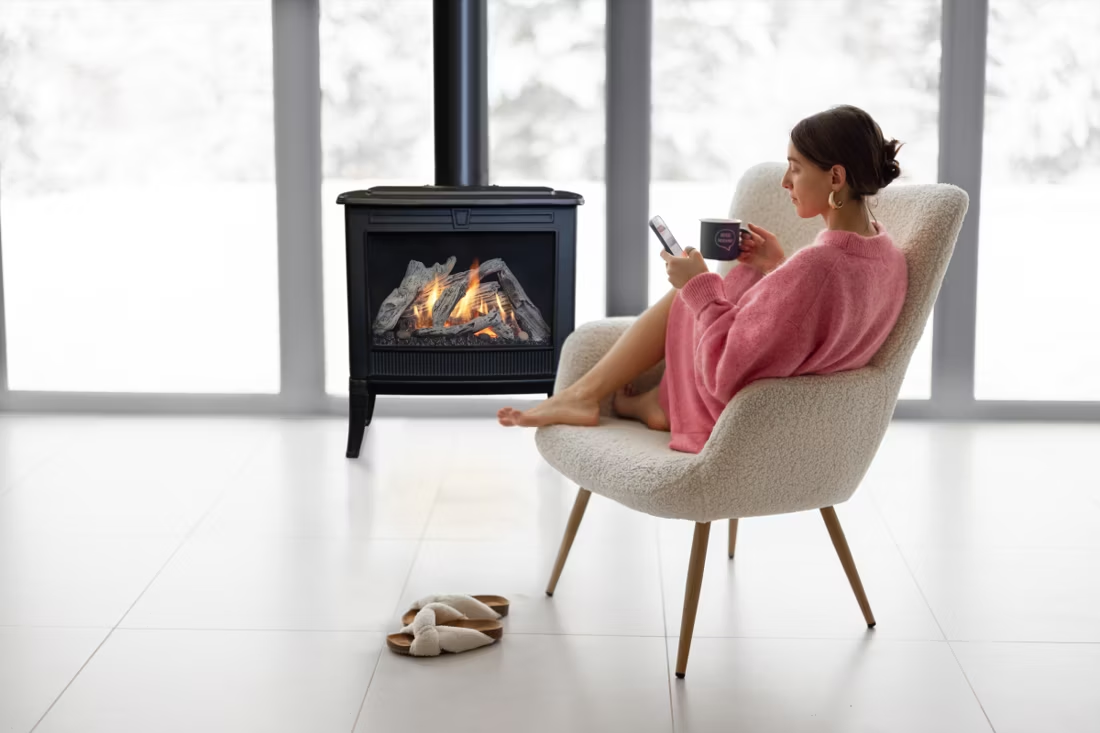
Propane is the dominant fuel here, delivered by regional co-ops like CHS and Farmers Union to farmsteads and rural properties scattered across the county. A limited number of homes closer to Ipswich have access to natural gas mains through providers like Montana-Dakota Utilities or NorthWestern Energy, but propane fills the gap for most of the county. Either way, a gas fireplace or insert gives Edmunds County homeowners instant, thermostat-controlled heat that holds steady through blizzards and multi-day cold snaps—without needing a wood supply that simply isn't practical to source locally.
Three steps. No salesperson until you're ready.
Tell us about your project
Your zip code, your situation, and the fuel you're leaning toward—or let the answers point you to one.
See what's actually available
The brands dealers within 100 miles genuinely carry—real options, never a catalog mirage.
Get your dealer & Project Guide
A trusted local dealer, plus the free Project Guide & Parts List that names every component of the job.
Frequently Asked Questions
How much does a gas fireplace installation cost in Edmunds County?
Most gas fireplace and insert installations in Edmunds County run between $4,000 and $9,500, depending on the unit, whether you're running natural gas or propane, and how much new line work is needed. Homes near Ipswich with existing gas service tend to land on the lower end; farmsteads that need a new propane tank set or a longer buried line run will land higher. Because Edmunds County is sparsely populated, expect installers to factor some travel time into their quote if you're out toward Bowdle, Roscoe, or Hosmer—a local dealer will give you a firm number after an in-home look.
Do I need natural gas, or should I plan on propane?
For the vast majority of Edmunds County, propane is the practical answer. Natural gas mains only reach a portion of homes near Ipswich; nearly everyone else—including most farms and the outlying towns—runs on propane delivered by regional suppliers like CHS or Farmers Union Co-op. Almost every gas fireplace, insert, or stove on the market today can be configured for either fuel, so your dealer simply sets the correct orifice and regulator for whichever service you have. If you're building new and are within reach of a natural gas main, it's worth asking your installer to check—but don't assume it's available just because a neighboring town has it.
Will a gas fireplace still work if the power goes out?
Most will, which matters here given how often winter storms knock out power across open farm country. Units with intermittent pilot ignition (IPI) run on a small battery backup that kicks in automatically, so the fireplace lights on demand even with no electricity—just remember to keep fresh batteries on hand. Valor fireplaces take it a step further: their pilot assembly generates its own electricity through the thermocouple, so there's no battery to forget at all. For an Edmunds County property that might go a day or two without grid power during a January blizzard, that self-powering design is worth asking about.
What's the difference between a gas fireplace, insert, and stove?
A gas fireplace is a built-in unit framed into a wall—the right call for new construction or a remodel. A gas insert slides into an existing masonry fireplace and uses the existing chimney as a vent path, which is the more common upgrade for older farmhouses in the county that already have a wood-burning hearth sitting unused. A gas stove is a freestanding, cast-iron-look unit that sits on the floor and doesn't require an existing fireplace opening at all—a good option for a shop, addition, or a home with no chimney to work with. A local dealer can tell you which fits your existing structure.
Do I need a permit to install a gas fireplace in Edmunds County?
Edmunds County doesn't enforce a countywide building code, so requirements depend on whether you're inside town limits. Installations within Ipswich or Bowdle typically go through that town's building office; homes on unincorporated farmland outside town boundaries generally aren't subject to a local permit process. Regardless of jurisdiction, any propane or natural gas line work should be handled by a licensed gas-fitter—that part isn't optional, even where a building permit isn't required. A reputable local dealer will know exactly what applies to your address.
Should I get a vented or vent-free gas fireplace?
Vented (direct-vent) units draw combustion air from outside and exhaust it back outside through a sealed pipe—they're the safer, more universally recommended choice and what most Edmunds County installers default to. Vent-free units burn directly into the room and are legal in South Dakota, but they release some water vapor and combustion byproducts indoors and come with strict room-sizing rules. For a well-sealed, energy-efficient farmhouse in a 6A climate zone, a direct-vent unit is usually the better call for indoor air quality—ask your dealer to walk through both options for your specific room.
How often does a gas fireplace need to be serviced?
Plan on an annual inspection, ideally before the first hard cold snap in the fall. A technician checks the burner, pilot assembly, gas connections, and venting, and cleans the glass and interior—usually a $150–$250 visit. Given how far apart service providers can be in a county this size, it's worth scheduling early rather than waiting until a unit fails on a subzero night when a technician has a longer drive to reach you.
Why doesn't Edmunds County have more wood-burning stoves?
It comes down to geography. Edmunds County is prairie and farmland, with cottonwood and scattered oak mostly limited to the James River bottoms—there's never been the kind of accessible timber supply that supports wood heat the way it does in wooded parts of the country. A few rural properties may keep a wood stove for occasional ambiance or true off-grid backup, but it's uncommon, and there's no local cutting-permit infrastructure or firewood delivery network to speak of. Propane and, where available, natural gas fill that role instead—which is part of why gas fireplaces and inserts are the standard choice here rather than the exception.
Gas vs. electric fireplace—which makes more sense for my home?
A gas fireplace or insert produces genuine, room-warming heat and can keep working through a power outage if it has battery backup or a self-powering pilot—a real advantage during Edmunds County's winter storms. An electric fireplace is simpler to install (often just a standard outlet, no gas line or venting required), which makes it a good fit for a secondary room, a rental, or a spot where running propane or gas line isn't practical. For primary supplemental heat in a farmhouse or main living area, gas is usually the better long-term choice; for a bedroom, basement, or a low-commitment ambiance unit, electric is worth a look.
What's the difference between an insert and a zero-clearance fireplace?
An insert is a fireplace that slides into a pre-existing wood-burning fireplace—if you don't have one, there's nothing to insert it into. A zero-clearance fireplace is built into a framed wall, which makes it the answer for remodels and new construction. Simple test: existing masonry fireplace means insert; blank or framed wall means zero-clearance.
Can I put a TV above my fireplace?
Yes—with an asterisk. Fireplaces are hot and TVs don't like heat. Either put a mantel between them to deflect rising warmth, or choose a fireplace with heat-management technology that creates a cool zone on the wall above—the wall stays around 125 degrees, barely warm, while the room still gets full heat. If you like clean lines and don't want a mantel, heat management is the answer.
Can I install a fireplace myself?
If you're putting a fire in your house on purpose, it's best to work with an expert. Unless you're genuinely experienced in framing, gas line, vent pipe, and the national code on clearances to combustibles, have a professional do it—and ideally the same company that sells you the fireplace, so warranty, service, and liability all live under one roof.
Can a fireplace actually lower my heating bill?
Yes—by creating a comfort zone. A furnace heats every square foot of the house just to warm the one room you're in; a gas fireplace on low burns roughly a sixth of the gas a typical furnace does. Set the furnace around 55–60 degrees as a baseline, then heat the rooms your family actually uses. Families who heat this way commonly save $20–$60 a month.
Stove and Fireplace Dealers in Edmunds County
Listings include WhyFire partner dealers, dealers we have verified as authorized for the brands we recommend, and established local businesses that carry hearth products. Every listing shows which one it is. The ones marked Preferred run on WhyFire's software, so they can show you real pricing and book your appointment right here. No manufacturer pays for placement. How we verify dealers →
Climate Control, Inc.
Builders Solutions
Builders FirstSource Huron
Find your gas fireplace in Edmunds County.
Tell us a bit about your home and heating setup, and we'll match you with a trusted local dealer and a free Project Guide & Parts List—the exact parts, vent kit, and installer recommendation for your Edmunds County gas fireplace project.
Find Your Fireplace →