
Warmth and ambiance for Deuel County winters, no chimney required.
From Clear Lake to Toronto, Gary, Astoria, and the farmsteads between, an electric fireplace plugs into what you already have—no gas line, no masonry, no venting through the roof. I'll match you with a local dealer who can size the right unit for your home and get it installed correctly.
Every Project Starts From One of These Five Situations
The easiest heat source in a county of scattered farms and small towns.
Deuel County is small—about 2,300 people spread across Clear Lake (the county seat), Toronto, Gary, Astoria, Brandt, and a lot of farmland in between. It sits in climate zone 6A, the same cold-winter band that runs through Fargo, ND, and points north—long heating seasons, hard frosts, and stretches where the wind off the open fields makes a room feel colder than the thermostat says. Most of the county gets its power through H-D Electric Cooperative, based right in Clear Lake, and that rural co-op backbone is part of why electric fireplaces make sense here: no gas main to tap into, no propane delivery to schedule, just an outlet or a dedicated circuit.
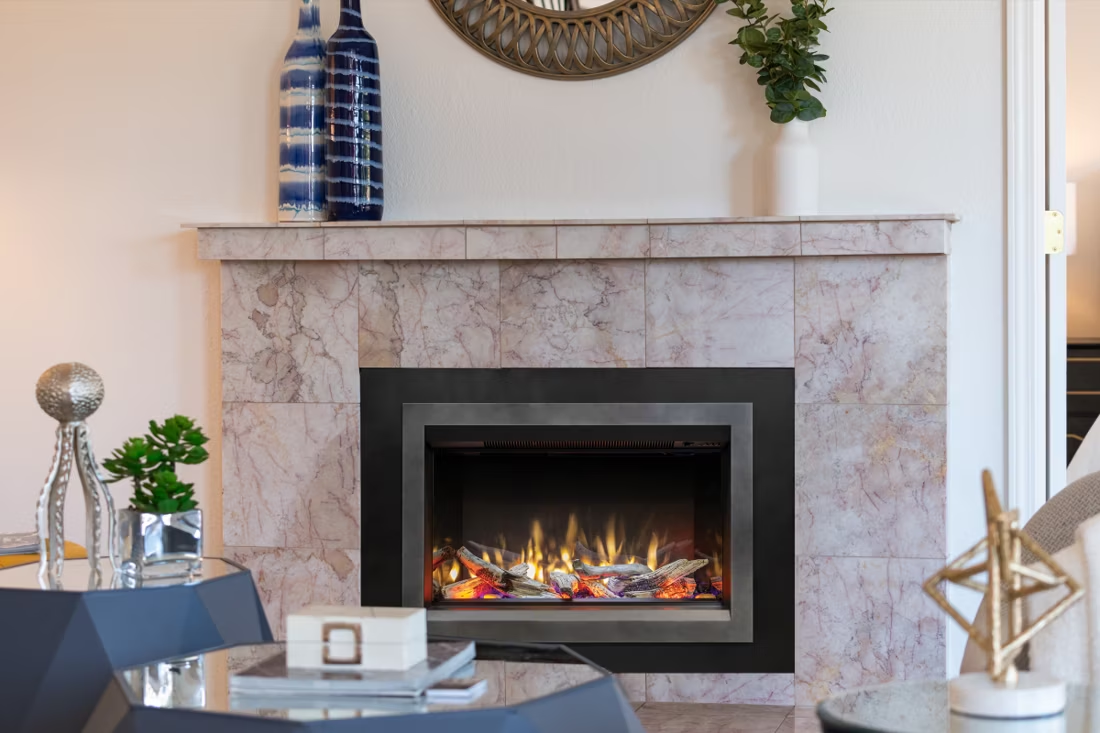
For farmhouses, manufactured homes, and lake cabins around Clear Lake and Toronto that never had a masonry chimney to begin with, an electric fireplace is often the simplest upgrade available—no structural work, no clearance-to-combustibles headaches, and no emissions to worry about (Deuel County has no air quality restrictions on the books, but electric units produce none regardless). It won't replace a furnace on a sub-zero January night, but as supplemental heat in a living room, a converted porch, or a bedroom in an older farmhouse with uneven heating, it's hard to beat for cost and simplicity.
Three steps. No salesperson until you're ready.
Tell us about your project
Your zip code, your situation, and the fuel you're leaning toward—or let the answers point you to one.
See what's actually available
The brands dealers within 100 miles genuinely carry—real options, never a catalog mirage.
Get your dealer & Project Guide
A trusted local dealer, plus the free Project Guide & Parts List that names every component of the job.
Frequently Asked Questions
How much does an electric fireplace installation cost in Deuel County?
Plug-in electric inserts and freestanding units are the cheapest path—many run under $1,000 installed, since they just need a standard 120V outlet and a place to sit. Built-in wall units or larger inserts that draw more current sometimes need a dedicated 20-amp or 240V circuit, which means an electrician and, in some cases, a permit through the Deuel County building office in Clear Lake. Either way, there's no chimney, no venting, and no gas line to run, which is why electric installs are consistently the least expensive fireplace option available to homeowners in the county.
Will an electric fireplace actually heat a room in a Deuel County winter?
It'll take the edge off, but don't expect it to replace your furnace on the coldest nights. Zone 6A winters here run long and cold—similar to what Fargo sees a couple hundred miles north—and most electric fireplace heaters top out around 5,000-6,000 BTUs, enough for a single room of 400 square feet or so, not a whole farmhouse. Where they shine is supplemental heat: warming up a living room fast while the furnace catches up, or taking the chill off a converted porch or bonus room that the ductwork barely reaches. Local dealers can walk you through wattage and BTU output for your specific space.
Will my electric fireplace work if the power goes out?
No—and this matters in Deuel County, where winter storms and ice can knock out rural co-op lines for hours at a time. An electric fireplace is entirely dependent on power, so it's not a backup heat source during an outage. Homes here that want heat regardless of grid status typically pair an electric fireplace for daily ambiance and convenience with a wood stove for true off-grid backup—ponderosa pine, oak, and cottonwood are all common locally and burn fine in a properly installed stove. If outage resilience is a real concern for your household, it's worth asking a local dealer about that combination.
Do I need a permit to install an electric fireplace in Deuel County?
Usually not for a plug-in unit—those just need an outlet and don't touch your home's structure or wiring. Built-in units that require a new dedicated circuit are a different story: that electrical work typically needs to be pulled by a licensed electrician and may require a permit through the Deuel County building office in Clear Lake. Local dealers who install built-ins regularly know exactly what's required and usually coordinate the electrical work as part of the job.
Electric fireplace vs. wood stove—which makes more sense for my Deuel County home?
Wood stoves burning local ponderosa pine, oak, or cottonwood put out real heat, run without electricity, and have been the backbone of rural South Dakota heating for generations—a serious asset when co-op lines go down in an ice storm. Electric fireplaces trade that off-grid capability for convenience: flip a switch, get instant flame effect and warmth, no ash, no chimney maintenance, no wood to split and stack. For a primary living space in town where reliability of the grid isn't a big worry, electric is simple and low-maintenance. For a farmstead that wants a real backup heat plan, wood still has the edge. Plenty of Deuel County homes end up with both.
Electric fireplace vs. pellet stove—what's the real difference?
Pellet stoves burning bags from regional suppliers like Lignetics or Indeck Energy Services put out considerably more heat than an electric unit—enough to serve as a primary heat source in a well-insulated home. But pellet stoves still need electricity to run the auger and combustion blower, so like electric fireplaces, they go dark in a power outage unless you add a battery backup. If you're choosing purely on convenience and ambiance with modest heat needs, electric is simpler and cheaper to install. If you want meaningful whole-room heat output and don't mind loading a hopper, pellet is worth a look—a local dealer can compare the two against your square footage.
What's the best electric fireplace for a manufactured or older farmhome in Deuel County?
A lot of housing stock in Deuel County—around Clear Lake, Toronto, and the surrounding township roads—is manufactured or mobile housing, or older farmhouses without a masonry chimney. For those, a wall-mounted or recessed electric unit is usually the easiest retrofit: no structural changes, no clearance issues, and models built for supplemental zone heating handle a single living space well. Freestanding electric stoves that mimic a wood-stove look are also popular in older farmhouses that want the aesthetic without the wood handling. A local dealer can look at your wall construction and wiring before recommending a specific model.
Can an electric fireplace go into my existing wood fireplace opening?
Yes—electric log-set inserts are designed to slide into an existing masonry or prefab fireplace opening and plug into a nearby outlet, which is a common and inexpensive upgrade for older Deuel County homes with an underused wood fireplace. It won't heat like the wood-burning original, but it gets you flame effect and modest supplemental warmth without cutting or cleaning ash. It's one of the simplest projects a local dealer can quote, often without any electrical or structural work at all.
Are there rebates available for electric fireplaces through H-D Electric Cooperative?
Rural electric co-ops like H-D Electric periodically offer efficiency incentives or off-peak rate programs for electric heating equipment, though specifics change year to year. It's worth a call to the co-op office in Clear Lake before you buy, and worth mentioning to your installer—some electric fireplace models qualify for efficiency programs that plug-in space heaters don't. A local dealer familiar with the co-op's service territory can usually tell you what's currently available.
Can I put a TV above my fireplace?
Yes—with an asterisk. Fireplaces are hot and TVs don't like heat. Either put a mantel between them to deflect rising warmth, or choose a fireplace with heat-management technology that creates a cool zone on the wall above—the wall stays around 125 degrees, barely warm, while the room still gets full heat. If you like clean lines and don't want a mantel, heat management is the answer.
Do electric fireplaces actually produce heat?
Yes—most put out around 4,800–5,000 BTUs from a standard outlet, which comfortably warms a bedroom, office, or den as a comfort-zone heater. What they won't do is carry a whole house the way wood, gas, or pellet can. Think of electric as ambiance-first with honest supplemental heat: flames on with no heat in July, flames plus warmth in January.
Can a fireplace actually lower my heating bill?
Yes—by creating a comfort zone. A furnace heats every square foot of the house just to warm the one room you're in; a gas fireplace on low burns roughly a sixth of the gas a typical furnace does. Set the furnace around 55–60 degrees as a baseline, then heat the rooms your family actually uses. Families who heat this way commonly save $20–$60 a month.
How much should I budget for a fireplace?
For an average home—covering the fireplace, the vent pipe, and basic installation—a budget between $3,900 and $5,500 gives you a lot of options across wood, gas, and pellet. By the time you add finish work, gas line, and electrical, the average complete installation lands between $5,000 and $12,000 all-in. In a remodel or new build, a good rule is to put about 2.5% of the total project cost toward the fireplace.
Stove and Fireplace Dealers in Deuel County
Listings include WhyFire partner dealers, dealers we have verified as authorized for the brands we recommend, and established local businesses that carry hearth products. Every listing shows which one it is. The ones marked Preferred run on WhyFire's software, so they can show you real pricing and book your appointment right here. No manufacturer pays for placement. How we verify dealers →
Larry's Lumber
Andor Inc.
Hometown Building Center
Find your electric fireplace in Deuel County.
Tell me a bit about your home and I'll match you with a trusted local dealer and put together a free Project Guide & Parts List—the exact parts for your electric fireplace project in Deuel County, plus who to call to get it installed right.
Find Your Fireplace →