
Add real fireplace warmth without touching a flue.
From Watertown to the shores of Lake Kampeska, electric fireplaces give Codington County homes instant ambiance and zone heat with no chimney, no venting, and no gas line—just a plug or a dedicated circuit. Find the right unit and connect with a trusted local dealer.
Every Project Starts From One of These Five Situations
A supplemental heat source built for 8,500 heating degree days.
Codington County sits on the Glacial Lakes plains of northeast South Dakota, anchored by Watertown and ringed by Lake Kampeska and Lake Pelican. Winters here are long and severe—average lows near 3°F, roughly 8,500 heating degree days a year, in the same range as Fargo or International Falls. That kind of cold means homes are built around a furnace or boiler as primary heat, with wood stoves and gas appliances filling in where cordwood or a gas line make sense. Electric fireplaces occupy a different, well-defined role in this climate: they're not asked to carry the whole house through a February cold snap, but they're excellent at warming a single room, adding real flicker and glow to a basement or bedroom, and doing it without a single inch of new venting.
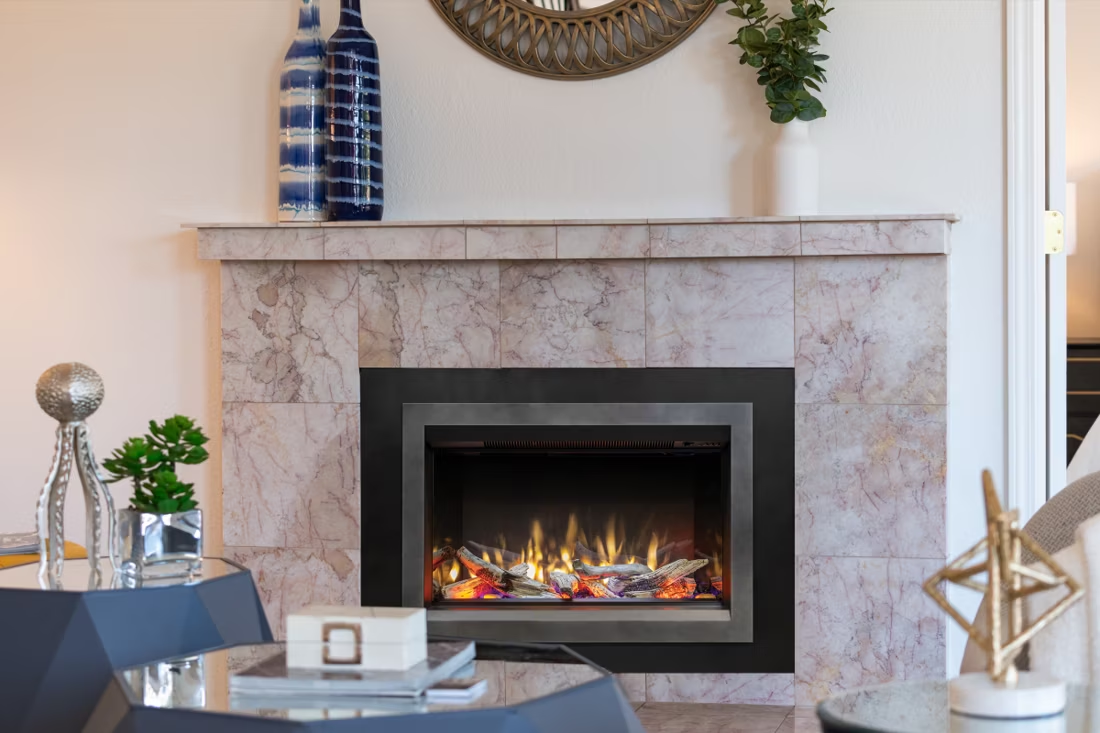
In town, power for an electric fireplace runs through Watertown Municipal Utilities; out in the rural county, East River Electric Cooperative serves most farms and acreages. Either way, a basic plug-in insert runs on a standard 120-volt household outlet, while larger built-in wall units typically need a dedicated 240-volt circuit—which means an electrician, not just a hearth installer, is part of the job. For Codington County homes with an old, unused masonry fireplace—common in the older neighborhoods around downtown Watertown—an electric insert is often the simplest fix: no chimney repair, no liner, no cutting a new vent path, just a heater and a light show that drops into the existing opening.
Three steps. No salesperson until you're ready.
Tell us about your project
Your zip code, your situation, and the fuel you're leaning toward—or let the answers point you to one.
See what's actually available
The brands dealers within 100 miles genuinely carry—real options, never a catalog mirage.
Get your dealer & Project Guide
A trusted local dealer, plus the free Project Guide & Parts List that names every component of the job.
Frequently Asked Questions
How much does an electric fireplace installation cost in Codington County?
Most electric fireplace projects in Codington County run $300 to $1,500. A plug-in insert or wall-mount unit that uses an existing outlet sits at the low end—it's largely a purchase-and-place job. Built-in units recessed into a wall or existing masonry fireplace opening cost more once you factor in a licensed electrician running a dedicated 240-volt circuit, which is common for larger units with higher heat output. Custom surrounds, mantels, or a full masonry-to-electric-insert conversion in an older Watertown home push toward the top of that range.
Will an electric fireplace heat my whole home during a Codington County winter?
No—and this is the most important expectation to set correctly. At roughly 8,500 heating degree days and average winter lows around 3°F, Codington County homes need a furnace, boiler, or comparable whole-house system as primary heat. Electric fireplaces are supplemental: excellent for taking the edge off a family room, den, or finished basement, and useful for zone heating so you can turn the thermostat down elsewhere in the house. Treat the electric fireplace as a comfort and ambiance upgrade layered on top of your existing heating system, not a replacement for it.
Do I need a permit for an electric fireplace in Codington County?
A simple plug-in insert or freestanding electric stove that uses an existing outlet generally doesn't require a permit. If the installation involves new wiring—most commonly a dedicated 240-volt circuit for a larger built-in unit—an electrical permit is required. Within city limits, that goes through the City of Watertown building inspection department; for rural parts of the county, it runs through Codington County Planning & Zoning. Most hearth dealers coordinate directly with a licensed electrician and handle the permit paperwork as part of the installation.
Can I convert my existing wood fireplace to electric?
Yes, and it's a common project in Codington County's older housing stock, particularly homes built decades ago around downtown Watertown with masonry fireplaces that have gone unused for years. An electric insert slides into the existing firebox opening, plugs into a nearby outlet (or a new circuit for higher-output models), and requires no chimney work, no liner, and no cleaning of decades-old creosote. You keep the look of the original opening and mantel while gaining a heater that runs at the flip of a switch.
What's the difference between an electric fireplace, insert, and stove?
An electric fireplace is typically a built-in unit set into a wall or framed surround, often the centerpiece of a media wall or new-construction living room. An electric insert is sized to slide into an existing masonry firebox, making it the natural choice for Codington County homes with an old wood fireplace they'd rather not maintain. An electric stove is a freestanding cabinet-style unit that sits on the floor and mimics the look of a wood stove, which works well in a corner, basement, or room without any existing fireplace opening. All three plug in or wire in without venting—the choice mostly comes down to the space you're filling.
Will my electric fireplace still work if the power goes out?
No—this is the key tradeoff compared to wood heat. Electric fireplaces depend entirely on grid power, and Codington County's rural stretches served by East River Electric Cooperative can see multi-hour or occasionally multi-day outages during a Glacial Lakes blizzard. If backup heat during winter storms matters to you, an electric fireplace shouldn't be your only plan—pair it with a wood stove, a propane appliance, or at minimum a generator large enough to run your furnace's blower motor.
What size electric fireplace do I need?
Because electric fireplaces are supplemental rather than whole-house heaters, sizing is about the room, not the square footage of the home. Most units in the 750–1,500 watt range comfortably take the chill off a bedroom, den, or basement family room in the 200–400 square foot range. Given how cold Codington County gets, don't expect a single unit to noticeably warm an open floor plan or a large great room—for those spaces, it's better to think of the electric fireplace as ambiance with a modest heat boost, and let the furnace handle the bulk of the load.
How much does it cost to run an electric fireplace in Codington County?
Electric fireplace heaters typically draw 1,500 watts on high, and at Watertown Municipal Utilities or East River Electric Cooperative residential rates in the roughly $0.12–$0.14 per kWh range, that works out to about 18–21 cents an hour to run at full heat. Most owners run the flame effect without the heater a good part of the time—that draws only a few watts, essentially the cost of a light bulb. It's a low-cost way to add a lot of visual warmth to a room without moving the needle much on your monthly electric bill.
Electric vs. wood—which makes more sense for my Codington County home?
Wood stoves, burning local ponderosa pine, oak, or cottonwood, provide real off-grid heat output and keep working through the power outages that come with Glacial Lakes winter storms—a genuine advantage in a county with 8,500 heating degree days. Electric fireplaces can't do that, but they win on convenience: no cutting, hauling, ash cleanup, or chimney maintenance, and they install in rooms where venting a wood stove would be impractical, like a finished basement or an upstairs bedroom. Many Codington County homes end up using both—wood or a furnace for real heat and outage resilience, electric for ambiance in secondary rooms.
Can I put a TV above my fireplace?
Yes—with an asterisk. Fireplaces are hot and TVs don't like heat. Either put a mantel between them to deflect rising warmth, or choose a fireplace with heat-management technology that creates a cool zone on the wall above—the wall stays around 125 degrees, barely warm, while the room still gets full heat. If you like clean lines and don't want a mantel, heat management is the answer.
Do electric fireplaces actually produce heat?
Yes—most put out around 4,800–5,000 BTUs from a standard outlet, which comfortably warms a bedroom, office, or den as a comfort-zone heater. What they won't do is carry a whole house the way wood, gas, or pellet can. Think of electric as ambiance-first with honest supplemental heat: flames on with no heat in July, flames plus warmth in January.
What is an in-home preview and do I need one?
It's a visit where a hearth professional measures your space, confirms the model you picked actually works in your home, and walks the specs—framing, gas line, venting, finish work—before anything is ordered. Some details you just can't know until you see the house. Never make a down payment without one; it's the single most-skipped step that burns buyers.
Can a fireplace actually lower my heating bill?
Yes—by creating a comfort zone. A furnace heats every square foot of the house just to warm the one room you're in; a gas fireplace on low burns roughly a sixth of the gas a typical furnace does. Set the furnace around 55–60 degrees as a baseline, then heat the rooms your family actually uses. Families who heat this way commonly save $20–$60 a month.
Stove and Fireplace Dealers in Codington County
Listings include WhyFire partner dealers, dealers we have verified as authorized for the brands we recommend, and established local businesses that carry hearth products. Every listing shows which one it is. The ones marked Preferred run on WhyFire's software, so they can show you real pricing and book your appointment right here. No manufacturer pays for placement. How we verify dealers →
Hometown Building Center
Andor Inc.
Larry's Lumber
Find your electric fireplace in Codington County.
Tell us a bit about your home and we'll match you with the right electric fireplace, insert, or stove—plus a free Project Guide & Parts List covering the exact wiring and circuit needs for your space, and the local dealer we recommend for the install.
Find Your Fireplace →