
Electric heat that keeps up with a Clay County winter.
No chimney, no gas line, no cordwood—just plug-in or hardwired warmth for homes across Vermillion, Wakonda, Irene, and the rest of Clay County. Find the right unit and connect with a trusted local dealer.
Every Project Starts From One of These Five Situations
Reliable warmth without a chimney or a woodpile.
Clay County sits on the bluffs above the Missouri River in southeastern South Dakota, anchored by Vermillion and the University of South Dakota, with a population under 13,000 spread across open farmland and small towns. Winters here are genuinely cold—Climate Zone 5A, roughly 6,758 heating degree days a year, and average lows around 10°F, in the same range as Fargo, ND. But this is prairie country, not timber country: cottonwood grows along the river bottoms, and ponderosa pine and oak show up mostly as planted shade trees rather than a harvestable local wood supply. That's part of why wood and pellet heat never took hold here the way they did in forested regions, and why electric fireplaces and stoves have become a practical, low-fuss way to add heat and ambiance to a room.
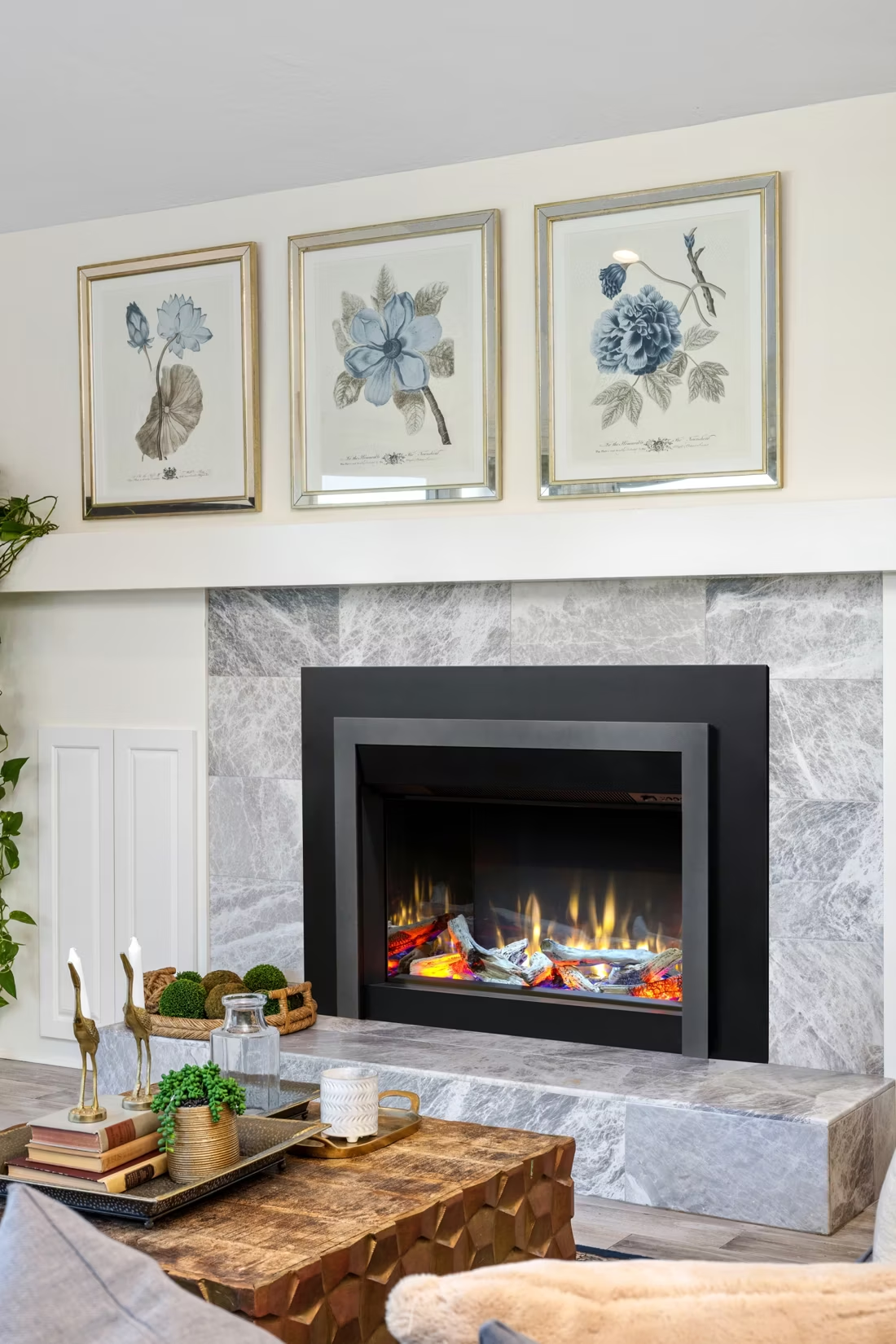
Electricity in Clay County comes through Clay-Union Electric Cooperative in the rural areas and Xcel Energy within Vermillion city limits—both reliable grids, which matters since an electric fireplace only works when the power is on. For homes here, that reliability is exactly the appeal: no chimney to maintain, no propane tank to schedule fills for, no ash to haul. Whether it's a plug-in unit added to a USD rental near campus or a built-in electric insert going into a 1970s ranch-style fireplace in Vermillion, electric heat solves the zone-heating problem—warming a den, a finished basement, or a bedroom—without touching your home's structure or venting.
Three steps. No salesperson until you're ready.
Tell us about your project
Your zip code, your situation, and the fuel you're leaning toward—or let the answers point you to one.
See what's actually available
The brands dealers within 100 miles genuinely carry—real options, never a catalog mirage.
Get your dealer & Project Guide
A trusted local dealer, plus the free Project Guide & Parts List that names every component of the job.
Frequently Asked Questions
How much does an electric fireplace installation cost in Clay County?
Plug-in electric fireplaces and stoves are the cheapest hearth option available—many units simply plug into an existing 120V outlet, so there's no installation cost beyond mounting or placement. Built-in electric fireplaces or inserts that require a dedicated circuit or in-wall wiring involve an electrician, and that work typically runs a few hundred dollars on top of the unit price, depending on how far the new circuit has to run from your panel. Homes in older parts of Vermillion with dated electrical panels sometimes need a panel assessment first. A local dealer can tell you within minutes of seeing your space whether your unit needs new wiring or not.
Do I need a permit to install an electric fireplace in Clay County?
Most plug-in electric fireplaces and stoves don't require any permit—they're treated like any other appliance you plug into a wall. If you're installing a built-in unit that requires a new dedicated circuit or any panel work, that electrical work does need a permit, handled through the City of Vermillion building department if you're inside city limits, or Clay County for rural addresses. A licensed electrician pulling the permit as part of the job is standard practice and keeps the work up to code.
Will an electric fireplace actually heat my home in a Clay County winter?
Be realistic about what electric heat can do here. Most electric fireplaces max out around 1,500 watts, which translates to roughly 5,000 BTUs—enough to comfortably heat a single room, but nowhere near enough to replace a furnace when winter lows average 10°F and the county racks up nearly 6,800 heating degree days a season. Where electric fireplaces earn their keep in Clay County is zone heating: warming a finished basement, a home office, or a bedroom so you can turn the main thermostat down elsewhere in the house. Think supplemental, not primary, and you'll be happy with the result.
What's the difference between an electric fireplace, insert, and stove?
An electric fireplace is typically a wall-mounted or built-in unit designed to look like a traditional fireplace, often with a realistic flame display. An electric insert is sized to slide into an existing masonry or wood-burning fireplace opening—a common upgrade in older Vermillion homes that want to retire a rarely-used wood fireplace without any structural changes. An electric stove is a freestanding cabinet-style unit that can go anywhere with an outlet, which makes it the easiest option for renters or homes without an existing fireplace. All three use the same core heating element; the difference is really about fit and where it goes in the room.
What's the best electric fireplace for a cold climate like Clay County?
Since electric units are supplemental heat here rather than a primary heat source, prioritize ones with a genuinely useful heater—look for models rated at the full 1,500-watt output with a thermostat, not just an ambiance-only flame unit. Brands with a realistic flame effect and a quiet-running fan tend to get used more often, which matters since a unit sitting unused doesn't help your heating bill. For a finished basement or bonus room in a Clay County home, a larger built-in insert with a stronger heater will do more work than a small tabletop unit. A local dealer can match wattage and room size for your specific space.
Electric vs. gas fireplace—which is right for my Clay County home?
Gas fireplaces are common in Clay County and deliver real, substantial heat output—natural gas is available through Xcel Energy inside Vermillion, with propane serving most rural county addresses. A gas fireplace can genuinely offset your furnace on cold nights; an electric one can't. But gas requires venting or a listed vent-free configuration, a gas line, and professional installation with permits. Electric skips all of that—it's plug-and-play or a simple circuit add, with no combustion byproducts and no annual gas appliance service. If you want supplemental ambiance and flexibility with minimal installation, electric wins. If you want a fireplace that can meaningfully help heat the room on a sub-zero night, gas is the stronger choice.
Why don't more Clay County homes use wood heat, given how cold it gets?
It's a fair question given the HDD numbers here rival places like Bismarck, ND. The honest answer is geography: Clay County is prairie and farmland along the Missouri River, with cottonwood in the river bottoms but no real forested acreage to sustain a firewood-cutting culture the way national forest counties out west do. Ponderosa pine and oak you'll see locally are mostly planted trees, not a harvestable supply. Without cheap, local firewood access, wood stoves never became the default here the way electric baseboard, propane, and natural gas heat did—which is part of why electric fireplaces fit naturally into the local hearth market as a supplemental option rather than a primary heat source.
Will my electric fireplace work during a power outage?
No—and this is worth planning around. Unlike a wood stove, an electric fireplace or insert is entirely dependent on grid power from Clay-Union Electric Cooperative or Xcel Energy, so it goes dark the moment the power does. Prairie ice storms and high winds do occasionally knock out power in Clay County, so if backup heat during an outage is a real concern for your household, an electric-only setup isn't the answer—a propane or natural gas unit with battery-backed ignition is the better fit for that specific need. Many homeowners here run electric for daily convenience and keep a separate backup plan for outages.
How do I find a trustworthy installer for an electric fireplace in Clay County?
For plug-in units, installation is often as simple as placement—but for any built-in unit or new circuit work, look for a licensed electrician and, ideally, a hearth dealer who regularly works with electric fireplaces rather than a generalist. That combination matters because sizing the unit to the room and running the electrical correctly are two different skill sets, and a dealer who does both routinely will spot problems a one-off installer might miss. Find My Fireplace doesn't sell or install anything ourselves—we're a neutral matchmaker that connects Clay County homeowners with a trusted local dealer who actually carries and installs what fits their home.
Does an electric fireplace need a vent or chimney?
No—that's its superpower. An electric fireplace needs a wall and an outlet, period. No vent pipe, no gas line, no clearances to design around, which is why it works in bedrooms, offices, apartments, and walls where venting a gas or wood unit would be impractical or impossible. Installation is typically the simplest and least expensive of any fireplace type.
Can I put a TV above my fireplace?
Yes—with an asterisk. Fireplaces are hot and TVs don't like heat. Either put a mantel between them to deflect rising warmth, or choose a fireplace with heat-management technology that creates a cool zone on the wall above—the wall stays around 125 degrees, barely warm, while the room still gets full heat. If you like clean lines and don't want a mantel, heat management is the answer.
Does a fireplace add value to my home?
On average, a fireplace adds back to the home about the same amount you spent installing it. Add the monthly savings from heating the rooms you actually use instead of the whole house—often hundreds of dollars a year—and the value case is strong before you even count what a fire does for how your family uses the room.
How much should I budget for a fireplace?
For an average home—covering the fireplace, the vent pipe, and basic installation—a budget between $3,900 and $5,500 gives you a lot of options across wood, gas, and pellet. By the time you add finish work, gas line, and electrical, the average complete installation lands between $5,000 and $12,000 all-in. In a remodel or new build, a good rule is to put about 2.5% of the total project cost toward the fireplace.
Stove and Fireplace Dealers in Clay County
Listings include WhyFire partner dealers, dealers we have verified as authorized for the brands we recommend, and established local businesses that carry hearth products. Every listing shows which one it is. The ones marked Preferred run on WhyFire's software, so they can show you real pricing and book your appointment right here. No manufacturer pays for placement. How we verify dealers →
Larry's Heating & Cooling
Kaiser Heating & Cooling
Pinnacle Heating & Cooling
Hearth & Home Decor
Find your electric fireplace in Clay County.
Tell us a bit about your home in Clay County and we'll put together a free Project Guide & Parts List—the right electric fireplace, insert, or stove for your space, the exact parts and electrical requirements, and a recommended local dealer to handle the work.
Find Your Fireplace →