
Warmth without the woodpile in Williamsburg County.
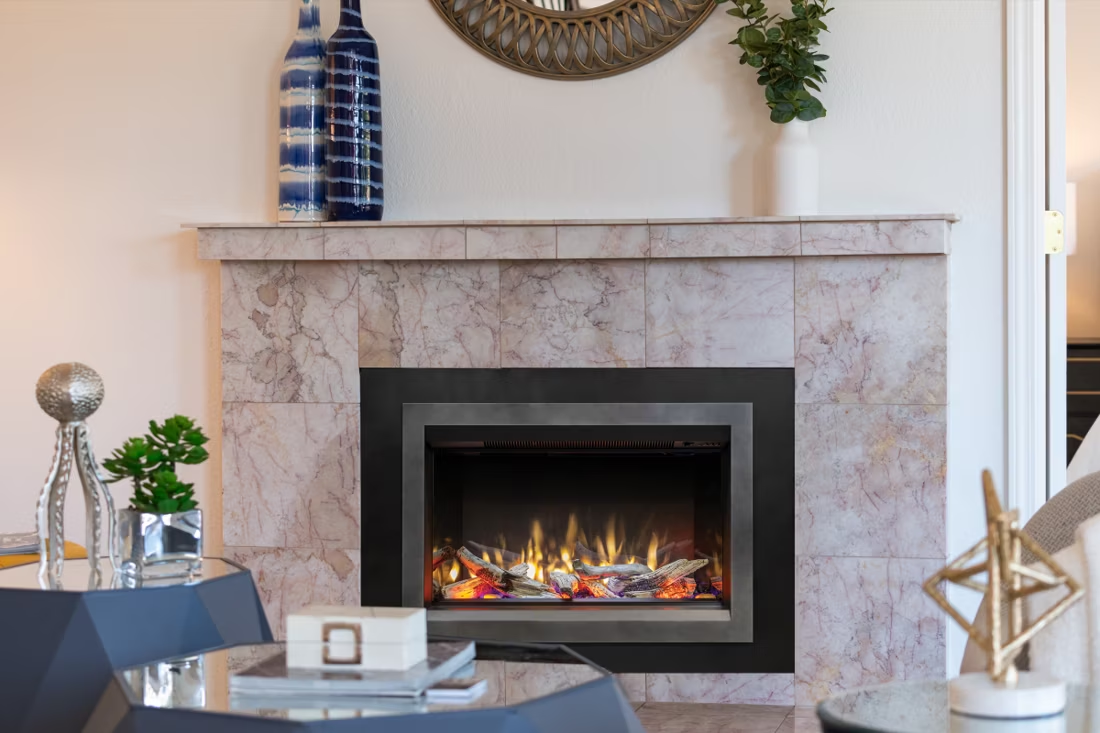
With such a light winter heating need and winter lows that rarely dip below the low 30s, most Williamsburg County homes need a fraction of the heat that cold-climate houses require. An electric fireplace or insert delivers real warmth and ambiance without a chimney, without venting, and without the upkeep of a wood-burning setup. Find the right unit and connect with a trusted local dealer.
Every Project Starts From One of These Five Situations
A short heating season built for a simple installation.
Williamsburg County sits in South Carolina's Pee Dee region, in climate zone 3A, where the winter low averages just 33 degrees and the annual heating need is light. For comparison, a home in Duluth, Minnesota faces nearly four times the winter heating load in a single winter. Around Kingstree, Hemingway, and the county's rural crossroads, homes simply don't need—and often can't justify the cost of—a full wood-burning or cordwood-fed heating system. That mismatch between heating demand and traditional hearth setups is exactly where electric fireplaces do their best work.
Power in Williamsburg County comes primarily through Santee Electric Cooperative, based right in Kingstree, and most homes here—from older frame houses to newer construction and manufactured homes—are well suited to a plug-in insert or a built-in wall unit rather than a masonry chimney project. There's no flue to inspect, no ash to haul, and no cutting permit to track down for oak, pine, or hickory that might otherwise fuel a wood stove. Built-in units that tie into home wiring typically go through the Williamsburg County Building Codes Department for an electrical permit, while plug-in inserts and freestanding units generally don't require one at all. Either way, a local dealer who knows the county's housing stock will steer you toward the right unit for your walls, your outlets, and your budget.
Three steps. No salesperson until you're ready.
Tell us about your project
Your zip code, your situation, and the fuel you're leaning toward—or let the answers point you to one.
See what's actually available
The brands dealers within 100 miles genuinely carry—real options, never a catalog mirage.
Get your dealer & Project Guide
A trusted local dealer, plus the free Project Guide & Parts List that names every component of the job.
Frequently Asked Questions
How much does an electric fireplace installation cost in Williamsburg County?
Costs vary widely because electric fireplaces span such a range of products. A plug-in insert that drops into an existing masonry fireplace opening typically runs $300 to $800 installed, since there's no venting or gas line to run. A built-in wall unit—recessed into new framing with a dedicated electrical circuit—usually falls between $1,200 and $2,500 depending on the unit size and whether an electrician needs to add a new circuit. Mantel packages with a built-in electric unit and surround fall somewhere in between. A local dealer can walk your specific space and give you a firm number.
Do I need a permit to install an electric fireplace in Williamsburg County?
It depends on the type of unit. A plug-in insert or freestanding electric stove that uses a standard household outlet generally doesn't require a permit. A built-in wall unit that requires a dedicated circuit or any new wiring typically needs an electrical permit through the Williamsburg County Building Codes Department, since that's a code-regulated electrical modification. Most local dealers who sell built-in units either pull the permit themselves or coordinate with a licensed electrician who does—worth confirming before work starts.
Can an electric fireplace actually heat my home, or is it just for looks?
Given Williamsburg County's mild heating load—2,439 degree days a year and winter lows that average 33 degrees—a well-chosen electric fireplace can genuinely serve as the primary heat source for a single room, and as meaningful supplemental heat for a modest whole home. Most units put out 4,000 to 5,000 BTUs, which is enough to noticeably warm a living room or bedroom on the county's coldest nights without running a central furnace at full tilt. It won't replace central heat in a large or poorly insulated house, but for the size and insulation level typical of homes around Kingstree and Hemingway, it does real work—not just visual warmth.
Electric fireplace vs. gas fireplace—which is right for my home?
Gas fireplaces are common in Williamsburg County too, and the choice usually comes down to installation complexity and how you plan to use the fireplace. Gas delivers more heat output and the look of a real flame, but requires either a natural gas line or a propane tank, plus venting for most models—more involved and more expensive to install. Electric skips all of that: no gas line, no venting, no combustion byproducts, and a much lower installed cost. For a rental property, a mobile or manufactured home, or a room where running gas line isn't practical, electric is usually the simpler and more affordable route. For a primary living space where you want higher heat output and a more traditional fire feel, gas is worth the extra installation cost.
What happened to wood-burning fireplaces in Williamsburg County?
Wood-burning fireplaces still exist in some older county homes, and there's no shortage of oak, pine, and hickory in the surrounding Pee Dee woodlands. But with such a light winter heating load and lows that rarely challenge single digits, the heating math for a full wood-burning setup—chimney maintenance, cutting or buying cordwood, ash cleanup—rarely pencils out for most homeowners here. Most new installations in the county skip wood entirely in favor of electric or gas, reserving any wood-burning for the occasional cool evening rather than as a real heat strategy.
What types of electric fireplaces are available for Williamsburg County homes?
The main categories are plug-in inserts (drop into an existing fireplace opening), built-in wall units (recessed into new or existing framing, often with a dedicated circuit), mantel packages (a built-in unit paired with a surround and mantel), and freestanding electric stoves (styled like a wood stove but plug-in, no venting). For older county homes with an existing but unused masonry fireplace, an insert is often the fastest and least invasive option. For new construction or a room without an existing hearth, a built-in wall unit or mantel package gives you more design flexibility. A local dealer will match the format to your space.
Will my electric fireplace still work if the power goes out?
No—electric fireplaces require power to run the heating element and flame effect, so they go dark along with everything else during an outage. Santee Electric Cooperative serves most of Williamsburg County and generally restores power quickly outside of major storm events, but ice storms and hurricane remnants do occasionally knock out power in the Pee Dee region for longer stretches. If backup heat during outages matters to you—particularly in rural parts of the county—it's worth keeping that in mind and pairing an electric fireplace with another heat source rather than relying on it as your only plan for winter storms.
How much does it cost to run an electric fireplace in Williamsburg County?
Most electric fireplaces draw around 1,500 watts on the heat setting, which costs roughly 15 to 20 cents an hour to run at typical Santee Electric Cooperative residential rates—a few dollars for an evening of use. Given the county's mild 2,439-degree-day heating season, most homeowners run their unit as supplemental or occasional heat rather than around the clock, which keeps the added cost to the power bill modest compared to running central heat harder on the coldest nights.
Electric vs. pellet stove—why isn't pellet more common in Williamsburg County?
Pellet stoves need a real heating load to justify the equipment, the hopper loading, and the ash cleanup, and Williamsburg County's mild winters—with average lows around 33 degrees and only a light winter heating need—simply don't generate that demand for most homes. You won't find much local pellet stove inventory or many dealers stocking bags of Lignetics or Hamer Pellet Fuel pellets locally, even though those brands serve other parts of the Southeast. Electric fills the same
Can I put a TV above my fireplace?
Yes—with an asterisk. Fireplaces are hot and TVs don't like heat. Either put a mantel between them to deflect rising warmth, or choose a fireplace with heat-management technology that creates a cool zone on the wall above—the wall stays around 125 degrees, barely warm, while the room still gets full heat. If you like clean lines and don't want a mantel, heat management is the answer.
Do electric fireplaces actually produce heat?
Yes—most put out around 4,800–5,000 BTUs from a standard outlet, which comfortably warms a bedroom, office, or den as a comfort-zone heater. What they won't do is carry a whole house the way wood, gas, or pellet can. Think of electric as ambiance-first with honest supplemental heat: flames on with no heat in July, flames plus warmth in January.
How much should I budget for a fireplace?
For an average home—covering the fireplace, the vent pipe, and basic installation—a budget between $3,900 and $5,500 gives you a lot of options across wood, gas, and pellet. By the time you add finish work, gas line, and electrical, the average complete installation lands between $5,000 and $12,000 all-in. In a remodel or new build, a good rule is to put about 2.5% of the total project cost toward the fireplace.
Does a fireplace add value to my home?
On average, a fireplace adds back to the home about the same amount you spent installing it. Add the monthly savings from heating the rooms you actually use instead of the whole house—often hundreds of dollars a year—and the value case is strong before you even count what a fire does for how your family uses the room.
Stove and Fireplace Dealers in Williamsburg County
Listings include WhyFire partner dealers, dealers we have verified as authorized for the brands we recommend, and established local businesses that carry hearth products. Every listing shows which one it is. The ones marked Preferred run on WhyFire's software, so they can show you real pricing and book your appointment right here. No manufacturer pays for placement. How we verify dealers →
Thomlinson & McWhite Inc
Mishoe Oil And Propane
H&S Oil Company
Find your electric fireplace in Williamsburg County.
Tell us a bit about your home and we'll put together a free Project Guide & Parts List—the right electric fireplace or insert for your space, matched with a trusted local dealer serving Williamsburg County.
Find Your Fireplace →