
Electric Warmth for Walterboro's Mild Winters.
No chimney, no gas line, no venting—just plug-in or hardwired warmth for Colleton County's short heating season. Find the right unit and get matched with a trusted local dealer.
Every Project Starts From One of These Five Situations
Low heating needs, high design flexibility.
Walterboro sits at just 29 feet of elevation in the South Carolina Lowcountry, a few miles from the ACE Basin, where winter lows average a mild 35°F and the heating season runs only about 2,322 degree days a year—a fraction of what a household in a place like Duluth, MN deals with. That climate reality shapes what actually makes sense here: most Walterboro homes don't need a whole-house wood or gas system running for months at a time. They need supplemental, on-demand warmth for the handful of genuinely cold nights each winter.
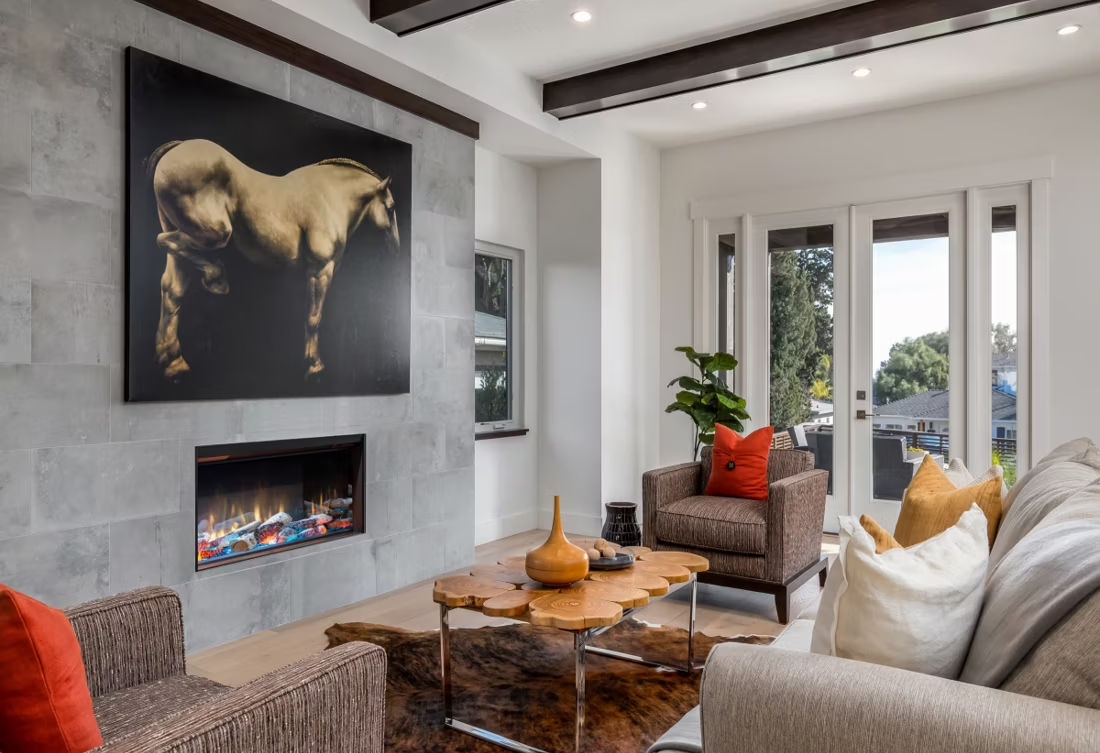
That's exactly where electric fireplaces earn their place. Many of Walterboro's homes date to the town's Victorian-era historic district, where adding a masonry chimney or running new gas line isn't practical or desired—an electric insert or wall-mount unit drops into an existing opening or goes straight on the wall with a standard or dedicated circuit, no structural work required. With Dominion Energy South Carolina serving most of town and Coastal Electric Cooperative covering the surrounding rural areas of Colleton County at roughly $0.1459 per kWh, running one for a few hours on a cool Lowcountry evening costs pennies, not a second mortgage.
Three steps. No salesperson until you're ready.
Tell us about your project
Your zip code, your situation, and the fuel you're leaning toward—or let the answers point you to one.
See what's actually available
The brands dealers within 100 miles genuinely carry—real options, never a catalog mirage.
Get your dealer & Project Guide
A trusted local dealer, plus the free Project Guide & Parts List that names every component of the job.
Frequently Asked Questions
How much does an electric fireplace installation cost in Walterboro?
A plug-in electric insert or wall-mount unit typically runs $300 to $1,500 installed in Walterboro, since it just needs an existing outlet and a mounting bracket or fireplace opening. A built-in electric fireplace that requires a licensed electrician to run a dedicated 20-amp circuit—common for larger units or new construction—runs closer to $1,500 to $3,000. Because there's no chimney, gas line, or venting to install, electric is consistently the least expensive fireplace option available to Colleton County homeowners.
How much heat can an electric fireplace actually put out?
Most residential electric fireplaces top out around 5,000 BTU (roughly 1,500 watts), which is enough to comfortably heat a single room of 400 to 1,000 square feet depending on insulation and ceiling height. Given Walterboro's mild, short winters, that's typically plenty—electric units here are almost always used for zone heating in a living room, bedroom, or sunroom rather than as a whole-home heat source, and that's the honest way to plan for one.
Do I need a permit to install an electric fireplace in Walterboro?
A simple plug-in unit generally doesn't require a permit since no new wiring is involved. If you're adding a built-in unit that requires a new dedicated circuit or panel work, an electrical permit through the Colleton County Building Codes Department is standard, and it's work that should be done by a licensed electrician regardless of permitting—not a DIY panel job. Local dealers who install built-in units typically coordinate the electrical permit as part of the job.
Will my electric fireplace work if the power goes out?
No—and this matters more in Walterboro than in a lot of places, since Colleton County sits inside hurricane and tropical storm territory and Coastal Electric Coop and Dominion Energy customers can see multi-day outages during storm season. An electric fireplace is a great everyday convenience, but it's not backup heat. Homeowners who want heat that survives a grid outage typically pair an electric unit for daily ambiance with a wood stove or gas fireplace with battery-backup ignition for genuine emergency reliability.
What's the difference between an electric insert, a wall-mount, and an electric stove?
An electric insert is built to slide into an existing fireplace opening (masonry or zero-clearance), and it's the most common retrofit for Walterboro's older homes with an existing but unused firebox. A wall-mount unit hangs flush on any wall like a flat-screen TV and needs only a nearby outlet—popular in newer construction or rooms without a fireplace at all. An electric stove is a freestanding cabinet-style unit that mimics a wood stove's look and can go virtually anywhere in a room. All three run on standard or dedicated circuits with no venting.
Are electric fireplaces a good fit for the Lowcountry's humidity?
Yes, and it's one of the underrated advantages locally. Wood stoves and inserts in the humid Lowcountry require attention to moisture content in stacked firewood—oak, pine, and hickory here all need proper seasoning to burn clean—while an electric unit has zero moisture, ash, or creosote concerns. For homeowners who want fireplace ambiance without managing fuel storage in Colleton County's damp air, electric removes that variable entirely.
What does it cost to actually run an electric fireplace in Walterboro?
At Dominion Energy South Carolina and Coastal Electric Coop's residential rate of about $0.1459 per kWh, a typical 1,500-watt electric fireplace running on its highest heat setting costs roughly $0.22 per hour to operate. Run it for a few hours most evenings during Walterboro's cooler months (usually December through February) and you're looking at maybe $10 to $20 a month in electricity—far less than most homeowners assume, and one reason electric remains popular for supplemental heat here even though it isn't the primary heat source in most homes.
Electric vs. gas or wood—which makes more sense in Walterboro?
Given Walterboro's mild winters and low heating demand, electric is often the practical choice for homeowners who want fireplace ambiance and occasional warmth without fuel storage, venting, or chimney maintenance. Gas fireplaces make sense for homeowners who want more heat output and the option to keep running during a power outage (with the right ignition system). Wood remains popular for authentic ambiance and the deep local tradition of burning oak, pine, and hickory, but it asks more of the homeowner—seasoning wood, sweeping a chimney, and tending a fire. For a lot of Walterboro living rooms and sunrooms, electric hits the sweet spot of low cost and low commitment.
Where can I see electric fireplaces in person near Walterboro?
Because electric units are compact and don't require a chimney evaluation the way wood or gas installs do, most Colleton County homeowners are surprised how quickly they can go from browsing to installed. A trusted local dealer can walk you through insert, wall-mount, and stove-style options sized correctly for your room, confirm whether your electrical panel can handle a dedicated circuit if needed, and get a unit installed without the guesswork of ordering something online that doesn't fit your opening or your wiring.
Does an electric fireplace need a vent or chimney?
No—that's its superpower. An electric fireplace needs a wall and an outlet, period. No vent pipe, no gas line, no clearances to design around, which is why it works in bedrooms, offices, apartments, and walls where venting a gas or wood unit would be impractical or impossible. Installation is typically the simplest and least expensive of any fireplace type.
Can I put a TV above my fireplace?
Yes—with an asterisk. Fireplaces are hot and TVs don't like heat. Either put a mantel between them to deflect rising warmth, or choose a fireplace with heat-management technology that creates a cool zone on the wall above—the wall stays around 125 degrees, barely warm, while the room still gets full heat. If you like clean lines and don't want a mantel, heat management is the answer.
Does a fireplace add value to my home?
On average, a fireplace adds back to the home about the same amount you spent installing it. Add the monthly savings from heating the rooms you actually use instead of the whole house—often hundreds of dollars a year—and the value case is strong before you even count what a fire does for how your family uses the room.
Can a fireplace actually lower my heating bill?
Yes—by creating a comfort zone. A furnace heats every square foot of the house just to warm the one room you're in; a gas fireplace on low burns roughly a sixth of the gas a typical furnace does. Set the furnace around 55–60 degrees as a baseline, then heat the rooms your family actually uses. Families who heat this way commonly save $20–$60 a month.
Nearby Dealers
Hearth shops serving Walterboro and the surrounding area. Every listing shows whether it is a WhyFire partner, a dealer we have verified as authorized for the brands we recommend, or a local business carrying hearth products. No manufacturer pays for placement. How we verify dealers →
WilliamSmith Fireplaces & Home Accents
Edisto Gas- Holly Hill
Mf Masonry
Dirty Chimney, LLC
Four Corners Building Supply
Lower State Gas Company
Electric Service in Walterboro
An electric fireplace's heater draws about 1,500 watts—pennies per hour at local rates.
Dominion Energy South Carolina, Inc
Coastal Electric Coop, Inc
Find your electric fireplace in Walterboro.
Tell us a bit about your room and your home's wiring, and we'll match you with a trusted local Walterboro dealer and send over a free Project Guide & Parts List—sized right, with the exact parts and installation plan for your space.
Find Your Fireplace →