
Electric fireplace heat, sized for Union County's mild winters.
With winter lows averaging 29°F and just 3,296 heating degree days a year, most Union County homes need supplemental heat, not a furnace-replacing wood stove. Find the right electric unit for your mill-village bungalow, ranch, or newer build, and get matched with a trusted local dealer.
Every Project Starts From One of These Five Situations
A climate that rarely demands more than zone heat.
Union County sits in climate zone 3A—mixed and humid, with a heating season that runs roughly November through February and rarely produces the kind of extended deep-cold stretches you'd see farther north. Fargo, ND, racks up more than 9,000 heating degree days most winters; Union County sees about a third of that. That difference matters for fuel choice: a wood stove sized to fight single-digit nights in the upper Midwest is often overkill for a county where the average winter low sits at 29°F. For a lot of homes here—especially the older mill-village housing around Buffalo, Lockhart, and Jonesville, where masonry chimneys are aging or were never built to modern code—electric is the practical answer.
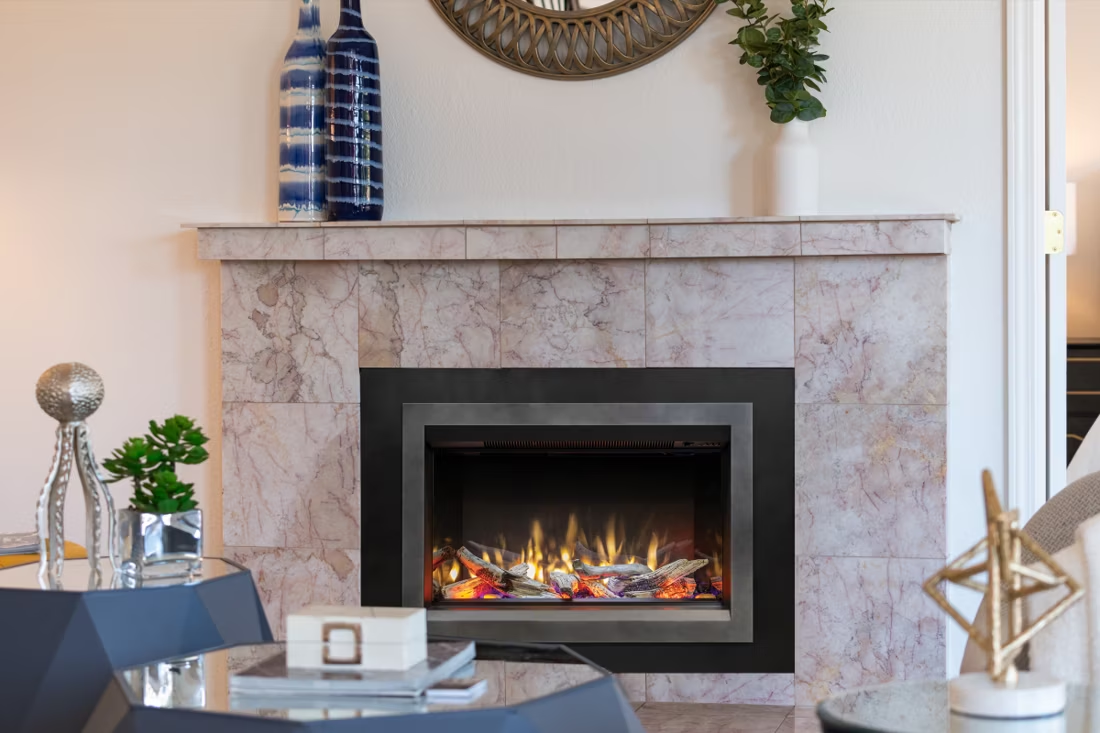
Both Duke Energy Carolinas and Broad River Electric Cooperative serve customers across the county, and either can support a plug-in unit or a hardwired built-in without special rate concerns for occasional zone heating. Electric fireplaces skip the chimney, the venting, and the wood storage entirely—they mount on a wall, slot into an existing firebox as an insert, or sit as a freestanding cabinet unit, and most run on a standard household circuit. For renters in Union's older mill housing, for manufactured homes on the outskirts of town, or for anyone who wants supplemental warmth in one room without opening up a wall for gas line or venting work, electric is often the fastest and least invasive project on this list.
Three steps. No salesperson until you're ready.
Tell us about your project
Your zip code, your situation, and the fuel you're leaning toward—or let the answers point you to one.
See what's actually available
The brands dealers within 100 miles genuinely carry—real options, never a catalog mirage.
Get your dealer & Project Guide
A trusted local dealer, plus the free Project Guide & Parts List that names every component of the job.
Frequently Asked Questions
How much does an electric fireplace installation cost in Union County?
Most electric fireplace projects in Union County run $400 to $1,800. A plug-in freestanding unit or a simple insert into an existing firebox sits at the low end—no electrical work beyond an existing outlet. A built-in wall unit or a linear electric fireplace that requires a dedicated 120V or 240V circuit, new drywall framing, or mantel and surround work runs higher, especially in older mill-village homes around Lockhart and Buffalo where panel capacity sometimes needs to be checked first. Local dealers will quote a firm number after seeing your electrical panel and the space.
Do I need a permit for an electric fireplace in Union County?
A plug-in electric fireplace that uses an existing outlet typically doesn't require a permit. If you're installing a built-in unit that needs a new dedicated circuit or any panel work, that electrical work falls under the Union County Building Codes Department and should be pulled by a licensed electrician—most local hearth dealers either employ one or coordinate directly with one as part of the install. Skipping this step on a hardwired unit is the most common way homeowners end up with an inspection problem at resale.
Can an electric fireplace actually heat a room, or is it just for looks?
Most electric fireplaces put out real, usable heat—typically up to 5,000 to 5,200 BTU on a standard 120V circuit, enough to comfortably supplement a single room of 400 to 1,000 square feet depending on insulation. Given Union County's mild winter average of 29°F, that's often plenty to take the edge off a bedroom or den without running the central heat pump harder than necessary. Where electric falls short is whole-home heating in older, leakier houses—for that, a heat pump upgrade or a wood/gas unit sized for the space is usually the better call. A local dealer can tell you honestly whether your room is a good fit.
What's the difference between a plug-in electric fireplace and a built-in unit?
A plug-in electric fireplace is a freestanding cabinet or a slide-in insert that uses a standard outlet—no wiring changes, easy to move, and often the fastest project on this page. A built-in electric fireplace is set into a wall or existing masonry firebox, usually wired to its own circuit, and finished with a mantel or surround to look like a permanent fixture. For Union County homes with an existing but aging masonry fireplace—common in the mill villages around Jonesville and Carlisle—a built-in insert is often the cleanest upgrade, since it covers up an old firebox that may no longer be safe for wood burning.
Will an electric fireplace work during a power outage?
No—unlike a wood stove or a gas unit with battery-backup ignition, an electric fireplace needs grid power to run, full stop. That's worth factoring in if you're in a part of the county prone to ice-storm outages, since Union County does see occasional multi-day outages after winter storms despite its generally mild climate. Homeowners who want both everyday convenience and a genuine backup heat source sometimes pair an electric unit for daily use with a small wood stove or vented gas unit for outages—a local dealer can walk through both options.
How does electric compare to wood or gas for a Union County home?
Wood, using local oak, pine, or hickory, offers the most heat output and works without electricity, but it means chimney maintenance and wood handling. Gas offers instant, higher-output heat but requires either natural gas service (limited in parts of the county) or a propane tank. Electric offers the lowest install cost, no venting, and no fuel to manage, but less raw heat output and no function during outages. In a climate zone as mild as Union County's, where the heating season is short and central heat pumps already carry most of the load, electric is frequently the right-sized choice for supplemental warmth rather than primary heat.
Are electric fireplaces a good fit for manufactured or mobile homes?
Yes, with the right unit. Electric fireplaces are one of the few hearth options that don't require modifying the roofline or wall cavity for venting, which makes them a common choice in Union County's manufactured and mobile housing stock. The main thing to check is the home's electrical panel capacity if you're going with a hardwired built-in rather than a plug-in unit—older mobile home panels sometimes need an upgrade before adding a dedicated circuit. A local dealer familiar with manufactured housing can flag this during the initial visit.
What brands or models are worth looking at for supplemental heat here?
For Union County's mild-climate, supplemental-heat use case, mid-range built-in and insert models from brands like Dimplex and Napoleon cover most needs without overspending on features designed for harsher climates. If you're weighing electric against a pellet stove for a similar supplemental role, regional pellet suppliers like Lignetics and Hamer Pellet Fuel serve the area, but pellet stoves need a hopper, venting, and periodic ash cleanup that electric skips entirely. A local dealer can compare specific models against your room size and budget.
How is electric different from pellet or gas if I just want low-maintenance heat?
Electric is the lowest-maintenance option on this list—no venting to inspect, no hopper to fill, no gas line to run, and no annual chimney sweep. Pellet stoves (supplied locally through brands like Greenway Renewable Energy) need regular hopper loading and ash removal but burn cleaner and hotter than electric. Gas units need an annual service check and either natural gas or propane. For Union County homeowners prioritizing convenience over raw heat output, especially in a room that just needs to shed a chill on a 29°F morning, electric is usually the simplest project to install and live with.
Can I put a TV above my fireplace?
Yes—with an asterisk. Fireplaces are hot and TVs don't like heat. Either put a mantel between them to deflect rising warmth, or choose a fireplace with heat-management technology that creates a cool zone on the wall above—the wall stays around 125 degrees, barely warm, while the room still gets full heat. If you like clean lines and don't want a mantel, heat management is the answer.
Does an electric fireplace need a vent or chimney?
No—that's its superpower. An electric fireplace needs a wall and an outlet, period. No vent pipe, no gas line, no clearances to design around, which is why it works in bedrooms, offices, apartments, and walls where venting a gas or wood unit would be impractical or impossible. Installation is typically the simplest and least expensive of any fireplace type.
Can a fireplace actually lower my heating bill?
Yes—by creating a comfort zone. A furnace heats every square foot of the house just to warm the one room you're in; a gas fireplace on low burns roughly a sixth of the gas a typical furnace does. Set the furnace around 55–60 degrees as a baseline, then heat the rooms your family actually uses. Families who heat this way commonly save $20–$60 a month.
Should the dealer who sells my fireplace also install it?
Ideally, yes. A fireplace project involves vent pipe, gas line, electrical, and often tile or stone. Hire three or four separate trades and you own the liability and the game of telephone between them. One company selling and installing means one accountable party, start to finish—ask about factory training, on-time completion records, and what happens if an inspection fails.
Stove and Fireplace Dealers in Union County
Listings include WhyFire partner dealers, dealers we have verified as authorized for the brands we recommend, and established local businesses that carry hearth products. Every listing shows which one it is. The ones marked Preferred run on WhyFire's software, so they can show you real pricing and book your appointment right here. No manufacturer pays for placement. How we verify dealers →
Blue Sky Chimney Sweeps
Clinton Newberry Natural Gas
Edisto Gas- Chester
Superior Plus Propane D/b/a Freeman Gas - Spartanburg
Find your electric fireplace in Union County.
Tell us about your home and we'll put together a free Project Guide & Parts List—the exact wiring, mantel, and surround parts your project needs—and match you with a trusted local dealer who can install it right.
Find Your Fireplace →