
Built for mild Midlands winters, not brutal ones.
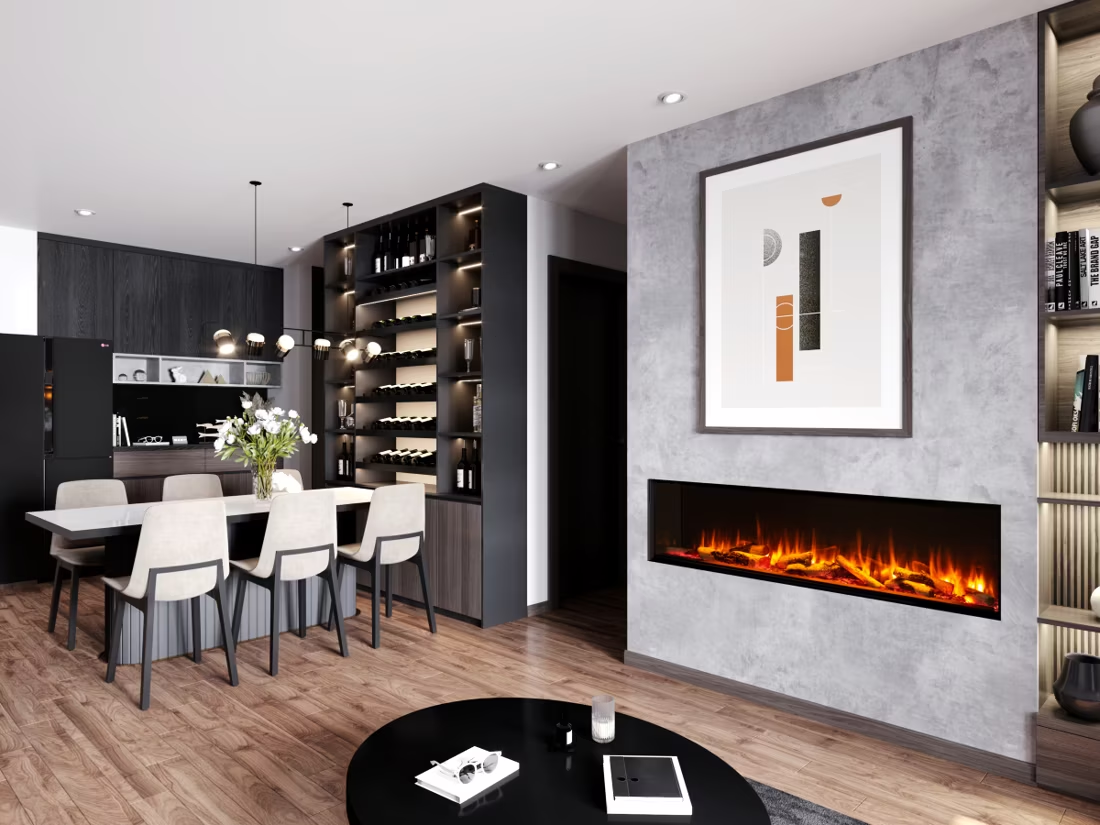
With winter lows averaging 33°F and just 2,821 heating degree days a year, Sumter County homes don't need a primary heat source in the living room—they need ambiance and a little supplemental warmth on the coldest nights. I'll match you with a trusted local dealer who can size the right electric unit for your space and wiring.
Every Project Starts From One of These Five Situations
Your heat pump handles the season; the fireplace handles the mood.
Sumter County sits in climate zone 3A, part of South Carolina's Midlands, where winters are short and mild by national standards—2,821 heating degree days is a fraction of the roughly 7,600 a Minneapolis, MN winter logs. Most homes here, from the historic districts near downtown Sumter to newer construction around Shaw Air Force Base and out toward Pinewood and Wedgefield, are heated primarily by central heat pumps or gas furnaces. An electric fireplace fits into that setup as a supplemental heat source and a visual centerpiece, not the thing standing between a family and a cold house. That's exactly what electric does well: instant flame effect, zone heat for a bedroom or den, and none of the venting or gas-line work a masonry fireplace or gas insert requires.
Oak, pine, and hickory grow all over Sumter County and show up in plenty of backyard firewood piles, but with air quality concerns effectively nonexistent here and winters rarely severe enough to justify tending a fire daily, wood stoves and pellet appliances have never caught on as heating equipment the way they have in colder parts of the country—most local hearth dealers carry them, if at all, as a niche request rather than a stocked line. Electric, by contrast, is a straightforward fit: a plug-in insert or wall-mount unit runs on a standard 120V outlet, works in rental properties and base housing near Shaw AFB, and needs no chimney, no fuel storage, and no annual sweep. Duke Energy Progress serves the city of Sumter, with Black River Electric Cooperative and Santee Electric Cooperative covering rural stretches of the county, so power reliability and rate structure are worth a quick look before choosing between a low-draw insert and a higher-wattage built-in unit.
Three steps. No salesperson until you're ready.
Tell us about your project
Your zip code, your situation, and the fuel you're leaning toward—or let the answers point you to one.
See what's actually available
The brands dealers within 100 miles genuinely carry—real options, never a catalog mirage.
Get your dealer & Project Guide
A trusted local dealer, plus the free Project Guide & Parts List that names every component of the job.
Frequently Asked Questions
How much does an electric fireplace installation cost in Sumter County?
Plug-in inserts and freestanding electric stoves that use a standard 120V outlet typically run $300 to $1,200 installed, since there's no venting or gas line involved—most of that cost is the unit itself plus a mantel or surround if you want one. Built-in wall units recessed into framing, common in newer construction around Wedgefield and Pinewood or in remodels near downtown Sumter, run $1,500 to $3,500 once you add an electrician for a dedicated circuit and any custom trim work. Homes in older sections of the city with dated panels sometimes need a small electrical upgrade first, which a local dealer will flag during the estimate rather than after the unit's already on the wall.
Do I need a permit to install an electric fireplace in Sumter County?
A simple plug-in unit that draws from an existing outlet generally doesn't require a permit. A built-in electric fireplace that involves new wiring, a dedicated circuit, or any framing changes does—that work falls under the City of Sumter Building Safety Division if you're inside city limits, or the Sumter County Building Codes Office for unincorporated areas like Mayesville or Rembert. Most licensed electricians and hearth dealers pull that permit as part of the installation, so ask upfront whether your quote includes it.
Can an electric fireplace actually heat a room in Sumter County, or is it just for looks?
Most units include a built-in 1,500-watt heater rated to comfortably warm 400 to 1,000 square feet, which is plenty for a bedroom, den, or open living area during the county's coldest stretches—typically nights when the temperature dips into the 20s, well below the 33°F winter average. It won't replace your heat pump or furnace as the whole-house heat source, and it isn't meant to; the value here is zone heat for the room you're actually sitting in, without running central heat harder than it needs to on a mild Midlands evening.
Electric or gas—which makes more sense for my home in Sumter County?
Both are common choices here. Gas fireplaces put out more consistent heat and work through a power outage if they're battery-backed, which matters during the occasional ice storm or hurricane-season outage on the Black River Electric Cooperative or Duke Energy Progress systems. Electric wins on simplicity: no gas line, no venting, and a fraction of the installation cost, which makes it the easier retrofit for condos, apartments near Shaw AFB, and older downtown Sumter homes where running new gas piping isn't practical. If ambiance and supplemental warmth in one or two rooms is the goal, electric is usually the more cost-effective starting point; if you want a fireplace that can genuinely carry heat during a cold snap, gas is worth the extra investment.
What features should I look for in an electric fireplace for a humid, mild climate like Sumter County's?
Look for a unit with a separate heater switch, so you can run the flame effect for ambiance on a mild 55-degree evening without kicking on the heater—a feature you'll use often given how short the county's real cold stretches are. Humidity is also a factor here; units with sealed electronics and LED (rather than older halogen) flame technology tend to hold up better in Sumter's humid subtropical air over the years. Beyond that, wattage and room coverage matter more than brand name—a local dealer can match unit size to the actual square footage of the room, not a generic chart.
Will my electric fireplace work during a power outage?
No—electric fireplaces are entirely dependent on grid power, so during an outage from a summer thunderstorm, a tropical system, or a rare ice event on the Duke Energy Progress or Black River Electric Cooperative lines, the unit simply won't run. That's a real consideration in Sumter County given the area's hurricane-season exposure. If backup heat during an outage is a priority for your household, a battery-ignition gas unit is a better fit as either a primary or secondary fireplace; electric is best thought of as a grid-dependent comfort feature, not an emergency heat source.
How much maintenance does an electric fireplace need?
Very little compared to any combustion appliance. There's no chimney to sweep and no fuel to store—maintenance is mostly wiping down the glass front, dusting the heater vents a couple of times a year, and occasionally replacing an LED module or fan motor after years of daily use. That low-maintenance profile is one reason electric units do well in rental properties and Shaw AFB-area housing where a tenant or transferring family doesn't want an ongoing service obligation.
I have an older home near downtown Sumter—can I still install a built-in electric fireplace?
Usually yes, but older homes in Sumter's historic districts sometimes have panels or circuits that weren't sized for an additional 1,500-watt draw, especially if the home still has any original knob-and-tube wiring. A licensed electrician can confirm your panel has capacity for a new dedicated circuit before the fireplace goes in—this is exactly the kind of detail a local dealer catches during an in-home estimate rather than after a unit is already mounted. In some cases, a lower-draw plug-in insert is simply the easier and cheaper path for a historic property.
Why don't more homes in Sumter County use wood or pellet stoves?
With only 2,821 heating degree days and winter lows averaging 33°F, Sumter County's heating season is short and mild enough that tending a wood stove or feeding a pellet hopper daily doesn't pencil out the way it does in colder parts of the country—plenty of oak, pine, and hickory grows locally, but it mostly ends up in fire pits and the occasional decorative fireplace rather than serious heating equipment. Most local hearth dealers stock gas and electric units as their bread and butter, with wood or pellet appliances available on request rather than as a standard line. For most Sumter County homeowners, electric or gas covers the actual need—supplemental warmth and ambiance—without the fuel storage and daily upkeep a wood or pellet setup demands.
Can I put a TV above my fireplace?
Yes—with an asterisk. Fireplaces are hot and TVs don't like heat. Either put a mantel between them to deflect rising warmth, or choose a fireplace with heat-management technology that creates a cool zone on the wall above—the wall stays around 125 degrees, barely warm, while the room still gets full heat. If you like clean lines and don't want a mantel, heat management is the answer.
Do electric fireplaces actually produce heat?
Yes—most put out around 4,800–5,000 BTUs from a standard outlet, which comfortably warms a bedroom, office, or den as a comfort-zone heater. What they won't do is carry a whole house the way wood, gas, or pellet can. Think of electric as ambiance-first with honest supplemental heat: flames on with no heat in July, flames plus warmth in January.
What is an in-home preview and do I need one?
It's a visit where a hearth professional measures your space, confirms the model you picked actually works in your home, and walks the specs—framing, gas line, venting, finish work—before anything is ordered. Some details you just can't know until you see the house. Never make a down payment without one; it's the single most-skipped step that burns buyers.
Can I install a fireplace myself?
If you're putting a fire in your house on purpose, it's best to work with an expert. Unless you're genuinely experienced in framing, gas line, vent pipe, and the national code on clearances to combustibles, have a professional do it—and ideally the same company that sells you the fireplace, so warranty, service, and liability all live under one roof.
Stove and Fireplace Dealers in Sumter County
Listings include WhyFire partner dealers, dealers we have verified as authorized for the brands we recommend, and established local businesses that carry hearth products. Every listing shows which one it is. The ones marked Preferred run on WhyFire's software, so they can show you real pricing and book your appointment right here. No manufacturer pays for placement. How we verify dealers →
Palmetto Gas
Thomlinson & McWhite Inc
Farmers Propane
Thomlinson & McWhite Inc
Get your free Project Guide & Parts List for an electric fireplace in Sumter County.
Tell me about your room, your wiring situation, and how you want to use the fireplace, and I'll match you with a trusted local Sumter County dealer and send over a free Project Guide & Parts List—the right unit, the electrical requirements, and a recommended installer, no big-box guesswork.
Find Your Fireplace →