
The Easiest Fireplace Upgrade for Pendleton's Historic Homes.
No chimney, no gas line, no masonry work—just plug in or hardwire real heat and flame effect for the mild Upstate winters around Pendleton.
Every Project Starts From One of These Five Situations
A short heating season built for plug-in warmth.
Pendleton sits at 819 feet in the South Carolina foothills near Clemson and Lake Hartwell, in climate zone 3A. Winters here are mild—the average low hovers around 32°F, and the town logs a light winter heating load, a fraction of what a place like Duluth, MN or Burlington, VT sees. That means most homes here need real heat for a handful of cold snaps a year, not a full winter-long furnace replacement, which is exactly the kind of demand an electric fireplace is built to answer.
Pendleton is also one of the older towns in Anderson County, with a National Register historic district built up around the village green in the 1800s. Many of those homes never had a working chimney to begin with, and running a new gas line or masonry flue through a historic structure is expensive and sometimes not allowed. A 120-volt plug-in insert or a hardwired wall unit adds a real 4,600–5,200 BTU heat source and a convincing flame effect without touching the structure. Electric service in town runs through Duke Energy Carolinas, while properties on the outskirts of Pendleton are more often served by Blue Ridge Electric Cooperative—worth knowing before you budget for winter operating costs.
Three steps. No salesperson until you're ready.
Tell us about your project
Your zip code, your situation, and the fuel you're leaning toward—or let the answers point you to one.
See what's actually available
The brands dealers within 100 miles genuinely carry—real options, never a catalog mirage.
Get your dealer & Project Guide
A trusted local dealer, plus the free Project Guide & Parts List that names every component of the job.
Frequently Asked Questions
How much does an electric fireplace installation cost in Pendleton?
A plug-in electric insert or freestanding stove typically runs $300 to $1,500 installed, since most models just need a standard 120-volt outlet and no venting or gas line. A built-in wall unit or a linear electric fireplace set into new framing usually runs $2,000 to $4,500 once you factor in an electrician running a dedicated 20-amp circuit, trim work, and any drywall or mantel finishing. Because there's no chimney or flue to build, electric installs in Pendleton are almost always faster and cheaper than a comparable gas or wood project.
Do I need a permit to install an electric fireplace in Pendleton?
A freestanding plug-in unit generally doesn't require a permit—it's treated like any other appliance. A built-in electric fireplace that needs a new dedicated circuit does require an electrical permit through the Anderson County Building Codes Department, since Pendleton itself doesn't run a separate building department. Most local electricians and hearth dealers pull this permit as part of the install, so you typically aren't coordinating it yourself.
Can an electric fireplace actually heat a room in Pendleton's climate?
Yes, for the way most Pendleton homes actually use one. With only a light winter heating load and winter lows that rarely drop far below freezing, a standard 1,500-watt electric unit (roughly 4,600–5,200 BTU) is enough to comfortably supplement a heat pump on the coldest nights or fully heat a single room of 300–400 square feet—a sunroom, den, or converted porch common in this area's older homes. It's not sized to replace central heat in a whole house, but that's rarely the ask here.
What's the difference between an electric insert, a wall-mount, and an electric stove?
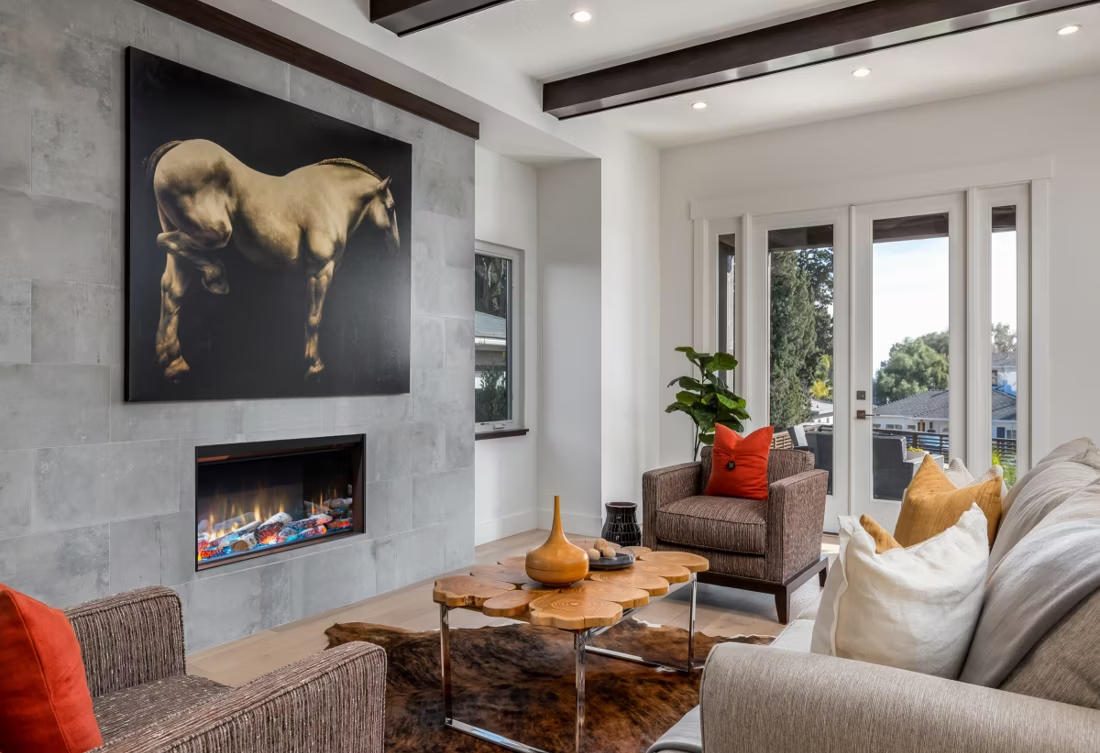
An electric insert is built to slide into an existing masonry firebox, which works well if your Pendleton home already has an old wood-burning fireplace opening you want to convert. A wall-mount or linear unit is designed to be recessed into new framing or hung on a wall like a large flat panel—popular in newer builds or additions. An electric stove is a freestanding cabinet-style unit that mimics a wood stove's look and can go almost anywhere near an outlet, which suits historic homes where you want the visual without any structural change.
What will an electric fireplace cost to run each month?
It depends on which utility serves your address. Duke Energy Carolinas customers in town pay around $0.1394 per kWh, while properties served by Blue Ridge Electric Cooperative pay closer to $0.1894 per kWh. A typical 1,500-watt unit running 5 hours a night uses about 7.5 kWh a day—roughly $31/month on Duke Energy or $43/month on Blue Ridge Electric, assuming daily use through the coldest stretch of the year. Most owners run theirs far less often, since the heating season here is short.
Is electric heat a good fit for an older Pendleton home?
Often, yes—it's the least invasive option for the pre-1900s homes in and around Pendleton's historic village district. Rather than adding a chimney liner or running new gas piping through original framing, an electrician can add a single dedicated circuit for a built-in unit, or you can use a plug-in model in an existing fireplace opening with no structural work at all. It's worth having a licensed electrician confirm your home's panel has capacity before adding a hardwired unit, since some older Pendleton homes still run older 100-amp service.
Will my electric fireplace work if the power goes out?
No—this is the one honest limitation to plan around. Unlike a wood stove or a battery-backed gas fireplace, an electric unit stops working the moment power drops, since both the heater and the flame effect run on household current. If backup heat during outages matters to you—which does come up in Pendleton during ice storms—a gas fireplace or a small generator setup for your electric unit is worth discussing with a local dealer.
Electric vs. gas—which is right for my Pendleton home?
Gas fireplaces are a standard, well-supported option in this area and give you higher heat output, a more traditional flame, and the ability to run during a power outage with battery-backup ignition. Electric skips the gas line and venting entirely, costs far less to install, and is the simpler retrofit for a historic home or an add-on room. For a primary living space where you want real backup heat, gas is usually the better fit; for a den, bedroom, sunroom, or a home where running new gas piping isn't practical, electric is usually the more sensible and affordable choice.
How much maintenance does an electric fireplace need?
Very little, which is part of the appeal. There's no chimney to sweep, no ash to clean, and no annual gas-line inspection required. LED flame elements typically last 20,000 to 30,000 hours before needing replacement, and the main upkeep is occasionally dusting the interior and checking the blower fan. It's a good option for homeowners who want a real ambiance feature without adding an appliance that needs yearly servicing.
Can I put a TV above my fireplace?
Yes—with an asterisk. Fireplaces are hot and TVs don't like heat. Either put a mantel between them to deflect rising warmth, or choose a fireplace with heat-management technology that creates a cool zone on the wall above—the wall stays around 125 degrees, barely warm, while the room still gets full heat. If you like clean lines and don't want a mantel, heat management is the answer.
Does an electric fireplace need a vent or chimney?
No—that's its superpower. An electric fireplace needs a wall and an outlet, period. No vent pipe, no gas line, no clearances to design around, which is why it works in bedrooms, offices, apartments, and walls where venting a gas or wood unit would be impractical or impossible. Installation is typically the simplest and least expensive of any fireplace type.
Can I install a fireplace myself?
If you're putting a fire in your house on purpose, it's best to work with an expert. Unless you're genuinely experienced in framing, gas line, vent pipe, and the national code on clearances to combustibles, have a professional do it—and ideally the same company that sells you the fireplace, so warranty, service, and liability all live under one roof.
Can a fireplace actually lower my heating bill?
Yes—by creating a comfort zone. A furnace heats every square foot of the house just to warm the one room you're in; a gas fireplace on low burns roughly a sixth of the gas a typical furnace does. Set the furnace around 55–60 degrees as a baseline, then heat the rooms your family actually uses. Families who heat this way commonly save $20–$60 a month.
Nearby Dealers
Hearth shops serving Pendleton and the surrounding area. Every listing shows whether it is a WhyFire partner, a dealer we have verified as authorized for the brands we recommend, or a local business carrying hearth products. No manufacturer pays for placement. How we verify dealers →
Carolina Elite Fire
Tugalo Gas Company Inc.
White Jones Ace Hardware
Blossman Gas - Anderson
Yoder Building Supply
Blossman Gas And Appliance
Fireplaces Of Lake Hartwell
Frankie T's Chimney & Fireplace Services
Electric Service in Pendleton
An electric fireplace's heater draws about 1,500 watts—pennies per hour at local rates.
Duke Energy Carolinas, LLC
Blue Ridge Electric Coop Inc - (Sc)
Find your electric fireplace in Pendleton.
Tell us a bit about your home and we'll match you with the right electric insert, wall unit, or stove—plus a free Project Guide & Parts List and a trusted local dealer to install it.
Find Your Fireplace →