
Instant ambiance for Oconee County's mild winters.
Real flame-effect ambiance and supplemental warmth for Oconee County's mild winters—from lake homes on Keowee and Jocassee to Walhalla, Seneca, and Westminster. Find the right unit and connect with a trusted local dealer.
Every Project Starts From One of These Five Situations
Supplemental warmth without the smoke or the venting.
Oconee County sits in the far northwestern corner of South Carolina, where the Blue Ridge Escarpment rises out of the Piedmont toward Sassafras Mountain—the state's highest point, just across the Pickens County line. Around Lake Keowee, Lake Jocassee, and the Chattooga River, winters are genuinely mild: Walhalla, Seneca, and Westminster sit in climate zone 3A, with a short, mild heating season and winter lows that hover around 34°F. That's a fraction of the heating load carried by a place like Fargo, ND or Burlington, VT—which is exactly why so many Oconee County homeowners lean on electric fireplaces rather than investing in a full wood-burning or gas heating system.
An electric fireplace or insert doesn't need a chimney, a flue, or combustion air, which makes it the simplest option for lake cottages around Keowee and Jocassee that were never built with a masonry fireplace, for condos and townhomes in Seneca, and for older Walhalla farmhouses where retrofitting a vented wood or gas unit isn't practical. Most plug-in units run on a standard 120-volt outlet; larger built-in wall units typically need a dedicated 240-volt circuit, which is where an electrician and, in some cases, a permit through the Oconee County building department come in. Either way, the appliance draws from the same grid serving the rest of the county—Duke Energy Carolinas around Seneca and Walhalla, Blue Ridge Electric Cooperative in more rural stretches—so there's no fuel delivery, no wood species to worry about (even though oak, pine, and hickory are everywhere in the surrounding Nantahala-Pisgah forestland), and no seasonal cutting permit to track.
Three steps. No salesperson until you're ready.
Tell us about your project
Your zip code, your situation, and the fuel you're leaning toward—or let the answers point you to one.
See what's actually available
The brands dealers within 100 miles genuinely carry—real options, never a catalog mirage.
Get your dealer & Project Guide
A trusted local dealer, plus the free Project Guide & Parts List that names every component of the job.
Frequently Asked Questions
How much does it cost to install an electric fireplace in Oconee County?
Cost depends heavily on which type you choose. A plug-in electric insert that slides into an existing masonry fireplace opening typically runs $300 to $1,200 installed, since no electrical or structural work is needed. A built-in wall unit or full electric fireplace package—the kind often chosen for a Lake Keowee great room or a Seneca remodel—runs closer to $2,000 to $5,000 once you factor in a dedicated 240-volt circuit, wall framing, and a local dealer's installation labor. Because Oconee County's mild winters (a short, mild heating season) mean most homeowners are after ambiance and supplemental warmth rather than a whole-home heat source, many buyers land on the lower end of that range.
Will an electric fireplace actually heat my home, or is it just for looks?
Most electric fireplaces put out around 1,500 watts, roughly 5,000 BTU—enough to noticeably warm a single room, but not a whole house. In Oconee County, where the average winter low sits around 34°F and the heating season is short compared to the mountains just north along the Nantahala-Pisgah National Forest boundary, that output is often all the supplemental heat a living room or bonus room needs. Homeowners who want the unit to double as real backup heat during a cold snap should look for models with a built-in fan-forced heater and thermostat, not just a decorative flame effect.
Do I need an electrician to install an electric fireplace?
Plug-in electric inserts and stoves generally don't—they run off a standard 120-volt household outlet, the same as any major appliance. Built-in wall units, especially larger models sized for a great room on Lake Keowee or Lake Jocassee, usually require a dedicated 240-volt circuit, which means a licensed electrician needs to run new wiring. Your local dealer will tell you which category your chosen unit falls into before you buy, so there are no surprises on installation day.
Do I need a permit to install an electric fireplace in Oconee County?
In most cases, no—a plug-in electric insert or freestanding stove doesn't trigger a permit since it involves no new wiring, venting, or structural changes. If you're installing a built-in unit that requires a new dedicated circuit or any electrical panel work, that portion of the project typically does need a permit through the Oconee County building department, pulled by your licensed electrician. Unlike wood or gas installations, there's no venting inspection to worry about, which is part of why electric projects move faster from purchase to first fire.
Are electric fireplaces a good fit for lake houses and rental cabins around Keowee and Jocassee?
Yes—it's one of the most common uses in Oconee County. Vacation homes and rental cabins around Lake Keowee and Lake Jocassee often don't have an existing chimney, and owners don't want to leave a wood-burning appliance unattended between renters. A plug-in electric insert or freestanding stove gives a cottage real fireplace ambiance with none of the fire-tending, ash cleanup, or unattended-flame risk of wood, and none of the gas line or venting work of a gas unit. It's also simple enough for a renter or caretaker to operate with a remote.
What's the difference between an electric fireplace, insert, and stove?
An electric fireplace is typically a built-in unit—mounted flush in a wall or framed into cabinetry—used in new construction or remodels. An electric insert is sized to slide into an existing masonry fireplace opening, which is the common choice for older homes in Walhalla and Seneca that already have a hearth but no interest in burning wood. An electric stove is a freestanding cabinet-style unit that sits on the floor like a traditional wood stove but plugs into an outlet—a good option for a room with no fireplace at all. All three use the same basic heating element and flame-effect technology; the choice mostly comes down to what opening or space you're working with.
What does it cost to run an electric fireplace in Oconee County?
At roughly 1,500 watts on the heat setting, an electric fireplace costs about 15 to 20 cents an hour to run at typical Duke Energy Carolinas or Blue Ridge Electric Cooperative residential rates—a few dollars for an evening of use. Because Oconee County's heating season is short (well under half the winter heating load of a place like Minneapolis or Duluth), most owners run their unit for ambiance on cool evenings rather than for hours on end, which keeps operating costs modest.
Why choose electric over wood or gas in Oconee County?
Oconee County's oak, pine, and hickory forests support a real wood-burning culture, especially up toward the Nantahala-Pisgah National Forest boundary where cutting permits run about $20 a cord from May through October. But plenty of homeowners—especially in newer construction around Seneca, in condos, or in homes without an existing chimney—prefer electric for the simplicity: no wood to split and stack, no chimney to sweep, no gas line or propane tank to manage, and no combustion byproducts. Given the county's mild winters, that convenience trade-off makes sense for a lot of households, particularly as a secondary or accent fireplace rather than a primary heat source.
Can I put an electric fireplace insert into my existing wood-burning fireplace?
Yes, and it's a popular retrofit in older Walhalla and Westminster homes with an existing masonry fireplace they no longer want to use for wood. An electric insert slides into the existing opening, usually with no changes to the chimney or masonry required—some homeowners even leave the flue capped for insulation. It's a straightforward way to keep the look of the original fireplace while eliminating firewood, ash, and chimney maintenance entirely.
Can I put a TV above my fireplace?
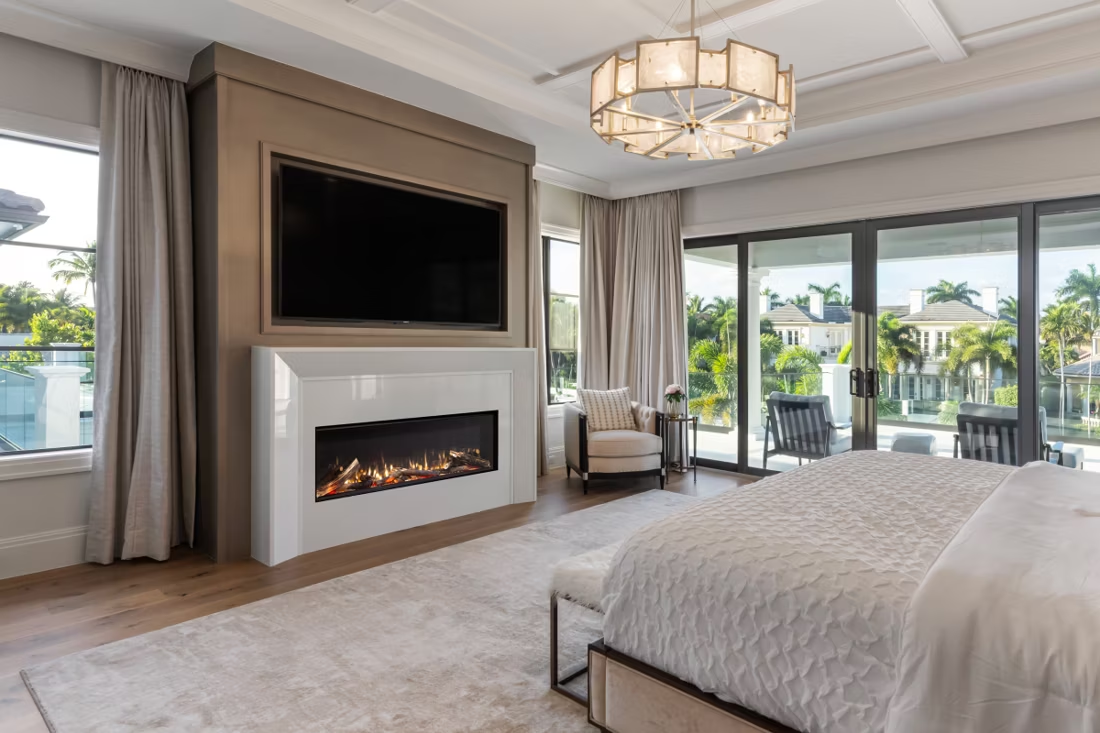
Yes—with an asterisk. Fireplaces are hot and TVs don't like heat. Either put a mantel between them to deflect rising warmth, or choose a fireplace with heat-management technology that creates a cool zone on the wall above—the wall stays around 125 degrees, barely warm, while the room still gets full heat. If you like clean lines and don't want a mantel, heat management is the answer.
What fireplace styles should I know before shopping?
Four cover most of the market: screen-front traditional (mesh front, open feel, fits craftsman homes), traditional door set (the classic look you grew up with), modern linear (wide, low, the statement piece for entertaining), and clean face contemporary (no trim—your tile or stone runs right to the fire's edge). Walk in knowing those four terms and you're ahead of most buyers.
Does a fireplace add value to my home?
On average, a fireplace adds back to the home about the same amount you spent installing it. Add the monthly savings from heating the rooms you actually use instead of the whole house—often hundreds of dollars a year—and the value case is strong before you even count what a fire does for how your family uses the room.
Can a fireplace actually lower my heating bill?
Yes—by creating a comfort zone. A furnace heats every square foot of the house just to warm the one room you're in; a gas fireplace on low burns roughly a sixth of the gas a typical furnace does. Set the furnace around 55–60 degrees as a baseline, then heat the rooms your family actually uses. Families who heat this way commonly save $20–$60 a month.
Stove and Fireplace Dealers in Oconee County
Listings include WhyFire partner dealers, dealers we have verified as authorized for the brands we recommend, and established local businesses that carry hearth products. Every listing shows which one it is. The ones marked Preferred run on WhyFire's software, so they can show you real pricing and book your appointment right here. No manufacturer pays for placement. How we verify dealers →
Tugalo Gas Company Inc.
Blossman Gas And Appliance
Yoder Building Supply
Toccoa Service Gas Company Inc.
Carolina Elite Fire
Southern Chimney Sweep
Find your electric fireplace in Oconee County.
Tell us about your Oconee County home and we'll match you with a trusted local dealer who can walk you through the right electric fireplace, insert, or stove—plus a free Project Guide & Parts List with the exact parts for your project and our recommended local dealer.
Find Your Fireplace →