
Electric heat that fits Murrells Inlet's mild winters.
With winter lows averaging 37°F and no chimney required, electric is the low-hassle way to add real ambiance and supplemental warmth to a Lowcountry home. We match you with a trusted local dealer.
Every Project Starts From One of These Five Situations
Ambiance first, heat second—and that's fine here.
Murrells Inlet sits at 22 feet of elevation on the Georgetown County coast, where the climate (zone 3A) brings a light winter heating season—a fraction of what a place like Duluth, MN sees in a single winter. Winter lows average 37°F, and hard freezes are the exception, not the rule. That's why wood heat is genuinely uncommon here: oak, pine, and hickory grow throughout the region, but you won't find many wood stoves in Murrells Inlet's elevated, stilt-built coastal homes and marsh-front condos, where HOA rules, insurance carriers, and the simple fact that you rarely need real heat make solid-fuel appliances impractical.
Electric fireplaces fill that gap well. They need no chimney, no gas line, and no combustion air, which matters in homes built on pilings or in condo buildings where venting a masonry chimney isn't an option. Residents here are split between Duke Energy Progress and South Carolina Public Service Authority (Santee Cooper) for electric service, with residential rates running roughly 11.4 to 15.5 cents per kWh—inexpensive enough that running an electric fireplace as supplemental heat in a bedroom or den doesn't meaningfully move the needle on a power bill. For most Murrells Inlet homeowners, the appeal is the flame itself: real ambiance, safe for a rental or vacation property, with heat as a welcome bonus on the handful of genuinely cold nights each winter.
Three steps. No salesperson until you're ready.
Tell us about your project
Your zip code, your situation, and the fuel you're leaning toward—or let the answers point you to one.
See what's actually available
The brands dealers within 100 miles genuinely carry—real options, never a catalog mirage.
Get your dealer & Project Guide
A trusted local dealer, plus the free Project Guide & Parts List that names every component of the job.
Frequently Asked Questions
How much does an electric fireplace installation cost in Murrells Inlet?
Costs vary widely because electric units span such a range of product types. A plug-in freestanding or wall-mount unit can be installed for $300–$800 in most cases since it just needs an existing outlet. A built-in linear electric fireplace set into a wall or entertainment center, requiring a dedicated circuit and finish carpentry, typically runs $1,500–$2,500 installed. Because there's no chimney, gas line, or combustion venting involved, electric is consistently the least expensive fireplace category to install in a coastal SC home—local dealers can usually quote a firm price after seeing your wall and electrical panel.
Will an electric fireplace actually heat my room, or is it just for looks?
Most electric fireplaces include a real heating element—typically 1,500 watts, good for roughly 400 to 1,000 square feet depending on ceiling height and insulation. Given Murrells Inlet's mild heating load (a light winter heating season by national standards), that's often enough to keep a den, bedroom, or Carolina room comfortable without running the central heat pump. The flame effect can also be run independently of the heater, which is the setting most local homeowners actually use nine months of the year.
Do I need a permit to install an electric fireplace in Murrells Inlet?
A plug-in electric fireplace that uses an existing outlet doesn't require a permit. A built-in unit that needs a new dedicated circuit does require an electrical permit through the Georgetown County Building Codes Department, and the work should be done by a licensed electrician regardless of permit requirements. This is one of the simplest permitting paths of any fireplace fuel type—there's no venting inspection or gas line sign-off involved, which is part of why local dealers can often turn around a built-in install quickly once product is in hand.
Is wood heat an option for my Murrells Inlet home?
Technically yes, but it's genuinely rare here. Oak, pine, and hickory are all common regionally, but Murrells Inlet's mild winters, elevated stilt-style construction, and coastal HOA restrictions mean very few homes are set up for a wood stove or fireplace insert. Insurance carriers along the Grand Strand can also be particular about solid-fuel appliances near marsh and flood zones. A small number of inland or older Georgetown County homes still burn wood for atmosphere, but for the large majority of Murrells Inlet properties, electric or gas covers the fireplace experience without the complications.
What type of electric fireplace works best in a coastal SC home?
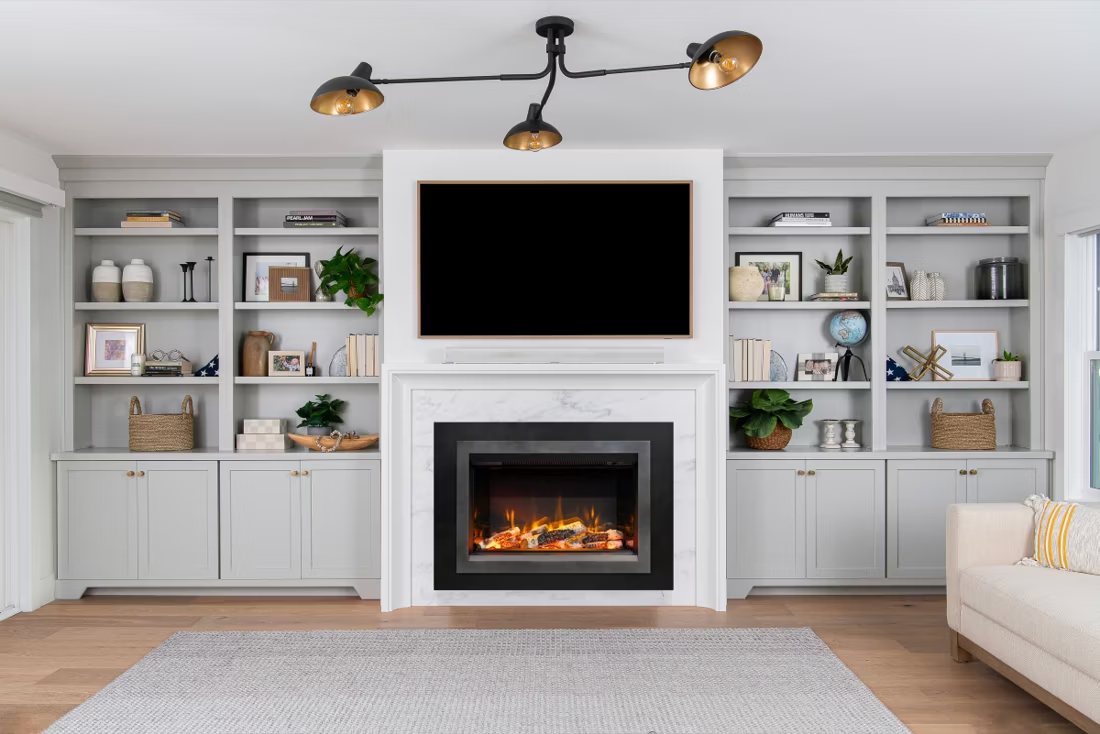
For condos and homes without an existing masonry fireplace, a built-in linear electric unit set into a wall or media console is the most popular choice—it gives a modern, low-profile look that suits the open floor plans common in newer Murrells Inlet construction. For homes with an existing but unused wood-burning fireplace, an electric insert can slide into that opening without any venting work. Given the salt air and humidity along the Inlet, it's worth choosing a unit with a sealed housing and asking your local dealer about corrosion-resistant components, especially for installs near exterior walls or in three-season rooms.
Electric vs. gas fireplace—which makes more sense here?
Both are common in Murrells Inlet, and the choice usually comes down to venting and budget. Gas fireplaces need either a natural gas line or a propane tank plus a vented flue path, and installed cost typically runs several thousand dollars higher than electric—but they throw real heat and a live flame. Electric needs no venting or fuel line at all, installs for a fraction of the cost, and is the easier fit for condos, rental properties, and homes on pilings where running a vent through the structure is impractical. If you want a fireplace mainly for ambiance and light supplemental warmth without touching the gas system, electric is usually the simpler answer here.
How much does it cost to run an electric fireplace in Murrells Inlet?
A typical 1,500-watt electric fireplace on high heat costs about 17 to 23 cents per hour to run, depending on whether you're served by Duke Energy Progress (around 15.5 cents/kWh) or South Carolina Public Service Authority (around 11.4 cents/kWh). Running the flame effect alone, without the heater engaged, draws only 30 to 100 watts and costs a fraction of a cent per hour—most owners leave the flame on for ambiance far more often than they run the heat, especially given how mild the local winters are.
Will my electric fireplace work if the power goes out?
No—electric fireplaces require power to operate, both for the heater and the flame effect, which is worth considering along the Grand Strand where hurricane season can bring extended outages. If backup heat during a storm-related power loss is a real priority for your household, a propane or natural gas unit with a battery-backup ignition system, or a small portable propane heater, is a more resilient option. Many Murrells Inlet homeowners pair an electric fireplace for everyday ambiance with a generator or alternate heat source for storm season.
What's the difference between an electric fireplace and a space heater?
A space heater is a purely functional appliance—it puts out heat with no design intent. An electric fireplace pairs the same heating element with a realistic flame display (LED or flame-effect technology), a finished mantel or media-console housing, and thermostat control, and it's built and rated for continuous, furniture-adjacent use in a way a portable space heater isn't. For Murrells Inlet homeowners looking to upgrade a room's look while adding a bit of zone heat, an electric fireplace does both jobs at once; a space heater only does one.
Can I put a TV above my fireplace?
Yes—with an asterisk. Fireplaces are hot and TVs don't like heat. Either put a mantel between them to deflect rising warmth, or choose a fireplace with heat-management technology that creates a cool zone on the wall above—the wall stays around 125 degrees, barely warm, while the room still gets full heat. If you like clean lines and don't want a mantel, heat management is the answer.
Does an electric fireplace need a vent or chimney?
No—that's its superpower. An electric fireplace needs a wall and an outlet, period. No vent pipe, no gas line, no clearances to design around, which is why it works in bedrooms, offices, apartments, and walls where venting a gas or wood unit would be impractical or impossible. Installation is typically the simplest and least expensive of any fireplace type.
What is an in-home preview and do I need one?
It's a visit where a hearth professional measures your space, confirms the model you picked actually works in your home, and walks the specs—framing, gas line, venting, finish work—before anything is ordered. Some details you just can't know until you see the house. Never make a down payment without one; it's the single most-skipped step that burns buyers.
How much should I budget for a fireplace?
For an average home—covering the fireplace, the vent pipe, and basic installation—a budget between $3,900 and $5,500 gives you a lot of options across wood, gas, and pellet. By the time you add finish work, gas line, and electrical, the average complete installation lands between $5,000 and $12,000 all-in. In a remodel or new build, a good rule is to put about 2.5% of the total project cost toward the fireplace.
Nearby Dealers
Hearth shops serving Murrells Inlet and the surrounding area. Every listing shows whether it is a WhyFire partner, a dealer we have verified as authorized for the brands we recommend, or a local business carrying hearth products. No manufacturer pays for placement. How we verify dealers →
Coastal Energy Inc.
Paramount Contractors
Palmetto Patio & Hearth
H&S Oil Company
Electric Service in Murrells Inlet
An electric fireplace's heater draws about 1,500 watts—pennies per hour at local rates.
Duke Energy Progress - (Nc)
South Carolina Public Service Authority
Find your electric fireplace in Murrells Inlet.
Tell us a bit about your home and we'll put together a free Project Guide & Parts List—the right electric fireplace or insert for your space, matched with a trusted local Murrells Inlet dealer who can install it correctly.
Find Your Fireplace →