
Add real warmth to any room in Marion County—no chimney required.
Marion County's mild coastal-plain winters—average lows around 34°F and a short, light heating season—make electric heat a practical, low-fuss fit from downtown Marion to Mullins and Nichols. Find the right unit and get matched with a trusted local installer.
Every Project Starts From One of These Five Situations
Electric fireplaces make sense where winters are mild.
Marion County sits in the flat coastal plain of northeastern South Carolina, climate zone 3A, with a short, mild heating season—just a fraction of the winter heating load a place like Duluth, MN sees in a single season. Winter lows average around 34°F, and hard freezes are the exception rather than the rule. That's a very different heating problem than a cold-climate wood stove is built to solve, which is part of why wood heat has never been a necessity here even though oak, pine, and hickory are all abundant locally—homeowners in Marion County who want a fire lean on it for atmosphere, not survival heat.
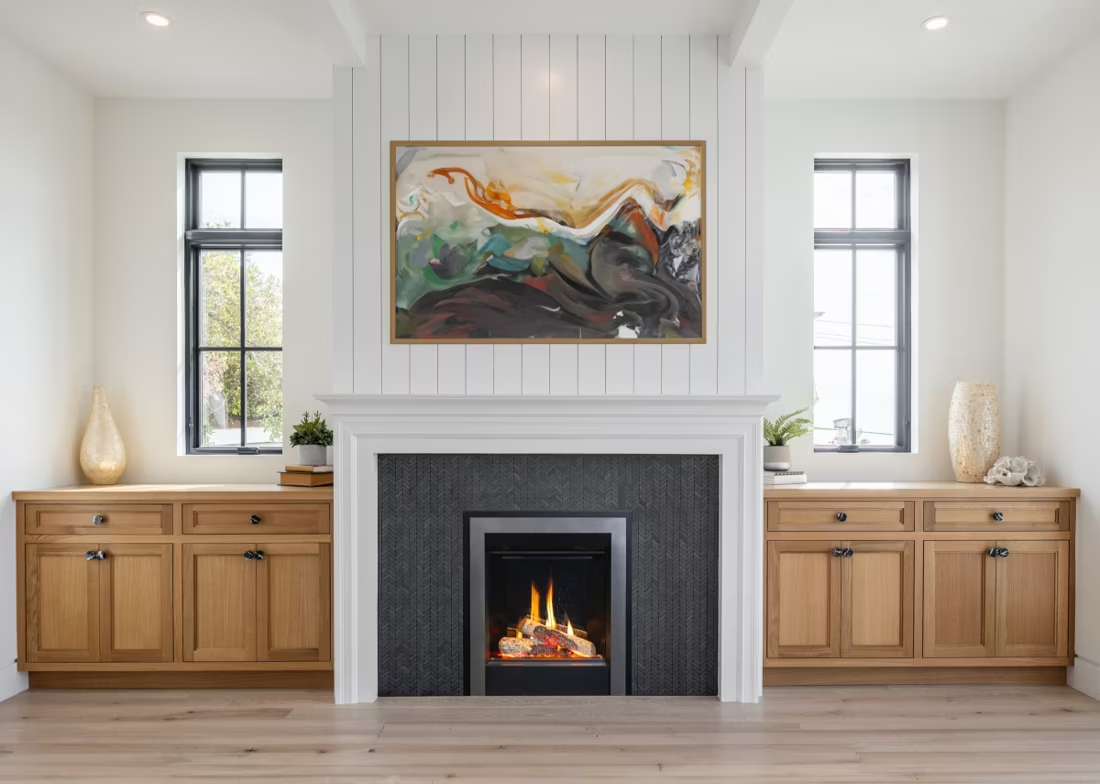
That's exactly the gap electric fireplaces fill well. There's no chimney to build, no venting to run, and no combustion byproducts to worry about—which matters in a county with a lot of older homes in Marion's and Mullins' historic districts, plus a significant share of manufactured and modular housing across the rural parts of the county. A plug-in unit or a hardwired insert can go into an existing fireplace opening, a bare wall, or a new-construction stud wall, and it draws power from the same grid—largely Santee Electric Cooperative territory here—that already runs the rest of the house. For zone heat in a bedroom, sunroom, or den without a full HVAC retrofit, it's the simplest project on this list.
Three steps. No salesperson until you're ready.
Tell us about your project
Your zip code, your situation, and the fuel you're leaning toward—or let the answers point you to one.
See what's actually available
The brands dealers within 100 miles genuinely carry—real options, never a catalog mirage.
Get your dealer & Project Guide
A trusted local dealer, plus the free Project Guide & Parts List that names every component of the job.
Frequently Asked Questions
How much does an electric fireplace installation cost in Marion County?
Most electric fireplace and insert installations in Marion County run $400 to $1,200. A plug-in freestanding unit or a basic insert that uses an existing outlet sits at the low end. Larger built-in units or inserts that need a dedicated 20-amp circuit run higher, since that requires a licensed electrician to add the circuit. Retrofitting an existing masonry fireplace opening with an electric log insert is usually toward the middle of that range and doesn't touch the chimney at all.
Do I need a permit to install an electric fireplace in Marion County?
Usually not for a plug-in unit—there's nothing to inspect beyond an ordinary appliance. If you're having a unit hardwired or adding a new dedicated circuit, that electrical work typically requires a permit through the Marion County Building Codes Department, and it should be pulled by whoever does the wiring. Compared to a wood or gas installation, the permitting here is minimal—no chimney inspection, no gas line, no venting code to satisfy.
Can an electric fireplace actually heat a room in Marion County's climate?
Yes, and it's a reasonable expectation here. Most residential electric inserts and stoves are rated to comfortably heat 400 to 1,000 square feet, which covers a bedroom, den, or open living area without strain. Given Marion County's mild profile—average winter lows near 34°F and a short, light heating season overall—an electric unit doesn't need to do the heavy lifting a wood stove would in a colder climate. It's realistic as the primary heat source for a single room or as supplemental heat alongside central HVAC on the occasional cold snap.
Electric vs. gas—which is right for my Marion County home?
Gas fireplaces are a standard, common choice in Marion County and give you more heat output plus the ability to run during a power outage if you use propane and a battery-backed ignition system—worth considering given how rural stretches of the county can see longer outage times after storms. Electric fireplaces trade that outage resilience for simplicity: no gas line, no propane tank, no combustion venting, and instant on-off heat at the flip of a switch or remote. For a supplemental heat source in a den or bedroom where installation simplicity matters more than backup capability, electric is usually the easier and cheaper path.
Can I put an electric insert into my home's existing fireplace?
Yes—this is one of the more common projects in Marion County, especially in the older homes around downtown Marion and Mullins that still have an original masonry fireplace opening. An electric log insert slides into the existing opening, plugs into a nearby outlet or gets hardwired if you want a cleaner look, and doesn't require touching the chimney or flue at all. It's a straightforward way to bring a drafty, rarely-used fireplace back into regular use without any masonry or venting work.
Why don't more homes in Marion County use wood heat?
Wood is available locally—oak, pine, and hickory are all common in the area—but Marion County's mild winters simply don't demand it as primary heat the way a colder climate would. With winter lows averaging around 34°F and a heating season that stays short and light year to year, most households never need the heat output a wood stove is designed to provide. A handful of rural homeowners still keep a wood-burning fireplace for occasional use or backup, but it's the exception, not the norm—which is part of why electric and gas dominate new installations here.
Does my electric fireplace need its own circuit?
Smaller plug-in units (typically 1,500 watts or less) can usually run off a standard household outlet without issue. Larger built-in units, especially ones rated for bigger rooms, often draw enough current that a dedicated 20-amp circuit is recommended to avoid tripping breakers or overloading a shared circuit. A licensed electrician can confirm what your specific model needs and pull the permit for any new circuit work through the county building department.
Where can I find a local dealer to install an electric fireplace near me?
Marion County's population is under 12,000 spread across Marion, Mullins, Nichols, Sellers, and the surrounding rural areas, so full-service hearth dealers with in-stock electric units are thinner on the ground than in a larger metro—many homeowners end up driving toward Florence for showroom options. That's the gap Find My Fireplace is built to close: we match you with a trusted dealer who actually covers Marion County and can size, install, and service the unit, rather than leaving you to guess from a big-box aisle.
How much maintenance does an electric fireplace need?
Very little compared to wood or gas. There's no chimney to sweep, no gas lines to inspect, and no combustion byproducts to manage. Maintenance is mostly dusting the unit, occasionally cleaning the glass front, and replacing an LED module years down the road if the flame effect dims—a job most homeowners can do themselves or have a technician handle in a few minutes during a routine visit.
Do electric fireplaces actually produce heat?
Yes—most put out around 4,800–5,000 BTUs from a standard outlet, which comfortably warms a bedroom, office, or den as a comfort-zone heater. What they won't do is carry a whole house the way wood, gas, or pellet can. Think of electric as ambiance-first with honest supplemental heat: flames on with no heat in July, flames plus warmth in January.
Can I put a TV above my fireplace?
Yes—with an asterisk. Fireplaces are hot and TVs don't like heat. Either put a mantel between them to deflect rising warmth, or choose a fireplace with heat-management technology that creates a cool zone on the wall above—the wall stays around 125 degrees, barely warm, while the room still gets full heat. If you like clean lines and don't want a mantel, heat management is the answer.
Can I install a fireplace myself?
If you're putting a fire in your house on purpose, it's best to work with an expert. Unless you're genuinely experienced in framing, gas line, vent pipe, and the national code on clearances to combustibles, have a professional do it—and ideally the same company that sells you the fireplace, so warranty, service, and liability all live under one roof.
Can a fireplace actually lower my heating bill?
Yes—by creating a comfort zone. A furnace heats every square foot of the house just to warm the one room you're in; a gas fireplace on low burns roughly a sixth of the gas a typical furnace does. Set the furnace around 55–60 degrees as a baseline, then heat the rooms your family actually uses. Families who heat this way commonly save $20–$60 a month.
Stove and Fireplace Dealers in Marion County
Listings include WhyFire partner dealers, dealers we have verified as authorized for the brands we recommend, and established local businesses that carry hearth products. Every listing shows which one it is. The ones marked Preferred run on WhyFire's software, so they can show you real pricing and book your appointment right here. No manufacturer pays for placement. How we verify dealers →
Battle Lp Gas
Palmetto Patio & Hearth
Quality Oil & Gas Company
Find your electric fireplace in Marion County.
Tell us a bit about your home and we'll put together a free Project Guide & Parts List—the right unit, the exact parts, and a trusted local dealer to install it in Marion County.
Find Your Fireplace →