
Cozy, on-demand heat for Laurens winters.
Laurens doesn't need a wood-burning workhorse to get through winter—it needs clean, instant heat you can flip on for a chilly Piedmont evening. Find the right gas unit and connect with a trusted local dealer.
Every Project Starts From One of These Five Situations
Mild winters, real comfort when it counts.
Laurens sits in the South Carolina Piedmont at just under 600 feet elevation, in climate zone 3A, where the average winter low hovers around 30 degrees and the heating season is light overall—a fraction of what a town like Duluth, MN or Fargo, ND sees in a single hard winter. Cold snaps here are real but brief, which is exactly why wood stoves and pellet stoves are rare in Laurens: most homes simply don't need a heavy-duty primary heat source, even though oak, pine, and hickory are plentiful in the surrounding county.
What Laurens homes do want is a gas fireplace or insert—something that adds real ambiance and useful zone heat on the nights temperatures dip into the 20s, without the upkeep of cutting, stacking, or hauling wood. Electric service comes through Duke Energy Carolinas, Laurens Electric Cooperative, or the City of Laurens depending on where you live, and much of Laurens County runs on propane rather than piped natural gas for hearth appliances—a detail that shapes which units and installers make sense for your specific address.
Three steps. No salesperson until you're ready.
Tell us about your project
Your zip code, your situation, and the fuel you're leaning toward—or let the answers point you to one.
See what's actually available
The brands dealers within 100 miles genuinely carry—real options, never a catalog mirage.
Get your dealer & Project Guide
A trusted local dealer, plus the free Project Guide & Parts List that names every component of the job.
Frequently Asked Questions
How much does a gas fireplace installation cost in Laurens?
Most gas fireplace and insert installations in Laurens run between roughly $3,000 and $8,500, depending on the unit, whether you're converting an existing masonry fireplace or building new, and whether a propane tank or gas line needs to be added. A direct-vent insert into an existing fireplace with propane already on site tends to land on the lower end. New construction, a first-time propane tank install, or a gas line run from the meter to a new location pushes the estimate toward the higher end. A local dealer will give you a firm number after seeing the space in person.
Does Laurens have natural gas, or do I need propane?
Much of Laurens and the surrounding county isn't served by piped natural gas mains—the utility footprint here is dominated by electric providers (Duke Energy Carolinas, Laurens Electric Cooperative, and the City of Laurens), which is a strong signal that propane is the standard fuel for gas fireplaces in this area rather than natural gas. Propane fireplaces look and perform identically to natural gas units; the difference is a tank on your property instead of a buried gas main. Local propane suppliers can set up a new tank alongside your fireplace installation, and most gas fireplace models can be configured for propane from the factory.
Do I need a permit to install a gas fireplace in Laurens?
Yes—a building permit is generally required through the City of Laurens Building Department if you're inside city limits, or the Laurens County Building Codes Department for county addresses, and any new gas line or propane connection needs to be run by a licensed gas fitter. Most hearth dealers coordinate the permitting and inspection as part of the installation, so you're not left juggling separate trades for the tank, the gas line, and the fireplace itself.
Will a gas fireplace still work if the power goes out?
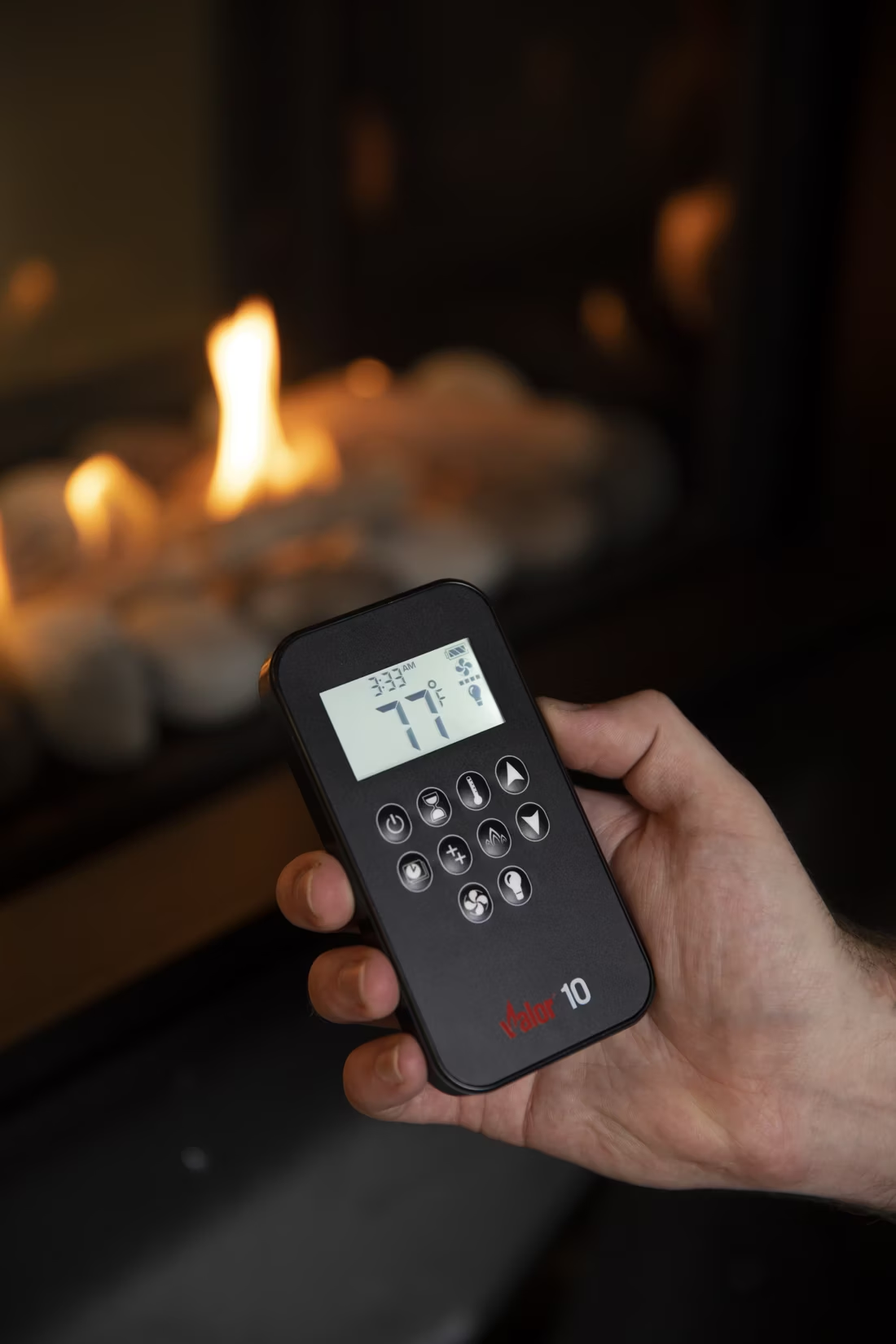
Most modern gas fireplaces are built to keep working through a power outage. Units with intermittent pilot ignition (IPI) run on a small battery backup that kicks in the moment power drops, so the fireplace lights on demand just like normal. Valor fireplaces take a different approach—their pilot assembly generates its own electricity through the thermocouple, so there are no batteries to remember at all. For Laurens homes that lose power during Piedmont ice storms, either option gives you working heat without relying on the grid.
What's the difference between a gas fireplace, a gas insert, and a gas stove?
A gas fireplace is a built-in unit framed into a wall, typically chosen for new construction or a remodel. A gas insert slides into an existing masonry fireplace opening and uses the chimney as its vent path, turning an old wood-burning fireplace into an efficient, sealed gas unit. A gas stove is a freestanding cabinet-style unit that sits on the floor and vents through a wall or existing chimney. Most Laurens homeowners with an older brick fireplace go the insert route, since it keeps the existing mantel and opening while dramatically improving heat output and eliminating drafts from an open flue.
Why doesn't Laurens see many wood stoves?
Laurens's winters are simply too mild to justify a wood-burning primary heat source for most homeowners—with an average winter low around 30 degrees and an overall light heating season, the kind of sustained sub-freezing stretches that make a wood stove essential in places like Bozeman, MT or Burlington, VT just don't happen here. Oak, pine, and hickory are all common locally and plenty of Laurens County residents enjoy an open wood fire or a fire pit, but for indoor heating appliances, a gas fireplace covers the occasional cold night with far less maintenance than a chimney and firewood supply.
What size gas fireplace do I need for my home?
Because Laurens's climate is mild compared to much of the country, most homes here do fine with a smaller-output unit than you'd see recommended in a colder region—typically in the 20,000 to 30,000 BTU range for a single living area, rather than the 40,000+ BTU units common in places with harsher winters. The right size still depends on your room's square footage, ceiling height, and how much of the home you want the fireplace to heat versus purely accent. A local dealer can size the unit correctly during an in-home visit—oversizing a gas fireplace in a mild climate like this one just means you'll run it on low most of the time.
Are vent-free gas fireplaces allowed in South Carolina?
Yes, vent-free (unvented) gas fireplaces and log sets are legal in South Carolina, and they're a popular option in Laurens for homeowners who want supplemental gas heat without adding venting through a wall or roof. Vent-free units burn fuel directly into the room and require oxygen depletion sensors and adherence to room-size minimums, so they're best suited to open, well-ventilated living areas rather than small bedrooms. Direct-vent units remain the more universally recommended choice for full-time use and better indoor air quality—a local dealer can walk you through the tradeoffs for your specific room.
How often does a gas fireplace need to be serviced?
An annual inspection is recommended for any gas fireplace or insert, even in a mild climate like Laurens where the unit might only run a few months a year. A qualified technician checks the burner, pilot assembly, venting, and gas connections, and cleans the glass and interior—typically a $150 to $250 visit. Propane systems specifically benefit from an annual check of the tank, regulator, and line connections as well, since propane equipment sees less frequent inspection than natural gas utility-metered systems in areas where a utility handles that oversight.
Why is a fireplace insert so efficient?
An insert does two things: it seals the chimney completely, so you stop losing air you already paid to heat, and it radiates warmth into the room through the firebox and glass. Most add a heat-exchange fan that pulls cool room air underneath, wraps it around the hot firebox, and pushes it back out warm. Your home is more efficient before you've even lit the first fire.
Why is my open fireplace making my house colder?
Open fireplaces suck—literally. As the fire burns, it consumes air your furnace already paid to heat and pulls it out through the chimney, so the house is actually colder after the fire goes out than before you lit it. An insert fixes this: it seals the chimney, puts fixed glass across the front, and turns that hole in your house into a real heat source.
How much should I budget for a fireplace?
For an average home—covering the fireplace, the vent pipe, and basic installation—a budget between $3,900 and $5,500 gives you a lot of options across wood, gas, and pellet. By the time you add finish work, gas line, and electrical, the average complete installation lands between $5,000 and $12,000 all-in. In a remodel or new build, a good rule is to put about 2.5% of the total project cost toward the fireplace.
Can a fireplace actually lower my heating bill?
Yes—by creating a comfort zone. A furnace heats every square foot of the house just to warm the one room you're in; a gas fireplace on low burns roughly a sixth of the gas a typical furnace does. Set the furnace around 55–60 degrees as a baseline, then heat the rooms your family actually uses. Families who heat this way commonly save $20–$60 a month.
Nearby Dealers
Hearth shops serving Laurens and the surrounding area. Every listing shows whether it is a WhyFire partner, a dealer we have verified as authorized for the brands we recommend, or a local business carrying hearth products. No manufacturer pays for placement. How we verify dealers →
Buck Stove Pool & Spa Of Laurens
Blue Sky Chimney Sweeps
Clinton Newberry Natural Gas
Buck Stove, Pool & Spa
Find your gas fireplace in Laurens.
Tell us a bit about your home and we'll put together a free Project Guide & Parts List—the right gas fireplace or insert, propane or gas line considerations, and a trusted local Laurens-area dealer to install it.
Find Your Fireplace →