
Ambiance Every Evening, Real Heat When a Storm Knocks Out the Power.
Goose Creek winters rarely demand serious heat, but a gas fireplace still earns its keep—cozy evenings most of the year, and dependable warmth during hurricane-season outages.
Every Project Starts From One of These Five Situations
Mild winters, coastal storms—gas fits both.
Goose Creek sits at just 7 feet of elevation in the humid subtropical Lowcountry, in climate zone 3A with a short, mild winter heating season—a fraction of what a place like Fargo, ND or Duluth, MN sees in a single hard month. Winter lows average around 39°F, and stretches of true cold are brief. That's exactly why wood and pellet stoves are rare here: there's little sustained heating load to justify them, and Berkeley County's humidity makes stacking and storing seasoned oak or hickory firewood more trouble than it's worth for most homeowners. A handful of rural properties still burn wood for a Saturday-night fire, but it's not the norm.
Gas is a different story. Dominion Energy South Carolina runs natural gas lines through much of Goose Creek and North Charleston, and a direct-vent gas fireplace or insert gives you real ambiance on the cool December and January evenings that do roll through, plus genuine backup heat if a tropical system knocks out electricity for a few days—which happens along this stretch of coast more often than most inland cities ever deal with. In newer subdivisions where gas mains haven't been extended yet, propane fills the gap, and most gas fireplace models install just as easily on either fuel.
Three steps. No salesperson until you're ready.
Tell us about your project
Your zip code, your situation, and the fuel you're leaning toward—or let the answers point you to one.
See what's actually available
The brands dealers within 100 miles genuinely carry—real options, never a catalog mirage.
Get your dealer & Project Guide
A trusted local dealer, plus the free Project Guide & Parts List that names every component of the job.
Frequently Asked Questions
How much does a gas fireplace installation cost in Goose Creek?
Most gas fireplace and insert installations in the Goose Creek area run $3,500 to $9,000, with the lower end covering a direct-vent insert into an existing masonry fireplace where a gas line is already nearby, and the higher end covering new construction or remodels that need framing, venting through an exterior wall, and a fresh gas line run from the meter. Homes that need a new propane tank set instead of a natural gas tap typically land in the middle of that range. A local hearth dealer will confirm the number after seeing your fireplace opening and gas access in person.
Can I convert an existing wood-burning fireplace to gas in Goose Creek?
Yes, and it's a common project on older homes in Berkeley County that were built with a traditional masonry fireplace and chimney. A gas insert slides into the existing firebox, uses the chimney (relined with a stainless liner) as the vent path, and typically runs $4,000 to $8,000 depending on whether you're on natural gas or need propane. Given how little wood heat actually gets used in this climate, converting is often an easy call—you keep the look of the fireplace and lose the hassle of hauling and storing cordwood in Lowcountry humidity.
Is natural gas available in Goose Creek, or do I need propane?
It depends on where in Goose Creek you are. Dominion Energy South Carolina provides natural gas service through much of the older, established parts of the city and North Charleston corridor. Newer developments out toward zip code 29486 sometimes haven't had gas mains extended to them yet, in which case propane—delivered and stored in an above-ground or buried tank—is the standard alternative. Nearly every gas fireplace on the market can be set up for either fuel; your installer just configures the correct orifice and regulator.
Will a gas fireplace still work if a hurricane knocks out my power?
In most cases, yes, and this is a real consideration for Goose Creek homeowners given how often tropical storms and hurricanes threaten the Charleston-area grid. Gas fireplaces with IPI (intermittent pilot ignition) run their electronic ignition off small onboard batteries, so they'll still light and heat a room even with the house dark. Valor fireplaces take it a step further—their pilot assembly generates its own electricity through the thermocouple, so there are no batteries to remember at all. If storm-season reliability matters to you, ask your local dealer specifically about the ignition system on any unit you're considering.
What's the difference between a gas fireplace, insert, and stove?
A gas fireplace is a fully built-in unit framed into a wall, typically chosen for new construction or a remodel. A gas insert is sized to drop into an existing masonry firebox, sealing it up and venting through the existing chimney with a liner. A gas stove is a freestanding cast-iron or steel unit that sits out in the room on its own hearth pad. For the many older Goose Creek homes with a traditional brick fireplace already in place, an insert is usually the simplest and most cost-effective upgrade.
Do I need a permit to install a gas fireplace in Goose Creek?
Yes. New gas fireplace and insert installations require a building permit and a gas permit, handled through the City of Goose Creek Building Services Department if you're inside city limits, or the Berkeley County Building Codes Department for properties outside them. The gas line connection itself has to be run or verified by a licensed gas-fitter—one more reason it pays to hire a hearth dealer who coordinates the gas work, venting, and inspection together instead of juggling separate contractors yourself.
Should I get a vented or vent-free gas fireplace in a humid climate like this?
Vented (direct-vent) units draw combustion air from outside and exhaust it back outdoors through a sealed pipe, which keeps combustion byproducts and extra moisture out of the house. Vent-free units burn directly into the room and release water vapor as part of that process—not ideal in a Lowcountry climate that already runs humid for much of the year, since the added moisture can aggravate condensation and mold concerns. Vent-free fireplaces are legal in South Carolina with proper room sizing and an oxygen depletion sensor, but most Goose Creek dealers steer customers toward direct-vent units for exactly this reason.
How often does a gas fireplace need to be serviced?
Plan on an annual inspection, ideally in early fall before the handful of cold snaps that hit the Charleston area December through February. A technician checks the burner, pilot assembly, venting, and gas connections, and cleans the glass. Local service calls for this kind of annual checkup typically run $125 to $225. It's a much smaller job than chimney sweeping on a wood system, but skipping it is still the most common cause of ignition problems and sooted glass.
Why do so few homes in Goose Creek use wood heat compared to gas?
With only a short, mild winter heating season and winter lows that average in the high 30s, there simply isn't the sustained cold that makes wood heat worthwhile the way it is in a place like Bozeman, MT or Minneapolis, MN. Add in Lowcountry humidity, which makes seasoning and storing oak, pine, or hickory firewood harder than in a dry climate, and it's easy to see why wood and pellet stoves are rated not-applicable for most Goose Creek homes. Gas fills that role instead—instant heat for the cool evenings that do come through, no ash or wood storage, and the option of hurricane-season backup heat that a wood stove can't match without stored fuel and a chimney most newer homes don't even have.
Is my gas fireplace wasting gas?
If it was installed more than 15 years ago, probably. Older gas fireplaces keep a standing pilot light burning all the time, and that little flame can cost a couple hundred dollars a year. Newer models use pilot-on-demand ignition—the pilot lights only when you use the fireplace and goes out when you turn it off.
Can I put a TV above my fireplace?
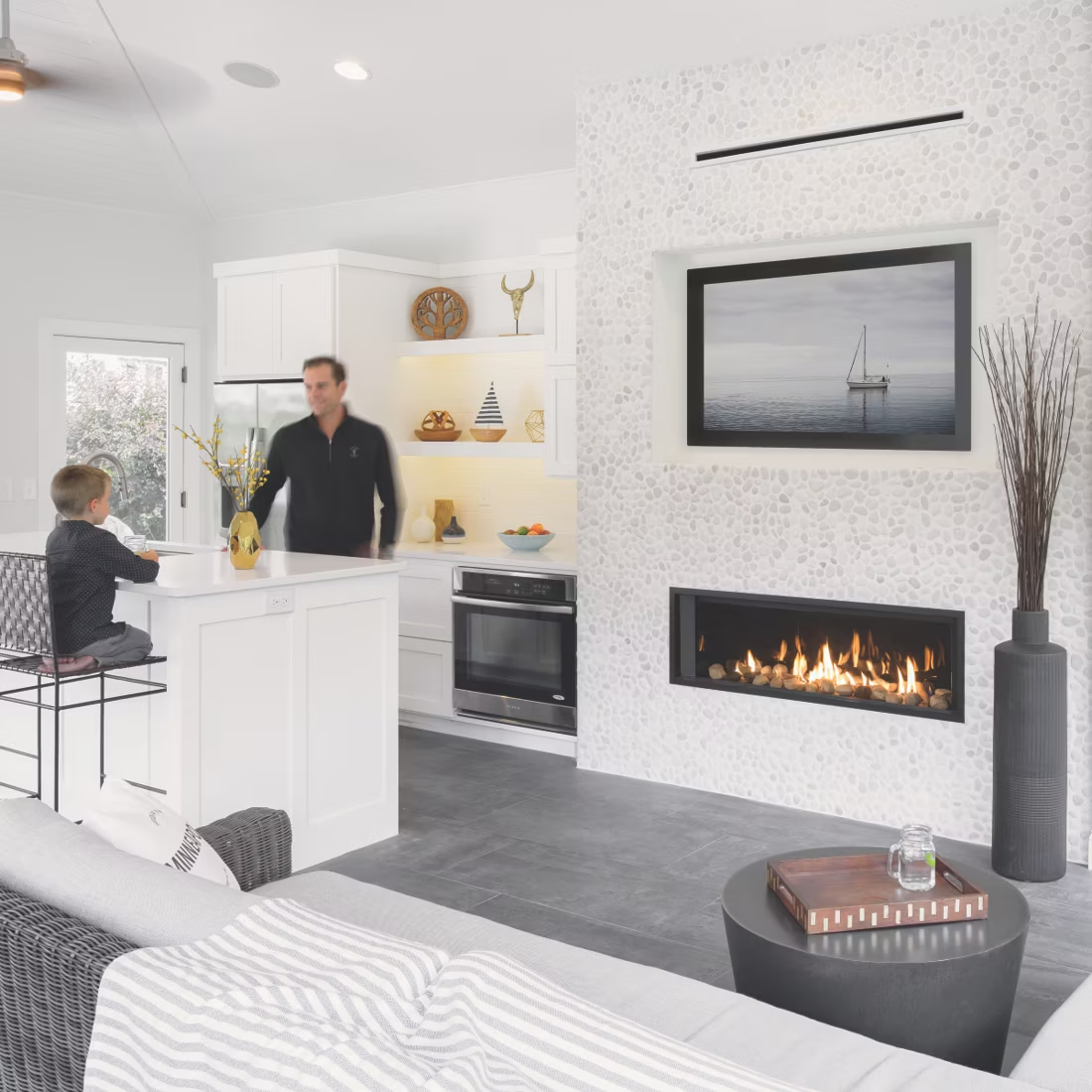
Yes—with an asterisk. Fireplaces are hot and TVs don't like heat. Either put a mantel between them to deflect rising warmth, or choose a fireplace with heat-management technology that creates a cool zone on the wall above—the wall stays around 125 degrees, barely warm, while the room still gets full heat. If you like clean lines and don't want a mantel, heat management is the answer.
Does a fireplace add value to my home?
On average, a fireplace adds back to the home about the same amount you spent installing it. Add the monthly savings from heating the rooms you actually use instead of the whole house—often hundreds of dollars a year—and the value case is strong before you even count what a fire does for how your family uses the room.
Can a fireplace actually lower my heating bill?
Yes—by creating a comfort zone. A furnace heats every square foot of the house just to warm the one room you're in; a gas fireplace on low burns roughly a sixth of the gas a typical furnace does. Set the furnace around 55–60 degrees as a baseline, then heat the rooms your family actually uses. Families who heat this way commonly save $20–$60 a month.
Nearby Dealers
Hearth shops serving Goose Creek and the surrounding area.
Find your gas fireplace in Goose Creek.
Tell us about your home and your goals—ambiance, hurricane-season backup heat, or both—and we'll match you with a trusted local dealer and send over your free Project Guide & Parts List, sized to your fireplace and gas setup.
Find Your Fireplace →