
Clean gas heat built for East Camden's mild winters.
Instant warmth for the occasional cold snap and the ice storms that knock out power—without stacking wood. Find the right gas fireplace and connect with a trusted local dealer near Kershaw County.
Every Project Starts From One of These Five Situations
Heat for Kershaw County's short, unpredictable winters.
East Camden sits at just 286 feet in the South Carolina midlands, where winter lows average around 30°F and the whole heating season adds up to a mild winter workload—a fraction of what a place like Fargo, ND or Duluth, MN racks up in a single hard month. Homeowners here aren't fighting for survival heat; they're looking for something reliable on the handful of nights it actually dips near freezing, and for backup warmth when a winter ice storm takes down power lines across Kershaw County for a day or two.
Natural gas mains in this part of the county are concentrated closer to downtown Camden and the Columbia-area suburbs, so most East Camden addresses run on propane instead—often the same tank already feeding a water heater, range, or standby generator. Electric service here comes through Duke Energy Progress, Duke Energy Carolinas, or Black River Electric Cooperative depending on exactly where your property sits, which matters less for the fireplace itself and more for how long you can expect to go without power during a storm. Either fuel path gets you a gas fireplace or insert that lights instantly, holds a steady flame without tending, and keeps working through an outage if you choose the right ignition system.
Three steps. No salesperson until you're ready.
Tell us about your project
Your zip code, your situation, and the fuel you're leaning toward—or let the answers point you to one.
See what's actually available
The brands dealers within 100 miles genuinely carry—real options, never a catalog mirage.
Get your dealer & Project Guide
A trusted local dealer, plus the free Project Guide & Parts List that names every component of the job.
Frequently Asked Questions
How much does a gas fireplace installation cost in East Camden?
Most East Camden installations run $3,800 to $8,500. The lower end covers a direct-vent propane insert going into an existing masonry fireplace where a propane tank is already on the property for other appliances. The higher end covers a new built-in gas fireplace with fresh framing, venting, and either a new gas line run or a dedicated propane tank sized just for the hearth appliance. Homes closer to the natural gas mains near downtown Camden sometimes skip the tank question entirely, which can shave a few hundred dollars off the job.
Is my East Camden home on natural gas or propane?
Odds are propane. Municipal natural gas service in this part of Kershaw County is denser near downtown Camden and thins out quickly once you're into the more rural East Camden zip code. Regional propane suppliers like Blossman Gas and AmeriGas serve most of the area, either topping off an existing tank shared with a water heater or range, or setting a new tank sized specifically for a fireplace. Your installer will confirm which fuel path makes sense for your address before recommending a unit.
Can I convert my existing wood fireplace to gas?
Yes, and it's a common project on the older masonry fireplaces scattered through East Camden and historic Camden proper. A propane insert with a stainless liner run up your existing chimney typically costs $3,500 to $7,000, depending on the chimney's condition and whether new gas line or tank work is needed. The conversion keeps the look of the original hearth while cutting out the ash cleanup and the hunt for dry oak or pine when the wood pile runs low.
Will my gas fireplace still work if the power goes out?
It can, with the right ignition system. South Carolina's midlands get occasional ice storms that leave Duke Energy Progress and Duke Energy Carolinas customers without power for a day or more. Units with intermittent pilot ignition (IPI) run on AA battery backup that kicks in automatically, so the fireplace still lights on demand—just remember to swap the batteries every so often. Valor fireplaces go a step further: their pilot assembly generates its own electricity through the thermocouple, so there's no battery to forget. For a household planning around the next ice storm, that's worth asking your local dealer about directly.
What's the difference between a gas fireplace, insert, and stove?
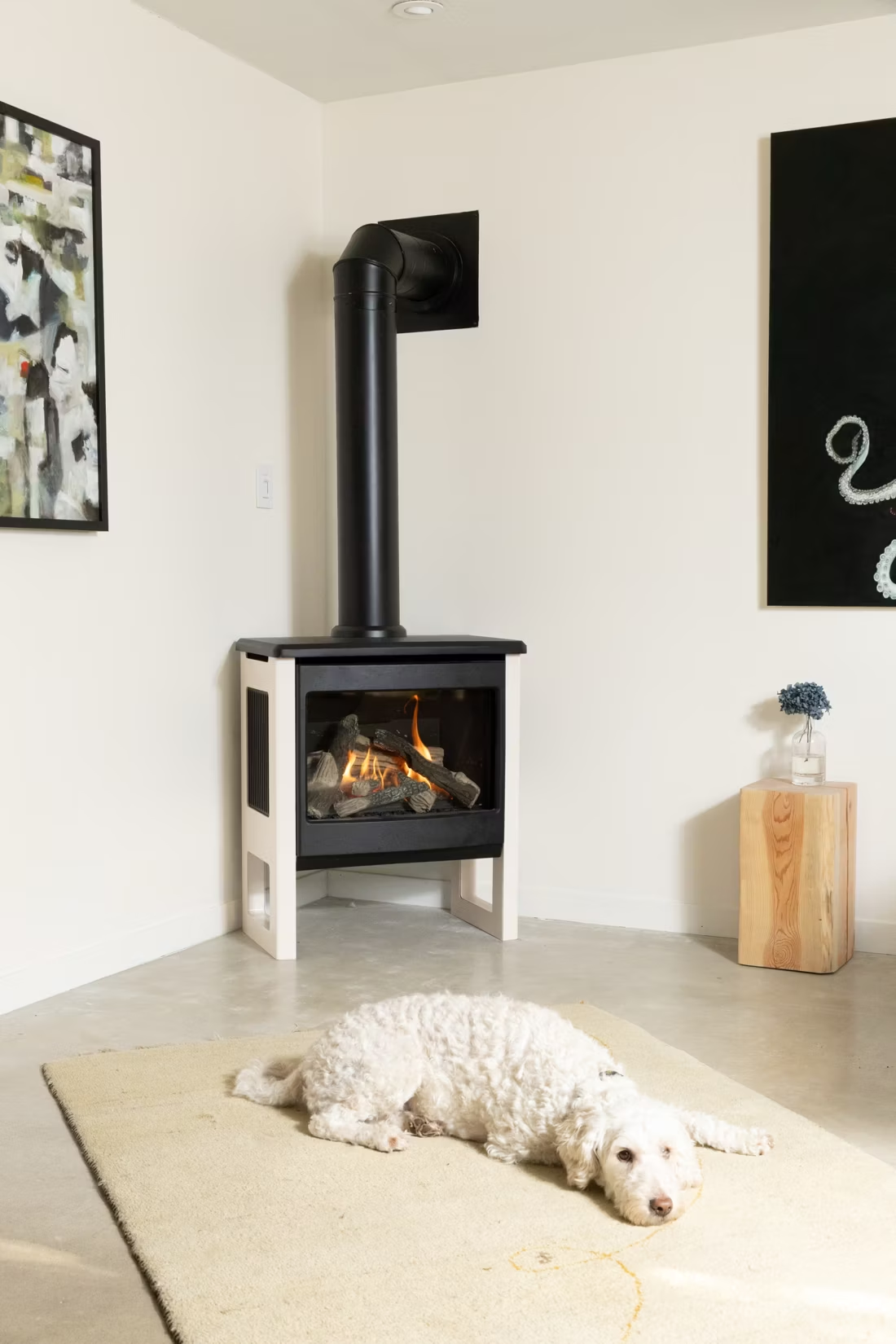
A gas fireplace is a fully built-in unit framed into a wall—the right call for new construction or a remodel with no existing hearth. A gas insert drops into an existing masonry fireplace opening and uses the chimney as its vent path, which is the common route for older East Camden homes with a fireplace already in place. A gas stove is a freestanding cabinet-style unit that sits on the floor like a wood stove but runs on propane or natural gas—a good fit when you want a fireplace-style heat source but don't have a masonry opening to work with.
Do I need a permit to install a gas fireplace in East Camden?
Yes. Unincorporated East Camden addresses fall under the Kershaw County Building Codes Enforcement Office for both the building permit and the gas line permit, and propane line or tank work has to be done by a licensed gas fitter. Most hearth dealers who serve the area handle the permit paperwork as part of the installation, so it's rarely something you have to chase down yourself.
Should I get a vented or vent-free gas fireplace?
Vented (direct-vent) units draw combustion air from outside and exhaust it back outside, which keeps combustion byproducts and extra moisture out of the house—a real consideration in a humid climate zone like South Carolina's 3A, where indoor moisture is already something homeowners manage. Vent-free units are legal in South Carolina and burn more efficiently on paper, but they release water vapor and small amounts of combustion gas directly into the room, which can add to humidity load rather than help it. For most East Camden homes, a direct-vent unit is the safer, more universally recommended choice, though a local dealer can walk you through both if you're weighing the tradeoffs.
How often does a gas fireplace need to be serviced?
Plan on an annual inspection, typically before the first cool nights in fall. A technician checks the burner, pilot assembly, gas connections, and venting, and cleans the glass and interior—a much lighter job than a wood chimney sweep, but it matters for safety and warranty coverage. Local service providers in the Camden area generally charge $125 to $225 for this visit, and propane suppliers who deliver in East Camden often offer it as an add-on service.
Gas vs. wood—which makes more sense in East Camden?
With oak, pine, and hickory all readily available and split locally, wood is easy to source here, and plenty of homes keep a wood-burning fireplace for the ritual of it. But with only a mild winter heating workload and winter lows that hover around 30°F rather than the single digits, most of the heating season here is mild—the kind of weather where instant on-off gas heat gets used far more often than a wood fire that takes real effort to build and tend. Many East Camden homeowners end up keeping both: gas for daily convenience and the occasional ice-storm backup, wood for the handful of evenings a real fire is worth the work.
Is my gas fireplace wasting gas?
If it was installed more than 15 years ago, probably. Older gas fireplaces keep a standing pilot light burning all the time, and that little flame can cost a couple hundred dollars a year. Newer models use pilot-on-demand ignition—the pilot lights only when you use the fireplace and goes out when you turn it off.
Why is a fireplace insert so efficient?
An insert does two things: it seals the chimney completely, so you stop losing air you already paid to heat, and it radiates warmth into the room through the firebox and glass. Most add a heat-exchange fan that pulls cool room air underneath, wraps it around the hot firebox, and pushes it back out warm. Your home is more efficient before you've even lit the first fire.
Can a fireplace actually lower my heating bill?
Yes—by creating a comfort zone. A furnace heats every square foot of the house just to warm the one room you're in; a gas fireplace on low burns roughly a sixth of the gas a typical furnace does. Set the furnace around 55–60 degrees as a baseline, then heat the rooms your family actually uses. Families who heat this way commonly save $20–$60 a month.
Should the dealer who sells my fireplace also install it?
Ideally, yes. A fireplace project involves vent pipe, gas line, electrical, and often tile or stone. Hire three or four separate trades and you own the liability and the game of telephone between them. One company selling and installing means one accountable party, start to finish—ask about factory training, on-time completion records, and what happens if an inspection fails.
Nearby Dealers
Hearth shops serving East Camden and the surrounding area. Every listing shows whether it is a WhyFire partner, a dealer we have verified as authorized for the brands we recommend, or a local business carrying hearth products. No manufacturer pays for placement. How we verify dealers →
Thomlinson & McWhite Inc
Comfort Control Air
Palmetto Gas
West Propane
Edisto Gas - Columbia
Meetze Plumbing Co Inc
Lancaster County Natural Gas Authority
Porter Gas Serivce Inc.
Thomlinson & McWhite Inc
Tnt Propane
Fireplace Systems
Find your gas fireplace in East Camden.
Tell us about your home and we'll match you with a trusted local dealer and hand you a free Project Guide & Parts List—the exact parts, vent kit, and dealer recommendation for your East Camden gas fireplace project.
Find Your Fireplace →