
Instant Warmth for Easley's Mild but Chilly Nights.
Gas fireplaces bring clean, on-demand heat and real ambiance to Upstate South Carolina homes—no woodpile, no ash, no hauling. Find the right unit and connect with a trusted local dealer.
Every Project Starts From One of These Five Situations
Comfort on demand for a foothills climate that rarely needs a woodstove.
Easley sits at just over 1,000 feet in the foothills of the Blue Ridge Mountains, where winter lows average around 30°F and the area has a mild, short heating season—less than half the winter heating load of a place like Madison, WI. That's mild enough that a dedicated wood-heating setup is rarely a necessity here. It's also why wood stoves see little demand locally—most Pickens County homeowners want warmth and glow on a cold snap night, not a full heating system, and gas delivers exactly that with the flip of a switch.
Natural gas lines reach many neighborhoods inside Easley city limits, but plenty of homes—especially out in the growing subdivisions and farmland of Pickens County—run on propane instead, since gas main coverage thins out fast past the city line. Either fuel works fine in a modern direct-vent fireplace; your local dealer will confirm which service reaches your address and size the unit accordingly. Electric service in the area comes from a mix of Duke Energy Carolinas, Blue Ridge Electric Cooperative, and Easley Combined Utility System, which matters mostly for battery-backup ignition during the occasional ice storm that knocks out power along the foothills.
Three steps. No salesperson until you're ready.
Tell us about your project
Your zip code, your situation, and the fuel you're leaning toward—or let the answers point you to one.
See what's actually available
The brands dealers within 100 miles genuinely carry—real options, never a catalog mirage.
Get your dealer & Project Guide
A trusted local dealer, plus the free Project Guide & Parts List that names every component of the job.
Frequently Asked Questions
How much does a gas fireplace installation cost in Easley?
A typical gas fireplace or insert installation in Easley runs about $3,500 to $8,500. A direct-vent gas insert dropped into an existing masonry fireplace with gas already run to the house sits toward the lower end. A new built-in fireplace for a remodel or new-construction home in one of Easley's newer subdivisions—with framing, venting, and a fresh gas line—lands in the middle to upper range. If your home needs a new propane tank set and line run because you're outside natural gas coverage, budget toward the higher end. A local dealer will give you a firm number after seeing the space.
Can I convert my existing wood-burning fireplace to gas?
Yes, and it's a common job for older brick ranch homes and mill-village houses around Easley and Pickens County that were built with a wood-burning masonry fireplace decades ago but rarely, if ever, get used for wood heat now. A gas log set or full gas insert goes into the existing firebox, typically using a stainless liner run up the original chimney. Costs usually land between $3,000 and $6,500 depending on whether you choose vented gas logs or a sealed high-efficiency insert, and whether the home already has a gas or propane line nearby.
Should I choose natural gas or propane for my fireplace in Easley?
It depends on what reaches your address. Homes within Easley's core and along established gas mains can usually tap natural gas directly, which is the simpler and generally cheaper option long-term. Homes further out in Pickens County—where Blue Ridge Electric Cooperative serves electric but no natural gas main exists—typically run on a propane tank instead. Most fireplace models can be configured for either fuel with the right orifice kit, so the choice usually comes down to what's already at your house rather than which fireplace you want. Your local dealer can confirm what's available at your specific address before you buy anything.
Will my gas fireplace still work if the power goes out?
Most modern gas fireplaces will, which matters in the Upstate when an ice storm takes down lines served by Duke Energy Carolinas or Blue Ridge Electric Cooperative. Units with intermittent pilot ignition (IPI) include a battery backup that kicks in automatically when power drops, so the fireplace lights on demand just like normal. Valor fireplaces go a step further—their pilot assembly generates its own electricity through the thermocouple, so there's no battery to remember or replace. Given how quickly Upstate ice storms can take down rural lines, that's worth asking about when you're comparing units.
Fireplace vs. insert vs. stove—what's the difference for my Easley home?
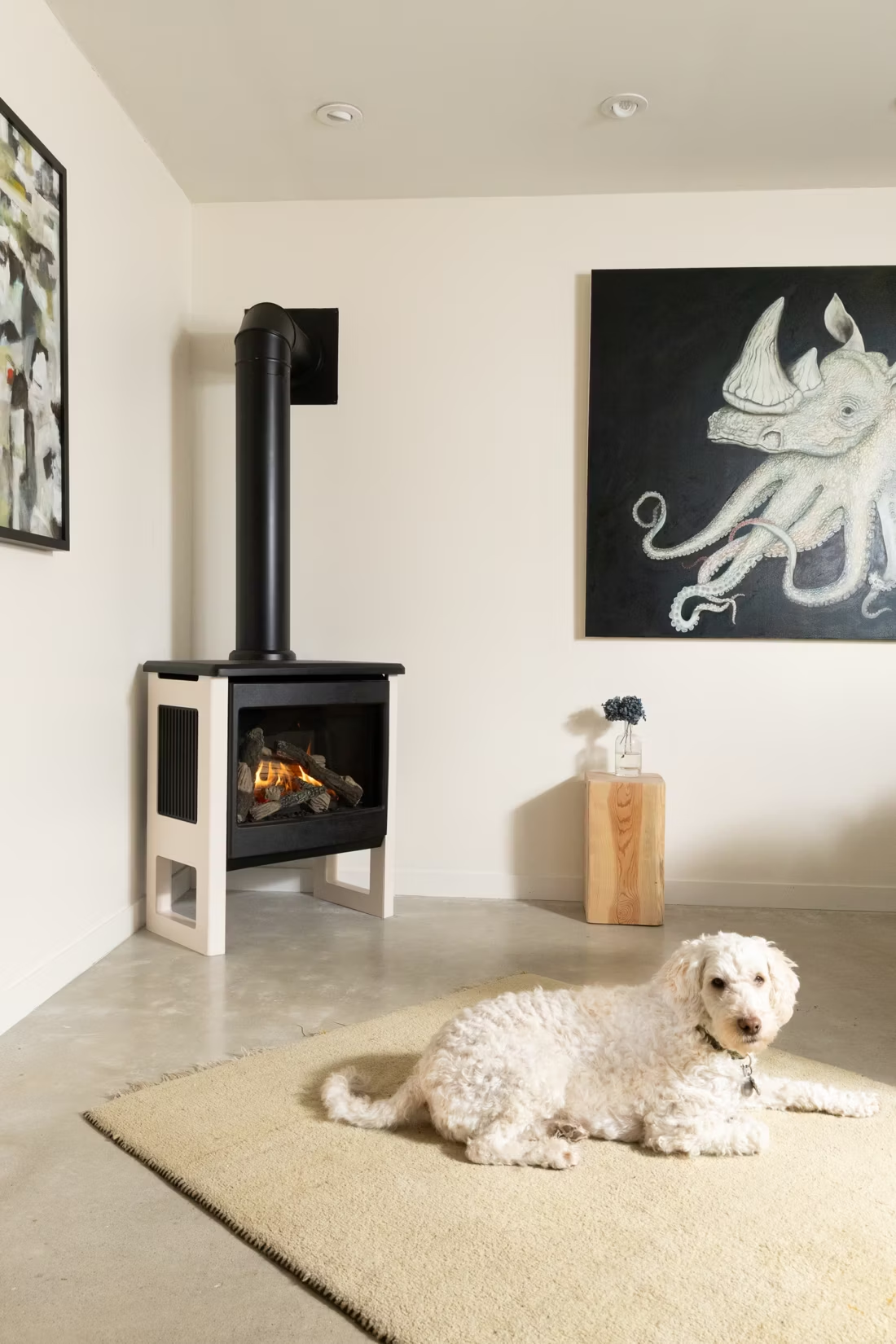
A gas fireplace is a fully built-in unit framed into a wall, best for new construction or a remodel. A gas insert is sized to slide into an existing masonry firebox—the natural choice for the many 1960s-to-1980s brick ranch homes scattered around Easley and Pickens County that already have a fireplace opening but rarely burn wood in it anymore. A gas stove is a freestanding cast-iron or steel unit that sits on the floor and vents through a wall or existing flue, which works well in a room without an existing fireplace. Most Easley homeowners upgrading an old brick hearth go with an insert; new-build homes usually go with a built-in fireplace.
Do I need a permit for a gas fireplace installation in Easley?
Yes. Inside city limits, permits go through the City of Easley Building Department; outside city limits, it's the Pickens County Building Codes Department. Either way, the gas line connection itself needs to be run or verified by a licensed gas-fitter, and most reputable local hearth dealers coordinate the building permit, gas hookup, and inspection together so you're not chasing down separate trades on your own.
Vented vs. vent-free gas fireplaces—which does South Carolina allow?
South Carolina permits both. Vented (direct-vent) fireplaces draw combustion air from outside and exhaust it back outside through a sealed pipe—they're the safer, more universally recommended choice and what most local dealers install by default. Vent-free units burn directly into the room and are legal here as long as they're sized correctly for the room and include an oxygen depletion sensor, but they release some moisture and combustion byproducts indoors. Since Easley has no air quality non-attainment issues to complicate permitting, either type is available locally—most homeowners still choose direct-vent for the cleaner installation and lower maintenance.
How often should a gas fireplace be serviced in Easley?
Plan on an annual inspection, ideally in early fall before the first cold snap rolls down off the Blue Ridge foothills. A certified technician checks the burner, pilot assembly, gas connections, and venting, and cleans the glass and interior—usually $125 to $225 for a standard visit. It's a quicker job than a wood chimney sweep, but skipping it is still the most common cause of pilot and ignition problems homeowners run into mid-winter.
Is a gas fireplace better than a wood-burning one for an Easley home?
For most homes here, yes. With winter lows averaging around 30°F and a mild, short heating season—a fraction of the winter heating load of a place like Duluth, MN—wood heat isn't the necessity it is in colder climates, and dedicated wood stoves are genuinely uncommon in Pickens County homes for that reason. Some homeowners still want a wood-burning fireplace for the smell and ritual of a real fire, and oak, hickory, and pine are all available regionally, including self-cut permits through the Nantahala-Pisgah National Forests at about $20 per cord during the May-through-October season. But for day-to-day comfort, ambiance, and heating a room without dealing with ash and smoke, gas is the more practical fit for the vast majority of Easley homes.
Can I put a TV above my fireplace?
Yes—with an asterisk. Fireplaces are hot and TVs don't like heat. Either put a mantel between them to deflect rising warmth, or choose a fireplace with heat-management technology that creates a cool zone on the wall above—the wall stays around 125 degrees, barely warm, while the room still gets full heat. If you like clean lines and don't want a mantel, heat management is the answer.
Why is a fireplace insert so efficient?
An insert does two things: it seals the chimney completely, so you stop losing air you already paid to heat, and it radiates warmth into the room through the firebox and glass. Most add a heat-exchange fan that pulls cool room air underneath, wraps it around the hot firebox, and pushes it back out warm. Your home is more efficient before you've even lit the first fire.
What is an in-home preview and do I need one?
It's a visit where a hearth professional measures your space, confirms the model you picked actually works in your home, and walks the specs—framing, gas line, venting, finish work—before anything is ordered. Some details you just can't know until you see the house. Never make a down payment without one; it's the single most-skipped step that burns buyers.
How much should I budget for a fireplace?
For an average home—covering the fireplace, the vent pipe, and basic installation—a budget between $3,900 and $5,500 gives you a lot of options across wood, gas, and pellet. By the time you add finish work, gas line, and electrical, the average complete installation lands between $5,000 and $12,000 all-in. In a remodel or new build, a good rule is to put about 2.5% of the total project cost toward the fireplace.
Find your gas fireplace in Easley.
Tell us about your home and we'll match you with the right gas fireplace, insert, or stove—plus connect you with a trusted local dealer who'll hand you a free Project Guide & Parts List for your install.
Find Your Fireplace →