
Real ambiance for Dorchester County homes—no chimney required.
From Summerville to St. George, Dorchester County's mild winters make electric the easiest way to add warmth and glow to a room. Find the right unit and connect with a trusted local dealer.
Every Project Starts From One of These Five Situations
Mild winters, maximum flexibility.
Dorchester County sits in climate zone 3A with an average winter low around 34°F and just 2,385 heating degree days a year—a fraction of what a place like Duluth, MN or Bozeman, MT racks up in a single winter. That low heating demand is exactly why wood stoves and pellet stoves see almost no traction here: there's simply not enough sustained cold to justify a chimney, a cord of oak or hickory, or a hopper full of pellets from suppliers like Lignetics or Hamer Pellet Fuel. Electric, on the other hand, fits the local climate almost perfectly—it delivers instant supplemental heat on the handful of nights each winter that dip into the 20s and 30s, and pure ambiance the rest of the year.
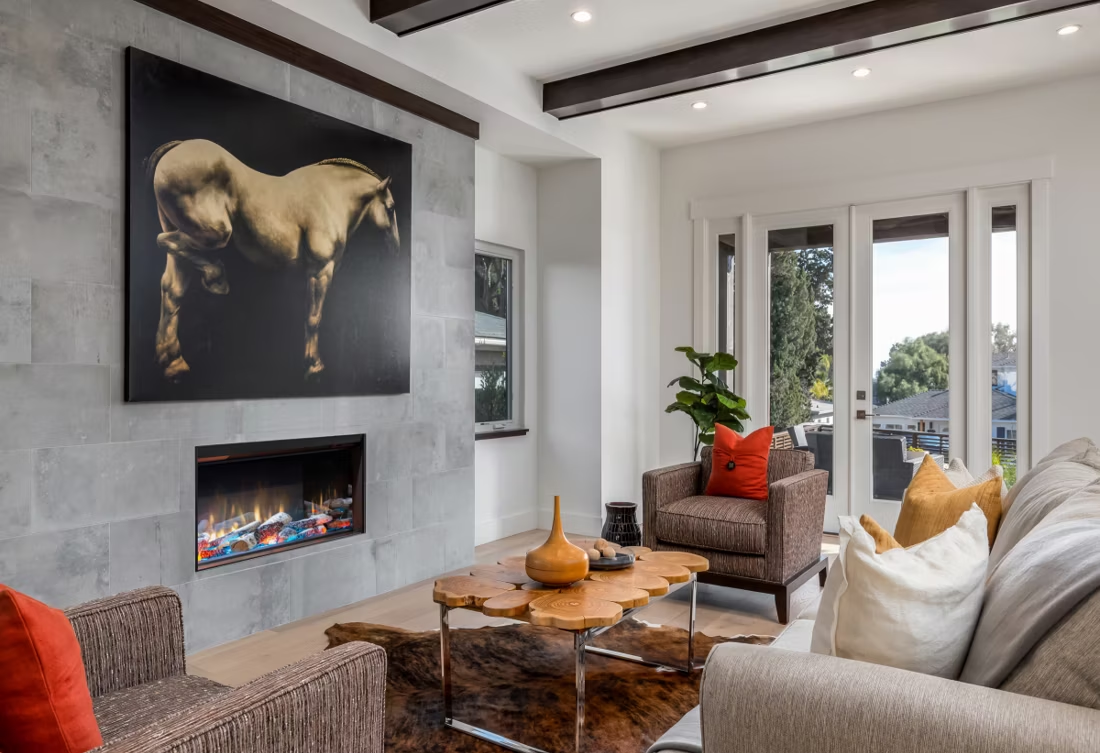
Across Summerville's historic downtown, the newer subdivisions off Highway 61 and Berlin G. Myers Parkway, and the smaller towns of St. George, Ridgeville, and Harleyville, electric fireplaces show up in three common scenarios: a wall-mount unit added to a living room with no existing masonry, an insert dropped into an old wood-burning firebox that homeowners stopped using because of humidity and pest concerns, and freestanding stoves used for zone heat in sunrooms or additions where extending ductwork isn't practical. No combustion, no venting, and no chimney maintenance means it's also a low-risk retrofit for the coastal humidity that Dorchester County homes deal with year-round.
Three steps. No salesperson until you're ready.
Tell us about your project
Your zip code, your situation, and the fuel you're leaning toward—or let the answers point you to one.
See what's actually available
The brands dealers within 100 miles genuinely carry—real options, never a catalog mirage.
Get your dealer & Project Guide
A trusted local dealer, plus the free Project Guide & Parts List that names every component of the job.
Frequently Asked Questions
How much does an electric fireplace installation cost in Dorchester County?
Costs vary widely based on the type of unit. A plug-in electric insert or freestanding stove that runs on a standard 120-volt outlet typically costs $400 to $1,200 installed, since there's no electrical work involved beyond placement. A built-in wall unit or a larger insert that requires a dedicated 240-volt circuit runs higher—often $1,200 to $2,500—once you factor in an electrician to run new wiring and any wall or mantel framing. Historic homes in downtown Summerville with older electrical panels sometimes need a panel upgrade first, which adds to the total. Local dealers will give you a firm number after seeing your room and your existing electrical setup.
Do I need a permit to install an electric fireplace in Dorchester County?
A simple plug-in unit generally doesn't require a permit. But if your installation involves running a new dedicated circuit or altering wiring—common with built-in wall units—an electrical permit is typically required. Homes inside the Town of Summerville go through Summerville's own building and zoning department rather than the county, while unincorporated areas and towns like St. George, Ridgeville, and Harleyville go through Dorchester County Building Services. Most local dealers coordinate the electrical permit as part of the install, so you're not left tracking down the paperwork yourself.
Why don't more Dorchester County homes use wood or pellet stoves?
With only 2,385 heating degree days a year and winter lows averaging 34°F, there just isn't enough sustained cold in Dorchester County to make a wood or pellet stove worth the investment for most homeowners. Add in the region's humidity—which makes stacked firewood and stored pellet bags prone to moisture and pest issues—and it's easy to see why local hearth retailers stock far more electric and gas units than solid-fuel appliances. A small number of rural properties still keep a wood stove for backup heat during ice storms or extended power outages, but it's the exception here, not the norm.
Will an electric fireplace actually heat my room, or is it just for looks?
Most electric fireplaces include a built-in heater rated around 4,600 to 5,200 BTU, which comfortably takes the chill off a 300 to 400 square foot room—plenty for the handful of nights each Dorchester County winter that drop into the 20s and 30s. Many homeowners run the flame effect without the heater most of the year and switch the heat on only during cold fronts. It's genuinely useful supplemental heat, not just decoration, but it's not designed to replace your central HVAC system as a whole-home heat source.
Electric vs. gas fireplace—which is right for my Dorchester County home?
Both are common choices here. Gas fireplaces deliver more heat output and a more authentic flame, but require either a natural gas line (available in parts of Summerville) or a propane tank, plus venting for most models. Electric fireplaces need no gas line and no venting at all—just an outlet or a dedicated circuit—which makes them far simpler to add to an interior wall, a bedroom, or a room with no existing fireplace. For homeowners prioritizing installation simplicity and flexibility over maximum heat output, electric is usually the easier and less expensive path. For those wanting a stronger primary or supplemental heat source, gas is worth a look too—a local dealer can walk through both.
Can I put an electric insert into my existing wood-burning fireplace?
Yes, and it's one of the most common projects in Summerville's older, historic homes. An electric insert slides into your existing masonry firebox, plugs into an outlet (or a new dedicated circuit for larger units), and gives you flame effect and heat without the upkeep of an open wood-burning fireplace—no more worrying about creosote, chimney leaks in our humid climate, or pest entry through an old flue. Many homeowners choose this route specifically because they'd stopped using the wood-burning fireplace altogether and wanted the look back without the maintenance.
What electric fireplace features matter most in a humid, coastal climate like Dorchester County?
Look for units with a sealed electronic control board and moisture-resistant housing, since coastal South Carolina humidity can shorten the life of cheaper components over time. LED-based flame effects also run cooler and more efficiently than older halogen models, which matters if you're planning to run the unit for ambiance during humid, non-heating months. If the unit is going into a sunroom, screened porch conversion, or any space with less climate control, ask your local dealer specifically about moisture ratings—not every model is built for it.
Who's my electric utility, and does it matter for this project?
Most of Dorchester County is served by Dominion Energy South Carolina, with Berkeley Electric Cooperative covering parts of the more rural eastern county. For a plug-in electric fireplace, your utility doesn't factor into the project at all. For a larger built-in unit requiring a new circuit, your electrician will need to confirm your panel has available capacity—in most Dorchester County homes this isn't an issue, but older homes in St. George or Harleyville with dated panels occasionally need an upgrade first.
Electric vs. wood-burning fireplace—does wood make sense at all here?
For the vast majority of Dorchester County homes, no—wood heat isn't practical given how few genuinely cold days the county sees each winter, and humidity makes firewood storage more of a hassle than it's worth. Electric wins on convenience, cost of installation, and fit with our climate zone. The exception is a small number of rural properties, often on larger acreage near Ridgeville or Harleyville, where a wood stove serves as backup heat during hurricane-season power outages rather than primary winter heat. If that's your situation, it's worth discussing directly with a local dealer, but for most homeowners in this county, electric is the more sensible choice.
Does an electric fireplace need a vent or chimney?
No—that's its superpower. An electric fireplace needs a wall and an outlet, period. No vent pipe, no gas line, no clearances to design around, which is why it works in bedrooms, offices, apartments, and walls where venting a gas or wood unit would be impractical or impossible. Installation is typically the simplest and least expensive of any fireplace type.
How much does an electric fireplace cost to run?
With the heater on, a typical unit draws about 1,500 watts—at average electric rates that's roughly 20 cents an hour. Run the flame effect alone and it costs pennies; the flames are LED-driven and use about as much power as a light bulb. There's no pilot light, no fuel delivery, and essentially no maintenance.
Can a fireplace actually lower my heating bill?
Yes—by creating a comfort zone. A furnace heats every square foot of the house just to warm the one room you're in; a gas fireplace on low burns roughly a sixth of the gas a typical furnace does. Set the furnace around 55–60 degrees as a baseline, then heat the rooms your family actually uses. Families who heat this way commonly save $20–$60 a month.
Does a fireplace add value to my home?
On average, a fireplace adds back to the home about the same amount you spent installing it. Add the monthly savings from heating the rooms you actually use instead of the whole house—often hundreds of dollars a year—and the value case is strong before you even count what a fire does for how your family uses the room.
Stove and Fireplace Dealers in Dorchester County
Listings include WhyFire partner dealers, dealers we have verified as authorized for the brands we recommend, and established local businesses that carry hearth products. Every listing shows which one it is. The ones marked Preferred run on WhyFire's software, so they can show you real pricing and book your appointment right here. No manufacturer pays for placement. How we verify dealers →
WilliamSmith Fireplaces & Home Accents
Edisto Gas- Holly Hill
Dirty Chimney, LLC
Berkeley Propane
Berkeley Propane
Find your electric fireplace in Dorchester County.
Tell us a bit about your home and we'll match you with the right electric fireplace, insert, or stove—plus a free Project Guide & Parts List with your recommended local dealer.
Find Your Fireplace →