
Instant warmth for Clarendon County's short, mild winters.
With only about 2,595 heating degree days a year and winter lows that hover near 35°F, Clarendon County doesn't need a wood-burning workhorse—it needs a clean, on-demand flame for cool mornings on Lake Marion and the occasional hard freeze in Manning or Summerton. Tell us about your home and we'll connect you with a trusted local dealer.
Every Project Starts From One of These Five Situations
A climate built for flip-a-switch heat, not a full-time wood habit.
Clarendon County sits in USDA/IECC climate zone 3A—humid subtropical, with an average winter low around 35°F and roughly 2,595 heating degree days a year. Compare that to a place like Fargo, ND, which racks up over 9,000 heating degree days, and it's clear why most homes here don't need a stove running around the clock. Instead, gas fireplaces and inserts fill a specific role: quick warmth on the cool nights that roll off Lake Marion, backup heat during the occasional ice storm that knocks out power in Manning or Turbeville, and year-round ambiance in lake houses and cabins around the Santee Cooper Lakes that get used seasonally.
Natural gas mains reach parts of Manning's town limits, but a large share of Clarendon County's roughly 10,400 residents live outside that footprint—around Summerton, Turbeville, and the rural stretches near the lake—where propane from suppliers like AmeriGas, Suburban Propane, or local independent dealers is the standard fuel. Either way, a properly sized and vented gas fireplace gives you real heat at the push of a button, without the ash, smoke, or firewood stacking that a wood setup in oak-and-pine country demands.
Three steps. No salesperson until you're ready.
Tell us about your project
Your zip code, your situation, and the fuel you're leaning toward—or let the answers point you to one.
See what's actually available
The brands dealers within 100 miles genuinely carry—real options, never a catalog mirage.
Get your dealer & Project Guide
A trusted local dealer, plus the free Project Guide & Parts List that names every component of the job.
Frequently Asked Questions
How much does a gas fireplace installation cost in Clarendon County?
Costs vary with the unit, the venting path, and whether new gas line work is required, but most Clarendon County installations land somewhere between $3,500 and $9,500. A direct-vent gas insert dropped into an existing masonry fireplace—common in older homes around Manning—sits toward the lower end if a gas line is already nearby. A new built-in fireplace for a lake house on Lake Marion, or any project requiring a propane tank set and a fresh gas line run, sits higher. A local dealer will give you a firm number after seeing your home.
Can I convert my existing wood fireplace to gas?
Yes, and it's a common request for the older brick-and-block fireplaces found throughout Manning, Summerton, and the surrounding county. A gas insert typically drops into the existing masonry opening and vents up through the same chimney using a stainless liner, which keeps the cost down since you're not building new venting from scratch. Whether you're on propane or have access to natural gas near town changes the line-run cost, but the conversion itself preserves the look of the original hearth while removing the need to source and stack oak or pine firewood.
Do I need natural gas, or can I use propane?
Either works, and which one you'll use mostly comes down to where in Clarendon County you live. Homes inside Manning's town limits may have access to natural gas mains, but most of the county—including the areas around Summerton, Turbeville, and the shoreline communities on Lake Marion—runs on propane, either from an existing tank or a new tank set by a regional supplier. Nearly every gas fireplace and insert on the market can be configured for either fuel; your installer sets the correct orifice and regulator for whichever you have.
Will my gas fireplace work during a power outage?
Most modern gas fireplaces will, which matters in Clarendon County given how often summer storms and the occasional winter ice event knock out power in rural parts of the county. Units with IPI (intermittent pilot ignition) run on a small battery backup that kicks in the moment power drops, so the fireplace lights on demand just like normal. Valor fireplaces take a different approach—the pilot's thermocouple generates the electricity the unit needs, so there's no battery to remember at all. Either way, ask your local dealer about the ignition system before you buy if outage backup matters to you.
What's the difference between a gas fireplace, gas insert, and gas stove?
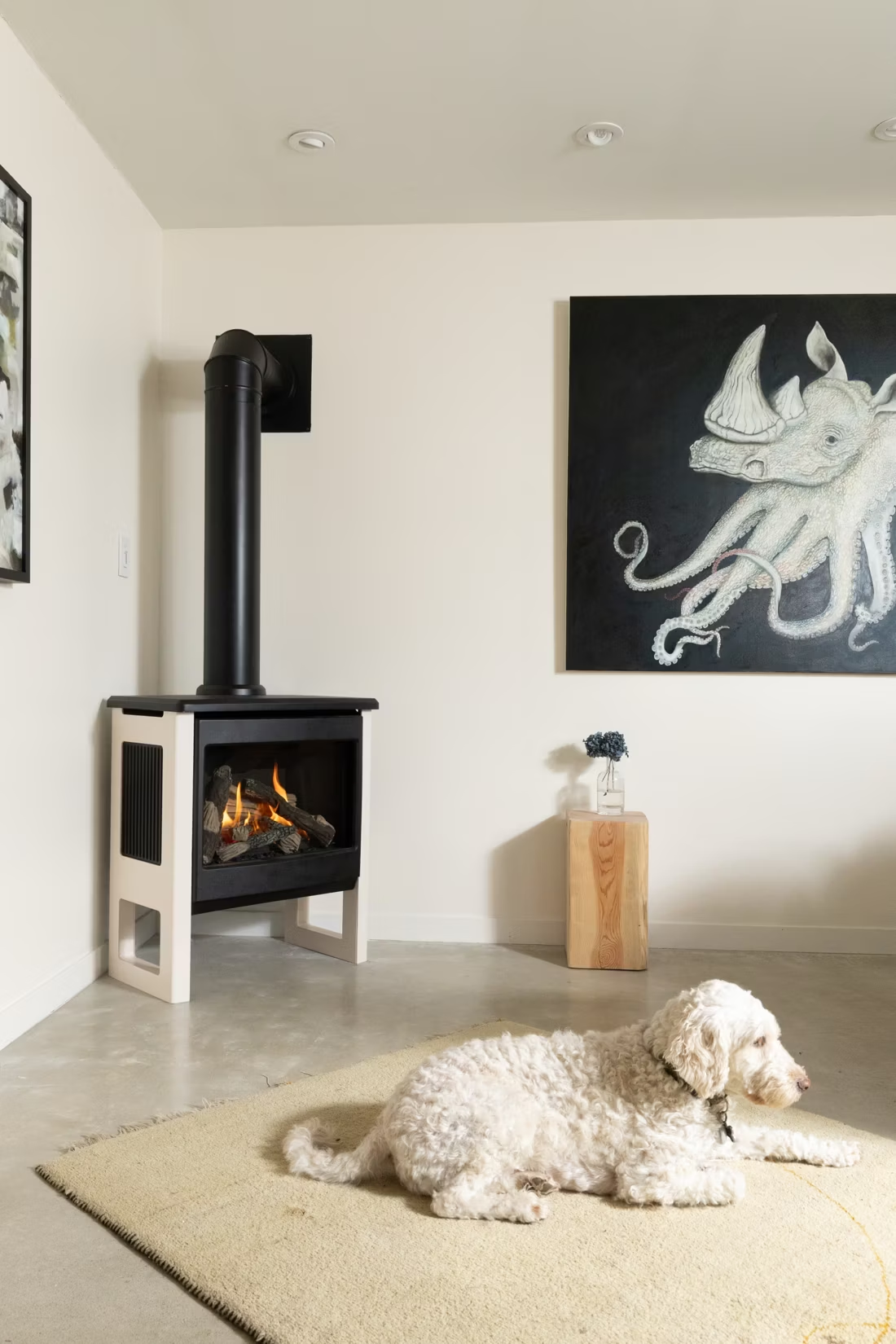
A gas fireplace is a fully built-in unit framed into a wall—the right call for new construction or a lake-house remodel on Lake Marion. A gas insert slides into an existing masonry fireplace opening, which fits the older homes common around Manning and Summerton. A gas stove is a freestanding unit that sits on the floor, useful in a room without any existing fireplace or chimney. For most Clarendon County homeowners upgrading an existing hearth, the insert is the simplest and most cost-effective path.
Do I need a permit to install a gas fireplace in Clarendon County?
Yes—a building permit and a gas line permit are typically required for a new gas fireplace or insert installation, handled through the Clarendon County Building Codes Department (or the Town of Manning's permitting office for in-town addresses). The gas line portion has to be run by a licensed gas-fitter, which is one of the main reasons to work with an established local dealer rather than a general handyman—they coordinate the gas work, venting, and inspection as one job instead of leaving you to juggle separate trades.
What's the difference between vented and vent-free gas fireplaces?
Vented (direct-vent) fireplaces pull combustion air from outside and exhaust the byproducts back outside through a sealed vent—they're the cleanest and most universally code-compliant option. Vent-free units burn directly into the room without external venting, which technically means no vent hole to cut, but they also release water vapor and small amounts of combustion byproducts indoors. In a humid subtropical climate like Clarendon County's, that added indoor moisture is worth weighing carefully—it's not a dealbreaker, but most local dealers steer homeowners toward direct-vent units for both air quality and long-term comfort. South Carolina allows vent-free units, but they carry strict room-sizing and oxygen-sensor requirements.
How often should my gas fireplace be serviced?
Plan on an annual inspection, the same recommendation that applies anywhere. A technician checks the burner, pilot assembly, gas connections, and any electronic ignition parts, and cleans the glass and interior. It's a lighter lift than chimney sweeping on a wood stove—usually $150–$250—but it matters just as much for safety, particularly for lake houses around Lake Marion that sit unused for stretches and benefit from a check before each burning season.
Gas vs. wood—which is right for my Clarendon County home?
Wood has deep roots here—oak, pine, and hickory are all abundant locally, and a wood stove or fireplace gives you heat that doesn't depend on the power grid, which appeals to full-time residents with land to cut and season their own firewood. But with only about 2,595 heating degree days a year and winter lows that rarely drop far below freezing, most Clarendon County homes don't need wood as a primary heat source the way a home in Duluth or International Falls would. Gas fits the local pattern better for most people: instant heat for cool nights, zero ash or wood handling, and a clean look that suits both full-time homes in Manning and seasonal lake houses on Lake Marion. Plenty of local homeowners keep a wood option for backup and ambiance while relying on gas day to day.
Can I put a TV above my fireplace?
Yes—with an asterisk. Fireplaces are hot and TVs don't like heat. Either put a mantel between them to deflect rising warmth, or choose a fireplace with heat-management technology that creates a cool zone on the wall above—the wall stays around 125 degrees, barely warm, while the room still gets full heat. If you like clean lines and don't want a mantel, heat management is the answer.
Is my gas fireplace wasting gas?
If it was installed more than 15 years ago, probably. Older gas fireplaces keep a standing pilot light burning all the time, and that little flame can cost a couple hundred dollars a year. Newer models use pilot-on-demand ignition—the pilot lights only when you use the fireplace and goes out when you turn it off.
Can I install a fireplace myself?
If you're putting a fire in your house on purpose, it's best to work with an expert. Unless you're genuinely experienced in framing, gas line, vent pipe, and the national code on clearances to combustibles, have a professional do it—and ideally the same company that sells you the fireplace, so warranty, service, and liability all live under one roof.
How much should I budget for a fireplace?
For an average home—covering the fireplace, the vent pipe, and basic installation—a budget between $3,900 and $5,500 gives you a lot of options across wood, gas, and pellet. By the time you add finish work, gas line, and electrical, the average complete installation lands between $5,000 and $12,000 all-in. In a remodel or new build, a good rule is to put about 2.5% of the total project cost toward the fireplace.
Stove and Fireplace Dealers in Clarendon County
Listings include WhyFire partner dealers, dealers we have verified as authorized for the brands we recommend, and established local businesses that carry hearth products. Every listing shows which one it is. The ones marked Preferred run on WhyFire's software, so they can show you real pricing and book your appointment right here. No manufacturer pays for placement. How we verify dealers →
Farmers Propane
Mishoe Oil And Propane
Thomlinson & McWhite Inc
Palmetto Gas
Thomlinson & McWhite Inc
Edisto Gas- Holly Hill
Find your gas fireplace in Clarendon County.
Tell us about your home and your project, and we'll send you a free Project Guide & Parts List—the exact parts, including the vent kit, and our recommended local dealer for your gas fireplace, insert, or stove in Clarendon County.
Find Your Fireplace →