
Real flame for Charleston's short, mild winters.
Charleston doesn't need a woodpile to stay warm. A direct-vent gas fireplace or insert delivers instant ambiance and backup heat for the handful of cold snaps each winter—installed by a trusted local pro who knows the peninsula's historic-district rules.
Every Project Starts From One of These Five Situations
A fireplace for ambiance, not survival.
Charleston sits at just 2 feet of elevation on the South Carolina coast, in climate zone 3A, where the average winter low hovers around 44°F and the entire heating season is short and mild—a fraction of the winter heating load a place like Duluth, MN or Burlington, VT racks up in a single month. Most Charleston winters bring a handful of nights in the 30s, not weeks of sustained cold, so a fireplace here is rarely asked to be the primary heat source. It's asked to look good, warm a room on a damp February evening, and work without fuss.
Dominion Energy South Carolina supplies both electric and natural gas service across the peninsula, West Ashley, and North Charleston, which makes direct-vent gas fireplaces and inserts an easy retrofit for the city's many historic single houses and Charleston-style homes with existing, often non-functional, masonry fireboxes. Homes further out on James Island, Johns Island, Sullivan's Island, and Folly Beach frequently sit outside the natural gas main and rely on propane instead—either way, a gas fireplace runs the same appliance, just with a different fuel line. Inside the historic district, the City of Charleston Board of Architectural Review has a say in anything visible from the street, including exterior vent terminations, so working with an installer who already knows how to get a direct-vent unit approved matters more here than in most cities.
Three steps. No salesperson until you're ready.
Tell us about your project
Your zip code, your situation, and the fuel you're leaning toward—or let the answers point you to one.
See what's actually available
The brands dealers within 100 miles genuinely carry—real options, never a catalog mirage.
Get your dealer & Project Guide
A trusted local dealer, plus the free Project Guide & Parts List that names every component of the job.
Frequently Asked Questions
How much does a gas fireplace installation cost in Charleston?
In Charleston, a direct-vent gas fireplace or insert typically installs for $3,500 to $9,000, depending on the unit, whether a new gas line needs to be run, and whether the vent termination requires Board of Architectural Review sign-off in the historic district. A gas insert going into an existing masonry firebox on a home already plumbed for natural gas sits at the lower end; a full built-in unit with new gas line work, a custom mantel, and BAR-approved venting on a peninsula home runs higher. Homes on James Island or Johns Island without natural gas service will also need a propane tank installed or an existing one hooked up, which adds to the project cost.
Can I convert my Charleston home's existing fireplace to gas?
Yes, and it's one of the most common projects in the historic district, where many Charleston single houses and downtown row houses have decorative masonry fireboxes that haven't burned wood in decades. A gas insert or gas log set can go into that existing opening, using a liner run through the original chimney, and typically costs less than a full new-construction gas fireplace because the framing and firebox already exist. If the home is on Dominion Energy South Carolina's gas network—most of the peninsula and West Ashley are—the hookup is usually straightforward. On the barrier islands, propane is the more common route.
Does my part of Charleston have natural gas, or do I need propane?
Dominion Energy South Carolina runs natural gas lines through most of the peninsula, West Ashley, and North Charleston, so homes in zip codes like 29401, 29403, and 29407 are usually a straightforward gas hookup. Out on James Island (29412), Johns Island (29455), Sullivan's Island, and Folly Beach (29457), natural gas mains are far less common, and propane is the standard fuel—either from an existing tank or a new one set by a local propane supplier. Either fuel runs the same gas fireplace models; your installer just configures the orifice and regulator for the fuel you have.
Will a gas fireplace keep working if the power goes out during hurricane season?
Most direct-vent gas fireplaces with intermittent pilot ignition (IPI) include a battery backup that keeps the unit lighting on demand when the grid goes down—a real consideration in a city that regularly sees storm-related outages between June and November. Valor fireplaces take it a step further: their pilot generates its own electricity through a thermocouple, so there's no battery to remember or replace. For a Charleston household thinking about hurricane prep, a gas fireplace that can still light and run without house power is a meaningful backup heat and light source during a multi-day outage.
Gas fireplace, insert, or gas stove—what fits a Charleston home?
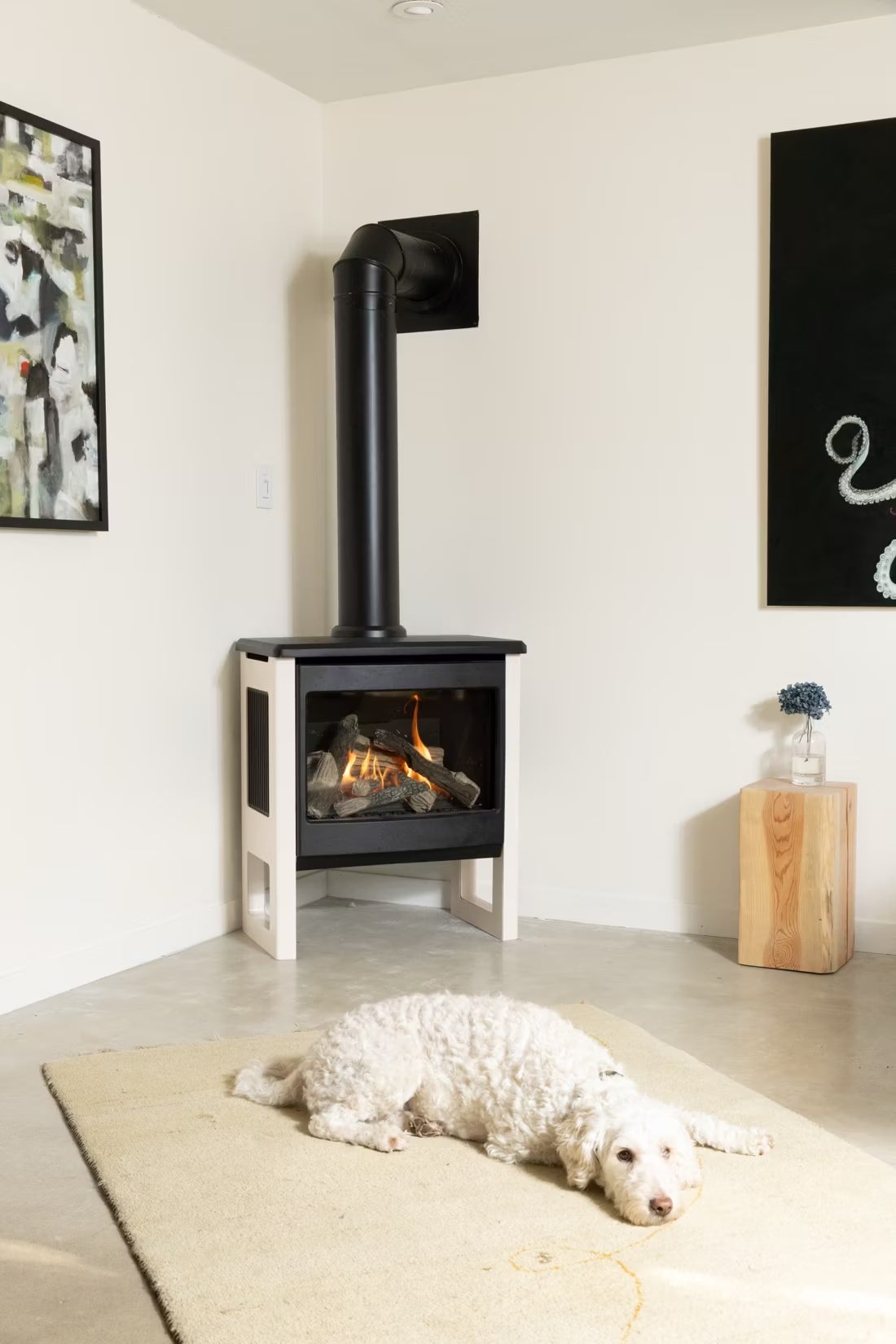
A gas insert drops into an existing masonry firebox, which describes a huge share of Charleston's historic single houses and downtown row houses—it's usually the least invasive and least expensive option if you already have an opening. A built-in gas fireplace is framed into a wall and fits new construction or a full remodel, common in newer developments around Mount Pleasant and West Ashley. A freestanding gas stove sits on the floor and vents through a wall or existing flue, which works well in smaller Charleston bungalows or additions that never had a fireplace at all. Local retailers will walk through which fits your specific opening and floor plan.
Do I need a permit for a gas fireplace in Charleston?
Yes. Homes on the peninsula and within the historic district need sign-off from the City of Charleston, and any exterior vent termination visible from a public street typically needs to clear the Board of Architectural Review before work starts—this is one of the more distinctly Charleston steps in the process, and it's why local installers who already have a working relationship with BAR staff can save weeks of back-and-forth. Outside the historic overlay, Charleston County Building Services handles the standard building and gas permits. Either way, the gas line connection itself has to be done by a licensed gas-fitter, and a reputable hearth dealer coordinates all of this as part of the install.
Should I get a vented or vent-free gas fireplace in Charleston's climate?
Vented, direct-vent units are the better fit for Charleston. Vent-free (unvented) fireplaces burn gas directly into the room and release water vapor as a byproduct—in a Lowcountry climate that's already fighting humidity and mold in older, poorly-sealed historic homes, adding more moisture indoors is the opposite of what you want. Direct-vent units pull combustion air from outside and exhaust everything back outside through a sealed vent, so they don't affect indoor humidity or air quality. Vent-free units are technically legal in South Carolina with room-size and ventilation restrictions, but most Charleston hearth dealers steer customers toward direct-vent for exactly this reason.
How often does a gas fireplace need to be serviced in Charleston?
Plan on an annual inspection, ideally before the first cool snap in November. Coastal salt air is harder on metal components than an inland climate—igniters, burner ports, and venting hardware can corrode faster in homes within a few miles of the harbor or marsh. A certified technician checking the burner, pilot assembly, and venting once a year catches that corrosion before it causes a service call in the middle of a cold snap. Expect to pay somewhere in the $150-$250 range for a standard annual service call from a local hearth technician.
Should I get a gas fireplace or a wood-burning one in Charleston?
For nearly every Charleston home, gas is the practical answer. With only a short, mild heating season and winter lows averaging in the mid-40s, the city simply doesn't have the sustained cold that makes wood heat worth the ash, smoke, and chimney maintenance—wood stoves are genuinely rare here, mostly limited to a few rural properties well outside the city. Gas gives you real flame and instant warmth on the handful of nights that call for it, without asking a 200-year-old chimney to handle daily wood-burning loads it was never built for. If you already have a decorative masonry fireplace, converting it to a gas insert is almost always the better long-term move than trying to bring it back to wood-burning code.
Can I put a TV above my fireplace?
Yes—with an asterisk. Fireplaces are hot and TVs don't like heat. Either put a mantel between them to deflect rising warmth, or choose a fireplace with heat-management technology that creates a cool zone on the wall above—the wall stays around 125 degrees, barely warm, while the room still gets full heat. If you like clean lines and don't want a mantel, heat management is the answer.
Why is a fireplace insert so efficient?
An insert does two things: it seals the chimney completely, so you stop losing air you already paid to heat, and it radiates warmth into the room through the firebox and glass. Most add a heat-exchange fan that pulls cool room air underneath, wraps it around the hot firebox, and pushes it back out warm. Your home is more efficient before you've even lit the first fire.
Can a fireplace actually lower my heating bill?
Yes—by creating a comfort zone. A furnace heats every square foot of the house just to warm the one room you're in; a gas fireplace on low burns roughly a sixth of the gas a typical furnace does. Set the furnace around 55–60 degrees as a baseline, then heat the rooms your family actually uses. Families who heat this way commonly save $20–$60 a month.
Does a fireplace add value to my home?
On average, a fireplace adds back to the home about the same amount you spent installing it. Add the monthly savings from heating the rooms you actually use instead of the whole house—often hundreds of dollars a year—and the value case is strong before you even count what a fire does for how your family uses the room.
Nearby Dealers
Hearth shops serving Charleston and the surrounding area. Every listing shows whether it is a WhyFire partner, a dealer we have verified as authorized for the brands we recommend, or a local business carrying hearth products. No manufacturer pays for placement. How we verify dealers →
WilliamSmith Fireplaces & Home Accents
Four Corners Building Supply
Fireplaces Plus
Palmetto Outdoor Kitchens
Dirty Chimney, LLC
Find your gas fireplace in Charleston.
Tell us about your home—historic peninsula single house, West Ashley ranch, or Johns Island new build—and we'll match you with a trusted local dealer and send over a free Project Guide & Parts List for your gas fireplace project, including the vent kit and everything else needed to get it installed correctly.
Find Your Fireplace →