
Find a gas fireplace built for Central's mild winters.
Central sees average winter lows near 32°F and a fairly light winter heating load overall—mild by Blue Ridge standards. A gas fireplace here is less about survival heat and more about comfortable, on-demand warmth. We'll match you with a vetted local dealer who knows what actually works in Pickens County.
Every Project Starts From One of These Five Situations
Comfort heat for a mild climate, not a harsh one.
Central sits at about 876 feet in the foothills of the Blue Ridge Mountains in Pickens County, a few miles from Table Rock State Park. Winters here are mild by national standards—Climate Zone 3A, an average winter low around 32°F, and a fairly light winter heating load overall, a fraction of what a place like Duluth, MN or Burlington, VT logs in a single season. That's part of why wood and pellet heat never became a dominant fuel source in this pocket of the Upstate: most homes simply don't need it to survive January.
Gas, on the other hand, is a standard and popular choice here—mostly for the instant ambiance and zone heat it adds to a living room or den, and as a hedge against the occasional ice storm that can knock out power along Blue Ridge Electric Cooperative's rural lines. Central is a small town of about 5,272 people without extensive natural gas mains, so most installations run on propane rather than piped natural gas—a distinction your local dealer will walk you through based on your address and whether you're inside town limits or out in the county.
Three steps. No salesperson until you're ready.
Tell us about your project
Your zip code, your situation, and the fuel you're leaning toward—or let the answers point you to one.
See what's actually available
The brands dealers within 100 miles genuinely carry—real options, never a catalog mirage.
Get your dealer & Project Guide
A trusted local dealer, plus the free Project Guide & Parts List that names every component of the job.
Frequently Asked Questions
How much does a gas fireplace installation cost in Central?
Most propane fireplace and insert installations in and around Central run $3,500 to $9,000, depending on the unit, whether you're converting an existing masonry fireplace or building new, and whether a propane tank and line need to be run to the house. Homes already set up with a propane tank for a water heater or range tend to land on the lower end; new propane tank installs and longer line runs push costs toward the higher end. Because Central doesn't have extensive natural gas mains, budget for propane infrastructure rather than a simple tap into an existing gas main.
Can I convert my wood-burning fireplace to gas in Central?
Yes, and it's a common upgrade in the older farmhouses and brick ranch homes scattered around Pickens County. A gas insert typically drops into your existing masonry firebox with a stainless liner run up the existing chimney, so you keep the look of the fireplace while gaining instant on-off heat and losing the ash and creosote upkeep. Since most of the area runs on propane rather than piped gas, your installer will also scope whether you need a new propane tank or can tie into an existing one.
Is natural gas or propane more common for fireplaces in Central?
Propane. Central is a small town—about 5,272 residents—without extensive natural gas distribution lines, so the large majority of gas fireplace installations here run on propane, either from a shared community tank or a dedicated tank on the property. Homes closer to Easley or Clemson with piped natural gas service are the exception rather than the rule out this way. Your local dealer will confirm what's available at your specific address before recommending a unit.
Will a gas fireplace still work if the power goes out?
Most will, with the right ignition system. Units with IPI (intermittent pilot ignition) run on battery backup that kicks in automatically when power drops, so the fireplace lights on demand just like normal. That matters in Pickens County, where ice storms occasionally take down rural power lines served by Blue Ridge Electric Cooperative—outages here tend to follow ice accumulation on trees rather than deep cold. Valor fireplaces go a step further, generating their own electricity through the pilot's thermocouple with no batteries required at all. Ask your dealer about the ignition system on any unit you're considering.
Gas fireplace, insert, or stove—what's the difference?
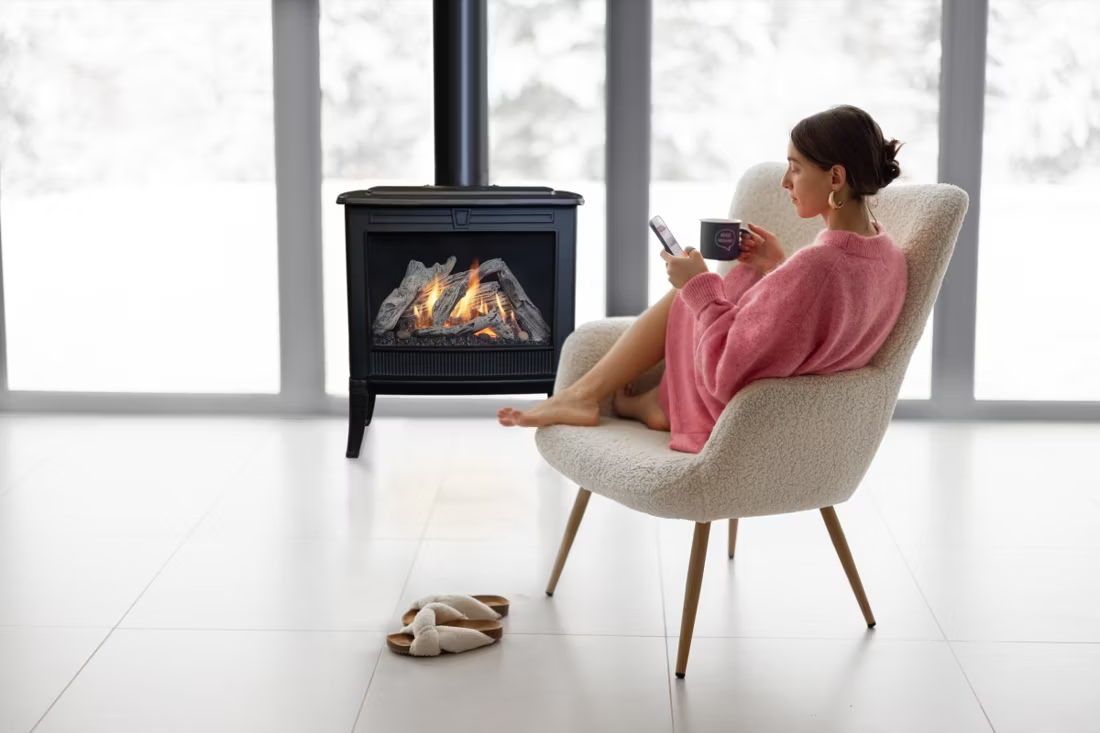
A gas fireplace is a built-in unit installed during new construction or a remodel. A gas insert slides into an existing masonry firebox and uses the chimney as its vent path—the most common retrofit for Central's older homes with an existing hearth. A gas stove is a freestanding cast-iron or steel unit that sits on the floor and can go in rooms without an existing fireplace at all, which works well for additions or converted porches, common around here.
Do I need a permit to install a gas fireplace in Central?
Yes. Pickens County requires a building permit and gas-line inspection for new gas fireplace and insert installations, and propane tank placement has its own setback rules from the structure and property line. Most established local hearth dealers pull these permits as part of the installation and coordinate the propane supplier and gas-fitter, so you're not left managing multiple trades on your own.
Are vent-free gas fireplaces legal in South Carolina?
Yes, vent-free (unvented) gas fireplaces are permitted in South Carolina, subject to room-size minimums and oxygen depletion sensor requirements. Vented, direct-vent units are still the more common recommendation for Central homes because they exhaust combustion byproducts outside rather than into the living space, and they don't come with the same square-footage restrictions. Ask a local dealer to walk through both options for your specific room.
How often does a gas fireplace need servicing?
Plan on an annual inspection, typically $100 to $200, where a technician checks the burner, pilot assembly, venting, and gas connections and cleans the glass. It's a lighter lift than wood-stove chimney sweeping, but skipping it is the main reason gas fireplaces develop sooting, pilot problems, or, on propane systems, regulator issues over time.
Should I consider a wood stove instead of gas in Central?
For most homes here, no—Central's winters are mild enough (a fairly light winter heating load, with average lows around 32°F) that wood heat never took hold as a primary fuel the way it does farther north or at higher elevation. A handful of homeowners with land still cut oak, pine, or hickory under Forest Service permits through the Nantahala-Pisgah National Forests, and burn wood for ambiance or backup on the coldest nights, but it's a minority choice. Gas is the far more practical option for consistent, on-demand comfort heat in this climate.
Why is a fireplace insert so efficient?
An insert does two things: it seals the chimney completely, so you stop losing air you already paid to heat, and it radiates warmth into the room through the firebox and glass. Most add a heat-exchange fan that pulls cool room air underneath, wraps it around the hot firebox, and pushes it back out warm. Your home is more efficient before you've even lit the first fire.
Why is my open fireplace making my house colder?
Open fireplaces suck—literally. As the fire burns, it consumes air your furnace already paid to heat and pulls it out through the chimney, so the house is actually colder after the fire goes out than before you lit it. An insert fixes this: it seals the chimney, puts fixed glass across the front, and turns that hole in your house into a real heat source.
Can I install a fireplace myself?
If you're putting a fire in your house on purpose, it's best to work with an expert. Unless you're genuinely experienced in framing, gas line, vent pipe, and the national code on clearances to combustibles, have a professional do it—and ideally the same company that sells you the fireplace, so warranty, service, and liability all live under one roof.
How much should I budget for a fireplace?
For an average home—covering the fireplace, the vent pipe, and basic installation—a budget between $3,900 and $5,500 gives you a lot of options across wood, gas, and pellet. By the time you add finish work, gas line, and electrical, the average complete installation lands between $5,000 and $12,000 all-in. In a remodel or new build, a good rule is to put about 2.5% of the total project cost toward the fireplace.
Nearby Dealers
Hearth shops serving Central and the surrounding area. Every listing shows whether it is a WhyFire partner, a dealer we have verified as authorized for the brands we recommend, or a local business carrying hearth products. No manufacturer pays for placement. How we verify dealers →
Tugalo Gas Company Inc.
Carolina Elite Fire
Blossman Gas And Appliance
White Jones Ace Hardware
Yoder Building Supply
Blossman Gas - Anderson
Find your gas fireplace in Central, SC.
Tell us about your home and we'll match you with a trusted local dealer and a free Project Guide & Parts List—the exact parts, including the vent kit, for your gas fireplace project in Central.
Find Your Fireplace →