
Instant heat, zero smoke, for Calhoun County homes.
No chimney, no gas line, no venting to plan around—just a real electric fireplace or insert that fits Calhoun County's short, mild winters. From St. Matthews to Cameron to Fort Motte, find the right unit and connect with a trusted local dealer.
Every Project Starts From One of These Five Situations
Mild winters, maximum flexibility.
Calhoun County is small—just over 2,400 people spread across farmland and pine woods between St. Matthews, Cameron, and Fort Motte, with Lake Marion and the Santee Cooper lakes region forming the county's eastern edge. Climate zone 3A here means winters that are short and gentle: the average winter low sits around 37°F and the county logs roughly 2,095 heating degree days a season. Compare that to a place like Duluth, MN, where a wood stove might run nonstop from October through April—Calhoun County's heating need is closer to a handful of cold snaps in December and January than a true heating season. That makes electric heat a genuinely practical fit here, not a compromise.
With no natural gas infrastructure in most of the county and a rural population too small to support a wide retail footprint, many Calhoun County homeowners lean on electric fireplaces and inserts for exactly the reason they exist: real ambiance and real supplemental warmth, plugged into a standard outlet or a simple dedicated circuit, with no chimney sweep, no propane tank, and no venting to size. Power comes from Edisto Electric Cooperative across most of the county, and running an electric insert during Calhoun's brief cold stretches costs very little compared to the upkeep of a wood-burning setup. Older homes in St. Matthews and Cameron with existing masonry fireplaces are especially good candidates for a retrofit electric insert—it swaps out a drafty, rarely-used firebox for something that actually gets used on a cold January night.
Three steps. No salesperson until you're ready.
Tell us about your project
Your zip code, your situation, and the fuel you're leaning toward—or let the answers point you to one.
See what's actually available
The brands dealers within 100 miles genuinely carry—real options, never a catalog mirage.
Get your dealer & Project Guide
A trusted local dealer, plus the free Project Guide & Parts List that names every component of the job.
Frequently Asked Questions
How much does an electric fireplace installation cost in Calhoun County?
Plug-in electric inserts and stoves that use a standard 120-volt outlet typically run $300 to $1,200 installed, since there's no venting or gas work involved—just setting the unit and, for an insert, fitting it into an existing masonry opening. Larger built-in linear electric fireplaces that require a dedicated 240-volt circuit run higher, often $1,500 to $3,000, once an electrician runs new wiring and a local installer handles the surround or mantel build-out. Because Calhoun County doesn't have a large retail base, most homeowners get a firmer number after a licensed electrician or hearth dealer sees the space in person—a short trip from St. Matthews, Cameron, or Fort Motte for most local pros.
Do I need a permit to install an electric fireplace in Calhoun County?
A simple plug-in electric insert or stove generally doesn't require a permit—it's no different than plugging in a large appliance. If your project involves running a new dedicated circuit for a larger built-in unit, that electrical work does require a permit through the Calhoun County Building Codes Department in St. Matthews, and it should be pulled by a licensed electrician. Most local installers who handle both the fireplace and the wiring will take care of the permit as part of the job.
Will an electric fireplace heat my whole house?
For most Calhoun County homes, yes—within reason. With an average winter low around 37°F and only about 2,095 heating degree days a year, the heating load here is light compared to colder parts of the country. A well-placed electric fireplace or insert can comfortably serve as the primary heat source for a single-story home or a specific wing of a larger one during Calhoun County's mild cold spells. That's a very different situation than a place like Fargo, ND, where electric resistance heat alone would struggle against sustained sub-zero stretches. If you have a larger farmhouse-style home or drafty older construction common around Cameron and Fort Motte, a local dealer can tell you whether one unit covers the space or whether you'd want a second zone unit elsewhere in the house.
Electric vs. gas vs. wood—which fireplace fits Calhoun County best?
Wood remains common in Calhoun County's rural areas, where oak, pine, and hickory are all locally available and air quality restrictions aren't a concern. Gas requires either a natural gas line—limited outside town centers—or a propane tank, which adds ongoing fuel cost and tank maintenance. Electric skips both of those complications: no fuel deliveries, no ash, no chimney to maintain, and no combustion byproducts, which matters if you're converting an older home's fireplace into something the whole family will actually use daily. Given the county's short, mild winter, many homeowners here choose electric specifically because they want reliable warmth and ambiance without taking on a wood-supply routine or gas infrastructure project for a heating need that's only active a few months a year.
What's the difference between an electric insert, stove, and built-in fireplace?
An electric insert is built to slide into an existing masonry fireplace opening—the most common upgrade for older homes around St. Matthews and Cameron that already have a firebox going unused. An electric stove is a freestanding cabinet-style unit that can go anywhere near an outlet, no existing fireplace required, which suits newer homes or additions. A built-in electric fireplace is designed to be framed into a wall, typically with a custom mantel or surround, and is the choice for new construction or a full remodel. All three can run on either a standard outlet or a dedicated circuit depending on the model's wattage.
How much does it cost to run an electric fireplace in Calhoun County?
Most electric fireplaces draw around 1,500 watts on the heat setting, which at typical Edisto Electric Cooperative residential rates works out to roughly 15-20 cents an hour of heated use—noticeably cheaper than most people expect, and a fraction of what a comparable amount of propane or delivered firewood would cost per hour of heat. Because Calhoun County's cold snaps are short rather than sustained, most homeowners find their electric fireplace adds only a modest amount to a winter power bill compared to running central heat continuously.
Will my electric fireplace still work during a power outage?
No—electric fireplaces require power to run the heater, blower, and flame effect, so they'll go dark along with everything else in an outage. For Calhoun County homeowners who want a heat source that works when the power's out, a wood stove or wood-burning fireplace insert is worth having as a backup, especially given the county's easy access to local oak, pine, and hickory. Many homeowners here run electric for daily convenience and keep a wood-burning option in reserve for storms—a common pairing in rural parts of the county.
Can I put an electric insert into my existing wood fireplace?
Yes, and it's one of the more popular projects local dealers see in Calhoun County's older housing stock. Many homes in St. Matthews, Cameron, and along the rural county roads have a masonry wood fireplace that's rarely used because tending a fire isn't practical day to day. An electric insert slides into that same opening, uses the existing mantel and surround, and gives you flame effect and heat at the flip of a switch—no chimney sweeping, no wood supply, no smoke. The main consideration is whether the opening size matches a standard insert or needs a custom-fit unit, which a local dealer can measure for during an in-home visit.
Electric vs. wood—which is right for my Calhoun County home?
Wood offers real backup heat during power outages, the lowest fuel cost if you're cutting or sourcing local oak, pine, or hickory yourself, and the authentic experience of a live fire—appealing to homeowners on larger rural properties around Fort Motte and Lone Star. Electric offers push-button convenience, zero maintenance, no chimney or venting to worry about, and a much simpler retrofit into an existing fireplace opening. Given Calhoun County's mild 2,095-heating-degree-day climate, electric covers the vast majority of the county's actual heating need with none of the upkeep—which is why it's become a common everyday choice here, with wood kept in reserve by many households for storms or ambiance.
Does an electric fireplace need a vent or chimney?
No—that's its superpower. An electric fireplace needs a wall and an outlet, period. No vent pipe, no gas line, no clearances to design around, which is why it works in bedrooms, offices, apartments, and walls where venting a gas or wood unit would be impractical or impossible. Installation is typically the simplest and least expensive of any fireplace type.
Can I put a TV above my fireplace?
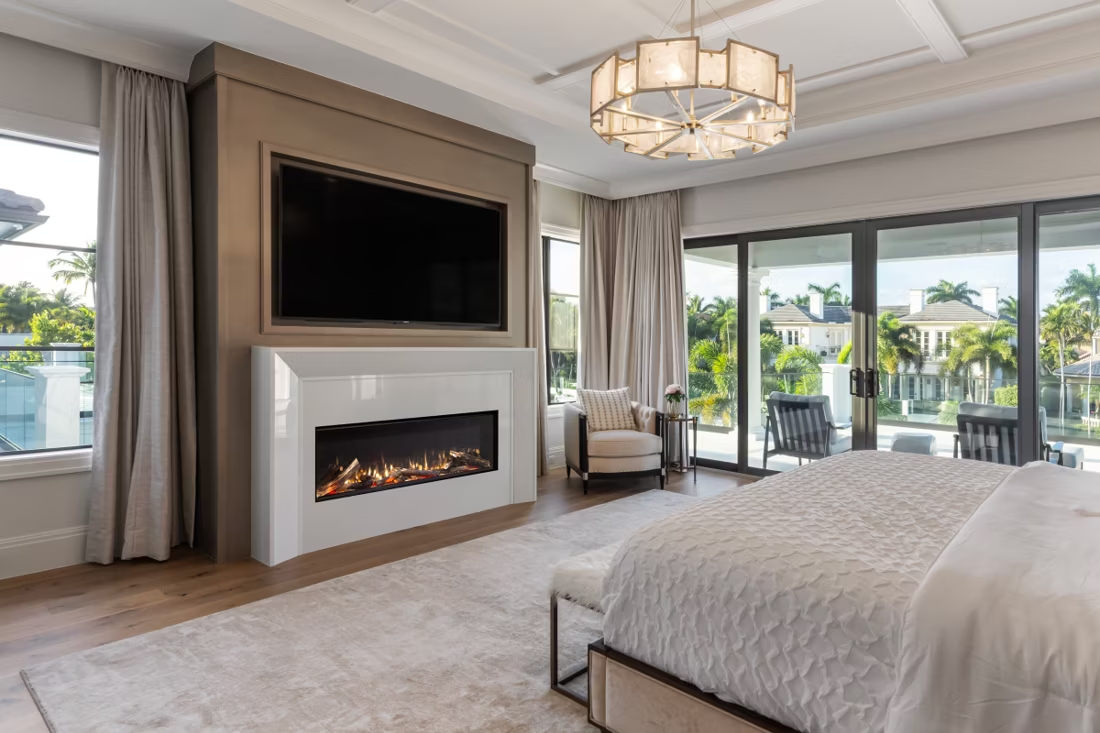
Yes—with an asterisk. Fireplaces are hot and TVs don't like heat. Either put a mantel between them to deflect rising warmth, or choose a fireplace with heat-management technology that creates a cool zone on the wall above—the wall stays around 125 degrees, barely warm, while the room still gets full heat. If you like clean lines and don't want a mantel, heat management is the answer.
What is an in-home preview and do I need one?
It's a visit where a hearth professional measures your space, confirms the model you picked actually works in your home, and walks the specs—framing, gas line, venting, finish work—before anything is ordered. Some details you just can't know until you see the house. Never make a down payment without one; it's the single most-skipped step that burns buyers.
How much should I budget for a fireplace?
For an average home—covering the fireplace, the vent pipe, and basic installation—a budget between $3,900 and $5,500 gives you a lot of options across wood, gas, and pellet. By the time you add finish work, gas line, and electrical, the average complete installation lands between $5,000 and $12,000 all-in. In a remodel or new build, a good rule is to put about 2.5% of the total project cost toward the fireplace.
Stove and Fireplace Dealers in Calhoun County
Listings include WhyFire partner dealers, dealers we have verified as authorized for the brands we recommend, and established local businesses that carry hearth products. Every listing shows which one it is. The ones marked Preferred run on WhyFire's software, so they can show you real pricing and book your appointment right here. No manufacturer pays for placement. How we verify dealers →
Awa Enterprises
Jennings Air And Mechanical
Carolina Propane
Southern Propane- Orangeburg
Farmers Propane
Find your electric fireplace in Calhoun County.
Tell us a bit about your home and we'll match you with the right electric fireplace, insert, or stove—plus a free Project Guide & Parts List with the exact parts for your project and our recommended local dealer in Calhoun County.
Find Your Fireplace →